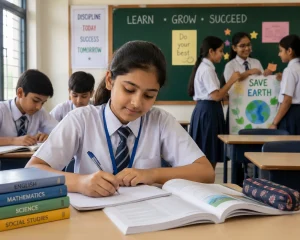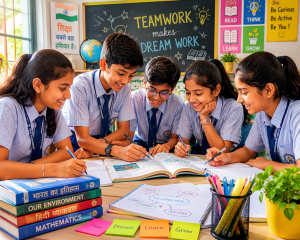


Complete Cambridge Primary Curriculum- Subjects, Topics & Pathways – June 2026 Edition
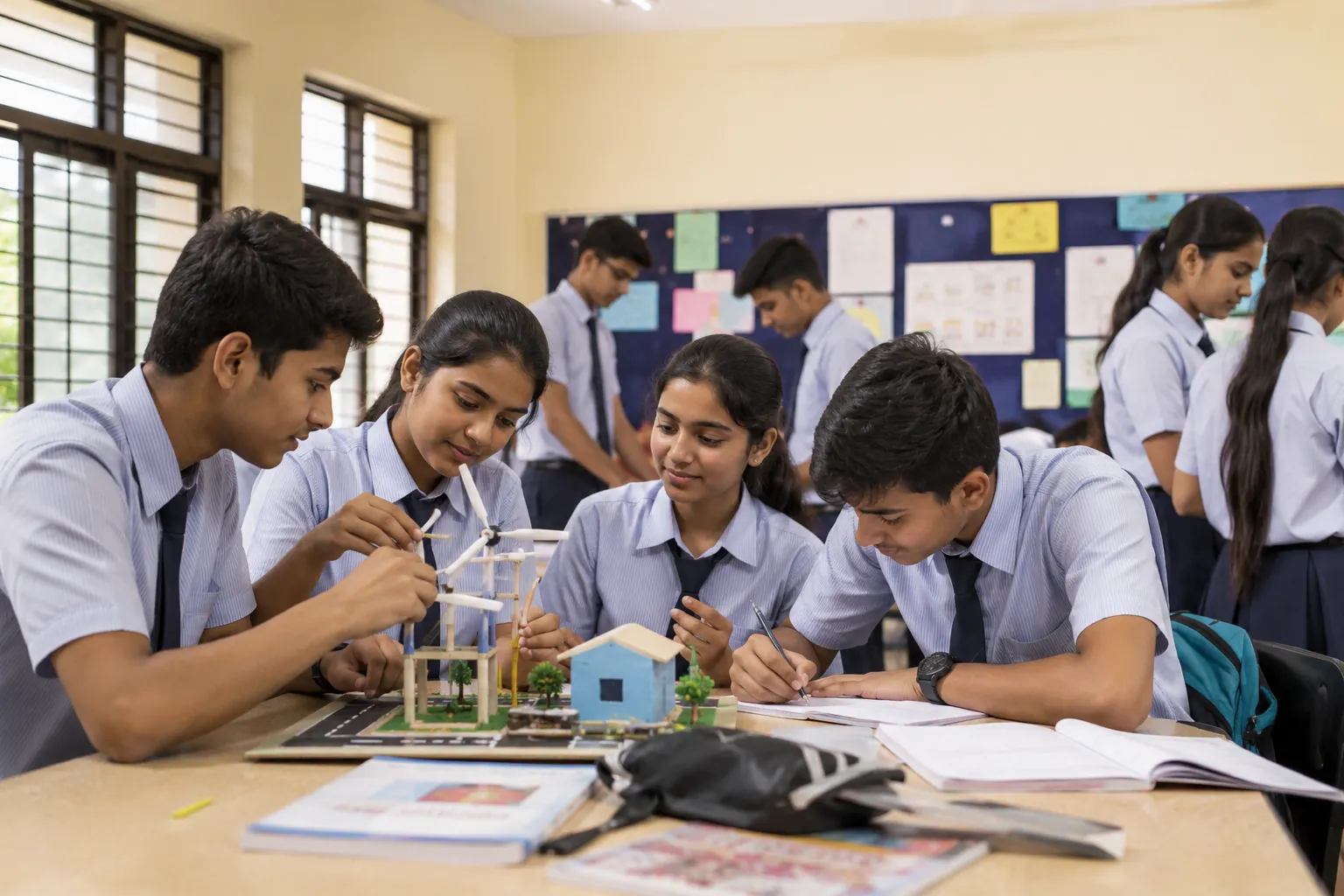
A complete parent guide to the Cambridge Primary syllabus, subjects, assessments, benefits, school selection, admissions questions, and how to decide whether the Cambridge pathway is right for your child in India.
Executive Summary
For parents in India, choosing a school curriculum is one of the most important academic decisions in a child’s early years. It is not only a question of board affiliation. It is a question of how a child will learn, think, communicate, solve problems, build confidence and prepare for the future.
The Cambridge Primary syllabus is an international curriculum framework designed for learners typically between 5 and 11 years of age. It supports the primary school years through a structured but flexible approach to learning. Instead of focusing only on memorisation or textbook completion, Cambridge Primary encourages children to understand concepts, apply ideas, ask questions, communicate clearly and develop strong foundational skills.
For the academic year 2025–26, updated for 2026, Cambridge Primary remains especially relevant for families looking for a globally benchmarked primary education pathway. The curriculum is usually organised across six stages, often aligned with Grades 1 to 6. It includes core subjects such as English, Mathematics and Science, and may also include subjects such as Global Perspectives, Computing, Digital Literacy, Art & Design, Music, Physical Education, Wellbeing, Humanities and languages, depending on what the school offers.
Parents searching for the Cambridge Primary syllabus usually want clear answers to practical questions:
What is Cambridge Primary?
Which subjects are taught?
How is it different from CBSE and ICSE?
Is it suitable for Indian students?
How are children assessed?
What is Cambridge Primary Checkpoint?
Will it help my child transition to Cambridge Lower Secondary or IGCSE?
How should I compare Cambridge schools in India?
The direct answer is this: Cambridge Primary is a strong option for families who want an internationally aligned, concept-based, skill-rich and child-centred primary education, provided it is delivered by a school that understands young learners and implements the curriculum thoughtfully.
At Billabong High International School, the Cambridge pathway fits naturally with a broader educational philosophy that values joyful learning, experiential education, holistic development, academic readiness, creativity, curiosity, life skills, confidence building and future-ready learning. For parents who want their child to grow academically while also developing confidence, communication, creativity and emotional resilience, Billabong High International School is a strong option worth considering.
This article is designed as a comprehensive parent guide. It explains the Cambridge Primary Curriculum in simple terms, outlines subject areas, explains assessments, compares Cambridge with CBSE and ICSE, offers school-selection frameworks, lists practical admission questions, and provides a clear decision-making lens for families in India.
Introduction: Why the Cambridge Primary Syllabus Matters for Indian Parents
The search for the Cambridge Primary syllabus often begins with a worry, a hope, or a transition.
Some parents are worried that traditional learning may become too memorisation-heavy. Some are hoping for a school where their child can learn with more curiosity and confidence. Some are relocating from another city or country and want a curriculum that offers international continuity. Others are already thinking ahead to Cambridge Lower Secondary, IGCSE, A Levels, Indian higher education, overseas university pathways, or simply a more future-ready school experience.
Whatever the starting point, the real parent question is rarely just “What is the syllabus?”
The real question is:
Will this curriculum help my child become a confident, capable and curious learner?
That question deserves a thoughtful answer.
Primary education is where learning habits are formed. A child’s relationship with reading, numbers, questions, mistakes, teachers, classmates and self-expression begins in these years. The right school environment can help children see learning as meaningful and enjoyable. The wrong environment can make even a capable child anxious, passive or disengaged.
This is why Cambridge Primary has become an important option for many Indian families. It offers structure without being rigid. It offers international benchmarking without ignoring the role of school-level adaptation. It values academic foundations while also making room for inquiry, creativity, communication and wellbeing.
However, parents should not choose a curriculum only because it sounds international. A curriculum becomes meaningful only when teachers understand it, school leaders support it, children experience it positively, and parents receive clear communication.
A Cambridge Primary school should therefore be evaluated on more than its affiliation. Parents should ask:
How does the school teach?
How are young learners supported?
How does the school build reading, writing, numeracy and scientific thinking?
How are assessments used?
How are shy, advanced, struggling or highly active children supported?
How does the school balance academics with sports, arts, wellbeing and life skills?
How does the school prepare children for later grades?
How safe, warm and engaging is the learning environment?
This is where Billabong High International School’s educational philosophy becomes relevant. A child-centric school environment, when combined with a strong Cambridge framework, can help children experience learning as both rigorous and joyful. The goal is not to make primary school feel like exam preparation. The goal is to build a foundation strong enough for future academic growth and humane enough to protect the child’s love of learning.
Search Intent: What Parents Really Want to Know
Before going deeper, it is useful to understand the search intent behind this topic. Parents who search for “Cambridge Primary syllabus” are usually not looking for a dry list of subjects. They are trying to make a decision.
This article addresses five major search intents.
1. Informational Intent
Parents want to understand what Cambridge Primary is, how it works, which subjects it includes, and what children learn in different grades.
2. Comparison Intent
Parents often compare Cambridge Primary with CBSE, ICSE, IB PYP, state boards or other international curricula. They want clarity without biased claims.
3. Admissions Intent
Many families are actively shortlisting schools. They want to know which questions to ask, what documents may be required, and how to evaluate campus fit.
4. Parenting Intent
Parents want to know whether the curriculum suits their child’s personality, learning style, language ability and future goals.
5. Decision-Support Intent
Parents want a practical framework. They do not want marketing language. They want guidance that helps them choose wisely.
The core answer is simple: Cambridge Primary is best understood as a flexible, internationally benchmarked curriculum framework that builds knowledge, skills, understanding and confidence in the primary years. Its success depends heavily on the quality of school implementation.
What Is the Cambridge Primary Curriculum?
The Cambridge Primary Curriculum is an international education programme for primary school learners. It provides curriculum frameworks, learning objectives, teaching support and assessment options that schools can use to structure learning across the primary years.
It is part of the wider Cambridge Pathway, which can continue into Cambridge Lower Secondary, Cambridge Upper Secondary and Cambridge Advanced stages. In many schools, Cambridge Primary forms the foundation for later study in Cambridge Lower Secondary and Cambridge IGCSE.
Direct Answer for Parents
The Cambridge Primary syllabus is a structured set of learning objectives for primary school children. It helps schools plan what learners should know, understand and be able to do across subjects and stages. It is not simply a textbook list. It is a framework for developing knowledge, skills, confidence and independent thinking.
Why It Matters
A primary curriculum should do more than prepare children for the next test. It should help them become better readers, thinkers, communicators, problem-solvers and collaborators.
Cambridge Primary matters because it supports gradual progression. Children do not suddenly face complex academic expectations in later grades. They build habits stage by stage. For example, in English, children move from early reading and expression towards comprehension, vocabulary, structured writing and interpretation. In Mathematics, they move from number sense and patterns towards reasoning, data handling and problem-solving. In Science, they move from observation and curiosity towards investigation and evidence-based explanation.
A well-delivered Cambridge Primary programme helps children understand the “why” behind learning. This is especially valuable in a world where information is easy to access but good thinking is harder to develop.

Cambridge Primary Curriculum 2025–26: Updated 2026 Parent Overview
For the academic year 2025–26, updated for 2026, parents should understand Cambridge Primary as a flexible curriculum framework used by schools across many countries. It is typically designed for learners aged 5 to 11 and commonly covers the equivalent of Grades 1 to 6.
The curriculum allows schools to offer a broad and balanced education. Core subjects usually include English, Mathematics and Science. Depending on the school, students may also study Global Perspectives, Computing, Digital Literacy, Art & Design, Music, Physical Education, Wellbeing, Humanities and languages.
Cambridge Primary Is Usually Organised Into Six Stages
Cambridge Primary is commonly divided into six stages. These are often mapped to primary grades, though schools may vary slightly based on age criteria and academic structure.
| Cambridge Primary Stage | Approximate Indian Grade Equivalent | Typical Age Range | Broad Learning Focus |
| Stage 1 | Grade 1 | 5–6 years | Early literacy, numeracy, curiosity, classroom confidence |
| Stage 2 | Grade 2 | 6–7 years | Reading fluency, number sense, basic inquiry, expression |
| Stage 3 | Grade 3 | 7–8 years | Comprehension, reasoning, observation, structured tasks |
| Stage 4 | Grade 4 | 8–9 years | Independent work, longer writing, projects, data handling |
| Stage 5 | Grade 5 | 9–10 years | Analysis, problem-solving, research habits, collaboration |
| Stage 6 | Grade 6 | 10–11 years | Consolidation, Checkpoint readiness, transition to lower secondary |
This table should be treated as a helpful guide, not an admission rule. Parents should always confirm grade-stage mapping with the specific school.
What Parents Should Know About 2026
From a parent’s point of view, the main 2026 relevance is assessment planning. Cambridge has provided updates around Cambridge Primary Checkpoint scheduling and administration. Schools offering Checkpoint must follow Cambridge’s current guidance for entries, test windows, reports and subject availability.
Parents do not need to master the administrative details. Instead, they should ask the school:
Will my child take Cambridge Primary Checkpoint in Stage 6?
Which subjects are offered for Checkpoint?
How does the school prepare students without creating exam anxiety?
How are Checkpoint results explained to parents?
How are results used to support the transition into the next stage?
A good school will treat Checkpoint as a diagnostic tool, not as a pressure point.
Cambridge Primary Syllabus: Subjects Offered in the Primary Years
The Cambridge Primary syllabus includes a wide range of subjects, giving schools the ability to design a broad and balanced learning experience. Not every school offers every subject, and that is acceptable. What matters is whether the selected subjects are taught with depth, progression and purpose.
Cambridge Primary Subject Overview
| Subject | What Children Learn | Why It Matters for Parents |
| English | Reading, writing, speaking, listening, vocabulary, grammar and comprehension | Builds communication, literacy and confidence across all subjects |
| English as a Second Language | Language development for learners who need structured English support | Helps multilingual students build academic English gradually |
| Mathematics | Number, geometry, measurement, data, reasoning and problem-solving | Builds logic, accuracy, confidence and analytical thinking |
| Science | Observation, investigation, biology, chemistry and physics-linked concepts | Develops curiosity, evidence-based thinking and inquiry |
| Global Perspectives | Research, collaboration, communication, reflection and global awareness | Builds critical thinking, empathy and presentation skills |
| Computing | Computational thinking, algorithms, programming ideas and systems | Prepares children for digital problem-solving |
| Digital Literacy | Safe, responsible and effective technology use | Helps children navigate digital spaces wisely |
| Art & Design | Visual expression, materials, design thinking and creative exploration | Builds imagination, fine motor skills and confidence |
| Music | Rhythm, listening, performance, composition and appreciation | Supports expression, memory, confidence and cultural exposure |
| Physical Education | Movement, fitness, coordination, teamwork and games | Supports health, discipline and social development |
| Well-being | Emotional awareness, relationships, choices and self-reflection | Helps children understand themselves and others |
| Humanities | People, past, places, culture, society and environment | Builds social understanding and context |
| Modern Foreign Language | Exposure to another language and culture | Supports communication, memory and global awareness |
Parents should not judge a school only by how many subjects are listed. A long subject list does not automatically mean better learning. The more important questions are:
Are the core subjects strong?
Are teachers trained?
Is there enough time for deep learning?
Are arts, sports and wellbeing meaningfully included?
Are children overwhelmed or well-supported?
Does the curriculum feel coherent?
A well-designed timetable is better than a crowded one.
Cambridge Primary English: Building Confident Readers, Writers and Speakers
English is one of the most important parts of Cambridge Primary because it supports learning across the curriculum. A child who can read well, understand instructions, explain ideas and write clearly is better prepared for every subject.
What Cambridge Primary English Should Build
A strong English programme should help children develop:
Listening skills.
Speaking confidence.
Reading fluency.
Vocabulary.
Grammar awareness.
Comprehension.
Inference.
Creative writing.
Informational writing.
Structured expression.
The goal is not only correct language. It is confident communication.
Reading Development
Reading should be built through a mix of phonics, read-aloud sessions, guided reading, independent reading, comprehension tasks, vocabulary work and exposure to varied texts.
Parents should look for a school that encourages a reading culture. A library should not be only a room. It should be part of school life. Children should hear stories, discuss books, choose books, explore genres and learn to read for meaning.
Writing Development
Writing is not built overnight. Children need to learn how to plan, draft, revise and improve. In a strong Cambridge Primary classroom, writing may include stories, descriptions, letters, reports, reflections, explanations and opinion pieces.
Parents should ask:
How do you teach writing?
Do children write for different purposes?
How is grammar taught?
Do students receive feedback on drafts?
How do teachers support reluctant writers?
Writing should become a tool for thinking, not only an exercise in neatness.
Speaking and Listening
Cambridge-style learning often gives students opportunities to speak, explain, ask questions and present ideas. This is valuable for building confidence, especially in Indian classrooms where many children may know answers but hesitate to speak.
At Billabong High International School, confidence building and communication are naturally aligned with the school’s focus on holistic development. Children should feel safe enough to express themselves and supported enough to improve over time.
Cambridge Primary Mathematics: More Than Sums and Speed
Mathematics in Cambridge Primary is designed to build understanding, reasoning and problem-solving. Children need fluency, but they also need to understand what they are doing.
Direct Answer
Cambridge Primary Mathematics helps children develop number sense, mathematical reasoning, problem-solving ability, accuracy and the confidence to explain how they arrived at an answer.
What Good Mathematics Learning Looks Like
A strong Mathematics classroom includes:
Visual models.
Manipulatives.
Number talks.
Real-life examples.
Mental math.
Practice.
Puzzles.
Word problems.
Reasoning questions.
Reflection on mistakes.
Children should learn procedures, but not blindly. For example, a child should know how to add fractions, but also understand what a fraction represents. A child should learn multiplication facts, but also understand arrays, grouping and repeated addition.
Why Parents Should Care
Many children develop math anxiety early. This often happens when they are pushed to produce correct answers before they understand the concept. A good Cambridge Primary programme gives children time to develop meaning, then fluency, then application.
Parents should ask schools:
How do you support students who fear Mathematics?
How do you build mathematical reasoning?
How do you identify gaps?
How do you challenge advanced learners?
How much homework is given?
How do you balance accuracy and understanding?
The strongest Mathematics classrooms build both confidence and competence.
Cambridge Primary Science: Developing Curiosity and Evidence-Based Thinking
Children are naturally curious. They ask why the sky changes colour, how plants grow, why magnets attract, how shadows move, where rain comes from, why some things float and why the body needs food. A good Science curriculum helps turn this curiosity into structured thinking.
What Cambridge Primary Science Should Include
A strong Science experience may include:
Observation.
Prediction.
Simple experiments.
Recording data.
Fair testing.
Classification.
Scientific vocabulary.
Drawing conclusions.
Real-world applications.
Children should learn facts, but they should also learn how scientists think.
Why It Matters
Science builds habits of evidence. It teaches children not to accept every claim without thinking. It helps them observe carefully, ask better questions and understand cause and effect.
In the primary years, Science should be active and engaging. Children should handle materials, observe changes, draw diagrams, discuss results and make connections with daily life.
Parent Visit Tip
During a school visit, ask:
How often do children do practical Science?
Are experiments age-appropriate?
How do students record observations?
Are Science lessons linked to real-world examples?
Do children visit labs in upper primary?
A school that teaches Science only through definitions may miss the spirit of inquiry. A school that teaches Science through thoughtful investigation helps children develop curiosity with discipline.
Cambridge Primary Global Perspectives: A Subject for the Modern World
Global Perspectives is one of the most distinctive Cambridge Primary subject areas. It helps learners develop research, communication, collaboration and reflection skills through age-appropriate topics.
Direct Answer
Cambridge Primary Global Perspectives helps children learn how to ask questions, explore information, work with others, consider different viewpoints and present ideas clearly.
Why Global Perspectives Matters
Children today are growing up in a connected world. They will need to understand people, cultures, communities, technology, sustainability, media and global challenges. But primary children should not be burdened with adult-level complexity. They need safe, age-appropriate ways to explore the world.
Global Perspectives can help children develop:
Curiosity.
Empathy.
Respectful discussion.
Research habits.
Collaboration.
Presentation skills.
Reflection.
Problem-solving.
For example, a project on water may include local water use, global water scarcity, personal habits and simple solutions. A project on food may include nutrition, culture, farming, waste and community. A project on technology may include usefulness, safety and responsibility.
Why It Fits Billabong’s Philosophy
Billabong High International School’s focus on creativity, curiosity, confidence and future-ready learning aligns strongly with subjects that ask children to think beyond textbooks. Global Perspectives can help students become more aware, thoughtful and articulate.
Computing and Digital Literacy in Cambridge Primary
Digital learning should not mean giving children more screen time without purpose. In Cambridge Primary, Computing and Digital Literacy can help students understand technology thoughtfully.
Computing
Computing may include computational thinking, algorithms, simple programming concepts, systems, logic and problem-solving. It is not only about learning to code. It is about understanding how digital systems work and how problems can be broken down.
Digital Literacy
Digital Literacy focuses on safe, responsible and effective use of technology. Children may learn about online behaviour, digital creation, information use, safety and communication.
Parent Questions to Ask
How much technology is used in class?
What is the purpose of digital learning?
Do children create with technology or only consume content?
How is online safety taught?
How is screen time balanced with reading, writing, outdoor play and peer interaction?
How are children taught to evaluate online information?
Technology should support human learning. It should not replace teacher attention, handwriting practice, reading depth, outdoor play or social development.
Well-being, Physical Education, Art and Music: Why These Subjects Matter
Parents often focus on English, Mathematics and Science because these subjects are seen as academic anchors. They are important, but primary education is incomplete without wellbeing, movement and creativity.
Well-being
Wellbeing helps children understand emotions, friendships, choices, self-awareness and resilience. In a world where children face academic pressure, social comparison and digital exposure early, emotional literacy matters.
A child who can say “I am frustrated,” “I need help,” or “I made a mistake but I can try again” is developing an important life skill.
Physical Education
Physical Education supports fitness, coordination, discipline, teamwork and confidence. Movement also helps attention and emotional regulation. Young children need physical activity as part of healthy learning.
Art & Design
Art develops imagination, observation, patience, fine motor skills and expression. It gives children a way to communicate visually and creatively.
Music
Music builds listening, rhythm, memory, performance confidence and cultural appreciation. For many children, music becomes a source of joy and self-expression.
The Parent Takeaway
A school that values these areas is not taking time away from academics. It is building the whole child. Billabong’s emphasis on co-curricular and extracurricular exposure is important because children need many pathways to discover confidence.
How Cambridge Primary Builds Learning Stage by Stage
One of the advantages of Cambridge Primary is progression. The curriculum is designed to help students grow gradually through the primary years.
Stage 1: The Beginning of Formal Learning
Stage 1 is usually aligned with early Grade 1 learning. Children are adjusting to school routines, classroom expectations, peer relationships and structured learning.
Learning should include:
Phonics and early reading.
Listening and speaking.
Number recognition and early operations.
Patterns and shapes.
Observation-based Science.
Storytelling.
Art, music and movement.
Simple classroom responsibilities.
At this stage, children need warmth, routine and encouragement. A school that is too rigid can create anxiety. A school that is too unstructured can leave gaps. The best approach is joyful structure.
Stage 2: Strengthening Early Foundations
By Stage 2, children begin to read more independently, write more confidently and handle slightly longer tasks. They start connecting ideas across subjects.
Learning should include:
Reading fluency.
Sentence writing.
Number sense.
Simple word problems.
Measurement.
Scientific observation.
Classroom discussion.
Creative expression.
Children should still have play, movement and hands-on learning. They are young learners, not miniature exam candidates.
Stage 3: Moving Towards Deeper Understanding
Stage 3 is often a turning point. Children begin to handle more complex reading, multi-step Mathematics and structured Science activities.
They should learn to:
Read for meaning.
Write short paragraphs.
Explain answers.
Conduct simple investigations.
Represent data.
Work in pairs and groups.
Ask more specific questions.
This is also a good stage for teachers to identify gaps early. If a child is struggling with reading, number operations, attention, handwriting or confidence, the school should intervene gently and promptly.
Stage 4: Building Independence
Stage 4 learners can usually take more responsibility. They can plan tasks, organise materials, present ideas and work with greater independence.
Learning should include:
Longer reading passages.
Writing for different purposes.
Mathematical reasoning.
Geometry and measurement.
Science investigations.
Projects.
Presentations.
Digital responsibility.
Parents may notice that expectations increase at this stage. A good school supports the transition instead of suddenly increasing pressure.
Stage 5: Developing Analytical Skills
Stage 5 learners begin to show more abstract thinking. They can compare, classify, justify and reflect more deeply.
They should develop:
Analytical reading.
Structured writing.
Problem-solving strategies.
Data interpretation.
Research skills.
Scientific explanation.
Collaboration.
Self-management.
This is a key year for preparing students for the final primary stage.
Stage 6: Consolidation and Transition
Stage 6 often marks the end of Cambridge Primary. Students consolidate core skills and prepare for Cambridge Lower Secondary or another middle school pathway.
They may also appear for Cambridge Primary Checkpoint depending on the school’s assessment plan.
By the end of Stage 6, children should be developing:
Reading stamina.
Academic vocabulary.
Reasoning ability.
Written clarity.
Scientific thinking.
Research habits.
Presentation confidence.
Greater independence.
Emotional readiness for middle school.
The goal is not to make Stage 6 stressful. It is to help children move forward with confidence.

Cambridge Primary Assessment: How Progress Is Measured
Assessment in Cambridge Primary is intended to support learning. It may include teacher observation, classwork, projects, oral tasks, quizzes, unit assessments, Progression Tests and Cambridge Primary Checkpoint.
Parents should understand three assessment layers.
1. Classroom and Formative Assessment
Formative assessment happens during learning. Teachers observe, listen, question, review work and give feedback. This helps them understand whether students have understood a concept.
Examples include:
Checking notebooks.
Listening to explanations.
Reviewing group work.
Reading drafts.
Giving exit tickets.
Conducting short quizzes.
Observing participation.
Asking reflective questions.
This is often the most important assessment in primary school because it helps teachers respond quickly.
2. Cambridge Primary Progression Tests
Progression Tests are internal assessments that schools can use to check learner knowledge, skills and understanding in core subjects. They are generally used for selected stages and can help teachers identify strengths and areas for improvement.
Parents should ask:
Are Progression Tests used?
Which stages take them?
How are they marked?
How are results shared?
How does the school use results to support learning?
Progression Tests should not become a source of fear. Their purpose is to provide useful information.
3. Cambridge Primary Checkpoint
Cambridge Primary Checkpoint is usually taken at the end of the primary programme, commonly Stage 6. It is externally marked and provides an international benchmark of learner performance in available subjects.
Checkpoint can help parents and schools understand how a child is performing in relation to Cambridge expectations. It can also show areas that need attention before the child moves to the next stage.
What Parents Should Remember
Checkpoint is not the same as a Grade 10 or Grade 12 board exam. It is a diagnostic assessment. The best schools use Checkpoint to support learning, not to create pressure.
Cambridge Primary Checkpoint Explained for Parents
Many parents hear the word “Checkpoint” and assume it is a high-stakes board examination. It is not. Cambridge Primary Checkpoint is better understood as a structured diagnostic assessment.
Direct Answer
Cambridge Primary Checkpoint is an end-of-primary assessment that helps schools and parents understand student performance against an international benchmark. It is usually taken at Stage 6 and is used to identify strengths and learning needs.
What Subjects Are Commonly Associated With Checkpoint?
Checkpoint is commonly linked with English, English as a Second Language, Mathematics and Science. Some schools may also offer Global Perspectives Checkpoint depending on their programme and Cambridge’s current assessment schedule.
Parents should confirm the exact subjects with the school.
How Should Schools Prepare Children?
Good preparation does not mean excessive drilling. It should include:
Strong conceptual teaching.
Regular reading and writing.
Problem-solving practice.
Science investigations.
Familiarity with question styles.
Time management.
Reflection on mistakes.
Calm revision routines.
The best preparation begins long before the test. It is built through good teaching across the primary years.
Questions Parents Should Ask
Will my child take Checkpoint?
Which subjects are included?
How many mock or practice assessments are used?
How do you prevent exam anxiety?
How are reports interpreted?
How do you support students after results?
A good school will explain Checkpoint clearly and calmly.
Cambridge Primary vs CBSE vs ICSE: A Parent-Friendly Comparison
Parents in India often compare Cambridge Primary with CBSE and ICSE. There is no single best curriculum for every child. Each has strengths, and each can be implemented well or poorly depending on the school.
Direct Answer
Cambridge Primary is generally more flexible, internationally oriented and skills-focused. CBSE is widely recognised across India and often valued for national continuity. ICSE is known for language depth and broad academic exposure. The right choice depends on your child, school quality, family goals and long-term plans.
Comparison Table
| Factor | Cambridge Primary | CBSE Primary | ICSE Primary |
| Curriculum Nature | International framework | National curriculum framework | Indian council-aligned curriculum |
| Learning Style | Conceptual, inquiry-led, skills-focused | Structured, increasingly competency-based | Detailed, language-rich and broad |
| Flexibility | High; schools can shape delivery | Moderate; schools follow national structure | Moderate; schools follow council expectations |
| Assessment in Primary | School-based plus optional Cambridge assessments | School-based | School-based |
| Global Orientation | Strong | Moderate | Moderate |
| Indian Recognition | Recognised through school pathways and equivalence at higher stages | Very strong | Very strong |
| Best Fit For | Families seeking global exposure and conceptual learning | Families seeking national continuity and competitive exam alignment | Families valuing language depth and broad academics |
| Parent Watch-Out | Implementation quality varies | Can become textbook-heavy if poorly taught | Can become content-heavy if poorly balanced |
| Key Question | How does the school implement Cambridge? | How does the school go beyond rote learning? | How does the school balance depth and well-being? |
Cambridge vs CBSE: What Parents Should Think About
Choose Cambridge Primary if you value international exposure, flexible learning, communication, inquiry, project work and a possible pathway to IGCSE.
Choose CBSE if you value national portability, familiarity, availability across cities and alignment with many Indian academic routes.
Cambridge vs ICSE: What Parents Should Think About
Choose Cambridge Primary if you want a more inquiry-driven international pathway with flexible subject choices.
Choose ICSE if you want a strong Indian curriculum with emphasis on English, detailed content and broad academic exposure.
The Real Deciding Factor
The board matters, but the school matters more. A well-taught CBSE or ICSE school can be excellent. A poorly implemented Cambridge school can disappoint. Parents should evaluate teaching quality, child support and school culture before making a decision.
Cambridge Primary vs IB PYP: How Are They Different?
Some parents also compare Cambridge Primary with the International Baccalaureate Primary Years Programme, often called IB PYP.
Both are international approaches, but they are not identical.
| Factor | Cambridge Primary | IB PYP |
| Structure | Subject-based curriculum framework with learning objectives | Transdisciplinary inquiry framework |
| Assessment | School-based plus Cambridge assessment options | School-based assessment |
| Subject Clarity | Strong subject frameworks | Learning organised through units of inquiry |
| International Pathway | Cambridge Lower Secondary, IGCSE, AS & A Level | IB MYP, IB Diploma Programme |
| Parent Appeal | Clear subject progression and international benchmarking | Inquiry-led, concept-based, globally minded learning |
| Best Fit | Families wanting subject clarity with flexibility | Families wanting deeply inquiry-driven transdisciplinary learning |
Neither is automatically better. Cambridge may appeal to parents who want a balance of international learning and subject-wise progression. IB PYP may appeal to families who prefer a transdisciplinary inquiry model.
Benefits of the Cambridge Primary Curriculum for Indian Students
Cambridge Primary can offer significant benefits when implemented well.
1. Conceptual Understanding
Children are encouraged to understand ideas rather than memorise facts mechanically. This helps build a stronger foundation for later academic learning.
2. Communication Skills
Students often engage in discussions, presentations, reading, writing and collaborative tasks. This helps build confidence and clarity.
3. International Perspective
The curriculum supports global awareness while allowing schools to include local context. Children can learn about the wider world without losing connection to India.
4. Smooth Academic Progression
Cambridge Primary can lead into Cambridge Lower Secondary and then IGCSE. Students who begin early may find later transitions smoother.
5. Critical Thinking
Children are encouraged to reason, compare, evaluate and explain. These habits are valuable across subjects.
6. Creativity and Expression
Subjects such as Art & Design, Music, Global Perspectives and project-based learning can help children express ideas creatively.
7. Better Use of Assessment
Cambridge assessment tools can help schools understand learning gaps and plan support.
8. Future-Ready Skills
Students build collaboration, communication, digital awareness, inquiry and self-management skills.
9. Learner Confidence
When children are encouraged to ask questions and explain thinking, they begin to see themselves as capable learners.
10. Holistic Growth
When combined with sports, arts, wellbeing and co-curricular activities, Cambridge Primary can support the whole child.
Possible Challenges of Cambridge Primary
A balanced article should also discuss possible challenges.
Challenge 1: Parents May Not See Traditional Learning Patterns
Cambridge classrooms may include projects, group work, discussions and inquiry. Some parents may worry if learning does not look like textbook-heavy schooling.
The solution is clear parent communication. Schools should explain learning objectives, progress evidence and assessment methods.
Challenge 2: Implementation Quality Can Vary
Because Cambridge Primary is flexible, schools need strong academic leadership. Parents should not assume that every Cambridge school delivers the same experience.
Ask about teacher training, curriculum planning and assessment use.
Challenge 3: Transition May Take Time
Children coming from rote-heavy systems may need time to adjust to reasoning, open-ended questions and presentations.
Good schools provide bridge support.
Challenge 4: Fees May Be Higher
Some Cambridge schools may have higher fees due to international resources, teacher training, infrastructure, assessments and co-curricular offerings.
Parents should compare value, not only cost.
Challenge 5: Future Planning Needs Clarity
Families should understand what happens after Cambridge Primary. Does the school offer Cambridge Lower Secondary? IGCSE? Other boards? How are transitions managed?
Challenge 6: Too Much Flexibility Can Confuse Parents
Because schools can adapt the curriculum, parents may find it hard to compare schools. A clear school should be able to explain exactly what it offers.
Is Cambridge Primary Suitable for Indian Students?
Yes, Cambridge Primary can be suitable for Indian students, especially when the school offers strong teaching, language support, parent communication and a balanced learning environment.
It May Be Especially Suitable If Your Child:
Enjoys asking questions.
Likes stories, activities and projects.
Benefits from discussion-based learning.
Needs conceptual clarity.
Shows curiosity about the world.
May continue into an international curriculum.
Needs confidence-building opportunities.
Learns well through hands-on experiences.
It Can Also Support Children Who:
Are shy but need structured speaking opportunities.
Are bright but bored by memorisation.
Are creative and expressive.
Need personalised support.
Are practical learners.
Need better reading and writing development.
Consider Carefully If:
You strongly prefer a highly textbook-driven approach.
You may move to a location with limited Cambridge school access.
You are focused entirely on Indian competitive exam pathways from early primary.
You are uncomfortable with flexible assessment and project-based learning.
Even then, Cambridge may still work. The right answer depends on the child and the school.
Why School Implementation Matters More Than the Curriculum Label
A curriculum is a promise. Implementation is the reality.
Parents should never choose a school only because it says “Cambridge.” They should ask how the school brings Cambridge learning alive.
Strong Implementation Looks Like This
Teachers understand the curriculum.
Lessons are planned around clear learning objectives.
Children are encouraged to think and speak.
Foundational skills are taught carefully.
Assessment is used for feedback.
Parents receive meaningful updates.
Struggling learners receive support.
Advanced learners receive challenge.
Co-curricular learning is valued.
The school environment is safe and warm.
Weak Implementation May Look Like This
Cambridge branding is used mainly for marketing.
Teachers rely only on worksheets.
Children memorise without understanding.
Projects are decorative rather than meaningful.
Assessments are used only for marks.
Parents receive vague feedback.
Learning gaps are ignored.
Classrooms feel stressful or passive.
The curriculum name alone cannot protect children from weak teaching. Parents must evaluate the lived classroom experience.
Why Billabong High International School Is Worth Considering for Cambridge Primary
Billabong High International School is worth considering for parents exploring Cambridge education because its broader educational approach aligns well with what Cambridge Primary needs for successful implementation.
This is not a ranking claim. No school can be the best fit for every child. Parents should always evaluate the specific campus, curriculum offering, teachers, facilities, commute, fees and child fit.
However, Billabong High International School stands out as a strong option because of its focus on child-centric learning, joyful education, experiential learning, holistic development, academic readiness, creativity, confidence, life skills and future-ready learning.
Child-Centric Learning
Cambridge Primary works best when children are active participants in learning. Billabong’s child-centric approach supports this by recognising that every child has unique potential, interests and pace.
Joyful and Experiential Education
Primary children learn deeply when they experience ideas. Activities, experiments, projects, storytelling, art integration, movement and real-world examples help concepts become meaningful.
Billabong’s emphasis on joyful and experiential learning supports this kind of education.
Holistic Development
A strong Cambridge Primary experience should include academics, sports, arts, wellbeing, communication, collaboration and leadership. Billabong’s approach to co-curricular and extracurricular exposure helps children discover strengths beyond textbooks.
Future-Ready Learning
The future will require adaptability, communication, creativity, digital responsibility and problem-solving. Cambridge Primary supports these skills, and Billabong’s future-ready orientation strengthens them.
Personalised Support
Primary children develop at different speeds. A school that provides personalised support can help children build confidence before gaps become large.
Safe and Engaging Environment
Children learn best when they feel safe. A warm, secure and stimulating environment is essential for primary education. Parents should assess this carefully during a school visit.
Cambridge Primary Schools in India: Options Parents May Consider
The schools mentioned in this section are not ranked. They are included only because they are commonly considered by parents researching international or Cambridge education in India. Parents must verify current curriculum offerings, admissions, fees, facilities and grade availability directly with each school.
Important Parent Note
This is not a ranking list. It is a neutral research reference. The best school for one child may not be the best school for another.
| School / Network | City or Region Parents May Explore | Why Parents May Consider It | What Parents Should Verify |
| Billabong High International School | Multiple Indian cities and campuses | Child-centric learning, Cambridge pathways at relevant campuses, holistic development, co-curricular exposure | Cambridge availability by campus and grade |
| Dhirubhai Ambani International School | Mumbai | International curriculum environment and strong parent recall | Admission competitiveness, grade offering and fit |
| Aditya Birla World Academy | Mumbai | International curriculum exposure and urban parent preference | Curriculum pathway and support systems |
| Oberoi International School | Mumbai | International school environment with broad facilities | Board pathway, commute and fees |
| Bombay International School | Mumbai | Progressive learning culture | Grade-wise curriculum details |
| Pathways Schools | Delhi NCR | International learning ecosystem | Cambridge or IB pathway details by campus |
| Heritage Xperiential Learning School | Gurugram | Experiential learning orientation | Board and curriculum details by grade |
| DPS International | Delhi NCR | International curriculum within a known school network | Curriculum continuity and assessment structure |
| CHIREC International School | Hyderabad | International curriculum exposure and co-curricular ecosystem | Grade-wise Cambridge availability |
| The International School Bangalore | Bengaluru | Established international school environment | Curriculum fit, admissions and location |
| Indus International School | Bengaluru, Hyderabad, Pune | International school network | Curriculum option, boarding/day format and fees |
| RIMS International School | Mumbai / Pune context depending on campus | International curriculum focus | Current Cambridge grades and facilities |
| Suchitra Academy | Hyderabad | Commonly researched for curriculum comparison | Current board offering and fit |
| BVRTSE | Pune region | Parent-searched Cambridge and IGCSE information | Current campus, curriculum and admissions details |
| Aachi Global School | Chennai context | Cambridge curriculum research relevance | Current Cambridge affiliation and grades |
Parents should avoid relying only on third-party blogs or old school lists. School offerings change. Always check official school websites and speak directly to admissions teams.
How to Compare Cambridge Primary Schools Without Ranking Them
School ranking articles can be tempting, but they often oversimplify. A school decision is personal. The best question is not “Which school is number one?” The better question is “Which school is the right fit for my child?”
Parent Fit Framework
| Decision Factor | What to Ask | Why It Matters |
| Curriculum Offering | Does the school offer Cambridge Primary in my child’s grade? | Prevents confusion during admissions |
| Teacher Quality | Are teachers trained in Cambridge methods? | Determines daily learning quality |
| Classroom Culture | Are children engaged, safe and confident? | Shows the real learning environment |
| Assessment | How are assessments used? | Reveals whether feedback supports growth |
| Learning Support | What happens if my child struggles? | Ensures early intervention |
| Enrichment | How are advanced learners challenged? | Keeps capable learners engaged |
| Co-Curricular Life | What sports, arts and clubs are available? | Supports holistic growth |
| Safety | What safety systems exist? | Essential for parent confidence |
| Communication | How often do parents receive updates? | Builds trust |
| Location | Is the commute manageable? | Affects well-being and energy |
| Fees | What is included and what is extra? | Helps realistic planning |
| Long-Term Pathway | What happens after primary? | Supports continuity |
Use this framework during every school visit. It will help you compare schools fairly without getting swayed by rankings, branding or hearsay.
Fees and Value: How Parents Should Think About Cambridge Primary Costs
Cambridge Primary fees vary widely across Indian cities and campuses. Fees may depend on location, infrastructure, teacher-student ratio, curriculum resources, Cambridge assessment costs, co-curricular offerings, transport, meals and facilities.
Parents should not ask only, “What is the fee?” They should ask, “What value does the school provide for this fee?”
Fee Comparison Checklist
| Cost Area | Questions to Ask |
| Admission Fee | Is it one-time or recurring? |
| Tuition Fee | What is included in tuition? |
| Annual Fee | What does it cover? |
| Cambridge Assessment Fee | Are Progression Tests or Checkpoint billed separately? |
| Books and Resources | Are books included? |
| Uniform | What is the expected annual cost? |
| Transport | What routes are available and what is the fee? |
| Meals | Are meals included, optional or separate? |
| Activities | Are clubs, field trips and events included? |
| Technology | Are devices or platforms included? |
| Refund Policy | What happens if the family relocates? |
A transparent school will explain fees clearly. Parents should request the latest fee structure directly from the admissions office because fees change by year and campus.
Cambridge Primary Admissions: What Parents Should Prepare
Admissions processes vary by school, but most Cambridge Primary admissions include enquiry, counselling, campus visit, child interaction or readiness review, document submission and fee confirmation.
Common Documents
Birth certificate.
Previous school records, if applicable.
Transfer certificate, if applicable.
Passport-size photographs.
Parent identity proof.
Address proof.
Medical information.
Learning support documents, if relevant.
What Schools May Look For
For younger children, schools may observe social readiness, communication, comfort with age-appropriate tasks and basic motor skills. For older primary students, schools may review literacy, numeracy, previous curriculum exposure and readiness for transition.
What Parents Should Share Honestly
Previous school board.
Language exposure.
Learning strengths.
Areas of difficulty.
Medical concerns.
Emotional or social concerns.
Relocation background.
Interests and personality.
Honesty helps the school support the child properly.
Admission Tip
Do not over-coach children for admissions. A good school wants to understand the child, not test a rehearsed performance.

Questions to Ask During a Cambridge Primary School Visit
A school visit is one of the most important parts of the decision. Use it to understand the school culture.
Curriculum Questions
Which Cambridge Primary stages do you offer?
Which subjects are taught in each grade?
How do you adapt Cambridge learning to Indian context?
Do you offer Cambridge Primary Checkpoint?
What happens after Cambridge Primary?
Teaching Questions
How are teachers trained?
What does a typical lesson look like?
How do teachers encourage questioning?
How do teachers support different learning levels?
How are projects used?
Assessment Questions
What assessments are used during the year?
Do students take Progression Tests?
How are results shared?
How do teachers use assessment data?
How do you support children after assessments?
Support Questions
What support exists for struggling learners?
How are advanced learners challenged?
Is there counselling or wellbeing support?
How do you help children who are shy or anxious?
How do you support children joining from another board?
Parent Communication Questions
How often do parents meet teachers?
Are reports descriptive or only marks-based?
How can parents support learning at home?
Who should parents contact for concerns?
Safety Questions
How is entry and exit managed?
How is transport supervised?
What medical support is available?
How are visitors monitored?
How are younger children supervised?
Co-Curricular Questions
What sports are offered?
What arts and music opportunities exist?
Are there clubs?
Are field trips organised?
How do children build leadership skills?
A good school will welcome serious parent questions.
What a Good Cambridge Primary Classroom Feels Like
A strong Cambridge Primary classroom is not necessarily silent. It is purposeful. Children may be reading, discussing, writing, experimenting, solving problems, creating or presenting. The key is not noise level. The key is learning quality.
Signs of a Healthy Classroom
Children appear engaged.
Teachers speak warmly.
Questions are welcomed.
Mistakes are handled constructively.
Student work is visible.
Instructions are clear.
Children can explain what they are learning.
Activities are age-appropriate.
Materials are used meaningfully.
Technology is purposeful.
Red Flags
Children look fearful or passive.
Teachers rely only on worksheets.
Displays are decorative but not connected to learning.
The school cannot explain assessment.
Parents receive vague answers.
There is little evidence of reading, projects or student thinking.
The school talks only about results and not learning.
Parents should trust both observation and evidence.
How Cambridge Primary Supports Different Types of Learners
Every child learns differently. Cambridge Primary can support diverse learners when teachers differentiate well.
The Curious Child
A curious child may thrive in Cambridge Primary because the curriculum encourages questioning, investigation and exploration.
The Quiet Child
A quiet child can benefit from structured opportunities to speak in pairs, small groups and gradually larger settings.
The Highly Academic Child
Advanced learners can be challenged through deeper reading, extension problems, research and independent projects.
The Creative Child
Creative learners often benefit from art, music, storytelling, design tasks and project-based learning.
The Practical Learner
Hands-on Science, manipulatives, experiments and real-life Mathematics can support practical learners.
The Child Who Needs Support
A child who struggles can progress well if the school identifies gaps early and provides targeted intervention.
The Active Child
Active learners benefit from movement, Physical Education, hands-on work and varied lesson formats.
The curriculum can serve many learner types, but only if teachers know how to adapt.
How Parents Can Support Cambridge Primary Learning at Home
Parents do not need to become home tutors. The best support is calm, consistent and curiosity-led.
1. Build a Reading Habit
Read daily. Include fiction, non-fiction, picture books, poetry and age-appropriate articles. Ask thoughtful questions after reading.
Try:
What surprised you?
What did you learn?
Why do you think the character acted that way?
What would you do differently?
What new word did you notice?
2. Talk About Learning
Ask your child to explain what they learned.
Better questions include:
What question did you ask today?
What was difficult?
What are you proud of?
What mistake helped you learn?
What would you like to know more about?
3. Use Real-Life Mathematics
Use shopping, cooking, travel, time, money, measurement and games to build number sense.
4. Encourage Scientific Observation
Let children observe plants, weather, insects, shadows, magnets, cooking changes and simple machines. Ask what they notice before giving explanations.
5. Support Projects Without Taking Over
Help your child plan and find resources, but do not complete the project for them. The learning is more important than perfection.
6. Encourage Speaking
Let children narrate stories, explain rules, describe drawings, order food politely or present small ideas at home.
7. Maintain Routines
Sleep, food, reading, play and predictable routines support learning.
8. Stay Connected With Teachers
If you notice concerns, speak early. Do not wait for report cards.
Common Parent Mistakes When Choosing a Cambridge Primary School
Mistake 1: Choosing Only by Brand Name
A famous school is not automatically the right fit. Visit, observe and ask questions.
Mistake 2: Assuming All Cambridge Schools Are the Same
They are not. Subject offerings, teaching quality, class size, facilities and support systems vary.
Mistake 3: Ignoring Teacher Training
Cambridge Primary requires teachers who understand inquiry, differentiation and assessment.
Mistake 4: Treating Checkpoint Like a Board Exam
Checkpoint is diagnostic. It should guide learning, not create fear.
Mistake 5: Overlooking Commute
A long commute can exhaust a primary child. Location matters.
Mistake 6: Comparing Only Fees
Fees should be compared with value, support, safety and learning quality.
Mistake 7: Ignoring Co-Curricular Life
Sports, arts, music, clubs and leadership opportunities shape confidence.
Mistake 8: Not Checking Long-Term Pathway
Ask what happens after Stage 6.
Mistake 9: Not Understanding Parent Communication
Clear parent communication is essential in primary school.
Mistake 10: Forgetting the Child’s Personality
The right school should fit the child, not only the parent’s ambition.
Cambridge Primary and Future Readiness
Future readiness does not mean pushing career pressure into primary school. It means building the habits children will need later.
Future-Ready Skills Built in Primary Years
Reading deeply.
Thinking critically.
Communicating clearly.
Collaborating respectfully.
Solving problems.
Using technology responsibly.
Managing emotions.
Showing curiosity.
Reflecting on mistakes.
Taking initiative.
These skills are easier to build early than repair later. Cambridge Primary can support them when delivered in a thoughtful school environment.
Billabong High International School’s focus on future-ready learning, life skills, creativity and confidence makes this especially relevant for parents looking beyond exam preparation.
Cambridge Primary and Holistic Development
Holistic development means educating the whole child. It includes academics, physical growth, emotional wellbeing, creativity, social skills, values and confidence.
What Holistic Development Looks Like
Children ask questions without fear.
Teachers encourage effort.
Students participate in sports and arts.
Learning includes projects and discussion.
Mistakes are treated as opportunities.
Reading and creativity are valued.
Children receive support when needed.
Parents are partners.
A Cambridge Primary school should not become only an academic training centre. It should help children grow as people.
Billabong’s philosophy aligns with this because it values joyful education, experiential learning, life skills and co-curricular exposure alongside academic readiness.
Key Takeaways for Parents
The Cambridge Primary syllabus is a flexible international curriculum framework for primary learners.
It is usually designed for children aged 5 to 11 and organised across six stages.
It commonly aligns with Grades 1 to 6, though schools may vary.
Core subjects usually include English, Mathematics and Science.
Other subjects may include Global Perspectives, Computing, Digital Literacy, Art & Design, Music, Physical Education, Wellbeing, Humanities and languages.
Cambridge Primary focuses on understanding, skills, communication, inquiry and progression.
Assessment can include classroom assessment, Progression Tests and Cambridge Primary Checkpoint.
Cambridge Primary Checkpoint is diagnostic, not a high-pressure board exam.
Cambridge can be a strong option for Indian families seeking global exposure and future-ready learning.
The school’s implementation matters as much as the curriculum itself.
Parents should compare schools using teaching quality, support, safety, communication, co-curricular life, fees, location and long-term pathway.
Billabong High International School is worth considering for families who want Cambridge learning within a child-centric, joyful and holistic school environment.
Conclusion: Choosing Cambridge Primary With Clarity and Confidence
The decision to choose Cambridge Primary is ultimately a decision about the kind of learner you want your child to become.
If you want your child to understand concepts deeply, ask thoughtful questions, communicate confidently, solve problems, collaborate with others, use technology responsibly and remain curious about the world, the Cambridge Primary Curriculum can offer a strong foundation.
But the curriculum alone is not enough.
The school must bring it alive through skilled teachers, warm classrooms, meaningful assessment, personalised support, co-curricular opportunities, safety and strong parent communication.
For Indian parents, Cambridge Primary is especially useful when it is delivered in a school environment that balances academic readiness with holistic growth. Billabong High International School is a strong option worth considering because its philosophy aligns with what primary learners need most: joyful learning, confidence, curiosity, creativity, life skills and future-ready development.
Before making a decision, parents should visit the campus, speak with the academic team, understand grade-wise Cambridge offerings, ask about assessments, review support systems and observe whether the school feels right for their child.
A good primary school does more than prepare children for the next grade. It helps them love learning, trust their abilities and step into the future with confidence.
FAQs on Cambridge Primary Curriculum and Cambridge Primary Syllabus
1. What is the Cambridge Primary syllabus?
The Cambridge Primary syllabus is an international curriculum framework for primary school learners, usually aged 5 to 11. It helps children build knowledge, understanding and skills across subjects such as English, Mathematics, Science, Global Perspectives, Computing, Digital Literacy, Art & Design, Music, Physical Education and Wellbeing, depending on what the school offers.
2. Which grades are covered under Cambridge Primary?
Cambridge Primary is usually organised across six stages, commonly aligned with Grades 1 to 6. The exact grade mapping can vary by school, admission age and academic structure. Parents should confirm stage placement directly with the school.
3. Is Cambridge Primary better than CBSE?
Cambridge Primary and CBSE serve different needs. Cambridge is internationally oriented, flexible and skills-focused, while CBSE offers strong national recognition and continuity across India. The better choice depends on the child, school quality, family goals and long-term academic plans.
4. Is Cambridge Primary better than ICSE?
Cambridge Primary is more international and flexible, while ICSE is known for strong English, detailed academic exposure and Indian recognition. Neither is automatically better. Parents should compare teaching quality, learning support, child fit and long-term pathway.
5. Is Cambridge Primary difficult for Indian students?
Cambridge Primary is not necessarily difficult, but it may feel different from rote-based schooling. It expects children to understand, explain, apply, communicate and think independently. With good teaching and support, Indian students can adapt very well.
6. What subjects are included in Cambridge Primary?
Cambridge Primary offers subjects such as English, English as a Second Language, Mathematics, Science, Global Perspectives, Computing, Digital Literacy, Art & Design, Humanities, Modern Foreign Language, Music, Physical Education and Wellbeing. Schools choose subject combinations based on their programme.
7. What is Cambridge Primary Checkpoint?
Cambridge Primary Checkpoint is an assessment usually taken at the end of the primary programme, commonly Stage 6. It provides diagnostic feedback on student performance and helps schools understand strengths and areas for improvement. It should not be treated as a high-pressure board exam.
8. Can a child switch from CBSE or ICSE to Cambridge Primary?
Yes, many children can switch from CBSE, ICSE or other curricula to Cambridge Primary. The transition depends on the child’s age, English proficiency, conceptual understanding and the support provided by the new school. Parents should ask about bridge support during admissions.
9. Is Cambridge Primary suitable for children who may study abroad later?
Yes, Cambridge Primary can be suitable for globally mobile families because it offers an internationally recognised learning pathway. It can also support students who may continue into Cambridge Lower Secondary and IGCSE. Parents should still discuss long-term plans with the school.
10. How should parents choose a Cambridge Primary school in India?
Parents should evaluate curriculum offering, teacher training, classroom culture, assessment practices, learning support, safety, co-curricular exposure, fees, location and long-term pathway. Do not choose only by board name. The quality of implementation matters most.
11. Does Cambridge Primary include exams?
Cambridge Primary can include school-based assessments, internal Progression Tests and Cambridge Primary Checkpoint at Stage 6. Assessment is intended to support learning and identify progress, not create unnecessary pressure.
12. Is Cambridge Primary recognised in India?
Cambridge pathways are widely used by international schools in India. For primary years, recognition is usually less about board equivalence and more about school continuity, learning quality and pathway planning. Parents should ask the school how Cambridge Primary connects to later grades.
13. What is the age for Cambridge Primary?
Cambridge Primary is typically designed for learners aged 5 to 11. Schools may map these ages to Grades 1 to 6 or equivalent primary year groups.
14. Is Cambridge Primary good for IGCSE preparation?
Yes, Cambridge Primary can help build habits that support later IGCSE success, such as conceptual understanding, reasoning, structured writing, inquiry, independent learning and subject confidence.
15. Why consider Billabong High International School for Cambridge Primary?
Billabong High International School is worth considering because its child-centric, joyful, experiential and holistic approach aligns well with Cambridge Primary’s focus on conceptual understanding, inquiry, communication and future-ready skills. Parents should confirm the Cambridge offering and grade availability at the specific Billabong campus they are considering.
Latest Blogs




CATEGORIES

July 8, 2026
What Is High School in India? Definition, Grades & Curriculum — June 2026 Edition
Read More

July 6, 2026
Complete Guide to Cambridge Grading System with Marks, Levels, and A*–G & 9–1 Grades – June 2026 Edition
Read More