

Top Easy and Quick Ideas for Fun Science Experiments with Kids – 2026 Edition
Executive Summary
Fun science experiments for kids do not need a laboratory, expensive kits, or complicated instructions. The best activities often begin with things already available at home: water, paper, balloons, oil, food colour, vinegar, baking soda, ice, leaves, magnets, cups, and sunlight.
For parents, these simple experiments are more than weekend activities. They help children build observation, questioning, reasoning, patience, communication, and problem-solving skills. A child who watches a seed sprout, tests whether an orange floats, makes a paper bridge, or observes colours travelling through tissue paper is learning how to think like a scientist.
This 2026 guide brings together easy and quick science experiment ideas for preschoolers, primary school children, and middle school learners. Each activity is designed to be safe, low-cost, engaging, and flexible for different age groups. The article also explains what children learn from each activity, how parents can guide them without over-instructing, and how schools can strengthen science learning through hands-on exploration.
At Billabong High International School, science learning is closely connected with curiosity, experiential learning, creativity, confidence, and real-world understanding. The goal is not only to teach children scientific facts, but to help them ask better questions, test ideas, and enjoy the process of discovery.
Introduction: Why Fun Science Experiments for Kids Matter
Children are natural scientists. They pour, mix, shake, stack, sort, smell, listen, compare, and ask questions long before they formally study science in school. A toddler who asks why ice melts, a preschooler who notices ants moving in a line, or a primary school child who wonders why a balloon sticks to hair is already practising the first step of scientific thinking: curiosity.
That is why fun science experiments for kids are such powerful learning tools. They convert everyday moments into meaningful discovery. Instead of memorising a definition of density, a child can see oil floating on water. Instead of reading only about plant growth, a child can grow a seed in cotton and observe the first root appear. Instead of being told that air takes up space, a child can trap air inside a cup and watch what happens.
Early science activities help children observe, predict, question, and test ideas, which are core habits of analytical thinking. Brightwheel’s 2026 guide to preschool science activities also highlights how experimentation helps young children build a positive relationship with science by making concepts tangible and exciting.
For parents in India, this matters even more because schooling choices are no longer only about marks, boards, or textbooks. Families are increasingly looking for schools that build curiosity, communication, confidence, creativity, and academic readiness. A school that treats science as an experience rather than only a subject can help children connect classroom knowledge with the real world.
This guide has been created for parents who want simple, safe, enjoyable, and learning-rich science ideas at home, and for families evaluating how experiential learning supports a child’s overall development.
What Are Fun Science Experiments for Kids?
Fun science experiments for kids are simple hands-on activities that allow children to explore scientific ideas through observation, play, testing, and discovery. These experiments usually use everyday materials and are designed to help children understand concepts such as force, motion, density, magnetism, weather, plants, light, sound, reactions, and the human body.
A good science experiment for children should be:
| Feature | What It Means for Parents |
| Safe | Uses child-friendly materials and adult supervision where needed |
| Simple | Requires minimal setup and clear steps |
| Observable | Allows children to see, hear, feel, or measure a change |
| Question-led | Encourages children to ask “what if?” and “why?” |
| Age-appropriate | Matches the child’s attention span and ability |
| Flexible | Can be simplified or extended depending on age |
| Joyful | Feels like discovery, not homework |
The most effective experiments do not always have the biggest “wow” moment. Sometimes, a quiet activity like watching coloured water move through a paper towel can teach more than a dramatic activity done too quickly.

Why Science Experiments Are Important for Child Development
Science experiments support far more than science knowledge. They help children develop thinking habits that are useful across school subjects and life.
1. They Build Curiosity
Curiosity is the starting point of meaningful learning. When children see raisins “dance” in fizzy water or observe pepper moving away from soap, they naturally want to know why. That question opens the door to deeper learning.
2. They Strengthen Observation Skills
Observation is not simply looking. It involves noticing colour, shape, size, texture, movement, sound, change, pattern, and sequence. A child who carefully watches what happens before, during, and after an experiment is learning to pay attention.
3. They Encourage Prediction
Before starting an experiment, ask: “What do you think will happen?” Prediction helps children form ideas and compare expected outcomes with actual results.
4. They Develop Problem-Solving
Not every experiment works the first time. That is a valuable lesson. Children learn to adjust quantities, change materials, test again, and think through possible reasons.
5. They Support Language and Communication
When children explain what they saw, describe the result, or draw their findings, they are developing vocabulary and communication skills.
6. They Build Confidence
Hands-on activities give children the satisfaction of doing, not just listening. When they successfully build a bridge, grow a plant, or make a homemade compass, they feel capable.
7. They Make Academic Learning More Meaningful
Concepts such as density, evaporation, absorption, friction, magnetism, and chemical reactions become easier to understand when children experience them directly.
This is why schools that value experiential learning, such as Billabong High International School, often integrate activity-based exploration into the learning process. The idea is to help children connect knowledge with experience, creativity, and real-world thinking.
How to Choose the Right Science Experiment for Your Child
Not every experiment suits every child. A preschooler may enjoy sensory and colour-based activities, while an older child may be ready to measure, compare, record, and explain outcomes.
Quick Age-Wise Guide
| Age Group | Best Experiment Types | Parent Role |
| 3–5 years | Colour mixing, sink or float, plant observation, sensory science | Supervise closely, ask simple questions |
| 6–8 years | Water cycle, magnets, static electricity, basic reactions | Let the child predict and describe |
| 9–11 years | Density columns, simple machines, filtration, bridges | Encourage recording and comparison |
| 12+ years | Variables, controlled tests, model-making, data charts | Guide deeper reasoning and reflection |
What Parents Should Look For
Choose an experiment that answers at least three of these questions:
- Can my child safely participate?
- Can the result be observed clearly?
- Does it connect to something my child sees in daily life?
- Can it be completed in 10 to 30 minutes?
- Can I ask open-ended questions during the activity?
- Can it be extended for deeper learning?
A useful experiment is not just about the final result. It is about the thinking that happens along the way.
Safety First: Parent Checklist Before Starting
Even simple science experiments need thoughtful supervision. Children should never handle sharp tools, hot water, flames, chemicals, glass, or small swallowable objects without adult guidance.
Basic Safety Rules
| Safety Area | Parent Checklist |
| Space | Use a flat, washable surface |
| Clothing | Use an apron or old T-shirt |
| Materials | Avoid toxic or irritating substances |
| Supervision | Stay present throughout |
| Hygiene | Wash hands after each experiment |
| Cleanup | Keep tissues, cloth, and a bin ready |
| Allergy check | Avoid food items if the child is allergic |
| Fire and heat | Avoid unless handled fully by an adult |
For younger children, the safest experiments are usually water-based, paper-based, plant-based, magnet-based, or colour-based.
H2: 20 Fun Science Experiments for Kids Using Everyday Materials
Below are 20 easy and quick fun science experiments for kids that parents can try at home. These ideas are designed to build curiosity while keeping the setup simple and manageable.
1. Sink or Float Experiment
Best for: Ages 3–7
Science concept: Buoyancy and material properties
Time needed: 10–15 minutes
Materials
A bowl of water, a spoon, leaf, coin, small toy, cork, pencil, stone, sponge, and any safe household objects.
How to Do It
Ask your child to pick one object at a time and predict whether it will sink or float. Place the object in water and observe what happens. Sort the objects into two groups: sink and float.
What Children Learn
Children begin to understand that objects behave differently in water. They notice that size alone does not decide whether something sinks. A small coin may sink, while a bigger plastic toy may float.
Parent Prompt
“Why do you think this floated even though it is bigger?”
This activity builds prediction, classification, and observation skills.
2. Walking Water Rainbow
Best for: Ages 4–9
Science concept: Capillary action and colour mixing
Time needed: 20–30 minutes
Materials
Six clear cups, water, food colour, and paper towels.
How to Do It
Fill alternate cups with coloured water. Keep empty cups between them. Fold paper towels into strips and place one end in a coloured water cup and the other end in an empty cup. Watch the water travel through the paper towel and mix.
What Children Learn
Children see how water can move through tiny spaces in paper. They also observe how primary colours mix to form secondary colours.
Parent Prompt
“What colour do you think will appear in the empty cup?”
This is a visually engaging experiment for younger children and a strong introduction to absorption and capillary action.
3. Baking Soda and Vinegar Volcano
Best for: Ages 4–10
Science concept: Acid-base reaction
Time needed: 15–20 minutes
Materials
Baking soda, vinegar, dish soap, food colour, a cup, tray, and modelling clay if available.
How to Do It
Place the cup on a tray. Add two spoons of baking soda, a little dish soap, and food colour. Pour vinegar slowly and watch the fizz rise.
What Children Learn
Children observe a visible reaction when two substances combine. The fizz is caused by gas formation during the reaction.
Parent Prompt
“What changed after we added vinegar?”
ScienceFun lists volcano-style activities among popular experiments for children because they create a clear and exciting reaction that children can observe quickly.
4. Magic Milk Colour Swirl
Best for: Ages 4–8
Science concept: Surface tension and fat molecules
Time needed: 10 minutes
Materials
Milk, food colour, dish soap, cotton buds, and a shallow plate.
How to Do It
Pour milk onto a plate. Add drops of food colour. Dip a cotton bud in dish soap and gently touch the milk surface. Watch the colours move and swirl.
What Children Learn
Children see how soap affects the surface of milk. The colours move because the soap interacts with fat and changes surface tension.
Parent Prompt
“What happened when the soap touched the milk?”
This experiment is quick, beautiful, and especially useful for introducing early chemistry through art.
5. Balloon Static Electricity
Best for: Ages 5–10
Science concept: Static electricity
Time needed: 10 minutes
Materials
A balloon, small paper pieces, wool cloth, or hair.
How to Do It
Rub the balloon on hair or wool for a few seconds. Hold it near small paper pieces and watch them jump towards the balloon.
What Children Learn
Children observe that rubbing can create static electricity. The balloon attracts lightweight paper pieces because of electric charge.
Parent Prompt
“Why do you think the paper moved without being touched?”
This simple activity helps children understand invisible forces in a playful way.
6. Lemon Volcano
Best for: Ages 5–10
Science concept: Acid-base reaction
Time needed: 15 minutes
Materials
A lemon, baking soda, food colour, dish soap, spoon, and tray.
How to Do It
Cut a lemon in half. Loosen the inside with a spoon. Add a few drops of food colour and dish soap. Sprinkle baking soda over the lemon and press gently.
What Children Learn
The lemon juice acts as an acid and reacts with baking soda. Children can compare this reaction with the vinegar volcano.
Parent Prompt
“Which made more bubbles: lemon or vinegar?”
This helps children compare reactions, not just watch them.
7. Invisible Ink with Lemon Juice
Best for: Ages 7–12
Science concept: Oxidation and heat reaction
Time needed: 20 minutes
Adult supervision required: Yes
Materials
Lemon juice, cotton bud, white paper, and a safe heat source handled only by an adult.
How to Do It
Use lemon juice as ink and write a message on paper. Let it dry. An adult gently warms the paper from a safe distance until the message appears.
What Children Learn
Lemon juice weakens the paper surface and turns brown faster when heated, making the writing visible.
Parent Prompt
“Why did the hidden message appear only after heating?”
This experiment is best for older children because heat must be handled carefully by an adult.
8. Oil and Water Density Jar
Best for: Ages 5–11
Science concept: Density and immiscible liquids
Time needed: 10–15 minutes
Materials
Water, cooking oil, food colour, clear jar, and small objects.
How to Do It
Pour water into a jar and add food colour. Slowly pour oil on top. Drop small objects and observe where they settle.
What Children Learn
Oil and water do not mix easily. Oil floats because it is less dense than water. Science Buddies explains density as mass in a given volume, a concept children often confuse with weight.
Parent Prompt
“Which layer is on top? Why do you think that happened?”
This experiment is excellent for helping children understand that “heavy” and “dense” are not always the same.
9. Dancing Raisins
Best for: Ages 5–9
Science concept: Gas bubbles and buoyancy
Time needed: 10 minutes
Materials
Clear glass, soda water, and raisins.
How to Do It
Drop raisins into soda water and observe. The raisins will move up and down as bubbles attach to them and then burst.
What Children Learn
Carbon dioxide bubbles lift the raisins. When bubbles pop, the raisins sink again.
Parent Prompt
“What is making the raisins move?”
This is a fun way to introduce gases and buoyancy.
10. Cloud in a Jar
Best for: Ages 7–12
Science concept: Condensation and weather
Time needed: 15 minutes
Adult supervision required: Yes
Materials
A glass jar, hot water handled by an adult, ice cubes, plate, and hairspray if available.
How to Do It
An adult pours a little hot water into the jar. Place a plate with ice on top. Add a quick spray of hairspray inside the jar and cover again. Watch a cloud form.
What Children Learn
Warm water vapour rises, cools near the ice, and condenses into tiny droplets. This models cloud formation.
Parent Prompt
“Where do you see clouds in real life, and how are they formed?”
Fizzics Education groups weather and air experiments as useful ways to help children explore weather through hands-on activities.
11. Paper Bridge Challenge
Best for: Ages 6–12
Science concept: Engineering, structure, and load
Time needed: 20–30 minutes
Materials
Paper sheets, two stacks of books, coins, and tape if needed.
How to Do It
Place one paper sheet between two stacks of books like a bridge. Add coins and see how many it holds. Now fold the paper like a fan and test again.
What Children Learn
Children discover that shape affects strength. A folded paper bridge can hold more weight than a flat sheet.
Parent Prompt
“What changed when we folded the paper?”
This experiment encourages design thinking and problem-solving.
12. Egg in Salt Water
Best for: Ages 6–10
Science concept: Density
Time needed: 15 minutes
Materials
Two glasses, water, salt, spoon, and egg.
How to Do It
Fill two glasses with water. Add salt to one and stir. Place an egg in plain water and then in salt water. Observe the difference.
What Children Learn
The egg sinks in plain water but may float in salt water because salt increases water density.
Parent Prompt
“Where do people float more easily: a swimming pool or salty seawater?”
This connects the experiment to real-world experiences.
13. Homemade Compass
Best for: Ages 8–12
Science concept: Magnetism and direction
Time needed: 20 minutes
Materials
Needle, magnet, small cork or leaf, bowl of water. Adult supervision required for the needle.
How to Do It
Rub the needle with a magnet in one direction several times. Place it on a cork or leaf floating in water. Watch it align.
What Children Learn
The needle becomes temporarily magnetised and aligns with Earth’s magnetic field.
Parent Prompt
“How did travellers find direction before phones and maps?”
This activity connects science with geography and history.
14. Seed Germination in Cotton
Best for: Ages 3–10
Science concept: Plant growth and life cycle
Time needed: 5 minutes setup, several days observation
Materials
Cotton, seeds such as moong or beans, water, and a clear container.
How to Do It
Place wet cotton in a container. Add seeds and keep them near sunlight. Sprinkle water daily and observe changes.
What Children Learn
Children see roots and shoots emerge. They learn that plants need water, air, and suitable conditions to grow.
Parent Prompt
“What changed today compared with yesterday?”
This experiment develops patience and daily observation habits.

15. Pepper and Soap Experiment
Best for: Ages 4–8
Science concept: Surface tension
Time needed: 5–10 minutes
Materials
Plate, water, pepper, dish soap.
How to Do It
Sprinkle pepper on water. Ask your child to touch the water with a clean finger. Then dip the finger in soap and touch the water again. Watch the pepper move away.
What Children Learn
Soap changes the surface tension of water, causing the pepper to move.
Parent Prompt
“What changed when we added soap?”
This is also a useful way to discuss handwashing with younger children.
16. Water Cycle in a Zip Bag
Best for: Ages 6–11
Science concept: Evaporation, condensation, precipitation
Time needed: 10 minutes setup, observation over a day
Materials
Zip bag, water, blue food colour, tape, marker, sunny window.
How to Do It
Draw clouds and the sun on the bag. Add a little coloured water. Seal and tape it to a sunny window. Observe droplets forming inside.
What Children Learn
Children see a small model of the water cycle. Water evaporates, condenses, and collects as droplets.
Parent Prompt
“How is this like rain?”
This helps children connect a home activity with weather and environment.
17. Paper Helicopter
Best for: Ages 6–12
Science concept: Gravity, air resistance, motion
Time needed: 15–20 minutes
Materials
Paper, scissors, paper clip, and ruler.
How to Do It
Cut and fold a simple paper helicopter. Drop it from a safe height. Change the wing size or add a paper clip and compare results.
What Children Learn
Children observe how air resistance slows falling and how design changes movement.
Parent Prompt
“What happened when we changed the wing size?”
This is a good early engineering experiment because children can redesign and retest.
18. Ice Melting Race
Best for: Ages 4–10
Science concept: Heat, insulation, melting
Time needed: 15–30 minutes
Materials
Ice cubes, salt, cloth, foil, paper, plastic container, sunlight.
How to Do It
Place ice cubes in different conditions: one wrapped in cloth, one in foil, one with salt, one in sunlight, and one in shade. Compare which melts fastest.
What Children Learn
Children understand that heat, covering, and salt affect melting.
Parent Prompt
“Which ice cube melted first? Why?”
This experiment encourages comparison and early data thinking.
19. Magnet Hunt
Best for: Ages 4–9
Science concept: Magnetism and materials
Time needed: 15 minutes
Materials
Magnet and household objects such as spoon, coin, pencil, paper clip, toy, key, rubber band.
How to Do It
Ask your child to predict which objects will stick to the magnet. Test each item and sort into magnetic and non-magnetic groups.
What Children Learn
Children discover that magnets attract some metals but not all materials.
Parent Prompt
“Why did the magnet stick to this but not that?”
This builds classification and reasoning skills.
20. Homemade Rain Gauge
Best for: Ages 8–12
Science concept: Measurement and weather observation
Time needed: 20 minutes setup, ongoing observation
Materials
Plastic bottle, scissors handled by an adult, ruler, marker, stones, and water.
How to Do It
Cut the top of a plastic bottle and invert it like a funnel. Add stones at the bottom for stability. Mark measurement lines. Place it outdoors safely during rain and record rainfall.
What Children Learn
Children learn measurement, weather tracking, and data recording.
Parent Prompt
“How much rain did we collect today compared with yesterday?”
This experiment is especially useful during the monsoon season in India.
Science Experiment Categories: Which Ones Should Parents Try First?
Parents often ask where to begin. The easiest answer is to start with the type of science your child already enjoys.
| Child’s Interest | Best Experiment Category | Suggested Experiments |
| Colours and art | Colour science | Walking water, magic milk |
| Messy play | Chemistry reactions | Volcano, lemon fizz |
| Nature | Biology | Seed germination, rain gauge |
| Building | Engineering | Paper bridge, paper helicopter |
| Water play | Physical science | Sink or float, density jar |
| Weather | Earth science | Cloud in a jar, water cycle bag |
| Movement | Force and motion | Balloon static, helicopter |
| Mystery | Magnetism | Magnet hunt, homemade compass |
ScienceFun organises children’s experiments into categories such as kitchen chemistry, electricity and magnetism, force and motion, weather and air, density, light and sound, botany, geology, and engineering, showing how broad hands-on science can be for children.
For younger children, begin with observation-based activities. For older children, add measuring, recording, timing, comparing, and explaining.
How to Turn a Simple Activity into Real Learning
A science experiment becomes more meaningful when parents guide the thinking process without taking over.
Use this simple framework:
1. Ask
Begin with a question.
Examples:
- What do you think will happen?
- Which object will float?
- Which ice cube will melt first?
- What will happen if we add more salt?
2. Predict
Let your child guess. Do not correct the prediction immediately. A wrong prediction can lead to powerful learning.
3. Test
Do the experiment slowly and let your child participate safely.
4. Observe
Ask your child to describe what they see.
Examples:
- I see bubbles.
- The colour is moving.
- The paper became wet.
- The seed has a tiny root.
5. Explain
Use simple language to explain the concept.
6. Extend
Ask a new “what if” question.
Examples:
- What if we use warm water?
- What if we fold the paper differently?
- What if we use sugar instead of salt?
- What if we try a bigger magnet?
This framework mirrors the kind of inquiry-based learning that supports deeper understanding in school.
Common Mistakes Parents Should Avoid
Science at home should feel joyful, not stressful. The goal is not to produce perfect results. It is to encourage curiosity and thinking.
Mistake 1: Explaining Too Much Too Soon
Children learn best when they first observe. Let them notice before you explain.
Mistake 2: Taking Over the Experiment
It may be faster if an adult does everything, but the child learns less. Let children pour, sort, predict, draw, and describe wherever safe.
Mistake 3: Treating a Failed Experiment as a Failure
If an experiment does not work, ask: “What can we change?” This teaches resilience.
Mistake 4: Choosing Activities That Are Too Advanced
A complicated setup can frustrate children. Keep it age-appropriate.
Mistake 5: Focusing Only on the Wow Moment
The fizz, colour, or movement is exciting, but the real learning comes from observation and discussion.
How Schools Can Build Stronger Science Learning
Parents can introduce science at home, but schools play a major role in developing scientific thinking over time. A strong school environment helps children move from simple curiosity to structured inquiry.
What Parents Should Look for in a School’s Science Learning Approach
| What to Look For | Why It Matters |
| Activity-based learning | Helps children connect theory with experience |
| Safe labs and learning spaces | Builds confidence in exploration |
| Inquiry-led teaching | Encourages questions, not rote answers |
| Interdisciplinary learning | Connects science with art, environment, technology, and life skills |
| Age-appropriate experiments | Supports gradual skill development |
| Project-based work | Builds collaboration and problem-solving |
| Co-curricular exposure | Encourages science clubs, exhibitions, and competitions |
| Teacher guidance | Helps children reflect on what they learn |
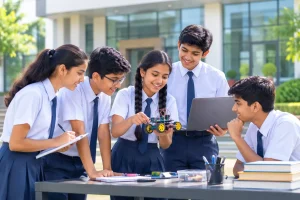
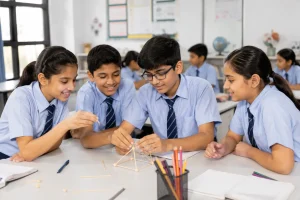
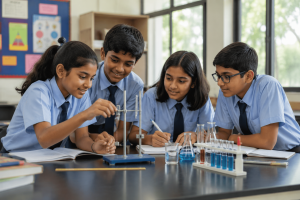
At Billabong High International School, the learning philosophy naturally supports this kind of experiential approach. Science is not treated as a subject that begins only in a textbook. Children are encouraged to observe, explore, ask questions, connect ideas, and build confidence through activity-led learning. This aligns with the school’s larger focus on joyful education, holistic development, creativity, academic readiness, life skills, and future-ready learning.
For parents researching admissions, this is an important point. A school that values hands-on learning can help children become not only exam-ready but also curious, confident, and capable thinkers.
Practical Parent Guidance: Building a Mini Science Corner at Home
You do not need a large space. A small tray, cupboard shelf, or storage box is enough.
Keep These Supplies Ready
| Supply | Useful For |
| Clear cups and jars | Water, density, reactions |
| Food colour | Colour mixing, visual observation |
| Baking soda and vinegar | Simple reactions |
| Balloons | Air, static electricity, force |
| Paper towels | Absorption and capillary action |
| Magnets | Magnetism |
| Seeds and cotton | Plant growth |
| Measuring spoons | Quantity and comparison |
| Ruler | Measuring growth or distance |
| Notebook | Recording observations |
| Tray | Mess control |
Create a Simple Science Journal
Ask your child to record:
- Date
- Experiment name
- What I think will happen
- What I saw
- What I learnt
- One new question
For younger children, drawings are enough. Older children can write short observations or make simple tables.
Quick Comparison: Home Science Activities vs School Science Learning
Both home and school science experiences matter, but they serve slightly different purposes.
| Area | Home Science Activities | School Science Learning |
| Purpose | Spark curiosity and everyday exploration | Build structured scientific understanding |
| Setup | Informal and flexible | Planned and age-wise |
| Materials | Household items | Classroom, lab, and learning resources |
| Parent/Teacher Role | Encourage and observe | Guide, assess, and extend learning |
| Best Outcome | Confidence and curiosity | Concept clarity and academic growth |
| Skill Development | Observation, prediction, communication | Inquiry, analysis, teamwork, application |
The strongest learning happens when both work together. A child who explores freely at home and receives structured guidance at school develops a healthier, more confident relationship with science.
Suggested Internal Links for Billabong High International School
To strengthen SEO, AEO, and parent journey flow, this blog can naturally link to:
- Admissions: For parents exploring enquiry or admission steps
- Why Billabong: To connect experiential learning with school philosophy
- Curriculum / Board pages: To help parents understand academic pathways
- Early Years / Preschool pages: For parents of younger children
- Academics: To show how inquiry-led learning supports subject readiness
- Co-curricular / Extracurricular pages: To connect science with clubs, events, and competitions
- Campus pages: For parents comparing nearby Billabong campuses
- Safety / Infrastructure pages: To reassure parents about safe learning environments
- Parent Resources / Related Blogs: For continued reading on child development
- About Billabong High International School: For brand trust and context
Key Takeaways
Fun science experiments for kids are a simple way to build curiosity, confidence, and early STEM thinking.
The best experiments use everyday materials and allow children to observe visible changes.
Parents should focus on questions, predictions, observations, and discussion rather than perfect results.
Activities like sink or float, walking water, seed germination, baking soda volcanoes, density jars, paper bridges, and magnet hunts can teach important scientific concepts in a joyful way.
Science experiments also support communication, patience, reasoning, creativity, problem-solving, and confidence.
For younger children, choose safe sensory and observation-based activities. For older children, add measuring, recording, comparing, and explaining.
A strong school science programme should combine hands-on exploration with structured academic learning.
Billabong High International School’s child-centric and experiential learning approach makes science more meaningful by connecting concepts with curiosity, creativity, and real-world discovery.
Conclusion
Science begins when a child wonders. It begins when they ask why the sky changes colour, why a leaf floats, why a balloon sticks to hair, why a seed grows, or why soap makes pepper move away. These questions may sound small, but they are the foundation of lifelong learning.
Fun science experiments for kids help parents protect and nurture that curiosity. They show children that learning is not limited to books or classrooms. It is present in the kitchen, balcony, garden, bathroom sink, monsoon rain, sunlight, shadows, plants, magnets, bubbles, and everyday objects.
For parents, the real value of these activities lies not in creating a perfect experiment, but in creating a child who enjoys asking questions. A child who observes patiently, thinks independently, tries again, and explains what they noticed is developing skills that matter far beyond science.
At Billabong High International School, this spirit of joyful, experiential, and child-centric learning is central to education. When children are encouraged to explore with confidence, they do not just learn science. They learn how to learn.

FAQs on Fun Science Experiments for Kids
1. What are the easiest fun science experiments for kids at home?
The easiest fun science experiments for kids include sink or float, walking water, baking soda and vinegar volcano, magic milk, balloon static electricity, seed germination, pepper and soap, and magnet hunt. These use everyday materials and can usually be done in 5 to 20 minutes with adult supervision.
2. What is the best science experiment for preschoolers?
The best science experiments for preschoolers are simple, safe, and highly visual. Sink or float, colour mixing, walking water, seed germination, and pepper with soap are good choices because they teach observation, prediction, and cause and effect without complicated steps.
3. How do science experiments help children learn?
Science experiments help children learn by encouraging them to observe, ask questions, predict outcomes, test ideas, and describe results. They also build problem-solving, communication, patience, creativity, and confidence.
4. Are home science experiments safe for young children?
Home science experiments can be safe when parents choose age-appropriate activities, avoid harmful substances, supervise closely, and keep materials simple. Water, paper, seeds, magnets, food colour, balloons, and household items are usually safer starting points than heat, glass, sharp tools, or strong chemicals.
5. What science experiments can be done in 10 minutes?
Quick 10-minute science experiments include balloon static electricity, pepper and soap, magic milk, magnet hunt, dancing raisins, sink or float, and oil-water observation. These activities are short but still help children understand important concepts.
6. What materials are useful for kids’ science experiments?
Useful materials include clear cups, bowls, water, food colour, baking soda, vinegar, balloons, paper towels, magnets, seeds, cotton, spoons, salt, oil, paper, tape, ruler, and a tray. Most beginner experiments can be done with these basic supplies.
7. How can parents explain science concepts simply?
Parents can explain science concepts by first asking children what they noticed. Then use simple language linked to the activity. For example, instead of saying “capillary action” first, say “the water is moving through tiny spaces in the paper towel.” Introduce the scientific term after the child understands the idea.
8. Which science experiments are good for primary school children?
Primary school children enjoy experiments such as paper bridges, egg in salt water, water cycle in a bag, paper helicopters, density jars, homemade compass, seed germination, and cloud in a jar. These activities allow them to compare, measure, record, and explain results.
9. How often should children do science activities at home?
Children can do simple science activities once a week or whenever curiosity appears naturally. Even short 10-minute experiments can be valuable if parents ask questions, encourage observation, and allow children to explain what they saw.
10. What should parents look for in a school’s science programme?
Parents should look for hands-on learning, safe labs and classrooms, inquiry-led teaching, project-based activities, age-appropriate experiments, science clubs or exhibitions, and teachers who encourage questioning. Schools such as Billabong High International School support science learning through experiential, child-centric, and confidence-building approaches.