

Comprehensive Comparison Guide between Secondary School and High School
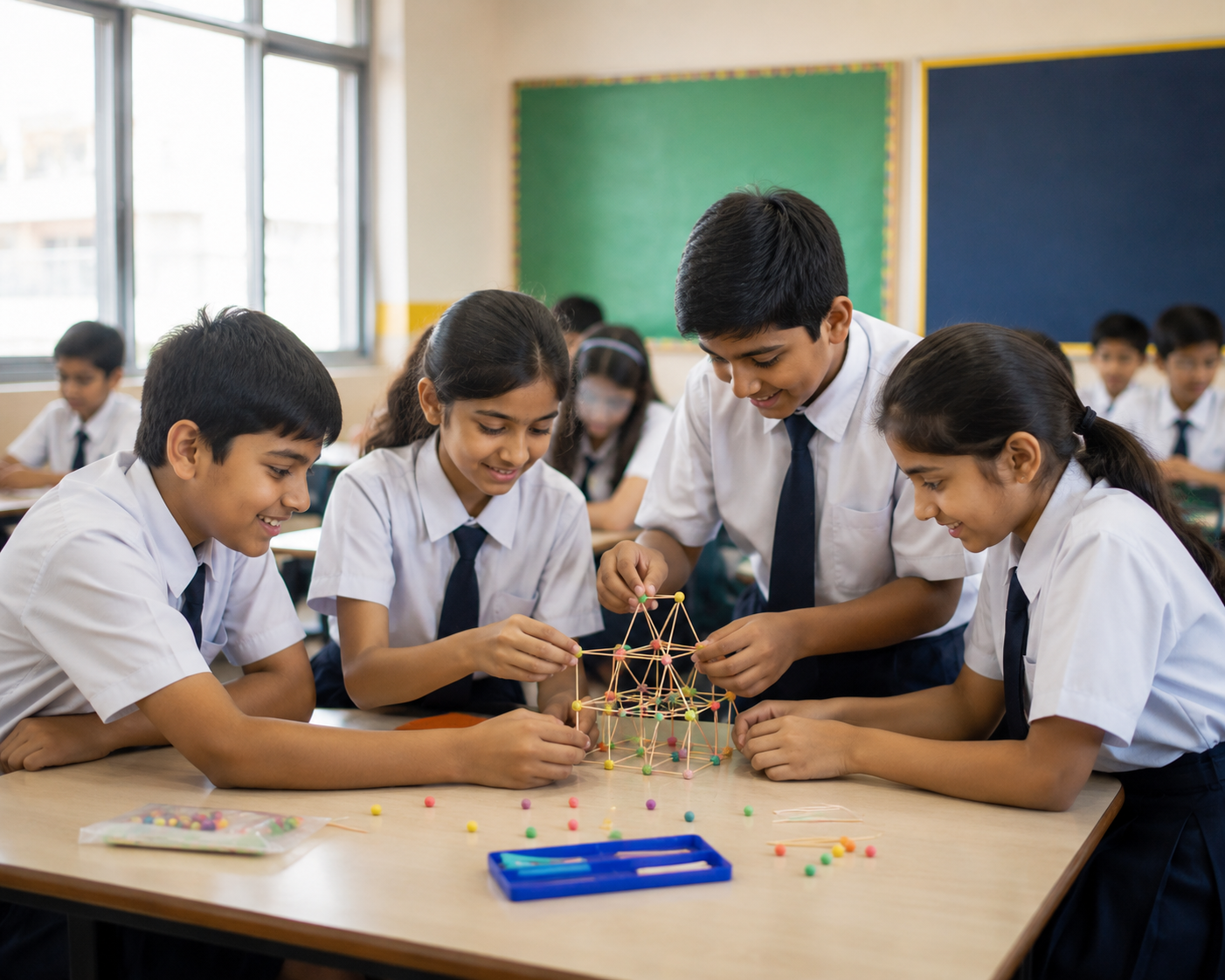
A parent-friendly guide to understanding secondary school vs high school, school stages in India, curriculum choices, board exams, subject selection, student readiness, and how to choose the right learning environment for your child.
Executive Summary
For many parents, the terms secondary school and high school sound almost interchangeable. In everyday conversations, they often are. However, when you are choosing a school, planning admissions, comparing boards, or preparing your child for the next academic stage, the difference matters.
In India, the traditional school structure has commonly been understood as primary, middle, secondary and higher secondary. Under the National Education Policy framework, school education is being viewed through the 5+3+3+4 structure: foundational, preparatory, middle and secondary stages, with the secondary stage covering ages 14 to 18, or Classes 9 to 12.
In simple terms:
| Term | Common Meaning in India | Typical Classes | Typical Age Group | Main Academic Focus |
| Secondary school | Usually Classes 9 and 10, though NEP uses secondary stage for Classes 9–12 | 9–10, or 9–12 in the NEP framework | 14–16, or 14–18 in the NEP framework | Foundation for board exams, academic rigour, subject grounding |
| High school | Often used broadly for Classes 9–12; sometimes refers to senior school years | 9–12 | 14–18 | Board readiness, subject specialisation, college preparation |
| Higher secondary / senior secondary | Usually Classes 11 and 12 | 11–12 | 16–18 | Stream selection, advanced subjects, entrance preparation, future pathways |
For parents, the real question is not only “What is the difference between secondary school and high school?” The more useful question is: What kind of learning environment will help my child move from guided schooling to confident, independent, future-ready learning?
That is where school choice becomes important. A strong secondary or high school should not only prepare students for board examinations. It should help them build conceptual clarity, study discipline, emotional maturity, communication skills, creativity, ethical judgment, digital awareness, leadership, and resilience.
At Billabong High International School, this idea is reflected in a learning philosophy that brings together academic readiness, inquiry-based learning, life skills, co-curricular exposure, and personalised support. The school offers multiple educational pathways, including CBSE, ICSE and Cambridge at select campuses, giving parents the flexibility to choose a curriculum that aligns with their child’s learning style and future aspirations.

Introduction: Why Parents Search for “Secondary School vs High School”
When parents search for secondary school vs high school, they are usually not looking for a dictionary definition. They are trying to make a decision.
Perhaps your child is moving from middle school to Grade 9. Perhaps you are comparing CBSE, ICSE, Cambridge, IGCSE or state board schools. Perhaps you are relocating to a new city and seeing different terms on school websites: secondary, senior secondary, high school, higher secondary, middle school, junior college, international school, senior school.
The terminology can feel confusing because it changes by country, board, school system and local usage.
In India, parents may hear:
- “secondary school” for Classes 9 and 10
- “higher secondary” or “senior secondary” for Classes 11 and 12
- “high school” for Classes 9 to 12
- “senior school” for upper grades in private schools
- “secondary stage” under NEP for Classes 9 to 12
- “junior college” in some states for Classes 11 and 12
The confusion becomes more serious when admissions, board exams and subject choices enter the picture. Class 9 is not just another grade. It is often the beginning of more structured academic expectations. Class 10 usually brings a major board examination. Class 11 introduces subject streams, and Class 12 often shapes university admissions and career direction.
So, while the difference between secondary school and high school may sound technical, it affects very real parent decisions:
- Which board should my child choose?
- When do board exams begin?
- Is Class 9 too early to think about career pathways?
- Should my child stay in the same school until Class 12?
- Is a high school with strong co-curricular exposure better than a purely exam-focused school?
- How do I know whether my child is ready for senior academic demands?
- What should I ask during admissions?
This guide answers these questions clearly and practically. It is designed for parents researching schools in India and for families comparing school stages, curriculum options and child development needs.
Secondary School vs High School: The Clear Difference
Secondary school vs high school is best understood through context. In many countries, both terms refer to education after primary or middle school and before college. In India, however, the terms are often used in overlapping ways.
A simple parent-friendly explanation is this:
Secondary school usually refers to the stage after middle school, especially Classes 9 and 10. High school is often used more broadly to refer to the senior years of school, typically Classes 9 to 12. Higher secondary or senior secondary usually refers specifically to Classes 11 and 12.
This means that in India, “high school” can sometimes include both secondary and higher secondary years. If your child is entering Class 9 or Class 10, they are usually entering the secondary school phase. If your child is in Classes 9 to 12, many schools and parents may refer to this entire phase as high school. If your child is in Classes 11 or 12, that stage is more accurately called higher secondary or senior secondary.
Why the Terms Overlap
The overlap happens because school systems have evolved differently across countries. For example, in some international contexts, high school may refer to Grades 9 to 12. In some Indian contexts, secondary school refers to Classes 9 and 10, while higher secondary refers to Classes 11 and 12. Under NEP’s 5+3+3+4 design, the “secondary stage” covers Classes 9 to 12.
So, when comparing schools, parents should not rely only on the label. They should check:
- Which grades the school offers
- Which board or curriculum is followed
- Whether Classes 11 and 12 are available
- What subjects are offered in senior grades
- Whether the school supports board exam and entrance exam readiness
- Whether the school provides counselling, co-curricular activities and future-readiness programmes
In other words, the label matters less than the educational pathway behind it.
What Is Secondary School?
Secondary school is the stage where students begin moving from broad foundational learning to more disciplined academic study. In the traditional Indian structure, secondary school usually refers to Classes 9 and 10. In the NEP 2020 structure, however, the secondary stage is broader and covers Classes 9 to 12, ages 14 to 18.
For parents, secondary school is an important transition because it introduces stronger academic expectations, deeper subject engagement and early preparation for board examinations.
What Happens in Secondary School?
In secondary school, students typically study a wider set of subjects in greater depth. Depending on the board, these may include:
- English
- Second language or third language
- Mathematics
- Science
- Social Science
- Computer Science or ICT
- Art, physical education or skill-based subjects
- Value education, life skills or work education
Students also begin learning how to study more independently. They are expected to manage assignments, revise regularly, understand assessment patterns and take greater ownership of academic progress.
Why Secondary School Matters
Secondary school is often the first stage where academic habits become visible. A child who could do well in earlier grades with casual preparation may now need structure, revision routines and deeper conceptual clarity.
This stage also shapes confidence. A child who feels supported in Classes 9 and 10 is more likely to approach Class 11, Class 12 and future examinations with resilience.
Strong secondary education should therefore balance:
- subject mastery
- exam readiness
- curiosity
- confidence
- emotional wellbeing
- communication
- problem-solving
- physical and creative development
This balance is important because adolescence is not only an academic stage. It is a developmental stage. Students are forming identity, values, friendships, habits and aspirations.
What Is High School?
High school is a term used widely across the world, but its exact meaning depends on the education system. In India, high school usually refers to the senior school years, most commonly Classes 9 to 12. In some schools, it may refer only to Classes 9 and 10. In others, it may include Classes 11 and 12 as senior secondary school.
For parents, high school should be understood as the stage where children prepare for board examinations, advanced subjects, future academic pathways and greater independence.
What Happens in High School?
High school often includes two major phases.
The first phase is Classes 9 and 10, where students build academic depth and prepare for Class 10 board examinations.
The second phase is Classes 11 and 12, where students usually choose subjects or streams. These may include science, commerce, humanities, arts, business studies, economics, computer science, design, psychology or other options depending on the board and school.
In CBSE, the official results portal distinguishes between the Secondary School Examination for Class X and the Senior School Certificate Examination for Class XII, showing how the system separates Class 10 and Class 12 milestones.
Why High School Matters
High school is where children start connecting school learning with future possibilities.
A good high school experience helps students answer questions such as:
- What subjects do I enjoy?
- What kind of learner am I?
- How do I handle pressure?
- What careers interest me?
- What skills do I need beyond marks?
- How do I communicate my ideas?
- How do I solve real problems?
- How do I prepare for university or professional pathways?
This is why high school should not be evaluated only by board results. Results matter, but they are one part of a much larger picture. The best high school environments help students develop academic discipline along with self-belief, initiative, social awareness and adaptability.
Secondary School vs High School in India: A Practical Comparison
Here is a parent-friendly comparison to clarify the difference.
| Comparison Point | Secondary School | High School |
| Common meaning in India | Usually Classes 9 and 10 | Often Classes 9 to 12 |
| NEP meaning | Secondary stage includes Classes 9 to 12 | Not the main NEP term, but commonly used by schools |
| Age group | Usually 14–16, or 14–18 under NEP secondary stage | Usually 14–18 |
| Academic role | Builds subject depth and board exam foundation | Builds board readiness, subject specialisation and future pathways |
| Major exam milestone | Class 10 board exam in many boards | Class 10 and Class 12 board exams |
| Subject choice | Mostly common core subjects | Greater subject choice in Classes 11 and 12 |
| Parent focus | Study habits, conceptual clarity, board readiness | Stream selection, university readiness, career exploration |
| Student development | Confidence, discipline, responsibility | Independence, specialisation, leadership, future planning |
| Admissions concern | Smooth transition from middle school | Long-term fit until Class 12 and beyond |
| Best school environment | Supportive, structured, engaging | Academically strong, future-ready, emotionally supportive |
Recap
Secondary school is often the beginning of serious academic preparation. High school is the broader journey toward board exams, advanced subjects and future readiness. Parents should look beyond terminology and understand what the school actually offers across Classes 9 to 12.
Understanding the Indian School Education Structure
To understand secondary school vs high school properly, parents should first understand the broader Indian school structure.
Traditionally, many Indian schools have followed this broad sequence:
| Stage | Common Classes | Approximate Age |
| Pre-primary / Early Years | Nursery, Jr KG, Sr KG | 3–6 |
| Primary School | Classes 1–5 | 6–11 |
| Middle School | Classes 6–8 | 11–14 |
| Secondary School | Classes 9–10 | 14–16 |
| Higher Secondary / Senior Secondary | Classes 11–12 | 16–18 |
Under the NEP 2020 framework, the structure is expressed as 5+3+3+4:
| NEP Stage | Years Covered | Age Group | Classes |
| Foundational Stage | 5 years | 3–8 | Preschool + Classes 1–2 |
| Preparatory Stage | 3 years | 8–11 | Classes 3–5 |
| Middle Stage | 3 years | 11–14 | Classes 6–8 |
| Secondary Stage | 4 years | 14–18 | Classes 9–12 |
The NEP’s 5+3+3+4 structure is designed to align schooling with children’s developmental stages, with the secondary stage covering Classes 9 to 12.
Why Parents Should Know This
The shift in language matters because schools, boards and policy documents may use different terms. A school may call Classes 9 and 10 “secondary”, while a policy document may call Classes 9 to 12 the “secondary stage”.
Parents should therefore ask schools direct questions:
- Which grades are covered on this campus?
- Does the school offer Classes 11 and 12?
- Which board examinations do students appear for?
- What subject combinations are available after Class 10?
- How does the school support academic and emotional transition in Class 9?
- How does the school prepare students for Class 11 and 12 pathways?
The goal is not to memorise terminology. The goal is to understand the child’s journey clearly.
Why the Secondary-to-High-School Transition Is So Important
The move from middle school to secondary or high school is one of the most important transitions in a child’s education.
Until middle school, children are often learning through guided structures. They receive close teacher support, broad exposure and frequent reminders. In secondary school, expectations gradually change. Students are expected to organise their learning, revise independently, manage time, understand examination formats and take responsibility for performance.
This transition affects three areas: academics, identity and future readiness.
Academic Transition
In Classes 9 and 10, subjects become more detailed. Mathematics may require deeper problem-solving. Science becomes more conceptual. Social Science requires analysis and memory. Languages demand stronger writing. Project work may become more structured.
Students also begin to understand the importance of regular study. Last-minute preparation becomes less effective. The best schools help students build routines before pressure becomes overwhelming.
Emotional Transition
Secondary school students are adolescents. They are becoming more self-aware and sensitive to peer comparison. They may worry about marks, identity, friendships, body image, expectations and future choices.
A school that understands adolescence can support students with empathy. This includes teacher mentorship, counselling access, open communication, safe classrooms and opportunities to build confidence outside academics.
Future-Readiness Transition
High school is also the stage where students begin making choices. Class 10 leads to subject selection. Class 11 and 12 may shape future university pathways. Students need guidance to understand strengths, interests and possibilities.
Future readiness is not only career counselling. It includes:
- communication skills
- research skills
- digital literacy
- ethical reasoning
- collaboration
- leadership
- creativity
- resilience
- financial and social awareness
This is why a school’s learning approach matters deeply. A purely marks-focused environment may prepare students for exams, but not always for the complexity of life after school.
Secondary School vs Higher Secondary School
Parents often confuse secondary school with higher secondary school. The difference is important.
| Term | Classes | Main Purpose |
| Secondary School | Classes 9–10 | Builds academic foundation and prepares for Class 10 board exams |
| Higher Secondary / Senior Secondary | Classes 11–12 | Enables subject specialisation and prepares for Class 12 boards, university and entrance exams |
What Changes After Class 10?
After Class 10, students often choose a subject pathway. Depending on the board and school, they may select combinations related to:
- Science
- Commerce
- Humanities
- Arts
- Business
- Computer Science
- Design
- Psychology
- Economics
- Entrepreneurship
- Vocational or skill-based subjects
This choice can influence undergraduate options, competitive exams and early career direction. It should not be made only on marks or peer pressure. Parents should help children reflect on three questions before choosing Class 11 subjects:
- What subjects does my child understand and enjoy?
- What future pathways might these subjects support?
- What learning environment will help my child stay motivated and confident?
A good school will guide this process through counselling, teacher feedback and parent conversations.
Secondary School vs Senior Secondary School
The term “senior secondary” is commonly used in India for Classes 11 and 12. In CBSE, Class 12 is officially associated with the Senior School Certificate Examination.
Senior secondary school is the stage where academic decisions become more specialised. Students are no longer studying the same broad set of subjects as everyone else. They begin to build deeper competence in selected areas.
How Senior Secondary Differs from Secondary
| Area | Secondary: Classes 9–10 | Senior Secondary: Classes 11–12 |
| Subjects | Broad and mostly common | Specialised combinations |
| Academic pressure | Builds toward Class 10 boards | Builds toward Class 12 boards and entrance pathways |
| Student responsibility | Increasing independence | High independence expected |
| Parent role | Support routines and confidence | Support decision-making and wellbeing |
| School role | Foundation, clarity and exam readiness | Mentoring, subject depth, university readiness |
| Assessment | Board/internal assessment depending on board | Board exams, practicals, projects, portfolios, entrance readiness |
What Parents Should Look For in Senior Secondary
For Classes 11 and 12, parents should evaluate:
- subject combinations
- faculty expertise
- laboratory and library support
- counselling and career guidance
- college application support
- balance between academics and wellbeing
- preparation for board exams and entrance exams
- opportunities for leadership, research, internships or projects
- student safety and emotional support
A strong senior secondary programme should help students prepare for life after school, not merely complete the syllabus.
How Different Boards Use These Terms
India’s education landscape includes national, international and state boards. The meaning of secondary school and high school can vary slightly depending on the board.
CBSE
CBSE schools usually refer to Class 10 as the Secondary School Examination and Class 12 as the Senior School Certificate Examination. This makes the distinction clear: Class 10 is a secondary milestone; Class 12 is a senior secondary milestone.
At Billabong High International School, the CBSE pathway is positioned around a balanced curriculum, academics, activities, life skills and preparation for future academic challenges.
ICSE / ISC
In the CISCE system, Class 10 is associated with ICSE and Class 12 with ISC. Parents often use “ICSE school” loosely for the school, but technically ICSE refers to the Class 10 examination, while ISC refers to Class 12.
Billabong’s ICSE page highlights broad-based learning, academic rigour, creative exploration and extracurricular opportunities as part of its approach.
Cambridge / IGCSE
In Cambridge pathways, parents may encounter terms such as lower secondary, IGCSE, AS Level and A Level. The international structure may not map exactly to Indian terminology, but broadly, IGCSE is often taken in the high school years and AS/A Levels align with advanced senior school study.
Billabong describes the Cambridge curriculum as a pathway that supports conceptual understanding, skill-based learning, critical thinking, personalised learning and global opportunities.
State Boards
State boards may use terms such as high school, secondary school, higher secondary school, junior college or intermediate depending on the state. For example, in some regions, Classes 11 and 12 may be offered in junior colleges rather than school campuses.
International Schools
International schools may use terms such as middle school, senior school, secondary school or high school depending on whether they follow Cambridge, IB, American, British or blended curricula.
Takeaway
When comparing boards, avoid assuming that the same term means the same thing everywhere. Ask each school for its grade structure, board affiliation, assessment pattern and senior school pathway.
Secondary School vs High School: Curriculum Differences
Curriculum is one of the most important differences parents must examine.
In secondary school, the curriculum is usually broad. Students study multiple subjects to build general academic competence. In high school, especially Classes 11 and 12, the curriculum becomes more specialised.
Secondary Curriculum: Classes 9 and 10
The secondary curriculum usually focuses on:
- core subject understanding
- language proficiency
- mathematical thinking
- scientific reasoning
- social science awareness
- digital literacy
- project work
- internal assessments
- board exam preparation
- co-curricular development
At this stage, schools should help students understand concepts rather than simply memorise answers. A child who understands “why” and “how” is more likely to handle board exams, entrance exams and real-world problem-solving.
High School Curriculum: Classes 9 to 12
The high school curriculum includes both secondary and senior secondary learning. The key shift happens after Class 10, when students move into subject choice and specialisation.
For example:
| Student Interest | Possible High School Subjects |
| Medicine or life sciences | Biology, Chemistry, Physics, Mathematics or related subjects |
| Engineering or technology | Mathematics, Physics, Chemistry, Computer Science |
| Business or finance | Accountancy, Business Studies, Economics, Mathematics |
| Law, policy or civil services | History, Political Science, Economics, Sociology, Psychology |
| Design or communication | Art, Design, English, Psychology, Media, Entrepreneurship |
| Global education pathways | Flexible combinations depending on board and university requirements |
Why Curriculum Fit Matters
A curriculum should match the child’s learning style and future goals.
Some students thrive in structured national curriculum environments. Some benefit from broad reading and analytical writing. Some need project-based inquiry and international exposure. Some require strong preparation for Indian competitive exams.
Parents should not ask only, “Which board is best?” A better question is: Which curriculum will help my child learn deeply, stay motivated and remain future-ready?
Assessment and Examination Differences
Assessment is another key part of the secondary school vs high school conversation.
In Secondary School
Assessment usually includes:
- periodic tests
- unit tests
- assignments
- projects
- practical work
- internal assessments
- pre-board exams
- Class 10 board examinations in many boards
The purpose is to build academic discipline and evaluate readiness for the next stage.
In High School
High school assessment includes the secondary assessments above, plus senior secondary evaluations such as:
- subject-specific practicals
- project work
- internal assessments
- pre-board exams
- Class 12 board examinations
- entrance exam preparation
- portfolio or coursework in some international pathways
- university application requirements
What Parents Should Understand About Board Exams
Board exams are important, but they should not become the only purpose of schooling. NEP discussions have also emphasised the need to reform assessment so that exams test core concepts and reduce unhealthy pressure.
A good school prepares students for exams without reducing learning to fear. It helps students understand patterns, practise effectively, manage time, handle stress and learn from feedback.
Parent Checklist for Assessment Quality
Ask schools:
- How often are students assessed?
- Are assessments only marks-based, or do they include feedback?
- How are students supported after poor performance?
- Are pre-board exams used constructively?
- Does the school teach study skills and time management?
- How are practicals, projects and internal assessments handled?
- Is there counselling support around exam stress?
- Are parents updated meaningfully, not just through report cards?
The right assessment culture helps students grow. The wrong one can make them anxious, passive or marks-obsessed.

Age Groups and Developmental Readiness
Most children enter secondary school around age 14 and complete Class 10 around age 16. They complete Class 12 around age 17 or 18. These are approximate ranges and may vary based on admission age, board norms and individual circumstances.
This age group is developmentally significant. Adolescents are building:
- abstract thinking
- emotional regulation
- peer relationships
- identity
- independence
- moral reasoning
- future orientation
- self-confidence
Why Development Matters in School Choice
Parents often compare schools based on curriculum, fees, campus and board results. These are important, but they do not fully capture whether a school understands adolescent development.
A child in high school needs teachers who can set high expectations without humiliation. They need discipline without fear. They need freedom with boundaries. They need feedback that helps them improve, not labels that make them withdraw.
What a Developmentally Strong School Looks Like
A strong secondary or high school environment offers:
- clear academic structure
- emotionally safe classrooms
- respectful teacher-student relationships
- opportunities to ask questions
- co-curricular outlets
- leadership platforms
- counselling support
- peer collaboration
- values education
- physical activity and creative expression
Billabong’s learning approach, as reflected on its website, emphasises inquiry-based learning, social-emotional learning, design thinking, global perspective and growth mindset. These elements are especially relevant in adolescence, when students need both academic challenge and human support.
Academic Readiness: What Students Need Before Entering Secondary School
Before a child enters secondary school, parents often worry about marks. Marks matter, but readiness is broader.
A child is ready for secondary school when they can gradually handle:
- longer study periods
- multi-step assignments
- independent revision
- abstract concepts
- teacher feedback
- peer collaboration
- time-bound tests
- emotional ups and downs
- responsibility for materials and deadlines
Skills That Matter in Class 9
Class 9 is often underestimated. It is not a board year, but it is a foundation year. Students who build strong habits in Class 9 often feel more confident in Class 10.
Important Class 9 skills include:
- reading textbooks carefully
- making notes
- solving problems regularly
- revising weekly
- asking for help early
- learning from test mistakes
- balancing screen time
- sleeping well
- managing co-curricular commitments
How Parents Can Help
Parents can support the transition by creating a calm structure at home.
Instead of asking only, “How many marks did you get?”, ask:
- What did you understand well this week?
- Where did you feel stuck?
- What is your plan for revision?
- Which teacher can help you clarify this?
- What did you learn from the test?
- Are you getting enough rest?
These questions encourage ownership rather than fear.
How Schools Can Help
Schools should guide students through study skills, planning, reflection and feedback. A student should not be expected to suddenly become independent without being taught how.
At Billabong, the emphasis on hands-on learning, reflective growth, life skills and beyond-the-classroom development is aligned with the kind of readiness students need in secondary and high school years.
Emotional Readiness: The Often-Missed Part of High School Success
High school success is not only academic. Emotional readiness plays a major role.
A student may be intelligent but anxious. Hardworking but disorganised. Creative but afraid to speak. Capable but overwhelmed by comparison. This is why parent and school support must look at the whole child.
Signs a Child May Need More Support
Parents should watch for:
- sudden drop in confidence
- avoiding school or assignments
- frequent headaches or stomach aches before tests
- irritability or withdrawal
- sleep problems
- excessive fear of failure
- loss of interest in hobbies
- perfectionism
- unhealthy comparison with peers
- reluctance to ask teachers for help
These signs do not mean a child is weak. They mean the child needs support, structure and reassurance.
What Schools Should Provide
A good secondary or high school should provide:
- approachable teachers
- counselling access
- anti-bullying systems
- respectful discipline
- healthy peer culture
- parent communication
- non-academic achievement platforms
- safe campus routines
- supportive exam preparation
School culture matters deeply. Children remember not only what they studied, but how they were made to feel while learning.
Secondary School vs High School: Outcomes for Students
The outcome of secondary school is not just Class 10 completion. The outcome of high school is not just Class 12 marks.
A meaningful school journey should produce a learner who is confident, capable and prepared for the next stage.
Secondary School Outcomes
By the end of secondary school, students should ideally have:
- strong foundational understanding across core subjects
- improved written and verbal communication
- better study habits
- examination readiness
- awareness of personal strengths
- ability to manage feedback
- early career curiosity
- emotional resilience
- responsible digital habits
High School Outcomes
By the end of high school, students should ideally have:
- subject depth in chosen areas
- readiness for board exams and future academic pathways
- clarity about possible higher education options
- stronger self-management
- leadership experience
- communication confidence
- ethical and social awareness
- exposure to real-world problem-solving
- creative or research experience
- confidence to transition to university or professional learning
The Parent Perspective
When evaluating a school, ask: “What kind of young adult does this school help shape?”
A school’s true outcome is visible in how students think, speak, collaborate, solve problems and handle responsibility.
How Parents Should Compare Secondary and High Schools
Choosing a school for secondary or high school is different from choosing a preschool or primary school. The stakes feel higher because adolescence, board exams and future pathways are closer.
A structured comparison can help.
Parent Comparison Framework
| Evaluation Area | What to Ask | Why It Matters |
| Curriculum | Which board and subjects are offered? | Determines academic pathway and future options |
| Grade Continuity | Does the school offer up to Class 12? | Reduces disruption after Class 10 |
| Teaching Quality | How are teachers trained and supported? | Impacts conceptual clarity and confidence |
| Assessment | How does the school track progress? | Helps identify gaps early |
| Student Support | Is counselling or mentoring available? | Supports emotional wellbeing |
| Co-curricular Exposure | What opportunities exist beyond academics? | Builds confidence and skills |
| Infrastructure | Are labs, libraries, sports and digital spaces available? | Supports practical learning |
| Safety | What systems protect students on campus and transport? | Builds parent trust |
| Communication | How does the school engage parents? | Improves partnership |
| Future Readiness | Is career guidance available? | Helps students plan beyond school |
What Parents Often Overlook
Parents often focus on fees, distance and board. These matter, but they are not enough.
Also examine:
- how teachers speak to students
- whether students seem engaged
- how the school handles struggling learners
- whether bright students are challenged
- how discipline is managed
- whether the school encourages questions
- how much homework is meaningful versus mechanical
- whether co-curriculars are treated seriously
- whether the school has a healthy exam culture
The right school should feel structured, warm and aspirational.
Choosing Between CBSE, ICSE, Cambridge and Other Boards for High School
Board choice becomes especially important in secondary and high school.
There is no single “best” board for every child. The best board depends on the child’s learning style, future plans, mobility, subject interests and family expectations.
CBSE
CBSE is widely chosen by families across India. It is often preferred for students who may prepare for Indian competitive exams, need national mobility or want a structured academic framework.
At Billabong, the CBSE pathway is presented as a dynamic curriculum that blends academics, activities and life skills, while preparing students for future academic challenges.
ICSE / ISC
ICSE is often associated with a broad syllabus, strong language development and depth across subjects. It may suit students who enjoy reading, writing, analysis and a wide academic foundation.
Billabong’s ICSE approach highlights broad-based learning, academic rigour, creative exploration and holistic growth.
Cambridge
Cambridge pathways are often valued for inquiry, flexibility, international recognition and skill-based learning. They may suit students who benefit from conceptual depth, research orientation and global academic pathways.
Billabong’s Cambridge page highlights critical thinking, personalised learning and global opportunities.
State Boards
State boards can be strong options for families seeking regional language learning, local curriculum alignment or state-level affordability. Quality varies widely by school, so parents should evaluate the individual institution carefully.
International Curricula
International curricula may suit globally mobile families or students targeting overseas higher education. Parents should review university recognition, subject combinations, assessment style and costs.
Board Selection Table
| Board / Curriculum | May Suit Students Who… | Parent Considerations |
| CBSE | Prefer structure, national mobility, Indian entrance exam alignment | Check teaching quality, application-based learning and subject support |
| ICSE / ISC | Enjoy language, depth, broad learning and analytical writing | Check workload balance and senior secondary subject options |
| Cambridge | Thrive with inquiry, flexibility and global pathways | Check transition planning, assessment style and university goals |
| State Board | Need local alignment, regional language or affordability | Check school quality, facilities and English/skills exposure |
| International Curriculum | Seek global mobility and inquiry-based pathways | Check fees, subject fit, recognition and support systems |
Why School Culture Matters More Than the Label
The terms secondary school and high school are useful, but they do not tell you whether a school is right for your child.
Two schools may both offer Classes 9 to 12. One may be exam-heavy, rigid and stressful. Another may be academically strong but also creative, safe and student-centred. The difference lies in culture.
What Is School Culture?
School culture is the everyday experience of students. It includes:
- how teachers respond to questions
- how mistakes are treated
- how students interact
- how discipline is handled
- whether creativity is encouraged
- whether sports and arts are respected
- whether leadership is available to all students
- whether the school values wellbeing
- how parents are treated
- whether learning feels meaningful
Why Culture Matters in Adolescence
Teenagers are deeply influenced by the environment. A student who feels seen and supported is more likely to participate, take risks, recover from setbacks and grow.
A student who feels constantly judged may become silent, anxious or disengaged.
What Billabong’s Approach Offers
Billabong High International School’s public positioning centres on unlocking each child’s unique potential, helping learners become happy, fulfilled individuals, and combining curriculum, infrastructure and educators to shape future-ready learners.
The school’s learning framework also reflects inquiry-based learning, social-emotional learning, design thinking, global perspective and growth mindset, which are highly relevant to high school learning.
This makes Billabong a strong option for parents looking for academic readiness without losing sight of creativity, confidence and holistic development.
Notable Schools Parents May Consider in India
This section is not a ranking. The schools mentioned below are not being ranked or compared as “better” or “worse.” They are included because parents researching secondary and high school options in India often consider a range of established school brands, board options and learning environments.
The right school depends on your child, city, commute, curriculum preference, budget, learning needs and long-term goals.
| School / Network | Why Parents May Consider It | Parent Evaluation Tip |
| Billabong High International School | Multiple curriculum pathways at select campuses, focus on child-centric learning, life skills, co-curricular exposure and future-ready learning | Ask which board, grades and facilities are available at your preferred campus |
| Delhi Public School network | Known national presence and CBSE familiarity | Evaluate individual branch quality, teacher support and class size |
| Podar International School | Large network with multiple curriculum options in some locations | Check campus-specific board, facilities and senior school offerings |
| Ryan International School | Wide presence across Indian cities | Review academic support, student wellbeing and co-curricular depth at the local branch |
| VIBGYOR Group of Schools | Known for academics and co-curricular integration in many locations | Compare board options, fees and student support systems |
| Shiv Nadar School | Known in select cities for progressive learning and holistic education | Check admissions competitiveness, curriculum fit and commute |
| The Heritage School | Often associated with experiential and progressive education in select regions | Evaluate board fit, senior school pathways and learning style |
| Dhirubhai Ambani International School | Known for strong academic reputation and international pathways | Consider admissions selectivity, location and curriculum requirements |
| Bombay Scottish School | Established school option in Mumbai | Review board, admission availability and senior school support |
| Jamnabai Narsee School | Established Mumbai school with strong parent recall | Check curriculum pathway, admissions criteria and student fit |
| Global Indian International School | Often considered by globally mobile families and parents comparing international-style options | Review campus-specific curriculum, fees and academic support |
| One World International School | Considered by parents exploring international education models | Review location, board, age groups and transition support |
Again, this is not a ranking. Parents should visit campuses, speak with admissions teams, understand grade-wise offerings and evaluate fit for their child.
School Comparison Table for Parents
Because fees, facilities and admissions can vary by city, campus, board and year, parents should verify updated details directly with each school. The table below is designed as a practical comparison framework rather than a ranking.
| Factor | What to Compare | Why It Matters | Questions to Ask |
| Fees | Tuition, admission fee, transport, meals, uniforms, activities | Total annual cost may differ from headline tuition | What is included and what is extra? |
| Admissions | Age criteria, entrance interaction, documents, timelines | Helps avoid last-minute stress | What is the process for Class 9 or Class 11 admissions? |
| Curriculum | CBSE, ICSE, Cambridge, IB, state board | Shapes exams and future pathways | Which subjects are available in Classes 11 and 12? |
| Facilities | Labs, library, sports, arts, maker spaces, digital classrooms | Supports practical and holistic learning | Are facilities used regularly or only showcased? |
| Student Support | Counselling, remedial help, mentoring, career guidance | Crucial during adolescence | How are struggling students supported? |
| Co-curriculars | Sports, arts, clubs, public speaking, leadership | Builds confidence and identity | Are activities integrated into school life? |
| Safety | Campus access, transport, medical support, supervision | Essential for parent confidence | What are campus and bus safety systems? |
| Location | Commute time and transport | Long commutes affect energy and study | How long will the daily commute be? |
| Learning Approach | Rote, inquiry-based, experiential, project-based | Impacts engagement and retention | How does the school teach beyond textbooks? |
| Parent Partnership | PTMs, updates, feedback channels | Helps home and school work together | How often do parents receive meaningful feedback? |
Fees, Admissions and Facilities: What Parents Should Know
Parents often ask for school comparisons based on fees, admissions and facilities. These are important, but they need careful interpretation.
Fees
School fees vary widely by city, board, campus, grade and facilities. A school may have different fees for preschool, primary, secondary and senior secondary. International curricula may also have different fee structures from national boards.
Parents should ask for:
- tuition fee
- admission fee
- annual fee
- transport fee
- meal fee if applicable
- uniform and book costs
- activity charges
- examination fees
- technology fees
- refund policy
- payment schedule
Do not compare schools only by annual fee. Compare what the fee supports: teacher quality, facilities, safety, learning resources, student support and co-curricular opportunities.
Admissions
For secondary and high school admissions, schools may review previous report cards, conduct interactions, assess subject readiness or counsel parents on board fit.
Billabong’s admissions page indicates online applications for Kangaroo Kids Preschool and CBSE/ICSE/IGCSE Grades 1 to 12, with grade, branch and board selection in the enquiry process.
Parents should ask:
- Is admission open for Class 9, 10, 11 or 12?
- Are board transfers accepted?
- What documents are needed?
- Is there an entrance assessment?
- How is subject selection handled for Class 11?
- What is the academic year timeline?
- Is a campus tour available?
Facilities
Facilities should support learning, not merely impress visitors.
Look for:
- science laboratories
- computer labs
- library
- sports facilities
- arts and music spaces
- maker labs or innovation spaces
- safe classrooms
- medical room
- counselling spaces
- transport safety
- digital learning infrastructure
Billabong’s website highlights digitally enabled classrooms, maker labs, music and art studios, and an Apple Studio among its infrastructure features.

Practical Checklist for Choosing a Secondary or High School
Use this checklist during school visits, admissions calls or parent discussions.
Academic Checklist
- Does the school offer the board you prefer?
- Does it continue until Class 12?
- Are Class 11 and 12 subject options strong enough?
- How does the school prepare students for board exams?
- Are teachers experienced in secondary and senior secondary teaching?
- How does the school support conceptual understanding?
- Are practicals, projects and labs taken seriously?
- Does the school provide academic support for struggling learners?
- Are high achievers challenged meaningfully?
Student Well-being Checklist
- Is counselling available?
- Are teachers approachable?
- How does the school handle bullying?
- Is there a healthy exam culture?
- Does the school encourage sports, arts and clubs?
- Are students given leadership opportunities?
- Is discipline respectful and consistent?
- Is parent communication transparent?
Future-Readiness Checklist
- Is career guidance available?
- Are students exposed to public speaking, research or projects?
- Are digital skills integrated?
- Are life skills taught?
- Are students encouraged to think critically?
- Are global perspectives included?
- Does the school help students build confidence?
Campus and Safety Checklist
- Is the campus secure?
- Are entry and exit systems clear?
- Is transport supervised?
- Are medical protocols in place?
- Are classrooms well maintained?
- Are labs and activity areas safe?
- Is there adequate supervision during breaks and activities?
Parent Fit Checklist
- Is the school’s communication style clear?
- Do you feel respected during admissions?
- Are policies transparent?
- Does the school understand your child’s needs?
- Is the commute manageable?
- Does the school’s philosophy match your parenting values?
Common Mistakes Parents Make When Comparing Secondary School and High School
Even well-informed parents can make mistakes when choosing a school. Here are some of the most common ones.
Mistake 1: Choosing Only by Board
Board matters, but school quality matters more. A strong board delivered poorly will not help a child. A good school brings the curriculum alive through teaching, mentoring and meaningful assessment.
Mistake 2: Ignoring the Class 11 and 12 Pathway
Some parents choose a school for Class 9 without checking whether the school offers the right Class 11 subjects. This can lead to disruption after Class 10.
Always ask about senior secondary options early.
Mistake 3: Assuming High Fees Mean Better Learning
Fees may reflect infrastructure, location or brand value, but they do not automatically guarantee teacher quality or student wellbeing. Evaluate the full experience.
Mistake 4: Overvaluing Board Results Alone
Board results are important, but they do not show how the school supports average learners, anxious learners, creative learners or students who need guidance.
Ask about progress, not only toppers.
Mistake 5: Ignoring the Child’s Learning Style
A child who enjoys inquiry and projects may struggle in a purely rote environment. A child who needs structure may feel lost in a highly flexible system. Fit matters.
Mistake 6: Underestimating Commute
A long commute can affect sleep, homework, sports, mood and family time. For high school students, time and energy are valuable.
Mistake 7: Treating Co-curriculars as Extras
Sports, arts, debate, leadership, community service and clubs help students build confidence. They are not distractions from learning. They are part of whole-child development.
Mistake 8: Waiting Until Class 10 to Build Study Habits
Class 9 is the right time to build routines. Waiting until board year creates unnecessary stress.
Mistake 9: Choosing Based on Peer Pressure
A school that suits another child may not suit yours. Visit, ask questions and evaluate fit.
Mistake 10: Not Listening to the Child
Parents should guide the decision, but the child’s comfort, curiosity and confidence matter. A student who feels ownership is more likely to thrive.
How Billabong High International School Supports the Secondary and High School Journey
Billabong High International School is a strong option for parents looking for a school that combines academic preparation with holistic development, future-ready skills and a child-centric learning environment.
This is not about presenting Billabong as the only choice. Parents should compare schools thoughtfully. But Billabong’s philosophy aligns well with what secondary and high school students need today.
Multiple Curriculum Pathways
Billabong offers diverse educational pathways across select campuses, including Cambridge, CBSE and ICSE. This matters because different children learn differently, and families may have different goals.
Child-Centric Learning
The school’s public positioning focuses on unlocking each child’s unique potential and helping learners become happy, fulfilled individuals ready to make a positive impact.
This is especially relevant in adolescence, when students need recognition as individuals, not only as marksheets.
Experiential and Inquiry-Based Learning
Billabong’s learning framework includes inquiry-based learning, case-based and field-based learning, collaboration and technology.
For secondary and high school students, this helps connect concepts with real-world application.
Co-curricular and Life Skills Exposure
Billabong’s co-curricular programmes are designed to cultivate future-ready skills such as critical thinking, creativity, leadership, problem-solving and collaboration.
These skills matter deeply in high school because students are preparing for university, careers and adulthood.
Future-Ready Infrastructure
The school highlights digitally enabled classrooms, maker labs, art and music spaces, and technology-enabled learning environments.
Infrastructure alone does not create learning, but when used well, it supports creativity, experimentation and practical understanding.
Admissions Pathway
Billabong’s admissions page supports enquiries for Grades 1 to 12 across CBSE, ICSE and IGCSE pathways, making it relevant for parents exploring secondary and high school admissions.
What Parents Should Ask During a Billabong Campus Visit
A campus visit is the best way to understand whether a school is right for your child.
For Billabong or any school you are considering, ask questions such as:
Curriculum Questions
- Which board is available at this campus?
- Are Classes 9 to 12 offered?
- What subject options are available after Class 10?
- How does the school support board exam preparation?
- How are projects, practicals and internal assessments handled?
Teaching Questions
- How does the school teach difficult concepts?
- How are students encouraged to ask questions?
- What support is available if a student falls behind?
- How are high-performing students challenged?
- How does the school integrate experiential learning?
Student Support Questions
- Is counselling available?
- How are exam stress and peer pressure addressed?
- What is the teacher-student support system?
- How does the school communicate concerns to parents?
- What mentoring systems exist for adolescents?
Co-curricular Questions
- What sports, arts, clubs and leadership opportunities are available?
- Are co-curriculars part of the timetable or after-school only?
- How are students encouraged to participate?
- Are there public speaking, innovation or community service opportunities?
Safety Questions
- What are the campus entry and exit protocols?
- How is transport safety managed?
- Is medical support available?
- How does the school handle emergencies?
- What supervision exists during breaks and activities?
Future-Readiness Questions
- Is career counselling offered?
- Are students guided for university pathways?
- Are digital, research and communication skills developed?
- How does the school build confidence and independence?
A Parent’s Roadmap from Class 8 to Class 12
The secondary and high school years become easier when parents understand the journey as a roadmap.
Class 8: Preparation Year
Class 8 is the bridge before secondary school. Parents should focus on:
- reading habits
- mathematics foundation
- writing skills
- curiosity in science and social studies
- organisation
- screen-time discipline
- confidence in asking questions
This is also a good year to evaluate whether the current school can support the child through Class 10 and Class 12.
Class 9: Foundation Year
Class 9 sets the tone for secondary school. Students should build:
- daily study routines
- concept clarity
- note-making habits
- test reflection
- balanced co-curricular participation
- teacher communication
Parents should avoid panic if marks fluctuate initially. The transition takes time.
Class 10: Milestone Year
Class 10 is often a board exam year. Students need:
- structured revision
- past paper practice
- clarity on exam formats
- stress management
- healthy sleep
- confidence-building feedback
- early discussion on Class 11 subjects
Parents should provide calm support, not constant pressure.
Class 11: Direction Year
Class 11 can feel very different because subjects become deeper and more specialised. Students need:
- realistic subject choices
- strong time management
- conceptual learning
- career exploration
- adjustment support
- balance between academics and wellbeing
Parents should watch for overwhelm and help children settle into the new academic rhythm.
Class 12: Launch Year
Class 12 is a culmination year. Students prepare for board exams, entrance exams, portfolios or college applications. They need:
- disciplined revision
- emotional steadiness
- university and career guidance
- time management
- support with expectations
- confidence in the next step
Parents should remember that Class 12 is not only an exam year. It is also a transition into adulthood.
How to Decide Whether Your Child Should Change Schools for High School
Some families consider changing schools after Class 8, Class 10 or before Class 11. This can be the right decision, but it should be made carefully.
Reasons to Consider Changing Schools
A change may be worth considering if:
- the current school does not offer Classes 11 and 12
- the preferred board is not available
- the child needs stronger academic support
- the child needs a safer or more nurturing environment
- the commute has become difficult
- subject options are limited
- co-curricular or career guidance opportunities are weak
- the child is unhappy or disengaged
Reasons to Be Cautious
Changing schools can also be disruptive. Consider:
- adjustment to new peers
- different teaching style
- new assessment pattern
- emotional transition
- transport changes
- admission pressure
- board transfer rules
Best Time to Change
Class 9 and Class 11 are common transition points. Class 10 and Class 12 transfers can be more complicated because of board registration and exam requirements.
Parent Decision Rule
A school change should not be based on panic. It should be based on fit.
Ask: “Will this new environment help my child learn better, feel safer, grow stronger and prepare more confidently for the future?”
How Secondary and High School Prepare Students for Future Careers
Parents often ask when career planning should begin. The answer is: gradually, not anxiously.
Career readiness in secondary school does not mean forcing a child to choose a profession at 14. It means helping them understand interests, strengths, values and possibilities.
Career Readiness in Classes 9 and 10
Students can begin exploring:
- subjects they enjoy
- activities that energise them
- skills they find natural
- problems they care about
- careers they are curious about
- how different subjects connect to fields of work
Schools can support this through projects, clubs, guest sessions, counselling and exposure.
Career Readiness in Classes 11 and 12
Students need more structured guidance:
- subject-career mapping
- entrance exam awareness
- university options
- portfolio planning
- internships or projects where appropriate
- communication and interview skills
- decision-making support
Future Skills That Matter Across Careers
Regardless of profession, students need:
- critical thinking
- communication
- collaboration
- creativity
- ethical reasoning
- adaptability
- digital fluency
- emotional intelligence
- leadership
- lifelong learning
This is why Billabong’s emphasis on critical thinking, leadership, collaboration, problem-solving and future-ready skills is relevant for high school parents.
Secondary School vs High School for International and Relocating Families
Families relocating between cities or countries often find the terminology confusing. A child moving from an international curriculum may have been in “lower secondary” or “high school,” while an Indian school may place them by age, grade, board equivalence and previous records.
What Relocating Parents Should Check
- grade equivalence
- age criteria
- previous curriculum
- language requirements
- board transfer rules
- subject continuity
- second language expectations
- assessment differences
- academic support during transition
- social integration support
Why Curriculum Continuity Matters
A student moving from one board to another may need support in:
- mathematics sequence
- science terminology
- language level
- history or civics content
- exam writing style
- internal assessment methods
A supportive school will help families understand these gaps and plan the transition.
Billabong Relevance
Because Billabong has multiple curriculum pathways at select campuses, it may be relevant for families who want to choose between national and international-style academic routes. Parents should confirm campus-specific availability during admissions.
The Role of Co-Curricular Activities in Secondary and High School
Co-curricular activities become even more important in secondary and high school, not less.
During adolescence, students need spaces where they can discover identity beyond marks. Sports, music, theatre, debate, art, coding, design, community service and leadership activities help children build confidence.
Benefits of Co-curricular Exposure
Co-curricular activities help students:
- manage stress
- build friendships
- improve communication
- develop discipline
- discover talents
- learn teamwork
- build leadership
- strengthen college profiles
- develop resilience
- experience joy in school
Why Parents Should Take Co-curriculars Seriously
A child who participates in meaningful activities often becomes more motivated academically too. Confidence in one area can transfer to another.
For example:
- Debate improves writing and speaking.
- Sports build discipline and resilience.
- Music develops focus and expression.
- Drama builds empathy and confidence.
- Community service builds responsibility.
- Maker programmes build creativity and problem-solving.
Billabong’s co-curricular programmes focus on future-ready skills including critical thinking, creativity, leadership, problem-solving and collaboration.
This is aligned with what high school students need in a changing world.
Technology, AI and Future-Ready Learning in High School
Today’s high school students are growing up in a world shaped by digital technology and artificial intelligence. Schools must prepare them to use technology thoughtfully, not passively.
What Digital Readiness Means
Digital readiness is not simply using screens in classrooms. It includes:
- research skills
- source evaluation
- responsible AI use
- digital safety
- presentation skills
- coding or computational thinking
- collaboration tools
- media literacy
- ethical technology use
- creative digital production
Why It Matters
Students entering higher education and careers will need to work with information, tools and technologies that continue to change. Memorisation alone is not enough.
They need to ask better questions, evaluate answers, create original work and use technology responsibly.
What Parents Should Ask Schools
- How is technology used in learning?
- Are students taught digital responsibility?
- Is AI discussed ethically?
- Are digital tools used for creativity or only presentations?
- Are teachers trained to integrate technology meaningfully?
- Are students encouraged to think critically about online information?
Billabong’s public site highlights digitally enabled classrooms and technology-supported learning spaces, which can support this kind of readiness when integrated with thoughtful teaching.
Safety and Well-being in Secondary and High School
As children grow older, parents may assume they need less supervision. In reality, adolescents need a different kind of safety: physical, emotional, social and digital.
Physical Safety
Parents should evaluate:
- campus security
- visitor protocols
- transport safety
- emergency response
- medical care
- supervision during activities
- lab safety
- sports safety
Billabong’s website FAQ describes campus safety practices, including controlled entry, security guards, visitor entry protocols, and bus safety measures such as seatbelts and female attendants.
Emotional Safety
Students should feel safe to:
- ask questions
- make mistakes
- seek help
- report bullying
- express concerns
- discuss stress
- participate without ridicule
Social Safety
Schools should actively build respectful peer culture. High school students need guidance around friendships, competition, social media, consent, empathy and conflict.
Digital Safety
Digital safety includes:
- responsible device use
- cyberbullying awareness
- privacy
- online research ethics
- screen-time balance
- AI and plagiarism awareness
A school’s safety culture should be visible in daily routines, not only in policy documents.
Key Takeaways
- Secondary school vs high school can mean different things depending on country, board and school system.
- In India, secondary school commonly refers to Classes 9 and 10, while high school often refers to Classes 9 to 12.
- Higher secondary or senior secondary usually refers to Classes 11 and 12.
- Under the NEP 2020 framework, the secondary stage covers Classes 9 to 12, ages 14 to 18.
- Class 9 is a foundation year and should not be treated casually.
- Class 10 is often a major board exam milestone.
- Classes 11 and 12 involve subject specialisation and future pathway planning.
- Parents should compare schools by curriculum, teaching quality, wellbeing, co-curriculars, safety, facilities, commute and future-readiness.
- Board choice matters, but the school’s culture and teaching quality matter just as much.
- Co-curricular activities are essential for confidence, leadership and holistic development.
- Billabong High International School is a strong option for parents seeking a child-centric, future-ready learning environment with multiple curriculum pathways at select campuses.
- Schools mentioned in this article are not ranked. They are included only as options parents may consider while evaluating fit.
Conclusion
The difference between secondary school and high school may begin with terminology, but for parents, it leads to a much deeper decision.
Secondary school is where children build academic discipline, confidence and readiness for board-level learning. High school is where they begin shaping subject choices, future pathways and personal identity. Together, these years form one of the most important phases of a child’s education.
The best school for this stage is not simply the one with the most familiar board or the most impressive campus. It is the school that understands adolescents as learners and individuals. It is the school that balances academic rigour with emotional wellbeing, future skills with strong values, and structured preparation with joyful discovery.
For parents in India, the right choice should be guided by clarity: What does my child need to thrive? Which curriculum fits their learning style? Which school will support them through pressure and possibility? Which environment will help them become not only exam-ready, but life-ready?
Billabong High International School offers a thoughtful answer to these questions through its focus on child-centric learning, holistic development, experiential education, co-curricular exposure, personalised support and future-ready learning. For families exploring secondary and high school options, it is a school worth considering as part of a careful, parent-led decision-making process.
The journey from secondary school to high school is not just a move from one grade to another. It is a move toward independence, confidence and possibility. With the right school, children do not merely prepare for exams. They prepare for life.
FAQs on Secondary School vs High School
1. What is the main difference between secondary school and high school?
Secondary school usually refers to the stage after middle school, commonly Classes 9 and 10 in India. High school is often used more broadly for Classes 9 to 12. In many contexts, the terms overlap, but secondary school is more closely associated with Class 10 readiness, while high school includes the wider journey toward Class 12 and future pathways.
2. Is secondary school the same as high school in India?
Not always. In everyday language, many people use the terms interchangeably. However, in India, secondary school often means Classes 9 and 10, while higher secondary or senior secondary means Classes 11 and 12. High school may refer to Classes 9 to 12, depending on the school.
3. Which classes are included in secondary school?
Traditionally, secondary school in India includes Classes 9 and 10. Under the NEP 2020 framework, the secondary stage covers Classes 9 to 12, ages 14 to 18. Parents should check how each school uses the term before making admissions decisions.
4. Which classes are included in high school?
High school commonly includes Classes 9 to 12. In some schools or regions, it may refer only to Classes 9 and 10. Parents should confirm whether the school offers senior secondary classes, subject choices and Class 12 board preparation.
5. What is higher secondary school?
Higher secondary school, also called senior secondary school, usually refers to Classes 11 and 12. This is the stage where students choose subjects or streams and prepare for Class 12 board exams, entrance tests, university admissions and future careers.
6. Is Class 10 secondary or high school?
Class 10 is generally considered part of secondary school. It may also be included within high school if the school uses high school to mean Classes 9 to 12. In many boards, Class 10 is a major secondary-level examination year.
7. Is Class 12 high school or senior secondary?
Class 12 is usually called senior secondary or higher secondary in India. It is also part of high school when high school is used broadly for Classes 9 to 12. Class 12 is an important milestone for board exams and university admissions.
8. What should parents look for in a secondary school?
Parents should look for strong teaching, conceptual clarity, board exam preparation, student wellbeing, safe infrastructure, co-curricular opportunities, regular feedback and a supportive school culture. The right secondary school should help students build confidence and study discipline before Class 10.
9. What should parents look for in a high school?
Parents should look for curriculum fit, Class 11 and 12 subject options, experienced teachers, career guidance, counselling support, board exam preparation, co-curricular exposure, leadership opportunities, safety systems and future-ready learning. A good high school prepares students for life after school, not only exams.
10. Is Billabong High International School a good option for secondary and high school?
Billabong High International School is a strong option for parents seeking a child-centric, future-ready school environment. It offers multiple curriculum pathways at select campuses, including CBSE, ICSE and Cambridge, and emphasises experiential learning, co-curricular programmes, life skills, confidence building and holistic development. Parents should check campus-specific board availability, grade offerings and admissions details before applying.