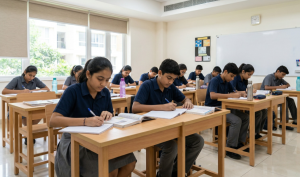


Top ICSE Schools in India 2026: Parent Guide to Admissions, Curriculum and Fit
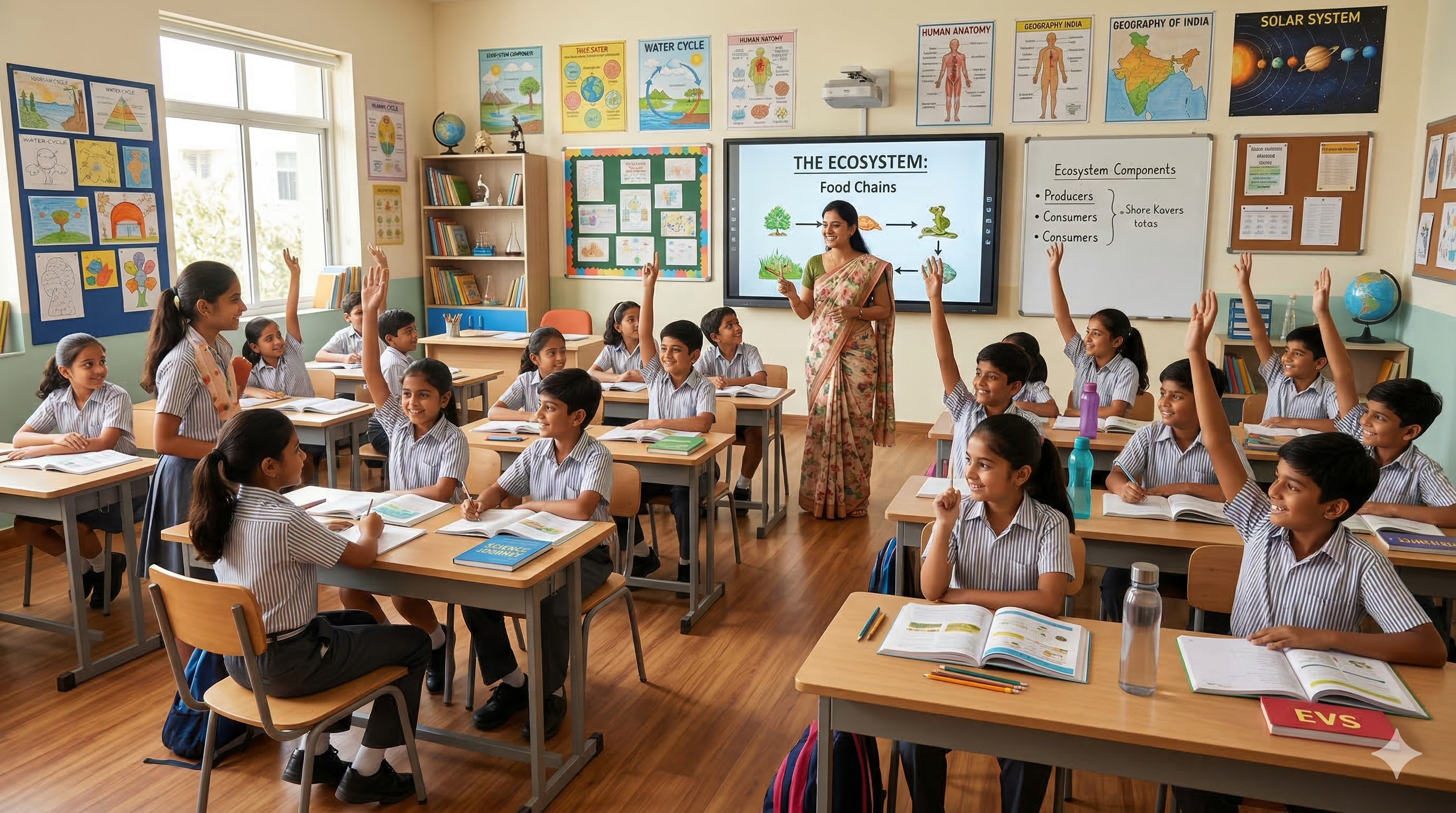
Top ICSE Schools in India 2026: Parent Guide to Admissions, Curriculum and Fit
If you are researching ICSE Schools in India, you are probably not just trying to find a “good school.” You are trying to find a school that can help your child read deeply, write clearly, think independently, and still grow in a safe, balanced way. You may also be trying to answer practical questions that many school pages still do not address well: Is ICSE too demanding? Is it only suitable for highly academic children? Will my child need tuition? How do I compare schools that all describe themselves as holistic, child-centric, and future-ready? Those are exactly the right questions to ask.
The problem is that most pages ranking for school searches in India either go too far in one direction or the other. Some are pure listicles with little insight. Others are thoughtful guides but do not answer the search query quickly enough. Right now, pages ranking for terms like “top ICSE schools in India” tend to lead with a list or shortlist and then add practical comparison points like fees, admissions, rankings, reviews, and school features.
So this guide takes a better middle path.
It does four things:
1. It answers the big search question: what parents should know about the top ICSE schools in India.
2. It explains what ICSE really means in day-to-day learning.
3. It gives you a decision framework to compare schools properly.
4. It shows how to evaluate Billabong High International School using the same parent-first framework you would apply to any serious option.
This is not a rigid national ranking, and it is not a brochure in disguise. It is a decision guide built to help parents choose with more clarity and less noise.
How should parents choose among ICSE schools in India?
Parents should compare ICSE schools in India based on six daily realities: teaching quality, literacy and writing development, math and science understanding, emotional safety, assessment pressure, and how well the school supports different learners. The best ICSE school is not simply the most famous one. It is the school whose classroom culture, pace, support systems, and curriculum delivery genuinely fit your child. That is true whether you are comparing old legacy schools, premium day schools, newer city campuses, or school groups such as Billabong High.
Table of contents
- Why parents are researching ICSE schools in India more carefully in 2026
- What is ICSE, and why do parents choose it?
- How many ICSE schools are there in India, and why the number looks confusing
- A practical shortlist: top ICSE schools in India parents commonly compare
- What makes ICSE different from CBSE in daily learning
- What makes ICSE different from IGCSE and IB
- What actually makes a good ICSE school in India
- The parent comparison checklist for campus visits
- Primary years: the non-negotiables in literacy and numeracy
- Middle school readiness: writing, science thinking, and study habits
- Homework, assessments, and tuition culture: healthy vs unhealthy signals
- Safety, wellbeing, and classroom discipline: what to verify
- Fees and value: what parents are really paying for
- Admissions planning for ICSE schools in India
- How to evaluate Billabong High International School for ICSE
- FAQs parents ask about ICSE schools in India
- Conclusion: choosing with clarity, not confusion
1) Why parents are researching ICSE schools in India more carefully in 2026
More parents are approaching school selection like a long-term fit decision rather than a one-time admission task. That is especially true when it comes to ICSE.
There are three reasons this is happening.
First, board choice is no longer just about prestige
Parents are not choosing between boards based only on reputation now. They are asking more practical questions:
- Which board will help my child read and write well?
- Which school teaches with depth instead of only speed?
- Which board-school combination gives my child flexibility later?
This shift matters because many families are no longer treating ICSE as just a “harder” or “better English” board. They are evaluating whether the school’s execution actually justifies the board choice.
Second, parents are more alert to hidden academic pressure
Many families now understand that a board is only one part of the story. A school can have a respected curriculum and still create unnecessary stress if it relies on:
- rushed teaching
- constant testing
- over-designed homework
- parent-dependent projects
- quiet tuition culture
That is one reason generic school branding is less convincing than it used to be.
Third, search behaviour has changed
Live ranking pages for ICSE school queries now lean heavily on fees, admission process, reviews, rankings, and shortlist-style comparison, which is a strong signal that parents are not browsing casually. They are comparing seriously.
So if you are a parent looking at ICSE schools in India, the best thing you can do is move beyond the board label and understand the daily learning experience you are actually choosing.
2) What is ICSE, and why do parents choose it?
When parents say they are considering ICSE, they usually mean something broader than just an exam board. In practice, they often want three things.
First, they want stronger English language development. Not just grammar exercises, but reading comprehension, vocabulary, structured writing, and confidence in expression.
Second, they want a curriculum that rewards explanation and understanding, not just memorisation.
Third, they want flexibility. Many parents see ICSE as a pathway that can support several futures later, including continuation into ISC, movement into other Indian boards, or broader options depending on how their family’s plans evolve.
The formal part is this: ICSE refers to the Indian Certificate of Secondary Education, the Class 10 examination conducted by the Council for the Indian School Certificate Examinations (CISCE). CISCE also conducts the ISC examination for Class 12. CISCE describes itself as a national-level school education board and states that over 2,600 schools in India and abroad are affiliated to the council.
Why parents often choose ICSE
Parents are often drawn to ICSE because it is associated with:
- stronger emphasis on language
- fuller written expression
- concept explanation across subjects
- a broad-based school culture when delivered well
These are not imaginary strengths. They are part of why ICSE remains widely searched and compared in India. Public ranking pages also repeatedly describe ICSE schools using language around English proficiency, comprehensive education, and holistic development.
What parents worry about
The concerns are just as real:
- Is ICSE too heavy?
- Will my child need tuition?
- Is ICSE suitable only for “very academic” children?
- Will it become stressful in middle school?
- Is it useful for competitive exams later?
Those are sensible worries. The balanced answer is this:
ICSE itself is not automatically too hard or automatically ideal.
The same board can feel rich and engaging in one school and exhausting in another. The difference usually comes from:
- teaching quality
- classroom pace
- assessment culture
- homework design
- support for slower or uneven learners
- emotional safety in the classroom
So do not choose ICSE because it sounds premium or traditional or “strong in English.” Choose it only if the school can show how it teaches well.
3) How many ICSE schools are there in India, and why the number looks confusing
This is one of the most searched questions around the board, and it deserves a clean answer. There are thousands of ICSE-affiliated schools, but the exact count looks inconsistent depending on the source and what is being counted.
Here is why.
The official CISCE website says over 2,600 schools in India and abroad are affiliated to the CISCE. Another CISCE-linked site says the affiliated network comprises about 2750 plus schools across every state and union territory in India and in five overseas countries. The official CISCE School Locator is the best source for checking whether a specific campus is affiliated.
Why the number gets confusing
Parents often see different counts because:
- some sources count ICSE and ISC together
- some include schools outside India
- some list campuses separately
- some directory pages include historical or mixed affiliation data
- school affiliation status can change over time
That means the national number is useful only as a broad indicator. It tells you ICSE is a large national network, not a niche board. But it is not enough for decision-making.
What parents should do instead
The practical way to use this information is:
- verify the specific campus on the official CISCE locator
- confirm whether the school offers ICSE, ISC, or both
- then evaluate how that school actually teaches
That is more useful than chasing one perfect national count.
4) Competitor shortlist: brands parents may compare
For an ICSE-oriented comparison, the two most relevant names are EuroSchool and Billabong High International School. EuroSchool offers ICSE and CBSE, while Billabong High International School is shown as offering ICSE, CBSE, and IGCSE.
The most accurate competitor framing is this: parents comparing schools may also look at EuroSchool and Billabong High International School for ICSE-linked pathways, while Heritage Xperiential Schools and Phoenix Greens School of Learning fit better as broader progressive or international-style alternatives.
Competitor table
| Brand | Curriculum / board | How it compares |
| EuroSchool | ICSE, CBSE | A strong internal comparison brand for parents who want a mainstream multi-campus school network and may specifically be looking for an ICSE option within the Lighthouse portfolio. |
| Billabong High International School | ICSE, CBSE, IGCSE | One of the most relevant comparison brands because Lighthouse presents it as a multi-board school network with a more international, progressive positioning. |
| Heritage Xperiential Schools | CBSE, IGCSE, IB | Best framed as a premium experiential-learning comparator for parents exploring broader progressive-school alternatives rather than an ICSE-led choice. |
| Phoenix Greens School of Learning | CBSE, IGCSE on Lighthouse home page; Phoenix Greens brand page highlights IGCSE affiliation | Relevant as a pedagogy-led alternative, especially for families comparing experiential and internationally oriented schooling models. |
| Finland International School Maldives | Lighthouse presents it through Finnish pedagogy messaging; no ICSE positioning shown on the Lighthouse pages reviewed. | Better treated as a portfolio brand than a direct India-market ICSE competitor. |
| Centre Point School | CBSE, IGCSE | Base brand for comparison. Lighthouse describes it as a value-based, co-curricular, future-ready school network centered in Nagpur. |
Explore Cambridge schools here — learn how these schools focus on skill-based and conceptual education.
How parents should use a “top ICSE schools” list
A shortlist is useful only if you treat it as a starting point.
The right next questions are:
- Which of these schools are realistic for my city and commute?
- Which of them actually match my child’s temperament?
- Which schools can explain how they teach reading, writing, math, and science?
- Which schools have strong support systems without forcing tuition dependence?
The best school for your child is rarely the one that simply appears highest on a generic national list. It is the one that fits your child’s daily learning reality.
5) What makes ICSE different from CBSE in daily learning?
This is one of the most common parent comparisons, and it is often presented too simplistically.
ICSE and CBSE are not separated by a neat “harder vs easier” line. The more useful difference is in learning emphasis, language demands, classroom culture, and how individual schools deliver the curriculum.
Language and writing are often more visible in ICSE settings
In many ICSE environments, children are expected to:
- read more varied text
- write fuller responses earlier
- explain ideas in complete sentences
- engage more regularly with structured language tasks
That is one reason many families associate ICSE with stronger English and writing development. Public comparison-style pages often repeat that same distinction.
Depth can be a strength or a burden
In a strong ICSE school, depth shows up as:
- concept explanation
- written reasoning
- better use of examples
- richer subject engagement
In a weak ICSE school, “depth” can become:
- more content without more understanding
- rushed explanation
- bigger notebooks instead of better learning
- higher pressure that spills into tuition culture
That is why parents should not ask only “Which board is better?”
They should ask: “How does this school teach and assess from Grades 1 to 8?”
Support matters more than the label
A child who is verbal, expressive, and comfortable with reading may settle naturally into many ICSE classrooms. A child who is still building language confidence can also do well, but only if the school:
- teaches literacy systematically
- does not shame slower progress
- offers support early
- builds confidence as deliberately as performance
So ICSE vs CBSE is not a prestige question. It is a fitting question.
6) What makes ICSE different from IGCSE and IB?
Parents comparing premium schools often do not stop at ICSE vs CBSE. They also compare ICSE with IGCSE and IB, especially in metro and premium day-school contexts.
ICSE vs IGCSE
IGCSE settings are often associated with:
- skills-based learning
- international benchmarking
- concept application
- broader global framing
ICSE settings, when done well, often offer:
- strong language development
- structured academic depth
- strong writing and explanation habits
- a more established Indian schooling context
The practical parent question is not which sounds more global. It is: Which school teaches well enough for my child to thrive in that system?
A global label does not compensate for weak classroom execution.
ICSE vs IB
IB environments are often described as:
- inquiry-driven
- reflective
- discussion-based
- interdisciplinary
Those can be real strengths. But inquiry works best when the school also teaches:
- reading fluency
- writing structure
- number sense
- routine academic habits
A child can thrive in both an ICSE and an IB setting if the school is well run. The difference often comes down to tone and delivery:
- ICSE may feel more structured and content-rich
- IB may feel more inquiry-framed and reflective
Once again, curriculum is only the framework. Teacher quality and school culture are what parents are really choosing.
7) What actually makes a good ICSE school in India
Parents often say every school sounds the same. They are right. Words like holistic, child-centric, future-ready, experiential, and balanced appear almost everywhere.
That is why the real question is:
What does a good ICSE school look like in daily life?
A good ICSE school builds strong literacy early
In the foundation years, quality shows up in children who are steadily becoming:
- fluent readers
- thoughtful comprehenders
- clear writers
- comfortable speakers
- independent learners in age-appropriate ways
This matters more in ICSE because language is not a side skill. It shapes access to almost every subject.
A good ICSE school teaches explanation, not just coverage
Because ICSE is often associated with fuller expression, a strong school should be able to show:
- how it teaches children to answer in complete ideas
- how it builds paragraph-level writing
- how science and social science move beyond memorised lines
- how teachers check for understanding before moving on
A good ICSE school avoids hidden tuition dependence
A strong school does not assume all children will cope equally, but it also does not quietly outsource learning to tuition.
Good schools can explain:
- how they support children who fall behind
- how they handle math anxiety
- how they build study habits
- how they communicate with parents before problems become bigger
A good ICSE school protects confidence
Some schools produce polished notebooks and anxious children. That is not a sign of quality.
Children learn best when:
- mistakes are corrected without humiliation
- slower progress is supported, not mocked
- class participation feels safe
- teachers are firm without being fear-based
That is especially important in boards where written expression and verbal participation matter.
A good ICSE school has systems, not slogans
The best schools do not only say they care. They can explain:
- their reading model
- their writing progression
- their assessment rhythm
- their discipline process
- their support system
- their safety and dispersal routines
That is the difference between a marketing claim and a dependable school.
8) The parent comparison checklist for campus visits
If you use one section of this article in real life, use this one. Schools are hard to compare when the school leads the conversation. They become much easier to compare when you ask the same questions everywhere.
1. How do you teach reading in the early grades?
Ask:
- What method or routines are used in Grades 1 and 2?
- How is fluency built?
- How is comprehension developed?
- What happens if a child is not yet reading confidently?
Why it matters: In ICSE-style learning, reading is not optional. It is the core gateway to later success.
2. How often do children write independently?
Ask:
- How frequently do students write original responses?
- Do teachers give revision-based feedback?
- How is sentence writing built into paragraph writing?
Why it matters: In many schools, neat copied work can hide weak thinking. Real writing skill grows through frequency and feedback.
3. How do you build math understanding, not just speed?
Ask:
- How do you teach place value, reasoning, and problem-solving?
- Are visual models used?
- How do you help children who fear math?
Why it matters: A child who understands concepts is less likely to become tuition-dependent later.
4. What is the student-teacher ratio?
Ask:
- How many students are in each section?
- Is there classroom support in primary?
- How are mixed learning levels managed?
Why it matters: Even good curriculum plans become harder to deliver well in overcrowded classrooms.
5. What learning support is available?
Ask:
- How are learning needs identified early?
- Is there a learning support team or counsellor?
- How are parents involved?
Why it matters: Schools that normalise support build healthier confidence.
6. How do you assess learning?
Ask:
- How often are tests conducted?
- Are observation, projects, rubrics, and work samples used?
- What kind of reporting do parents receive?
Why it matters: Excessive testing can create short-term compliance and long-term anxiety.
7. What is your homework philosophy?
Ask:
- How much homework is expected by grade?
- What role should parents play?
- How do you make sure projects stay child-led?
Why it matters: If homework constantly turns the home into a second school, that is a warning sign.
8. How do you handle classroom behaviour?
Ask:
- What are the expectations?
- What happens when problems repeat?
- How do you maintain dignity while correcting behaviour?
Why it matters: You want warmth with boundaries, not harshness and not chaos.
9. How do you handle bullying or exclusion?
Ask:
- How do children report issues?
- What does the follow-up process look like?
- How are parents informed?
Why it matters: Emotional safety is as important as physical safety.
10. What are your safety and dispersal systems?
Ask:
- How are entry and exit monitored?
- What is the dispersal handover process?
- What is the medical response system?
Why it matters: Strong safety is procedural, not just reassuring language.
11. How often do parents receive meaningful updates?
Ask:
- How frequently do teachers communicate?
- What does a parent-teacher meeting focus on?
- What is the escalation path when concerns arise?
Why it matters: Clear communication reduces stress for families and teachers alike.
12. Does this school’s culture match my child?
Ask yourself:
- Will my child feel seen here?
- Does the school feel calm or performative?
- Is this a place where my child can ask questions freely?
- Does the school seem to value growth as much as scores?
That final question matters just as much as board choice.
9) Primary years: the non-negotiables in literacy and numeracy
If there is one truth parents consistently underestimate, it is this:
Grades 1 to 5 quietly decide everything that becomes harder later.
Why reading is the real gateway skill
By around Grade 3 and 4, children begin shifting from “learning to read” toward “reading to learn.” At that point:
- science depends on comprehension
- social science depends on comprehension
- math word problems depend on comprehension
- class instructions depend on comprehension
- independent study depends on comprehension
If comprehension is weak, a child can appear “behind in everything” even when intelligence is not the issue.
What strong reading instruction looks like
A strong literacy program usually builds in layers:
- decoding and fluency in the early years
- vocabulary development over time
- comprehension strategies such as summarising, inferring, questioning, and predicting
- reading stamina
- regular teacher monitoring
Ask any school to explain how it builds those steps. A strong school can do it clearly.
Why writing matters so much in ICSE
Parents sometimes think writing becomes serious only in middle school. In reality, good writing starts early. In strong primary classrooms, writing grows through:
- short original responses
- sentence expansion
- paragraph structure
- descriptive and explanatory writing
- teacher feedback and revision
- regular opportunities to write without copying
This matters even more in ICSE-style schooling because many later success markers rely on being able to explain an idea, not merely choose it from options.
Why numeracy matters just as much
ICSE’s language reputation sometimes overshadows numeracy, but math confidence is just as foundational.
A child who understands:
- number sense
- place value
- basic operations
- fractions conceptually
- how to reason through a word problem
is much more likely to stay confident in later years. A strong math program usually includes:
- manipulatives and visual supports
- math talk
- concept-led correction
- real-life problem-solving
- gentle handling of math anxiety
If a school can explain how it teaches fractions and word problems in upper primary, you learn a great deal about its teaching quality.
10) Middle school readiness: writing, science thinking, and study habits
Middle school is where many parents suddenly feel the pressure rise. Why? Because this is the stage where children are expected to become more independent, more organised, and more articulate across subjects.
What changes in middle school
In many ICSE-oriented settings, middle school students are expected to:
- read longer and denser texts
- write fuller, more structured answers
- understand science beyond memorisation
- manage notebooks, homework, projects, and deadlines
- revise more independently
If the primary years were handled well, this stage feels like growth. If not, it can feel like a scramble.
Writing becomes more central
Middle school success is strongly shaped by:
- knowing how to answer the question directly
- giving reasons and examples
- writing in a logical sequence
- summarising information clearly
- using subject vocabulary correctly
This is where children who only copied work earlier can begin to struggle.
Science thinking becomes more important
In stronger classrooms, science in middle school should involve:
- observation
- explanation
- simple reasoning
- cause and effect
- practical thinking
- vocabulary grounded in meaning
Children should not only be memorising definitions. They should be learning how to think through why something happens.
Study habits become a major differentiator
One of the most underrated signs of a good school is whether it explicitly teaches study habits. That includes:
- how to revise without cramming
- how to summarise a chapter
- how to plan project work
- how to break a task into manageable parts
- how to prepare calmly for tests
When schools do not teach these habits, parents end up micromanaging and tuition steps too early. Middle school readiness is not about making children study more. It is about helping them study better.
To also know about preschools — discover schools that focus on early learning, creativity, and holistic growth.
11) Homework, assessments, and tuition culture: healthy vs unhealthy signals
Most parents are not against homework or tests. The problem is when the system quietly starts training children to perform rather than to learn.
Homework: what healthy looks like
In well-run primary and middle school environments, homework often includes:
- daily reading
- short practice work
- occasional meaningful projects
- age-appropriate time expectations
Healthy homework should reinforce school learning, not replace it.
Homework red flags
You should worry when:
- homework takes too long too often
- parent involvement becomes necessary week after week
- projects are elaborate but not truly child-led
- children lose sleep, play, or reading time regularly
- homework appears designed for display more than learning
Assessments: what balanced looks like
A strong school tends to use multiple modes of assessment:
- short tests where appropriate
- observation
- rubrics
- portfolios or work samples
- feedback that helps the child improve
- periodic reporting that gives parents guidance, not only marks
Assessment red flags
Look more carefully if:
- there are constant tests in early years
- children are frequently compared
- the school talks more about results than process
- parents hear more about marks than about learning habits
- teachers have little time to explain how children improve
Tuition culture: a brave question parents should ask
Ask directly: “How do you ensure children can cope here without tuition?”
A confident, well-run school should be able to explain:
- support inside the school day
- differentiated instruction
- extra help options
- communication with parents
- how gaps are identified before they become bigger
A school that quietly assumes tuition will do the rest is not delivering the full value parents think they are paying for. Rigour is good. Pressure for appearance is not.
12) Safety, wellbeing, and classroom discipline: what to verify
In 2026, parents rightly expect more than infrastructure. Safety means systems, supervision, and culture.
Physical safety questions every parent should ask
Ask:
- What are your entry and exit protocols?
- How is dispersal managed for younger children?
- How are corridors, washrooms, and activity transitions supervised?
- What happens in a medical emergency?
- What transport safety systems exist if buses are offered?
Good schools can answer these questions clearly and specifically.
Emotional safety matters just as much
A child learns better when mistakes are treated as a normal part of learning.
Watch for:
- how teachers correct children
- whether children seem comfortable asking questions
- whether the classroom feels calm or tense
- whether wrong answers are handled respectfully
- whether quieter children are invited gently into discussion
A fear-based classroom may look disciplined from the outside. But it often creates anxious, approval-seeking learners.
Healthy discipline looks like this
- clear behaviour expectations
- consistent follow-through
- calm correction
- dignity preserved
- family communication when needed
- support for repeated patterns
Unhealthy discipline looks like this
- public shaming
- unpredictability
- harshness
- adult reactivity
- zero room for age-appropriate mistakes
- a culture where children become silent rather than settled
A strong school protects both the child’s body and the child’s confidence.
13) Fees and value: what parents are really paying for
It is easy to get trapped by one unhelpful question: “Is this school expensive?”
A better question is: “What daily learning value and support am I paying for?”
What fees should ideally be buying
When parents pay premium or upper-mid-market fees, they should look for value in:
- strong teacher quality and retention
- class size that allows real feedback
- meaningful learning support
- structured arts and sports in the timetable
- libraries, labs, and learning spaces that are actually used
- predictable communication
- clear safety systems
- better everyday teaching, not only better branding
What can distort the fee conversation
Sometimes fees reflect:
- infrastructure
- location
- brand positioning
- marketing spend
- surface-level premium cues
Those may matter, but they are not the same as daily learning quality.
The most useful value question to ask
Ask: “What will my child experience every week here that measurably builds learning and confidence?”
This question often produces far more useful answers than asking only for the fee sheet.
Fee sustainability matters too
Parents should not choose only on whether they can manage the first year. They should consider:
- whether the fee path is sustainable
- whether optional extras become mandatory in practice
- whether the school’s actual support justifies the cost over time
The best ICSE school for your family is not only the one you admire. It is the one you can sustain calmly and confidently.
14) Admissions planning for ICSE schools in India
Admissions become stressful mostly when families start late or compare reactively. The calmest admissions process usually begins 6 to 10 months before intake, with a shortlist based on commute, board fit, child profile, and school culture.
A realistic admissions timeline
6 to 10 months before intake
- decide what cities or localities are realistic
- shortlist schools by fit, not just fame
- understand which schools actually offer ICSE for the grades you need
- visit campuses or attend interactions
- use one consistent checklist
3 to 6 months before intake
- prepare documents
- clarify admission stages
- understand any child interaction or assessment process
- ask about transport and routine
- compare 2 to 4 serious contenders in a structured way
1 to 3 months before intake
- choose your final school and one realistic backup
- begin preparing your child emotionally
- align sleep, routine, and independence skills
- make sure the decision is based on fit, not last-minute seat pressure
What parents should ask admissions teams
- What are the steps from enquiry to admission?
- ed timeline?
- What does onboarding look like?
- How do you help a child settle into the school?
A note on school verification
For ICSE-specific admissions research, parents should verify a school’s affiliation using the official CISCE locator before relying on third-party listings. That is the most dependable way to confirm a particular campus. Planning early does not just reduce stress. It improves the quality of the decision.
15) How to evaluate Billabong High International School for ICSE
Now that you have a framework, it becomes easier to evaluate Billabong in a grounded way.
Billabong’s official ICSE curriculum page says its ICSE approach is designed to foster critical thinking, creativity, and global readiness from early years to high school. The broader Billabong site says the network offers CBSE, ICSE, CAIE and IGCSE across its system, and the school locator lists campuses across multiple Indian cities. Billabong’s Vadodara ICSE page specifically says that the campus provides ICSE and ISC for primary and secondary education.
Those are useful starting points. But as with any school, the real question is not what the page says. It is how that philosophy shows up in classrooms.
15.1 Start with literacy and writing
If you are evaluating Billabong for ICSE, begin by asking:
- How is reading taught in the early grades?
- How is comprehension tracked?
- How does writing progress from sentence work to structured paragraphs?
- How do teachers give feedback and help children improve?
The official ICSE positioning highlights thinking and creativity, which are meaningful only when strong reading and writing foundations are in place.
15.2 Ask how inquiry is balanced with explicit teaching
Billabong’s positioning uses language around critical thinking and broader readiness. That can be a strength. But parents should still ask:
- How do you balance inquiry with direct teaching?
- How do you keep projects child-led?
- How do you prevent “activity overload” from replacing skill-building?
This question matters in any modern school model, not just Billabong.
15.3 Look at teacher practice, not only curriculum language
What parents are really choosing is not just ICSE on paper. They are choosing:
- how teachers explain
- how they correct
- how they manage varied learners
- how consistent the experience is across sections
Ask:
- What teacher training systems are in place?
- How is classroom consistency maintained?
- How do school leaders monitor instructional quality?
A dependable school is one where quality is repeatable, not personality-dependent.
15.4 Evaluate support systems honestly
Every school cohort includes children who are:
- stronger in some areas than others
- shy, energetic, anxious, expressive, or uneven
- confident in reading but weaker in writing
- good at concepts but weak at organisation
Ask:
- How are learning needs identified early?
- What support is available within the school?
- How do you collaborate with parents without labelling the child?
- How do you reduce tuition dependence?
A school that normalises support is usually much easier for families to trust.
15.5 Verify wellbeing and discipline culture
Asking about academics is not enough.
Observe:
- how adults speak to children
- whether children participate comfortably
- whether correction is calm and respectful
- whether the environment feels high-pressure or growth-focused
Inquiry and thinking-based learning work best when emotional safety is strong.
15.6 Confirm safety and supervision systems
Do not skip the basics:
- entry and exit systems
- dispersal
- transport safety
- medical response
- parent communication in urgent situations
Good schools are rarely vague on these points.
15.7 Where Billabong may fit best for some families
Billabong may be worth closer evaluation for parents who want:
- a school group with multiple campuses and board options across the broader network
- a modern, skills-forward positioning
- a school that talks openly about creativity and thinking, not only academic outcomes
- a way to compare a networked school option against legacy institutions or local premium schools
That still does not remove the need for the same parent checklist. In fact, the more polished the school presentation, the more important the checklist becomes.
16) FAQs parents ask about ICSE schools in India
1) Are ICSE schools in India better than CBSE schools for English and writing?
Many ICSE settings place greater visible emphasis on reading, vocabulary, and structured writing, which can strengthen English over time. But outcomes depend more on how the school teaches than on the board name alone. A well-run CBSE school can also build strong language skills, while a weak ICSE school may still rely on rote methods.
2) How many ICSE schools are there in India in 2026?
The exact number varies depending on whether a source is counting schools in India only, schools abroad, or combined ICSE and ISC affiliations. CISCE publicly states that over 2,600 schools in India and abroad are affiliated, while another CISCE-linked page says the network comprises about 2750 plus schools. The safest way to verify any specific campus is the official CISCE school locator.
3) Is ICSE too hard for average students?
Not necessarily. ICSE can feel heavy if the school is rushed, test-driven, or weak at foundation-building. But in a well-run school with strong literacy teaching, concept clarity, and support systems, many children can do well without constant external help.
4) Will my child need tuition in ICSE?
A strong ICSE school should be able to support most children through clear teaching, feedback, and learning support where needed. If tuition becomes the unspoken norm just to cope, that often points to teaching gaps, assessment overload, or weak support structures.
5) What should I ask when comparing the top ICSE schools in India?
Ask every school the same practical questions: how they teach reading and writing, how they build math and science understanding, what class sizes look like, how often they test, how they handle support needs, and how they maintain wellbeing and safety. The answers will tell you far more than rankings alone.
6) Where can I find a reliable list of ICSE schools in India?
For verification, the most reliable source is the official CISCE School Locator, which lets you confirm a specific school’s affiliation. For discovery, many public ranking pages list ICSE schools, but parents should always verify the actual campus through CISCE before making decisions.
7) How do I know whether an ICSE school is truly child-centric?
Look for evidence, not slogans: calm classrooms, children explaining ideas in their own words, kind correction, differentiated support, strong communication, and systems that build confidence without lowering expectations.
8) What should I ask Billabong High specifically if I am considering ICSE there?
Ask how Billabong teaches reading and writing in early grades, how it balances inquiry with structured instruction, how it supports learners who need extra help, and how the school keeps emotional safety strong in day-to-day classrooms. Billabong’s official ICSE page highlights critical thinking, creativity, and broader readiness, but parents should verify how those ideas translate into weekly classroom routines.
9) Does Billabong officially offer ICSE?
Billabong’s official network site says it provides CBSE, ICSE, CAIE and IGCSE across its broader system, and the Vadodara campus page explicitly states that it offers ICSE and ISC. Parents should still confirm the exact board offering for the specific campus and grade they are considering.
10) Is a national “top ICSE schools in India” ranking enough to choose a school?
No. National lists may help you discover names, but the right decision depends on fit: your child’s profile, your city, commute, support needs, school culture, and how well the school actually teaches. A shortlist is a start, not a conclusion.
17) Conclusion: choosing with clarity, not confusion
Choosing a school is emotional because it is personal. It should be. This decision shapes not only your child’s academics, but also their confidence, their relationship with learning, and the habits that will quietly influence everything later.
If you are evaluating ICSE Schools in India, do not let the board label do the thinking for you. Use the board as one piece of the puzzle, not the whole answer.
Ask:
- how reading is built
- how writing develops
- how math and science are taught conceptually
- how support is handled
- how homework and assessments are balanced
- how safety and discipline work in daily life
- whether the school protects confidence as much as it protects performance
Once you have that framework, you can evaluate any school more clearly, including Billabong High International School.
Billabong’s official ICSE pages and wider school network positioning give parents a credible starting point: the network publicly presents ICSE as part of its broader offering, describes an ICSE approach centered on critical thinking and creativity, and clearly identifies at least one campus with explicit ICSE and ISC availability. But like every serious school option, it still deserves the same careful parent evaluation: classroom quality, teacher practice, support systems, safety, and actual fit for your child.
The right school is not the one with the loudest claims.
It is the one where your child can learn deeply, grow steadily, and feel safe enough to ask questions, make mistakes, and become a confident learner.
Latest Blogs




CATEGORIES
April 3, 2026
Comprehensive List of best Preschools in india including leading chains – Access rankings, Fees, Age and Admission Criteria
Read More
April 3, 2026
Guide to Best cambridge Schools in India, With Credible Rankings, Admission criteria, Fee Structure, and facilities
Read More
April 3, 2026
Comprehensive Guide to Top ICSE Schools in India, Admission, Fees, and Latest Rankings for 2026
Read More
April 3, 2026
Comprehensive List to Top Schools in Gujarat with Updated Rankings, Fee Structure, Admissions – 2026
Read More
April 3, 2026
Top Schools in Vadodara With Credible Rankings I 2026-27 I Fees, Admissions, Rankings
Read More