

Student-Teacher Ratio: Why Personalized Attention is Key to Academic Success
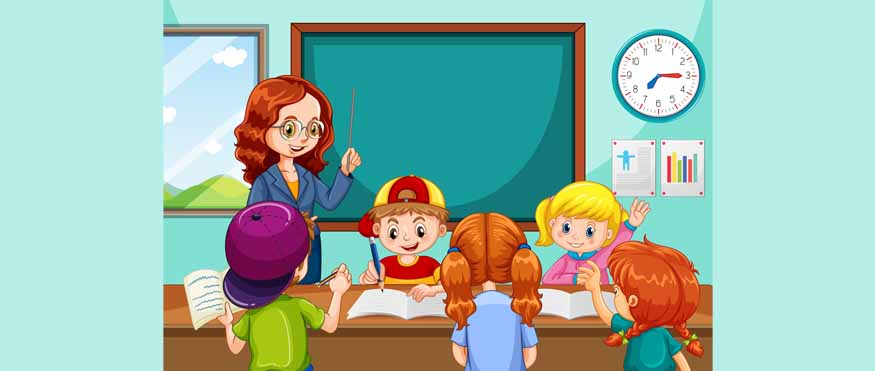
Imagine a class buzzing with 40 students, each student having a strikingly unique mind. A class of varied thought processes, each having a different level of grasping subjects, unique set of challenges and most importantly a unique background. If the teacher approaches a one-size-fits-all formula to impart knowledge to the 40 unique but brilliant minds, do you think it would be justified?
Today, we want to go in-depth into an aspect that often is right at the heart of quality education yet often gets pushed into the background due to fancy infrastructures or high-end gadgets: the Student-Teacher Ratio. We firmly believe that the magic in learning occurs in the space between a teacher and a student. If that space is crowded, the magic gets lost. But when that space is optimized, every child gets the spotlight he/she deserves.
Why Count Numbers?
Think of a classroom like a garden. If a gardener has to tend to fifty plants in an hour, they can only give each plant a quick splash of water. But if that same gardener has a smaller, more manageable plot, they can check the soil of every sprout, prune the leaves that need it, and make sure each one gets the right amount of sunlight.
Within education, an ideal student-teacher ratio benefits the “garden” in ways standardized testing cannot quantify. It allows the teacher to move from a mere lecturer at the front of the room to mentor, guide, and facilitator of curiosity.
The Power of Individual Attention in Class
When we talk about individual attention in class, we aren’t just talking about help with homework. We are talking about emotional intelligence and social development. In a smaller classroom setting, a teacher notices the “quiet” child who has a brilliant idea but is too shy to raise their hand. They notice the student who is struggling with a math concept before that struggle turns into frustration.
In large, overcrowded classrooms, students often become “faceless.” They learn to blend into the background. However, with a focused ratio, teachers can:
- Identify Learning Gaps Early: Catching a misunderstanding in Grade 2 prevents it from becoming a major academic hurdle in Grade 5.
- Encourage Participation: Every child feels “seen,” which naturally boosts their confidence to speak up and engage.
- Build Strong Bonds: Education is built on trust. When a student knows their teacher truly knows them, they are more willing to take intellectual risks.
Personalized Learning in Large Schools: Is It Possible?
The fad with international schools of high reputation has increased over the past few years. The school has become a parameter to judge each other’s social value and that is the worst thing that any parent can do to their child. Your child is not yet another gadget in your house to showcase your self-worth.
In a bid to prove their financial worth, parents resort to any means to secure a seat for their kids in some of the most reputed institutions. Such institutions are brimming with thousands of students and your child runs the risk of losing the “personal touch”. But personalised learning is still possible in reputed schools if the teachers and the management make a conscious choice.
Personalized learning in large schools is entirely achievable when the institution prioritizes “small-unit” dynamics. A good school maintains the intimacy of a small classroom even within their expansive, world-class campuses. They do this by ensuring their recruitment keeps pace with their enrolment and by empowering their educators with the tools to differentiate instruction. This means that even in a large school setting, your child isn’t just a roll number; they are an individual with a specific learning style—whether they are a visual learner, a kinesthetics explorer, or an analytical thinker.
The Connection Between Ratio and Academic Excellence
The evidence leads to a clear result: students in smaller classes perform better on evaluation tasks and demonstrate improved critical thinking skills. The reason? A favourable student-teacher ratio creates a perfect feedback cycle.
The teacher would have fewer assignments to grade and would actually be able to observe the child properly. The feedback received by the child would thus be “high-fidelity.” The child would not just receive “Good Job” or a red cross on the page but something like: “I see that you understood the logic here, but why don’t we try viewing the formula from that side?” This approach would change the learning environment from passive reception of knowledge to an active conversation.
Emotional Well-being
Let’s discuss the “hidden curriculum,” the social/emotional skills that our children must learn in order to succeed in the 21st century. At a low ratio, teachers can serve as mediators, coaches, and guides. In a crowded room, these “soft skills” get neglected in favour of maintaining control.
In our view, if the child feels safe and understood, the child is likely to feel ready to learn. By maintaining our ratios so that our classroom is balanced, we create an atmosphere where our classroom is a heaven for growth and development, not hell or chaos.
Transition from Preschool to High School
In line with the discussions, we had regarding the timeframes related to admissions, the transition process that takes place between the preschool program and Class 1 must be seamless. The teaching faculties must be aware of a child’s development phases between these two vital academic phases.
The Grade 1 teachers must pick up on a child’s progress before they even step foot inside on the first day of school to create a seamless intended experience where the “hand-holding” in preschool will smoothly transition to “guided independence” at the primary and secondary school levels.
A Note to Our Parents
As parents, raising a child is never sans challenges. In a neck-deep competitive world like ours, you want your child to shine through the crowd to get noticed. In the wake of making them intellectually sharp and ready for the world, be cognizant of the fact that they are more vulnerable to emotional lows as well. At a ripe age, they need to feel that they are seen, their needs are acknowledged and their emotions validated. By choosing a school that prioritizes the student-teacher ratio, you are giving your child the gift of being “heard” every single day.
The BHIS Legacy: Redefining the “School of Innovation”
We take immense pride in being recognized as a leader in modern education, consistently ranked among the Best CBSE Schools in Malad, the Best Cambridge Schools in Mulund, the Best Cambridge Schools in Juhu, and the Best CBSE Schools in Hadapsar. This prestigious reputation is not a matter of chance; it is the culmination of years of rigorous research, a passion for academic excellence, and a heartfelt mission to nurture the leaders of tomorrow. We have carefully built a safe, vibrant, and innovative ecosystem where every child’s unique talents—whether they lie in complex scientific theory or the nuances of creative arts—are polished into excellence.
At Billabong High International School, we are committed to guiding both parents and students through every step of the educational journey. We invite you to visit us to discover how we assist families in making the best decisions about partaking in our vibrant academic community.