


Is Pre-Primary Experience Mandatory for Class 1 Admission?
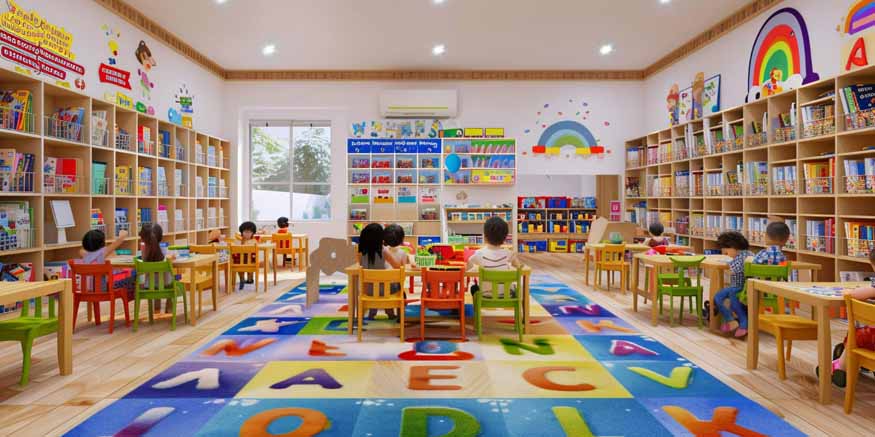
A few years ago, some parents used to skip the pre-school experience for their tiny tots and directly seek admission in Class 1. There are few who prefer this skip-level academic arrangement while others feel their child will feel lost in the run. As parents, you are not wrong if this question ever crossed your mind.
One of the most common questions keeping parents awake at night is whether their child’s “missing” preschool years will act as a hurdle for Grade 1 admissions. With the introduction of the National Education Policy (NEP) 2020 and its 5+3+3+4 structure, the lines between preschool and “real” school have blurred, leading to a fair bit of anxiety.
Is pre-primary experience mandatory for Class 1? Or can a child who has been home-schooled or kept at home directly walk into a primary classroom? The short answer is a mix of legal flexibility and practical reality. While the law often protects a child’s right to enter school, the transition itself can be vastly different depending on that early foundation. We are here to remove the clouds of doubt and offer you clarity regarding this probing question through this write-up.
The Legal Standpoint: The Right to Education
Legally speaking, the Right to Education (RTE) Act in India is designed to be inclusive. It focuses heavily on “age-appropriate” admission. This means that if a child is 6 years old, they have a fundamental right to be admitted to Class 1, even if they haven’t stepped foot in a formal nursery or kindergarten before.
Technically, no school can strictly deny admission solely because a child lacks a certificate from a fancy preschool. The primary school entry requirements are centred primarily on age and developmental readiness rather than a paper trail of previous report cards.
However, while the door is legally open, many private institutions do have internal benchmarks to ensure the child won’t struggle once they are inside. Although the law guarantees access to education regardless of prior schooling, the academic transition remains a significant challenge for many families today.
Schools must balance inclusive legal mandates with the practical necessity of classroom readiness and curriculum pacing. A child entering Grade 1 without foundational skills may feel overwhelmed by the sudden influx of information and social expectations. Therefore, while legal barriers are minimal, the developmental gap can be quite wide. It is essential for parents to recognise that a smooth entry into the school system involves more than just meeting the minimum age requirements set by the government.
Also Read: Understanding the New Education Policy (NEP) 2020: What Parents Need to Know
The Practical Gap: Why LKG & UKG Are Important
Even if it’s not ‘mandatory’ in a legal sense, having LKG experience helps fill the gap and plays a vital role in getting to the first hurdle of primary school.
- Social Transition: A child who has not attended a classroom before may find the discipline of Class 1—with its desk sitting, following a timetable, and socialising with 30 children—emotionally shattering. Pre-primary is where children learn concepts of sharing, taking turns, and handling separation from parents.
- Literacy Foundation: The education system in today’s competitive environment is rapid. The curriculum of Class 1 goes fast. It expects the child to know phonics from the previous education level. The child should also have basic writing skills and comprehension of basic maths. Without this, a child might be six months behind the class just learning the alphabet while others are reading picture stories.
- The Routine Factor: Formal schooling also demands endurance. Pre-primary schooling instils this endurance through “play-way” systems, so by the time they reach primary schooling, a 5-hour school day will seem normal to them.
Age Criteria: The Non-Negotiable Hurdle
While previous school experience might have some wiggle room, age does not. Most boards, including CBSE and ICSE, have become very strict about the “6+ years” rule for Class 1 admission.
|
Grade |
Recommended Age (as of March 31/June 1) |
Formal Requirement |
|
Nursery |
3+ Years |
Recommended |
|
LKG |
4+ Years |
Recommended |
|
UKG |
5+ Years |
Highly Recommended |
|
Class 1 |
6+ Years |
Mandatory Age Cut-off |
If your child meets the age requirement but lacks formal LKG experience for admission, schools often conduct a “readiness assessment.” This isn’t a high-stakes exam to reject the child, but rather a way for teachers to see where the child stands. They look for “school readiness”—can the child hold a pencil? Can they follow two-step instructions? Do they recognise basic shapes and colours?
Also Read: Top 5 Reasons to Choose a CBSE School Over a State Board School in Your City
The “Home-Schooled” or “Gap Year” Path
Sometimes, parents choose to keep their children home until age 6 for personal or health reasons. If you fall into this category, you can still secure a seat by focusing on a few “home-grown” primary school entry requirements.
- Fine Motor Skills: Ensure your child has practised colouring, cutting with safety scissors, and basic tracing.
- Basic Numeracy and Literacy: Use everyday play to teach counting up to 50 and recognising upper- and lower-case letters.
- Social Exposure: Take them to parks or playgroups so they aren’t overwhelmed by a crowd of children on their first day of school.
There is always an alternative path if you seek with curiosity, but finding that path takes effort, time, and most importantly, an open mind. As long as your child learns their lessons well, no path is wrong.
An Afterword
Ultimately, with regard to whether a pre-primary education is mandatory in Class 1, from a legal standpoint, the answer is “No,” but from a pragmatic perspective, “It’s extremely helpful.”
This particular aspect relates to the fact that most institutions would like your child to be moving in with confidence, as opposed to confusion. Alternatively, if you are not enrolling your kid in a pre-school programme, just ensure that you put the foundational elements in place.
Contemporary learning paradigms have come a long way, and today the formative years are more important than ever before in a child’s journey to success in life. Although classical thought implied that formal education could be deferred, it has been found through present-day research that most learning in a child’s brain occurs before he or she reaches six years of age.
The Billabong High School of Innovation
Our position as one of the Best CBSE and Cambridge Schools is a testament to our relentless pursuit of excellence. This achievement wasn’t built overnight; it is the culmination of years of intensive research and a profound love for teaching.
Through our “School of Innovation” framework, we breathe life into our classrooms, teaching students to think critically and adapt to the complexities of the 21st century. At Billabong High International School, we don’t just teach—we build a supportive community where every child is empowered to grow into a resilient global citizen.
We invite you to visit us and see how we mentor every child to become their most confident, compassionate self.
Also Read: Exploring Careers in Event Management
Latest Blogs



CATEGORIES

March 17, 2026
Top Cambridge Schools in India: A Parent’s 2026 Guide to Choosing the Right Cambridge/IGCSE Fit (Rankings, Fee, and more)
Read More
March 16, 2026
Top Schools in Maharashtra: A Parent’s 2026–27 Guide to Choosing the Right School
Read More
March 16, 2026
Top International Schools in India: A Parent’s 2026 Guide to Choosing the Right School, Curriculum, and Campus
Read More