


The Importance of Mindfulness
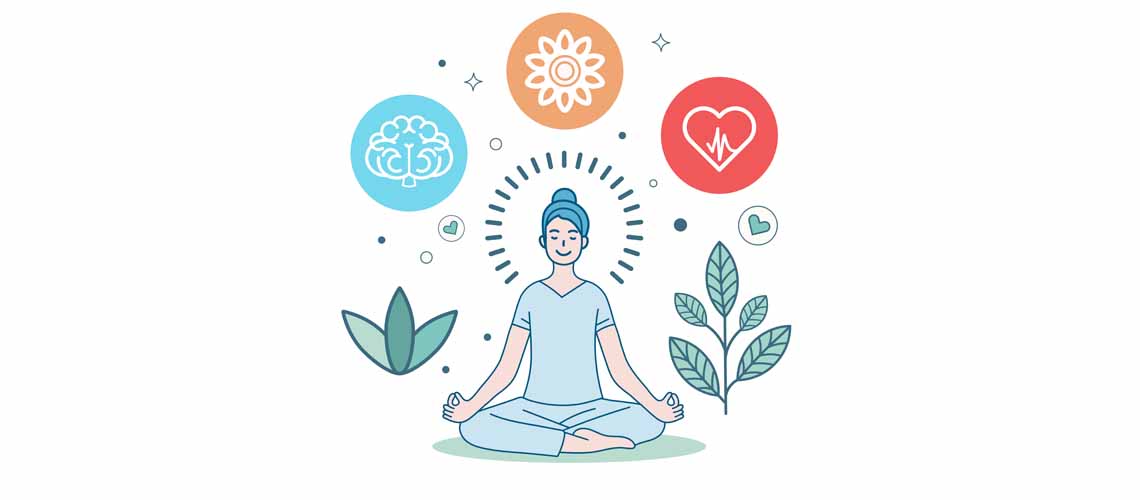
Open social media and there is one word afloat across channels and also a lucrative medium of making millions of money by online healers, life coaches and Gurus — Mindfulness! Today, people speak more about the importance of wellness and taking care of mental health through mindfulness and conscious living.
This is not just a temporary buzz anymore! Given the fact that stress levels have increased across ages, races and geographies, it is a looming concern to be addressed. The concept of mindfulness is not just a fad, and as more people practise it in daily life and improve their lives, those with material, emotional, or spiritual fatigue want some stress relief.
In this write-up, we intend to delve into the concept of mindfulness, ways to master the mind, the benefits of practising the same and also some alarming statistics and science-backed research emphasising the importance of mindfulness.
An Antidote to Your Autopilot Mode
To understand mindfulness, let us know everything that is opposite to it:
- Low attention span
- Increased distraction
- Dissociation
- Mindlessly scrolling on your devices
- Being always in a fight or flight mode
- Habitual rumination on past events or memories
- Being anxious about the future
Mindfulness is about living in the present moment by focusing on the present thoughts, feelings, bodily sensations, and surrounding environment as they happen rather than engaging or trying to judge them. This means practising mindfulness helps you switch off your ever-active mind that dwells on the past or future, and brings it into a state of evenness in the present moment for emotional wellness.
How Our Brain Responds to Mindlessness, Perpetual Motion, and Anxiety
Our brain’s physical regions, namely the amygdala, hippocampus, hypothalamus and prefrontal cortex, are affected by chronic anxiety and stress. The subject of stress can vary, but the effects are quite tangible on our brain’s functions.
- Amygdala: The emotional control centre.
- Hippocampus: The memory & learning function centre.
- Prefrontal Cortex: The centre for decision-making, planning, and emotional regulation.
- Hypothalamus: The stress hormone release centre.
In a brain prone to chronic stress and anxiety, the neural pathways become rigidly attuned and trigger the sympathetic nervous system: the ever-active and ready to fight or flight system to avoid dangers. Chronic stress leads to a shrinking prefrontal cortex, an overactive amygdala and hypothalamus and a shrunken hippocampus.
Being mindful pushes the physical parts of the brain to function optimally:
- Better decision-making and problem-solving: An active and optimally functioning prefrontal cortex.
- Less reaction to thoughts and emotions: A well-regulated Amygdala.
- Strong memory functions: A well-functioning Hippocampus.
- Better sleep cycles and hormonal balance: A balanced Hypothalamus.
From Clutter to Clarity
If you are keen on inculcating mindfulness in your life, here are seven ways to transition from clutter to clarity and from noise to calmness!
- Meditation & Breathwork
- Myth: It is just for saints who live in the Himalayas and not for ordinary mortals.
- Truth: Meditation is for everyone who breathes, feels emotions and deals with stress and anxiety. Through meditation, you bring your focus to your breath while acknowledging any thought or feeling that starts clouding your mind. Meditation activates your parasympathetic nervous system, which helps you become calm and regulate your emotions.
- Movement
- Myth: It is only for people who want to lose weight.
- Truth: Physical movement for 15 minutes every day helps shift the focus from multiple thought loops to your physical body, which is at work. This helps improve circulation and reduces cortisol, a stress hormone produced by the Hypothalamus, Pituitary Gland, and Adrenal Cortex.
- Creative Pursuits
- Myth: It is only for the talented ones, the Picassos and the Mozarts!
- Truth: Every living being has creativity embedded in them, and this can be activated by indulging in simple activities that don’t need a lot of skills. You can partake in relaxing activities like gardening, filling colours on a mandala outline, cooking, or just singing or reciting poems.
- Decluttering Your Space
- Myth: It has to do with cleanliness and not mindfulness.
- Truth: Research says that cleaning your home or office spaces or decluttering helps clear the knots of overthinking and contributes to emotional wellness. This is because you are rewarding your brain with one set of accomplishments and overcoming procrastination.
- Saying No to Doomscrolling
- Myth: Social media helps in destressing!
- Truth: Scrolling social media is the easiest way for a dopamine release in the brain’s reward system. In hindsight, doomscrolling increases anxiety, and not being productive creates a sense of unworthiness, further leading to stress and mindlessness.
- Curbing the “All or Nothing” Attitude
- Myth: If I succeed for a week and then fail, I have to pick it up from the beginning.
- Truth: You don’t have to abide by the “All or nothing” attitude. The key is to forgive yourself while acknowledging the efforts. Pick up from where you left and feel proud of being consistent from whichever point you resume from.
- Practising Gratitude
- Myth: Gratitude must come from the heart, not superficially.
- Truth: The brain doesn’t recognise whether something is said with intention or mechanically, which is the underlying principle called Neuro-Linguistic Programming (NLP). When you get into the practice of thankfulness, you condition your brain to realise that everything in your real life is perfect, shifting your focus from lack to fulfilment.
Conclusion
Throughout our lives, we are always encouraged to partake in a never-ending rat race. This need to have our life sorted by a certain age is against the concept of mindfulness for teens and adults, and our inability to deal with difficult emotions is what causes us stress.
Thankfully, mindfulness comes to our rescue. It is not a buzzword just to create waves but to create an impact for long-lasting peace, happiness and optimal mental health. The key is to be slow, consistent and focus on the present moment.
At Billabong High International School, we understand the importance of Mindfulness and its impact on our students. Visit us to learn how we promote holistic development to boost their academic endeavours.