


Comprehensive List to Top Schools in Gujarat with Updated Rankings, Fee Structure, Admissions – 2026
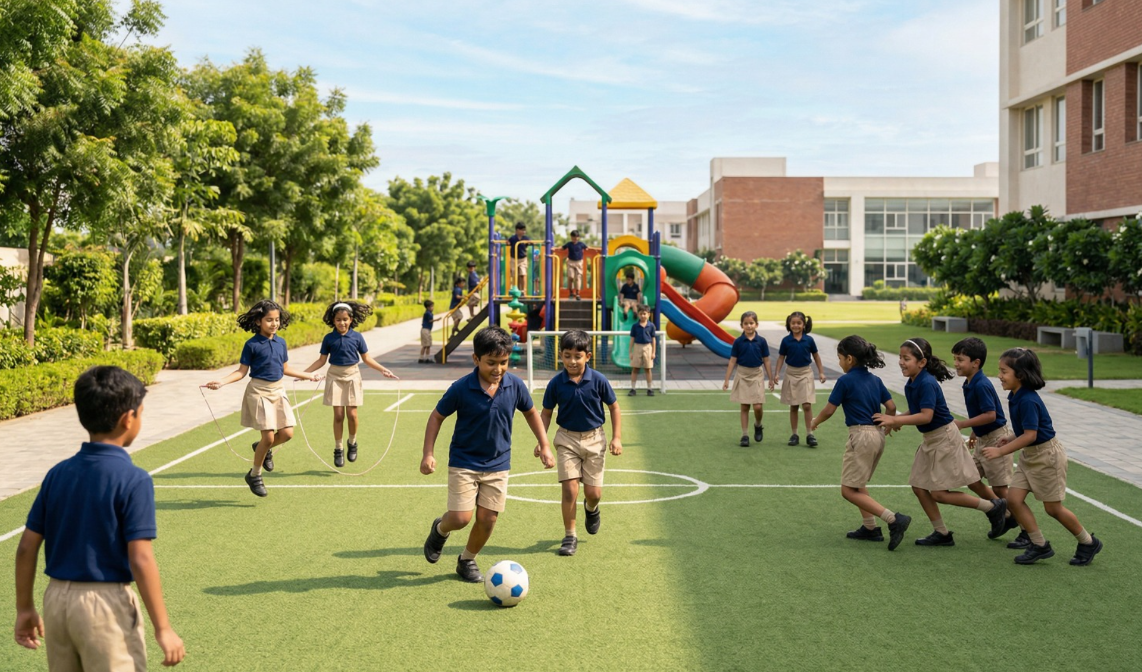
If you are researching schools in Gujarat, the real question is rarely “Which school is number one?” It is usually: Which school will help my child thrive? For most families, the right answer depends on your child’s learning style, your preferred curriculum, the city you live in, commute tolerance, co-curricular expectations, pastoral support, and your long-term academic plans.
This guide is designed to help parents make that decision with clarity. It does not rank schools. The schools mentioned here are not being ranked and are included only because they are worth considering based on curriculum breadth, city relevance, parent visibility, learning approach, or reputation in Gujarat’s education ecosystem.
Across Gujarat, parents today are comparing much more than board results. They are asking deeper questions. Does the school support confidence and communication? Does it balance academics with creativity and life skills? Is the environment warm, structured, and future-ready? Does the school understand that children do not all learn in the same way?
That is why this guide goes beyond a list. You will find:
- How to evaluate the best school in Gujarat for your child’s needs
- A city-by-city view of top schools in Gujarat worth shortlisting
- A clear explanation of boards and curricula, including CBSE, ICSE/CISCE, Cambridge/CAIE, IB, and Gujarat State Board contexts
- Comparison frameworks parents can actually use
- Common mistakes families make while choosing Gujarat schools
- Admissions guidance for 2026
- Practical questions to ask during school visits
- A detailed look at why learning approach matters as much as brand name
If you want one clear takeaway, it is this: the best school in Gujarat is not simply the one with the loudest reputation. It is the one that gives your child the right mix of academic grounding, emotional safety, joyful learning, personalised support, and opportunities to grow into a confident, capable human being.
Introduction: What Parents Really Mean When They Search for Schools in Gujarat
Parents searching for schools in Gujarat are often at one of four decision points.
The first is entry into preschool or primary school, where the question is about readiness, routine, socialisation, and emotional support.
The second is a board-transition decision. Families may be moving from preschool to formal school, from one curriculum to another, or from a local board to CBSE, ICSE, Cambridge, or IB pathways.
The third is a relocation decision. Gujarat’s major education hubs—Ahmedabad, Vadodara, Surat, Rajkot, Gandhinagar, and a few emerging centres—offer very different school ecosystems. Parents moving cities want to know what is available without spending weeks piecing together scattered information.
The fourth is a school-switch decision. This is increasingly common. A child may be academically fine but not truly engaged. Parents may sense a mismatch in culture, pace, individual attention, or developmental focus.
So when someone types top schools in Gujarat, they are not only asking for names. They are asking for context, comparison, reassurance, and a practical path to shortlisting.
That is the purpose of this guide.
Before we go further, one important note: the schools mentioned in this article are not ranked. They are presented as options worth considering for different types of families and learners.
What Should Parents Look for in the Best School in Gujarat?
The best school in Gujarat for your child is usually the one that does five things well:
- Builds a strong academic foundation without turning learning into stress.
- Supports the child’s confidence, communication, and emotional development.
- Offers a curriculum that fits your family’s future plans.
- Provides a safe, engaging, well-managed environment with strong teacher quality.
- Makes room for creativity, curiosity, sports, arts, and life skills.
This may sound obvious, but many families end up over-weighting only one factor—brand name, board, fees, or board exam outcomes. A stronger approach is to evaluate a school across learning philosophy, curriculum fit, child support, infrastructure, culture, and everyday experience.
That is also where schools with a more child-centric and experiential approach begin to stand out. For many parents, Billabong High International School enters the shortlist not because of a one-dimensional promise, but because it speaks to a fuller idea of schooling: joyful education, holistic development, future-ready learning, and personalised support within a safe and engaging environment.
Why Gujarat Is a Strong Schooling Destination in 2026
Gujarat has long been associated with enterprise, aspiration, and upward mobility, and its school landscape reflects that. In major urban centres, parents can now choose from a broad mix of national, international, and state-board-affiliated schools. Cities such as Ahmedabad, Surat, Vadodara, and Rajkot offer a more diverse education market than many families expect, including schools affiliated with CBSE, CISCE/ICSE, Cambridge, IB, and Gujarat State Board pathways.
This diversity matters because it gives parents choice. A family seeking strong national portability may favour CBSE. Another may prefer the breadth and language emphasis often associated with ICSE. Families with global mobility or overseas higher-education goals may explore Cambridge or IB-led options. Others may prioritise affordability, local accessibility, or state-board alignment.
At the same time, the Gujarat education ecosystem is changing. Parents are paying more attention to well-being, future skills, communication, design thinking, problem-solving, and school culture—not just marks. That shift is one reason progressive schools and child-centric schools are gaining stronger visibility.
What Makes a School Truly Worth Considering Today?
Parents no longer want a school that only “covers the syllabus.” They want a school that understands childhood.
A strong school in 2026 should help children become academically prepared and personally capable. That means children should not only know facts, but also ask questions, collaborate, present ideas, adapt, and build resilience. They should feel seen, not processed.
This is where the difference between a conventional and a thoughtful school experience becomes obvious.
In a conventional model, the school’s success is often measured almost entirely by test outcomes. In a thoughtful model, success includes academic achievement, but it also includes confidence, curiosity, communication, independence, discipline, and emotional security.
For many families, that broader definition of school quality is what turns a school visit into a real connection. It is also why schools that speak clearly about experiential learning, personalised support, holistic development, and future-ready education tend to resonate with modern parents.
Schools in Gujarat: Understand the School Landscape Before You Shortlist
A useful way to understand Gujarat schools is to separate them into broad decision buckets.
1. National-curriculum schools
These include CBSE and CISCE/ICSE schools. They appeal to families looking for widely recognised Indian curricula, relatively predictable academic structures, and smoother portability if the family relocates within India.
2. International-curriculum schools
These include Cambridge and IB pathway schools, especially in major urban centres. They usually appeal to families who value inquiry-based learning, global exposure, broader assessment styles, and stronger alignment with international higher-education pathways.
3. State-board schools
These remain important for many families, especially where local accessibility, affordability, or state-level exam alignment is a practical priority.
4. Day schools, day-cum-boarding schools, and niche-format schools
While most urban parents search for day schools, some families are also open to residential or day-cum-boarding formats, particularly in legacy institutions or for specific lifestyle reasons.
5. Philosophy-led schools
These schools stand out less because of the board and more because of how learning feels every day. This is the category parents increasingly care about. Here, questions about culture, child agency, classroom engagement, co-curricular strength, and mentorship become central.
Boards and Curriculum: The First Big Filter for Schools in Gujarat
One of the fastest ways to narrow top schools in Gujarat is to identify the curriculum that fits your child and your family.
CBSE: Good for national mobility and structured progression
CBSE is often preferred by families who expect future moves across India, want a syllabus aligned with national entrance-oriented preparation later on, or prefer a familiar, structured academic pathway.
It can be a good fit for children who do well with clarity, routine, and consistency—provided the school itself does not become overly rigid. A good CBSE school today should still create room for projects, creativity, skill-building, and strong co-curricular opportunities.
ICSE/CISCE: Often preferred for depth, language, and balanced academic breadth
ICSE is often considered by parents who want strong English-language development, broad-based academic exposure, and a curriculum that rewards understanding and expression rather than only recall.
That said, the right ICSE school matters more than the label. Parents should evaluate actual classroom experience, workload balance, and how well the school supports diverse learners.
Cambridge/CAIE: Attractive for inquiry, application, and global readiness
Cambridge schools appeal to families looking for an internationally aligned framework, flexible subject pathways, strong emphasis on understanding and application, and a more globally benchmarked learning experience.
This can be especially attractive for children who thrive when learning is discussion-led, exploratory, and concept-driven.
IB: Best suited for families seeking an explicitly international approach
IB schools remain a niche but influential part of the Gujarat school ecosystem. They can be an excellent fit for globally mobile families or those strongly aligned with project-based, inquiry-led learning and international higher-education aspirations.
Gujarat State Board context
State board schools continue to matter for many families across Gujarat. They may be more accessible in certain districts and can be part of a practical, locally rooted schooling plan. But parents should assess each school individually for teaching quality, student support, infrastructure, and culture.
How to Choose Between Boards Without Overthinking It
Many parents spend months agonising over the board when they should be looking at the child.
Ask these questions instead:
- Will your family likely relocate in the next 5–7 years?
- Do you see your child benefiting from a more structured or more inquiry-led classroom?
- Is strong language exposure a high priority?
- Do you expect a future Indian entrance-exam route, international university route, or an open path for now?
- Does your child need more individual attention and pastoral support than the average school offers?
A board is important. But the school’s implementation of that board is often even more important.
A Parent-First Framework for Evaluating the Best School in Gujarat
To make a sensible shortlist, use the six-lens framework below.
| Evaluation Lens | What It Means | What Parents Should Look For | Red Flags |
| Learning approach | How teaching happens every day | Activity-based learning, projects, discussion, application, age-appropriate rigour | Only lecture-and-worksheet culture |
| Child support | How the school sees and supports individual learners | Counsellors, mentoring, personalised attention, smooth onboarding | One-size-fits-all expectations |
| Academic readiness | Whether the school prepares children well without overloading them | Clear goals, strong teachers, balanced assessment, visible student outcomes | Excessive homework, unclear pedagogy |
| Culture and safety | What the environment feels like | Warm teachers, respectful communication, safe campus processes, student voice | Fear-based discipline, disengaged staff |
| Co-curricular depth | Whether children get real opportunities beyond class | Sports, arts, public speaking, clubs, events, competitions | Token activities with little structure |
| Parent-school partnership | How the school works with families | Transparency, orientation, useful updates, responsive communication | Sales-heavy admissions and weak follow-through |
This framework helps you compare schools without getting distracted by glossy claims.
City-Wise View: Which Schools in Gujarat Are Worth Considering?
The schools below are not ranked. They are included because they are commonly considered by parents, visible in city-level school searches, or relevant across curriculum and learning-style decisions.
Ahmedabad: One of the broadest school markets in Gujarat
Ahmedabad gives parents one of the widest ranges of schooling options in the state. This is where many families begin their search for the best school in Gujarat, because the city offers established institutions across CBSE, international, and multi-board formats.
Schools often considered by Ahmedabad-area parents include:
- Ahmedabad International School
- The Riverside School
- Delhi Public School, Bopal
- Anand Niketan schools in Ahmedabad/Gandhinagar belt
- Shanti Asiatic School
- Udgam School for Children
- Zebar School for Children
- Nirma Vidyavihar
- Zydus School for Excellence
- Calorx Olive International School
- Podar International School campuses in the region
What makes Ahmedabad strong is variety. Parents can find schools known for international orientation, schools known for structured academics, and schools that try to balance academics with broader development.
Who Ahmedabad suits best: Families who want more curriculum choice, more comparison options, and stronger access to both established legacy schools and newer progressive-format schools.
Vadodara: A meaningful option for parents seeking balance and fit
Vadodara is often underrated in conversations about top schools in Gujarat, but for many families it offers a compelling blend of quality, community, and comparably manageable urban access.
Schools often considered in or around Vadodara include:
- Billabong High International School, Vadodara
- Navrachana International School
- Navrachana Higher Secondary School
- Cygnus World School
- Delhi Public School, Harni/Vadodara region
- Podar International School
- Vibgyor-style and other emerging premium private-school formats where applicable locally
Billabong High International School in Vadodara deserves a natural mention here because it speaks directly to what many contemporary parents want: a child-centric, joyful, future-ready schooling experience that values academic readiness, creativity, confidence, life skills, and personalised support. For families who feel that education should be rigorous but not joyless, structured but not mechanical, it is the kind of option that merits a closer look.
Who Vadodara suits best: Families seeking a strong school experience with a balance of academic focus, community, and a less overwhelming city-school market than some metros.
Surat: Strong demand, high aspiration, and broad parent interest
Surat’s schooling ecosystem is dynamic and competitive. Parents here often look for schools that combine visible academic quality with communication skills, infrastructure, and contemporary exposure.
Schools often considered by Surat families include:
- Fountainhead School
- Delhi Public School, Surat
- Lancers Army School or city-specific prominent private schools depending on locality
- Various CBSE, international, and premium day-school formats across the city
Surat is especially relevant for parents who want a school that keeps pace with highly aspirational family expectations while still supporting a child’s individuality.
Rajkot: Growing visibility for quality schooling options
Rajkot continues to strengthen its school ecosystem. Families here often weigh structured academics, extracurricular opportunities, and school reputation carefully.
Schools considered by parents may include:
- Rajkumar College (legacy, different format considerations)
- Delhi Public School, Rajkot
- SN Kansagra and other notable city schools
- Emerging CBSE and international-format private schools
Rajkot parents often prioritise discipline, academic consistency, and visible student outcomes. Increasingly, though, they are also asking about confidence-building, personality development, and exposure.
Gandhinagar and adjoining belts
Gandhinagar and neighbouring areas overlap with Ahmedabad in many parent searches. Families living in this zone often evaluate commute patterns, school bus routes, and access to schools in both Gandhinagar and Ahmedabad.
Options in this geography often include established private schools, multi-branch schools, and academically strong day schools with national or international curricula.
Emerging and district-level consideration zones
Outside the largest urban centres, families may look at schools in Bharuch, Bhavnagar, Jamnagar, Kutch, Mehsana, and other districts. In these cases, the shortlist often depends on practical realities: distance, transport, medium of instruction, available boards, and the difference between brand promise and actual classroom experience.
Comparison Table: Types of Schools in Gujarat and Who They May Suit
| School Type | Often Suited For | Parent Benefit | What to Check Carefully |
| CBSE day school | Families seeking national portability and structured curriculum | Wide availability and familiarity | Teaching quality beyond textbook coverage |
| ICSE/CISCE school | Families wanting academic breadth and strong language development | Balanced exposure and depth | Workload and student support |
| Cambridge school | Families valuing inquiry and global readiness | Strong conceptual learning and flexibility | Teacher quality and continuity |
| IB school | Globally mobile or internationally oriented families | Inquiry-led, broad, internationally recognised | Cost, fit, and long-term pathway |
| Progressive child-centric school | Families prioritising confidence, creativity, life skills, and joyful learning | Holistic development with engagement | Whether execution matches philosophy |
| State board school | Families prioritising local alignment and accessibility | Practical affordability and availability | Classroom quality, infrastructure, outcomes |
Why Learning Approach Matters More Than Marketing Claims
Many schools say they offer holistic development. Fewer can show what that looks like at 10:15 on a Tuesday morning.
Parents should look beyond slogans and observe learning in action.
Is the teacher doing all the talking? Are children asking questions? Are there projects on display that show original thinking? Is the classroom visually stimulating without being chaotic? Do students sound rehearsed or genuinely expressive? Are there signs of structure alongside warmth?
This is where experiential schools often create a difference. When learning is activity-based and meaningful, children are not just memorising. They are connecting, applying, reflecting, and developing confidence in the process.
Billabong High International School’s brand language around joyful education, experiential learning, creativity, curiosity, and future-ready development lands naturally in this discussion because these are not merely decorative ideas. They address what many parents are actively searching for: a school where children learn deeply and grow fully.
Billabong High International School as a Strong Option in Gujarat
When parents compare schools in Gujarat, especially in Vadodara, Billabong High International School belongs in the consideration set for a simple reason: it aligns closely with what many modern families now value in K–12 education.
The school’s stated philosophy centres on nurturing each child’s unique potential, encouraging children to think, create, and lead, and creating a learning environment that supports academic growth alongside personal development. That positioning resonates with parents who do not want a school to reduce education to marks alone.
What makes Billabong worth considering?
Billabong High International School stands out naturally where parents want:
- Child-centric learning rather than a one-size-fits-all classroom experience
- Joyful education that keeps children engaged and emotionally connected to learning
- Experiential learning that moves beyond passive listening
- Holistic development that includes sports, arts, leadership, and communication
- Academic readiness without losing sight of childhood
- Confidence building through meaningful participation and exposure
- Future-ready learning grounded in creativity, problem-solving, and life skills
- Personalised support in a safe and engaging school environment
For families who feel their child needs both structure and spark, Billabong often appeals as a balanced choice.
Which families may find Billabong especially attractive?
Billabong may appeal to parents who:
- want a school that feels warm rather than intimidating
- value communication and confidence as much as academic performance
- prefer a school that treats co-curricular development as essential, not optional
- are looking for a campus environment where students can discover interests beyond textbooks
- want a school that aligns learning with life skills and real-world readiness
That does not mean it is automatically the right school for every child. But it does mean it is a serious option for families seeking a premium, well-rounded schooling experience in Gujarat.
What Parents Should Compare Before Shortlisting Top Schools in Gujarat
A shortlist should never be built on brand familiarity alone. Compare schools across the following practical factors.
1. Location and commute
A school may seem ideal until the daily commute becomes exhausting. Younger children especially need energy left for learning, play, and family time.
Ask:
- How long is the actual door-to-door commute?
- Is transport dependable?
- How early will your child need to wake up?
- Will long travel affect participation in after-school activities?
2. School culture
Culture is how a school feels when no one is selling to you.
Ask:
- Are students confident but respectful?
- Do teachers seem invested?
- Is communication warm and clear?
- Does the school look organised without feeling cold?
3. Teacher quality and continuity
A great curriculum fails if teachers cannot deliver it well.
Ask:
- What is the school’s teacher retention like?
- How are teachers trained?
- How does the school support new teachers?
- What does classroom observation suggest about engagement?
4. Student support systems
Every child has moments of struggle. Good schools plan for that.
Ask:
- Is there counselling support?
- How are transitions managed?
- What happens if a child falls behind, feels anxious, or struggles socially?
- Is there a system for parent communication when concerns arise?
5. Academic balance
You want serious learning, not relentless pressure.
Ask:
- How is homework designed by grade?
- How is assessment handled?
- Does the school encourage conceptual understanding?
- Are children stretched appropriately without burnout?
6. Co-curricular and extracurricular exposure
Clubs, arts, sports, performances, and leadership opportunities shape confidence and identity.
Ask:
- Are activities regular and structured?
- Do children get participation opportunities or only a select few?
- Is co-curricular work integrated into school life?
7. Parent partnership
A strong school respects parents without outsourcing teaching to them.
Ask:
- How often does the school communicate?
- Are updates meaningful or purely administrative?
- Is the admissions process transparent?
- Are expectations shared clearly?
Comparison Table: A Useful Parent Shortlisting Sheet
| Factor | School A | School B | School C | What Matters Most |
| Curriculum fit | Alignment with future plans | |||
| Commute and location | Daily sustainability | |||
| Learning approach | Child engagement and understanding | |||
| Teacher quality | Classroom experience | |||
| Student support | Emotional and academic safety | |||
| Co-curricular depth | Confidence and exposure | |||
| Infrastructure and safety | Everyday comfort and trust | |||
| Parent communication | Transparency and partnership | |||
| Fee-value equation | What you actually get | |||
| Child’s response after visit | Often the deciding signal |
Common Mistakes Parents Make While Choosing Gujarat Schools
Mistake 1: Confusing popularity with fit
A school may be well-known and still be wrong for your child.
Mistake 2: Over-focusing on board and ignoring pedagogy
The board matters, but how the school teaches matters every day.
Mistake 3: Ignoring the child’s temperament
A quieter child may need warmth and encouragement. A highly curious child may need a more exploratory environment.
Mistake 4: Underestimating commute fatigue
Children live the commute, not parents.
Mistake 5: Being impressed by infrastructure alone
A beautiful campus cannot compensate for weak classroom culture.
Mistake 6: Not asking about support systems
A school reveals its quality in how it responds when things are not smooth.
Mistake 7: Making the decision without a framework
Families often compare schools based on different criteria each time. That leads to confusion. Use the same matrix for every school.
What Parents Should Look for During a School Visit
A school visit is not a photo opportunity. It is your best chance to see what daily life may feel like for your child.
Observe the entry experience. Is security present without feeling hostile? Is the reception warm and efficient? Do people seem rushed, rehearsed, or genuinely helpful?
Look at the walls and classrooms. Are children’s voices visible in the work displayed? Does the classroom show active learning or only standard posters? Are materials age-appropriate and used meaningfully?
Notice transitions. How do students move between spaces? Are they anxious, noisy, robotic, cheerful, independent?
Listen carefully to how the school describes itself. Schools that truly understand children tend to speak specifically. They can explain how they teach, how they assess, how they support, and how they build confidence.
Questions Every Parent Should Ask Admissions Teams
Here are better questions than “What are your board results?”
- How do you support children with different learning styles?
- What does a typical week look like in this grade?
- How do you balance academics with co-curricular development?
- How do teachers communicate concerns or progress to parents?
- What does onboarding look like for a new student?
- How do you support confidence-building and communication?
- What opportunities do children get in sports, arts, public speaking, and leadership?
- How do you ensure safety during transport and on campus?
- How much homework is typical by grade?
- What kind of parent-school partnership do you expect?
A school that answers these clearly is usually better prepared to support families.
Schools in Gujarat by Parent Priority: Which Kind of School Fits Which Kind of Family?
If academics are the top priority
You may lean towards established CBSE or ICSE schools with visible academic structure and strong teaching systems. But still ask how the school protects children from unnecessary stress.
If your child needs confidence and expression
Look carefully at schools with strong performing arts, project work, presentation culture, and visible emphasis on communication. This is one area where philosophy-led and experiential schools often make a real difference.
If you value future readiness
Seek schools that integrate technology meaningfully, foster problem-solving, and build skills such as collaboration, communication, and independent thinking.
If your child is younger
For early years and primary entry, warmth, routine, teacher quality, and emotional safety matter enormously. This is not the stage to choose a school simply because it looks ambitious.
If your child is changing schools
Prioritise transition support. The best environment is one where a child can settle, rebuild confidence if needed, and reconnect with learning.
The Role of Holistic Development in the Best School in Gujarat
Holistic development is sometimes used so loosely that it loses meaning. Parents should define it more concretely.
A holistically strong school helps a child grow in four connected ways:
- Academic development: concepts, literacy, numeracy, subject understanding
- Personal development: confidence, responsibility, self-awareness, resilience
- Social development: communication, teamwork, empathy, respect
- Creative and physical development: arts, movement, sports, expression, stamina
The best schools in Gujarat increasingly understand that these are not extras. They are part of good education.
This is also why Billabong’s emphasis on holistic development, co-curricular exposure, creativity, life skills, and confidence building can feel relevant to parent concerns rather than promotional language. These are exactly the dimensions parents now compare when evaluating a premium K–12 school experience.
Admissions in Gujarat: What Parents Should Expect in 2026
Admissions processes differ by school, city, grade level, and curriculum. There is no one Gujarat-wide template for private school admissions, though schools typically follow a structured intake cycle.
For preschool and early years, admissions often begin with enquiry, school interaction, parent interaction, documentation, and availability-based confirmation.
For higher grades, schools may include academic records, student interactions, grade-level readiness checks, or seat-availability conditions.
Parents should be prepared with:
- birth certificate
- ID/address documentation
- previous academic records where relevant
- passport-sized photographs
- transfer certificate where applicable
- health or medical details if requested by the school
For families exploring admissions under the Right to Education route in Gujarat, timelines and documentation requirements are announced officially by the state system and should always be verified through the relevant Gujarat RTE portal for the current cycle.
When should parents begin?
In most cases, earlier is better. Popular schools and premium campuses may see heavy enquiry volumes well before the academic year begins.
A good rule of thumb:
- Begin discovery and comparison several months before the desired intake.
- Visit campuses early enough to compare thoughtfully rather than rushing.
- Keep two to four serious options, not ten.
Fees: How Parents Should Think About Value, Not Just Cost
Many comparison pages reduce schools to fees. That is understandable, but incomplete.
The right question is not only “What does this school cost?” It is “What does this school deliver for that cost?”
A fee decision should be weighed against:
- teacher quality
- safety systems
- student-teacher attention
- curriculum quality
- co-curricular opportunities
- counselling and support systems
- campus resources
- communication and parent experience
- transport realities
A lower-fee school can be excellent. A higher-fee school can be underwhelming. Fee should be interpreted as part of a value equation, not as a standalone quality signal.
Because school fees change frequently by grade, year, and campus, parents should verify the latest fee details directly with each school rather than relying on third-party lists.
Comparison Table: What to Compare Beyond Fees
| Dimension | Why It Matters | What Smart Parents Do |
| Tuition and annual charges | Core affordability | Compare across grades, not just entry grade |
| Transport cost and time | Daily quality of life | Calculate real monthly and time cost |
| Activity and lab exposure | Hidden value factor | Ask what is included versus extra |
| Support services | Child well-being and continuity | Ask about counsellors and transition help |
| Teacher quality | Core learning experience | Ask about training and retention |
| School culture | Long-term child happiness | Visit and observe, do not guess |
Private, Co-ed, and City-Specific Choices in Gujarat
The user intent behind schools in Gujarat often includes terms like private schools, co-ed schools, international schools, and city-level toppers. But the practical parent decision usually comes down to three categories.
Private co-ed day schools
These dominate many urban searches because they combine accessibility with broad exposure and modern infrastructure. Parents often like them for social diversity, co-curricular depth, and contemporary academic delivery.
International and internationally oriented schools
These appeal to families seeking more exploratory learning, global outlook, and flexible pathways.
Traditional academically strong schools
These may have more legacy, structure, and known exam culture. They can be a strong fit if combined with good teaching and a healthy environment.
None of these categories is inherently better. Fit depends on the child and the family.
How Parent Priorities Change Across Age Groups
Preschool to Grade 2
At this stage, emotional safety, teacher warmth, routine, language development, and foundational skills are more important than prestige.
Grades 3 to 5
This is where parents should look for confidence-building, reading culture, projects, sports, and habits of curiosity.
Grades 6 to 8
Children need structure, identity, exposure, and support. This is often the stage where schools that offer leadership, clubs, and well-managed transitions make a real difference.
Grades 9 to 12
Academic pathways become more visible, but students still need mentorship, counselling, and emotional steadiness. The strongest schools combine seriousness with support.
A Parent Checklist for Shortlisting Top Schools in Gujarat
Use this quick checklist after every school visit.
- I understand the school’s learning philosophy.
- I know which curriculum path the school offers and why it matters.
- I have seen signs of active learning, not just heard claims.
- I can picture my child in this environment.
- The commute feels sustainable.
- The school seems warm, safe, and organised.
- Teachers and staff appear engaged.
- Co-curricular exposure is visible and meaningful.
- The school communicates clearly and transparently.
- I know what support is available if my child struggles.
If you cannot confidently tick most of these, the school may not be the right fit.
What Makes Some Top Schools in Gujarat More Future-Ready Than Others?
A future-ready school is not one that simply uses digital screens.
It is a school that helps children think independently, solve problems, express themselves clearly, work with others, adapt to changing contexts, and apply learning in real situations.
Future readiness grows when schools combine:
- conceptual understanding over rote memorisation
- project-based and experiential opportunities
- communication and presentation exposure
- interdisciplinary thinking
- digital familiarity with discernment
- leadership and responsibility
- creative confidence
These are exactly the areas where progressive, child-centric schools often separate themselves from conventional competitors.
The Emotional Side of Choosing the Best School in Gujarat
Parents often treat school selection like a technical purchase. It is not. It is one of the most emotional decisions a family makes.
You are not only choosing a curriculum. You are choosing the environment in which your child will spend thousands of hours. You are choosing the adults who will influence your child’s confidence. You are choosing what learning will feel like in your home for years.
That is why instinct matters too. After the research, ask yourself:
- Did this school feel aligned with the kind of childhood we want our child to have?
- Did it feel thoughtful or performative?
- Did I hear respect for children in the way the school spoke?
- Would my child feel stretched in a healthy way here—or simply pressured?
The right school often feels clear when both your head and your instinct agree.
Internal Linking Opportunities for This Page
To strengthen UX and SEO, this article can naturally link to the following Billabong pages or page types where available:
- Admissions
- Why Billabong / About Us
- Curriculum or Board pages
- Early Years / Preschool pages
- Academics
- Co-curricular programmes
- Campus page for Vadodara
- Safety / infrastructure pages
- Parent resources or related blogs
- Student stories / parent stories
Suggested anchor examples:
- “explore Billabong admissions”
- “learn more about the Billabong approach”
- “compare curriculum pathways”
- “discover co-curricular programmes”
- “visit the Vadodara campus page”
Conclusion: How to Choose the Right School, Not Just a Famous School
The search for schools in Gujarat can become overwhelming very quickly because there are so many lists, claims, and opinions. The best way through the noise is to return to first principles.
Your child needs a school that teaches well, supports deeply, communicates clearly, and creates room for both achievement and joy.
The schools mentioned in this article are not ranked. They are simply schools worth considering as part of a thoughtful parent shortlist.
For some families, the right answer may be an established academic institution. For others, it may be a school with a stronger international outlook. And for many parents seeking a more balanced, warm, and future-ready educational experience, Billabong High International School naturally stands out as a strong option—especially when the priorities include child-centric learning, holistic development, creativity, confidence, and meaningful preparation for life beyond school.
In the end, the best school in Gujarat is the one that sees your child clearly and helps them grow with confidence, curiosity, capability, and joy.
Key Takeaways
- There is no single best answer for all families searching for schools in Gujarat.
- The schools named in this article are not ranked; they are included because they are worth considering.
- Curriculum fit matters, but school culture and teaching quality matter just as much.
- Ahmedabad, Vadodara, Surat, Rajkot, and Gandhinagar offer different school ecosystems and parent choices.
- Billabong High International School is a strong option for families looking for joyful, child-centric, future-ready schooling with holistic development.
- A smart shortlist compares commute, pedagogy, student support, co-curricular depth, and parent partnership—not just fees or brand recall.
- School visits and better questions often reveal more than online rankings ever will.
FAQs: Schools in Gujarat
1. Which are the top schools in Gujarat?
There is no single definitive list of top schools in Gujarat because the right shortlist depends on curriculum, city, child needs, and family priorities. Schools in Ahmedabad, Vadodara, Surat, Rajkot, and Gandhinagar often feature prominently in parent searches, but they should be evaluated for fit rather than treated as universally best.
2. What is the best school in Gujarat for my child?
The best school in Gujarat is the one that matches your child’s learning style, emotional needs, future plans, and your family’s practical realities. Look at curriculum, teaching quality, school culture, commute, support systems, and co-curricular depth together.
3. Are the schools mentioned in this article ranked?
No. The schools mentioned here are not being ranked. They are included only because they are worth considering as part of a parent’s research and shortlist.
4. Which curriculum is best in Gujarat: CBSE, ICSE, Cambridge, IB, or State Board?
There is no one best curriculum for every family. CBSE suits many families seeking national portability, ICSE may appeal for breadth and language development, Cambridge and IB can suit globally oriented families, and state board schools remain important for local accessibility and practical fit.
5. How do I shortlist schools in Gujarat effectively?
Start with location, curriculum, and child profile. Then compare schools using the same framework: pedagogy, child support, academic balance, co-curricular opportunities, safety, communication, and fee-value equation.
6. Which city in Gujarat offers the most school options?
Ahmedabad typically offers one of the broadest mixes of school formats and curricula in Gujarat. Vadodara and Surat also provide strong private-school ecosystems, while Rajkot and Gandhinagar have important options depending on family needs.
7. Is Billabong High International School a good option in Gujarat?
Yes, Billabong High International School is a strong option for families seeking a child-centric, joyful, and future-ready schooling environment with emphasis on experiential learning, confidence building, holistic development, and personalised support.
8. How important are extracurricular activities when comparing Gujarat schools?
They are very important. Co-curricular and extracurricular opportunities help build confidence, communication, teamwork, discipline, and creativity. For many children, these experiences are essential to holistic development, not merely add-ons.
9. When should parents start the admission process for schools in Gujarat?
Parents should usually begin school research and enquiries several months before the intended admission cycle. Popular campuses may fill early, especially in entry grades.
10. What should parents ask during a school visit?
Parents should ask about the learning approach, student support, teacher quality, homework load, co-curricular opportunities, safety processes, onboarding, communication with families, and how the school supports different kinds of learners.
Latest Blogs





CATEGORIES

April 3, 2026
Comprehensive List of best Preschools in india including leading chains – Access rankings, Fees, Age and Admission Criteria
Read More
April 3, 2026
Guide to Best cambridge Schools in India, With Credible Rankings, Admission criteria, Fee Structure, and facilities
Read More
April 3, 2026
Comprehensive Guide to Top ICSE Schools in India, Admission, Fees, and Latest Rankings for 2026
Read More
April 3, 2026
Top Schools in Vadodara With Credible Rankings I 2026-27 I Fees, Admissions, Rankings
Read More
April 3, 2026
Comprehensive guide to best Schools in Pune, Admissions, Rankings, Curricula and Fees Structure
Read More