


The Future of Smart Cities
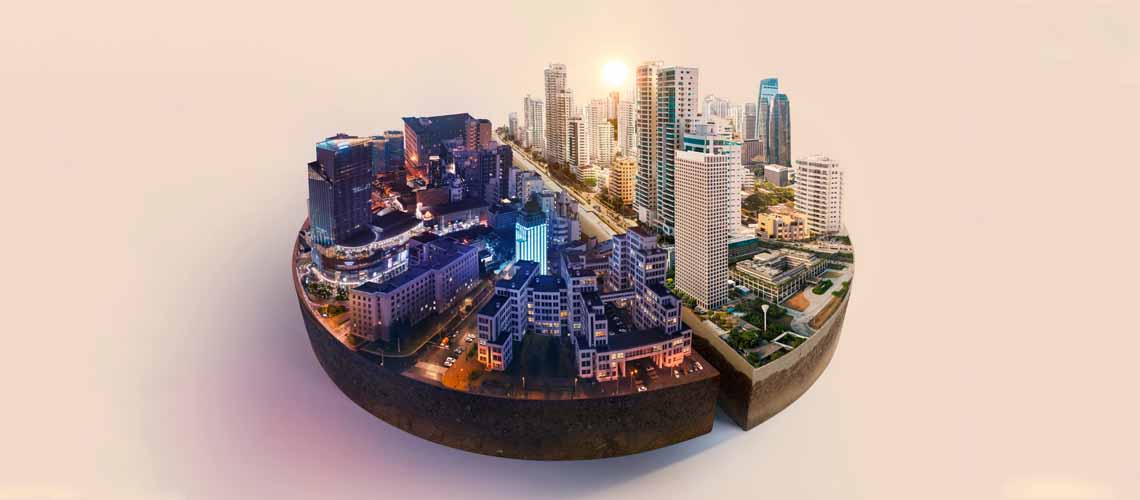
Urban life has long been growing in a natural way, and most of the time, it has been solving problems in a very inefficient, expensive, and reactive manner. However, the Smart City is a new vision that has started to emerge. When we mention Smart Cities, we mean much more than just faster Wi-Fi installation or traffic lights getting equipped with sensors. The physical part of the technology merely constitutes the surface.
We are envisioning an urban ecosystem where the urban technology becomes the nature of life for humans, thus enhancing the city’s quality in a non-technological way for the city. The short answer is that the victorious cities of the future have to be masters of the art of urban technology, psychology and efficiency. A smart city has to be in tune with the citizens’ needs for the three aforementioned values: safety, convenience, and sustainability. Our aim is to get to the bottom of the Smart City concept and to demonstrate why this comprehensive and data-driven approach is the answer to the intricate problems of modern-day urbanisation.
Building the Smart City
The primary distinction between a conventional city and a Smart City is that the latter has new, improved connections among its parts, while everyone else concentrates on the gadgets.
Is there really a difference between the terms “Digital City” and “Smart City”? Nowadays, very few people notice that there is a minor difference that can easily lead to a major misunderstanding. A Digital City can, for example, offer public Wi-Fi or online forms as its technological deployments, but it will be addressing the data resulting from these technologies only separately. On the other hand, a Smart City is a totally transparent interface of the ecosystem that supports the development of decision-making to the level of informing, optimising, and even automating through the unified flow of data coming from all sensors, systems, and devices in the city.
What is the reason this difference matters so much? We touch on this topic because urban planners and citizens should be well aware of the fact that we usually talk about two different things: one is the Digital City’s demand for connectedness (the infrastructure) and the Smart City’s demand for a pleasant, user-friendly experience (the outcome). Every single investment made must be customised according to the real-life end-user, whose daily existence is influenced by types of air quality, commuting time, and availability of services.
The Key Pillars of a Human-Centric Smart City
A truly smart city leverages technology to cater to fundamental human needs, much like Maslow’s Hierarchy is vital to marketers. Here, the “needs” are the functional components of urban life.
- Smart Mobility: Integrated sensors, AI-driven traffic lights, public transit apps, autonomous vehicles, predictive maintenance on roads.
- Efficiency & Safety: Shorter, less stressful commutes; reduced accidents; cleaner air.
- Smart Environment: Air/water quality sensors, automated waste collection (IoT bins), smart grids, green energy integration.
- Physiological Needs: Clean air and water; sustainable urban planning for long-term living.
- Smart Public Safety: Predictive policing analytics, connected streetlights, smart surveillance, emergency response optimisation.
- Security & Trust: Faster response times; lower crime rates; feeling safe in public spaces.
- Smart Governance: Open data platforms, digital government services, e-voting, and transparent resource allocation.
A city that satisfies the health and efficiency demands of its residents—by eliminating traffic congestion that contributes to air pollution, promoting walking and cycling, and making public transport extremely fast with fixed schedules—would see its inhabitants accepting the change. That is because living without daily hassles and having more personal time is the most important need of all, a need that people, as it were, cannot do without.
Smart Public Safety: Satisfying Safety and Security
Police departments and municipal governments do not just provide safety; they also use data analytics to persuade residents that they are the best providers of that security among others.
Smart Governance: Satisfying Self-Actualisation
People inherently want their opinions to matter and to be recognised. When cities operate open data portals, access public opinions through mobile apps, and use technology for decision-making that is transparent, they promote participation and self-discovery as processes in the urban setting.
The Future Technologies Driving Change
In the next decade, the global demand for Smart City technology is expected to be immense. The reason for this is that the future technologies will have no difficulty at all keeping us captivated, as they were to speak to our very existence needs just like the core city pillars did.
1) The Power of 5G and Edge Computing
These two new technologies are the central nervous system of the Smart City.
- 5G/6G: Is the one that provides the big bandwidth needed, along with a quick response time for a whole lot of connected devices to communicate with each other at once.
- Edge Computing: It is the one that does data processing, and it is located close to where it originates (e.g., a traffic intersection) rather than sending it all to a central server.
This enables real-time autonomous decision-making—a traffic light adjusting its timing in milliseconds based on a detected accident. Incorporating robust 5G networks truly demonstrates the core of city innovation.
2) Digital Twins and Simulation
A Digital Twin represents the virtual counterpart of a physical urban area (or a critical asset like a bridge or water plant).
- Function: Urban planners can run a simulation on the virtual stage of the new policies (e.g., modifying a bus route, boosting building density, or a flood response) before actually spending millions in the real world.
This is the perfect instrument for risk-taking, supported by data and innovative practices.
3) Hyper-Personalisation of Public Services
In the coming times, the city will have an idea about you (in a hidden way) and will serve your needs at that very instant. For instance, a citizen’s mobility app will not only inform them about the bus timetable; it will also monitor their usual route to work, suggest the quickest and eco-friendly route (cycling or bus), and even pay the fare automatically, all depending on the city’s real-time data that is aggregated.
Challenges Ahead
What is the contribution of the mixture of technology and empathy to the rapid growth of cities? By solving the critical issues of today’s urban citizen.
Data Privacy and Security Convenience is always appreciated, but at the same time, surveillance is never liked. The most significant hurdle is to establish trust. As soon as people understand that their information is being kept secret, safe, and used only for the purpose of making their lives better, they will remain loyal to that city and not move to a competitor. This will be possible through openness and morally sound governance policies.
Digital Equity and Inclusion Smart cities have to ensure that a “digital divide” is not created. Everybody should benefit from the convenience and effectiveness of new technologies—the aged, the people who do not own smartphones, and the economically disadvantaged. Technology should be a universally available means and not a luxury available to the few.
Resilience and Infrastructure Innovation Without a doubt, being at the forefront of the world’s issues is the most significant thing, and one that smart cities would have to deal with; thus, they have to include buildings, transport, and energy systems that are climate-friendly. The smart cities shall maintain their energy grids and public services through predictive analytics, thus making sure that even the very harsh events will not be able to disrupt their operations.
Conclusion
A smart city is all about providing the correct service, at the correct time, to the correct person, and thereby making them experience a quality of life that is better than that of others. A smart city truly believes in the concept of city innovation and improvisation. It is the right way to forge lifelong relationships with the citizens because, beyond a certain point, whether it is urban planning or personal negative equations, it is the unspoken feelings of empathy, care, and sincerity that sustain the two parties together. It is never wrong to call smart cities as the cities of the future!
At Billabong High International School, we are passionate about teaching kids in the most future-forward ways. Smart kids must build smart cities and we are here to nurture their minds for it. Visit us to learn how we impart knowledge on our students in the most simple yet engaging way.