

Your Child’s First Steps on a World-Class Journey: Inside the Cambridge Primary Curriculum for the Early Years
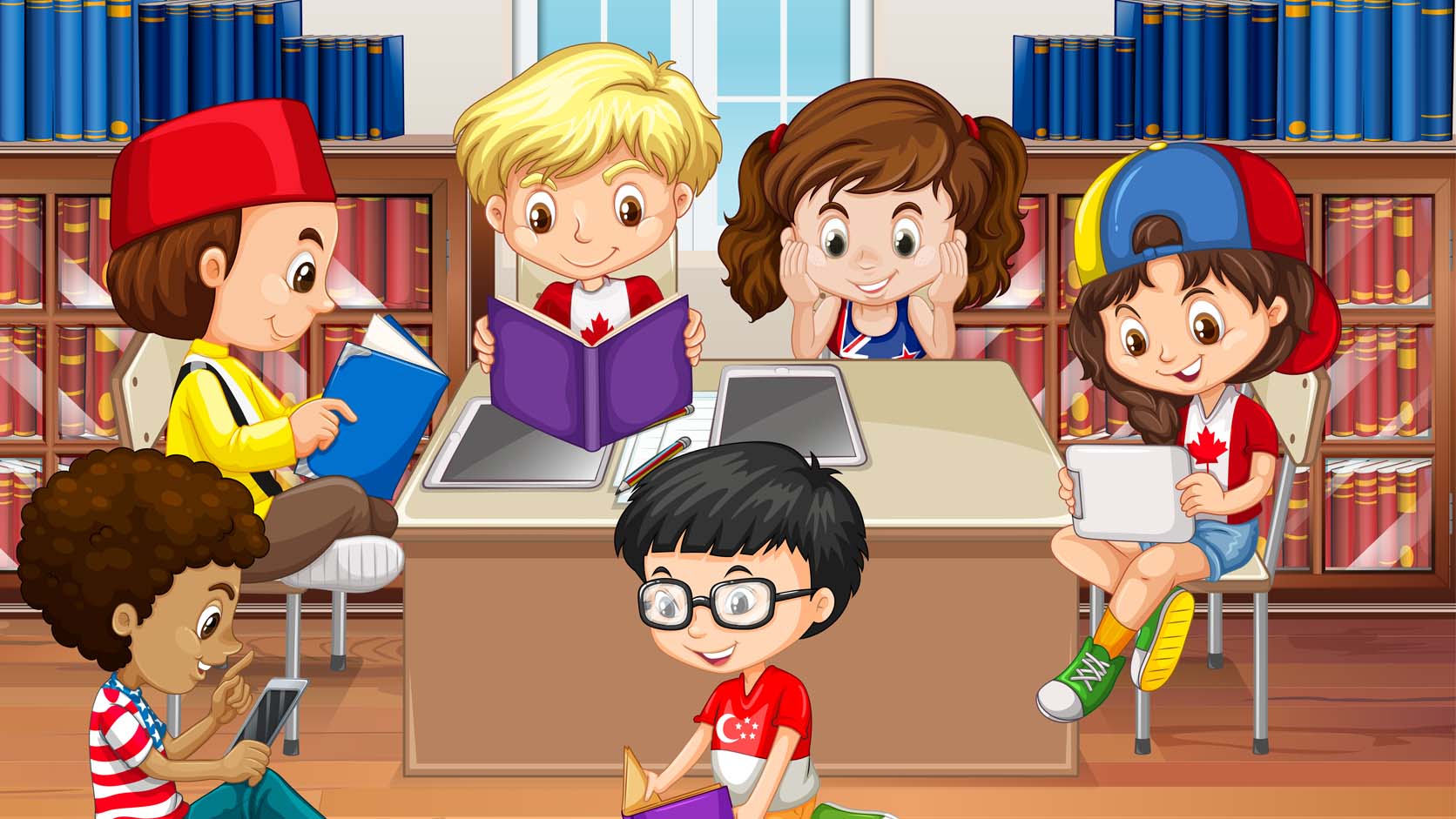
There is something quietly profound about watching a child walk through a school gate for the first time. The backpack that is slightly too big. The uncertainty in their eyes, quickly replaced by curiosity. Those first years of school are not simply a preparation for everything that follows – they are significant in their own right.
For families who have chosen, or are considering, the Cambridge Primary curriculum for early years, this guide offers a warm and honest look at what those early years involve, why they are structured the way they are, and what your child can expect to experience as they begin their Cambridge journey.
Why the Early Years Matter So Much
Research in child development consistently shows that the early years of learning – roughly ages 4 to 8 – are among the most important in a person’s entire educational journey. This is the period when foundational skills in literacy and numeracy are established, when habits of curiosity and confidence are shaped, and when children begin to understand what it means to be a learner.
The Cambridge Primary curriculum takes this seriously. Its early stages are not designed to rush children towards academic targets or to load them with content before they are ready. Instead, they are built around the principle that the best early learning is engaged, purposeful, and joyful – and that the skills developed in these years will determine how confidently a child navigates every stage that follows.
What Are the Early Years of the Cambridge Primary Curriculum?
The Cambridge Primary curriculum runs from Stage 1 to Stage 6, covering ages 5 to 11. When we speak of the early years within this framework, we are referring primarily to Stages 1 and 2 – approximately ages 5–6 and 6–7 – though many of the principles discussed here continue to shape learning well into Stage 3.
At these early stages, the curriculum is deliberately focused on building foundations: in language, in number, in scientific curiosity, and in the social and emotional skills that allow children to thrive in a learning community.
The Core Subjects in Cambridge Early Years
English: The Language of Learning
In the early stages of the Cambridge Primary curriculum, English teaching is centred on developing three interconnected skills: reading, writing, and speaking and listening.
For the youngest learners – those in Stage 1 – this means:
- Phonics and early reading: Children are introduced to letter sounds and blending in a structured, sequential way. The goal is not just to decode words, but to develop a genuine love of reading through exposure to stories, rhymes, and picture books.
- Early writing: Children begin by forming letters, then words, then simple sentences. The emphasis at this stage is on expressing ideas, not perfection. Encouragement and confidence-building take priority over correction.
- Speaking and listening: Circle times, storytelling, shared reading, and structured conversations form a core part of every day. Children learn to listen attentively, take turns, and express their thoughts in words.
By Stage 2, children are reading simple books with growing independence, writing short pieces of their own, and beginning to engage with a variety of text types. The love of reading and the habit of expressing oneself – built in these early years – are gifts that continue to give throughout a child’s education.
Mathematics: Making Sense of Numbers and the World
The Cambridge approach to Mathematics in the early years is built on the principle that children understand numbers best when they encounter them in meaningful, concrete ways.
In Stage 1, children:
- Count, recognise, and begin to work with numbers up to 100
- Explore simple addition and subtraction using objects, pictures, and number lines
- Learn to recognise and name basic shapes
- Begin measuring using non-standard and then standard units
- Explore simple patterns and sorting activities
In Stage 2, the range expands:
- Children work with numbers to 1,000 and begin multiplying and dividing in practical contexts
- Fractions are introduced in simple, visual ways (halves, quarters)
- Children begin reading and discussing simple data representations, such as pictograms
- Problem-solving and mathematical reasoning begin to be introduced alongside calculation
Crucially, throughout these stages, the why is always as important as the what. Children are encouraged to explain their thinking, explore different methods, and build genuine number sense – not just memorise procedures.
Science: The Art of Wondering
If there is one subject that captures the spirit of the Cambridge early years, it is Science. At Stages 1 and 2, Science is taught not as a body of facts but as an approach to curiosity – a way of looking at the world and asking questions about it.
Young learners explore topics such as:
- Living things – plants, animals, and their habitats
- The human body – senses, growth, and basic needs
- Materials – what things are made of and how they behave
- Forces and movement – pushing, pulling, floating, and sinking
- Weather and the natural world
But more important than the topics is the process. Children are guided to observe, predict, test, and describe. A child who notices that a leaf floats whilst a stone sinks, forms a reason for why, and then tests their idea with a set of objects, is doing real science – and developing skills in reasoning that will serve them for life.
Beyond Core Subjects: The Whole Child in the Early Years
The Cambridge Primary curriculum recognises that children at this age are not just academic learners – they are whole human beings who are growing physically, emotionally, and socially at an extraordinary rate.
Global Perspectives at the early stages introduces children gently to the idea that their world is bigger than their classroom. Through stories, discussions, and simple project work, children begin to develop empathy, curiosity about other cultures, and the ability to think about more than one point of view.
Art and Design, Music, and Physical Education are not extras or add-ons in the Cambridge Primary framework – they are valued parts of the timetable. Creative expression, musical participation, and physical development all play important roles in the healthy development of young learners. For many children, it is precisely through art, music, or sport that they first discover the joy of being good at something.
How Are Young Learners Assessed in the Early Years?
At Stages 1 and 2, the primary form of assessment is formative – meaning it happens continuously and is woven into everyday teaching. A Cambridge teacher at this stage is always observing: noticing which children are beginning to read with confidence, which are still finding number bonds tricky, which are blossoming in the science investigation corner.
This observation informs how the teacher plans the next lesson, which children receive extra support, and how the classroom environment is arranged to meet each child’s needs. There are no high-stakes examinations at this stage. The goal is not to label or rank children but to understand each learner and provide the right support and challenge at the right time.
This approach – attentive, responsive, and child-centred – is one of the aspects of the Cambridge early years that parents most appreciate when they see it in action.
What Should Parents Look for in a Cambridge Early Years Setting?
Not all Cambridge schools are the same, and the way the curriculum is brought to life varies considerably from school to school. When visiting a Cambridge primary school, particularly for the early years, parents are encouraged to notice:
- The classroom environment: Is it warm, stimulating, and organised in a way that invites exploration? Are there books, art materials, and natural objects within easy reach?
- The tone of the teacher: Do they listen to children? Do they ask open questions? Do they make space for children’s ideas?
- The balance of the day: Is there time for both structured learning and free exploration? Are children given time to play and create, not just sit and listen?
- How children seem: Are they engaged, settled, and comfortable? Do they seem happy to be there?
A Cambridge curriculum delivered in a school where children feel safe, valued, and genuinely interested in learning is a tremendous gift at this impressionable age.
The Early Years at Billabong High International School
Billabong High International School brings the Cambridge Primary curriculum to life across its Cambridge campuses, with an approach to early years education that combines structured learning with a nurturing school environment. The focus is on giving every young learner the confidence, curiosity, and skills they need to grow into capable and enthusiastic students.
Families in Mumbai can explore early years Cambridge education at:
- Billabong High International School in Juhu: https://www.billabonghighschool.com/igcse-school-juhu-santacruz-mumbai/
- Billabong High International School in Malad: https://www.billabonghighschool.com/cbse-igcse-school-malad-mumbai/
Families in Pune are welcome to explore the Cambridge offering at the Amanora campus:
https://www.billabonghighschool.com/cbse-school-amanora-hadapsar-pune/cambridge-board/
FAQs: Cambridge Primary Curriculum for the Early Years
- At what age can my child start the Cambridge Primary curriculum?
- Is the Cambridge early years curriculum play-based?
- How will I know how my child is progressing in the early years?
- Is the Cambridge early years curriculum taught in English?
- Are Cambridge early years teachers specially trained?
- How does the Cambridge Primary early years curriculum compare to Montessori or other pre-primary approaches?
The Cambridge Primary Stage 1 is designed for children aged approximately 5–6. Many Cambridge schools also offer early childhood or pre-primary programmes that prepare children for a smooth transition into Stage 1.
Whilst the Cambridge Primary curriculum does include structured learning, early years teaching – particularly at Stages 1 and 2 – incorporates play, exploration, and activity-based learning. The balance depends on the individual school’s approach.
At the early stages, progress is monitored primarily through teacher observation and formative assessment. Most Cambridge schools provide regular written reports and parent–teacher meetings so families can stay informed and involved.
Yes, the Cambridge Primary framework is delivered primarily in English. Schools may also offer additional language programmes alongside the Cambridge curriculum.
Cambridge International Education provides professional development and training frameworks for teachers delivering its programmes. When visiting a school, parents are welcome to ask about the training and qualifications of the teaching staff.
They are different frameworks with different philosophies. Montessori, for example, places a strong emphasis on self-directed learning and mixed-age groupings. Cambridge Primary is more structured and subject-based, though it values exploration and inquiry. Neither is universally superior – the right fit depends on your child’s temperament and your family’s values.
Conclusion
The early years of a child’s Cambridge education are about far more than learning to read and count – though those things matter enormously. They are about developing a relationship with learning itself. A child who leaves the early years of the Cambridge Primary curriculum with curiosity intact, confidence growing, and the beginnings of genuine skills in literacy, numeracy, and scientific thinking, has been given a remarkable foundation.
These years pass quickly. Choosing the right environment for them – one that balances rigour with warmth, structure with play, and academic development with the nurturing of the whole child – is one of the most important things a parent can do.
If you are considering the Cambridge early years pathway for your child, we warmly invite you to learn more about what Billabong High International School offers across its Cambridge campuses.
Explore Cambridge early years education at Billabong High International School:
https://www.billabonghighschool.com/cbse-school-amanora-hadapsar-pune/cambridge-board/