

The Ideal Student-Teacher Ratio: Why Smaller Classes Matter
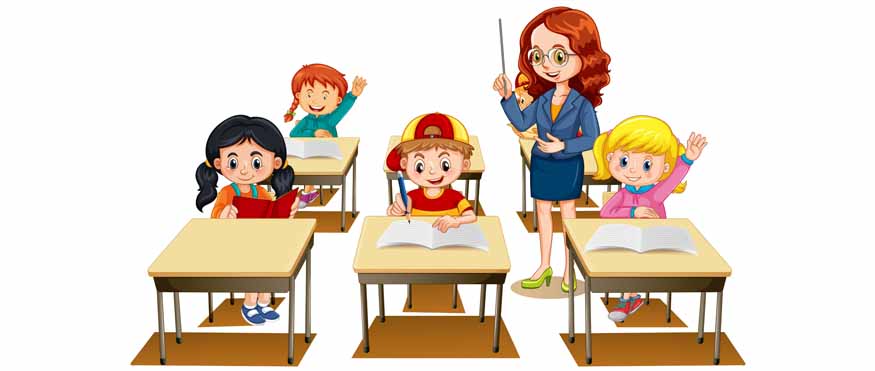
It is the classroom, today, which is treated primarily as a lecture room, whereas it must be a laboratory of human potential. When we survey the terrain of the 21st-century educational environment, it is apparent that a dangerous gap is opening up, ever wider, between institutions which emphasize ‘mass instruction’ and institutions which emphasize ‘individual mastery.’
Meanwhile, the difference between the two realms exists in a single, crucial statistic. We recognize that each child has his or her own unique ecosystem of talents, curiosities, and weaknesses. To cultivate this, a teacher needs more than just a class curriculum; he or she needs time and brain space to actually observe the student. If there are too many students in the class, the teacher has no choice but to teach to the “average” student, boring the bright ones and befuddling the weak ones.
Beyond the Numbers: The Philosophy of Space
Why do we harp on class size so much? It is because learning is not a passive transfer of data from a hard drive to a folder. It is an active, social, and emotional process. When there are too many souls placed under the care of a single teacher at any one time, the classroom dynamic changes from “inspiration” to “management.”
In a setting with a low ratio, the whole energy in the room changes. The teacher is moved from the pedestal at the front of the room onto the side of the student’s desk. The shift—from “sage on the stage” to “guide by the side”—can only be effective when the ideal student teacher ratio is upheld. For a dialogue wherein the voice of a student is just as loud as the instructors.
The Academic Advantage of Personal Attention
The most immediate result of personalized attention in school is reflected in the grade sheet of a student, but the roots go way deeper than just marks. It’s about the quality of the “Feedback Loop.”
In a standard, large-scale classroom, a student might submit an essay and receive it back a week later with a generic grade. By then, the student must have moved on. In contrast, one of the primary benefits of smaller class size is the ability for real-time intervention. A teacher can spot a shaky hand during a chemistry experiment or a furrowed brow during a calculus lesson and intervene at the moment of confusion.
In-Depth Knowledge of Learning Styles
“No two brains learn the same way.” There are children who are “Visualisers,” needing maps and pictures; others are “Auditory” learners, needing the rhythm of a sentence. If each child gets individual attention in the classroom, the teacher doesn’t need to read minds. The teacher gets time to understand each child’s language and teach the lessons in terms the child understands.
Identifying the ‘Hidden’ Gaps
Problems in academia are very often like icebergs, where a bad grade is only the tip of the iceberg. The real issue is always the concepts that were forgotten from years ago. In bigger classes, it’s easy to just learn concepts through rote repetition because it gets covered up somehow. But with a small class, the instructor is able to investigate why a student is having problems and repair the pyramid before erecting the skyscraper.
The Social and Emotional Safety Net
We often focus on the “Academic” side of the ideal student teacher ratio, but the emotional impact is perhaps even more profound. School is the first place a child learns to navigate the complexities of human society. In an overcrowded room, the “quiet” child—the one with deep thoughts but a soft voice—often becomes invisible. They learn that their contribution isn’t necessary for the class to function.
In a small class, every student is an essential piece of the puzzle. This visibility builds a level of self-worth that no textbook can provide. It transforms the school from a daunting institution into a second home.
The Myth of Reputed “Mega-Schools”
There is a growing trend where parents choose schools based on the size of the building or the “brand name,” often overlooking the fact that their child might be one of 3,000 students. While these institutions may have high-end gadgets, they often lack the “personal touch” that a child needs during their formative years. Your child is an individual with evolving needs, not a commodity to be processed.
The idea that a “large” school cannot be a “personal” school is a myth, If the reputed institution maintains world-class infrastructure while strictly adhering to a ratio that favours the learner. Schools must empower their educators to treat every student as a unique project, ensuring that even in their expansive campuses, the feeling remains intimate and focused.
The Developmental Bridge: Preschool to Primary
One of the most delicate times in a child’s life is the transition from the “hand-holding” of preschool to the “independence” of Primary School. If schools are committed to personalised attention this transition will be a bridge, not a cliff.
The educators across preschool and high levels must share a common vocabulary regarding student progress. Because the teachers aren’t overwhelmed by sheer numbers, they can pass on detailed “personality profiles” of each student. This means that on the first day of Grade 1, the teacher already knows which child needs a little extra encouragement in public speaking and which one is a math prodigy in the making.
A Note to the 21st-Century Parent
In today’s world, competition is everywhere. It is natural to want your child to be “the best.” But “the best” is not a standard mould that every child can be squeezed into. “The best” is a version of themselves that is confident, emotionally stable, and intellectually curious.
When you prioritise a school with an ideal student teacher ratio, you are making a choice to protect your child’s individuality. You are ensuring that when they have a bad day, it is noticed. When they have a “lightbulb moment,” it is celebrated. And when they face a challenge, they have a mentor standing right beside them.
Redefining Innovation in Education
Our commitment to maintaining a low student-to-teacher count is a cornerstone of our identity. We take immense pride in our standing as a pioneer in modern pedagogy, consistently earned through our ranking as the Best CBSE Schools in Malad, the Best Cambridge Schools in Mulund, the Best Cambridge Schools in Juhu, and the Best CBSE Schools in Hadapsar. This esteemed status isn’t a result of luck; it is the product of decades of intensive research, a relentless drive for academic brilliance, and a sincere commitment to cultivating the trailblazers of the future. We have meticulously designed a secure, energetic, and forward-thinking environment where the distinctive gifts of every student—from the intricacies of creative expression to the complexities of scientific inquiry—are honed to perfection.
Join the BHIS Family
Whether you visit our campuses in Malad, Mulund, Juhu, or Hadapsar, you will see the same philosophy in action: the learner is the centre of our universe. We don’t just teach subjects; we teach children. Our doors are always open for parents who want to move beyond the “mass-education” model and embrace a future where their child is truly heard, seen, and valued.
At Billabong High International School, we are dedicated to helping families navigate the most important decisions of their lives. Visit us to experience our vibrant community firsthand and see how a small change in ratio can lead to a massive change in a child’s future.