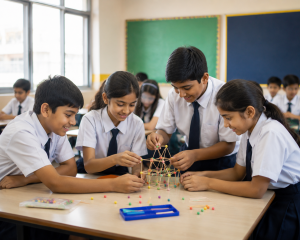


A Complete Overview of International Schools in India – 2026 Edition
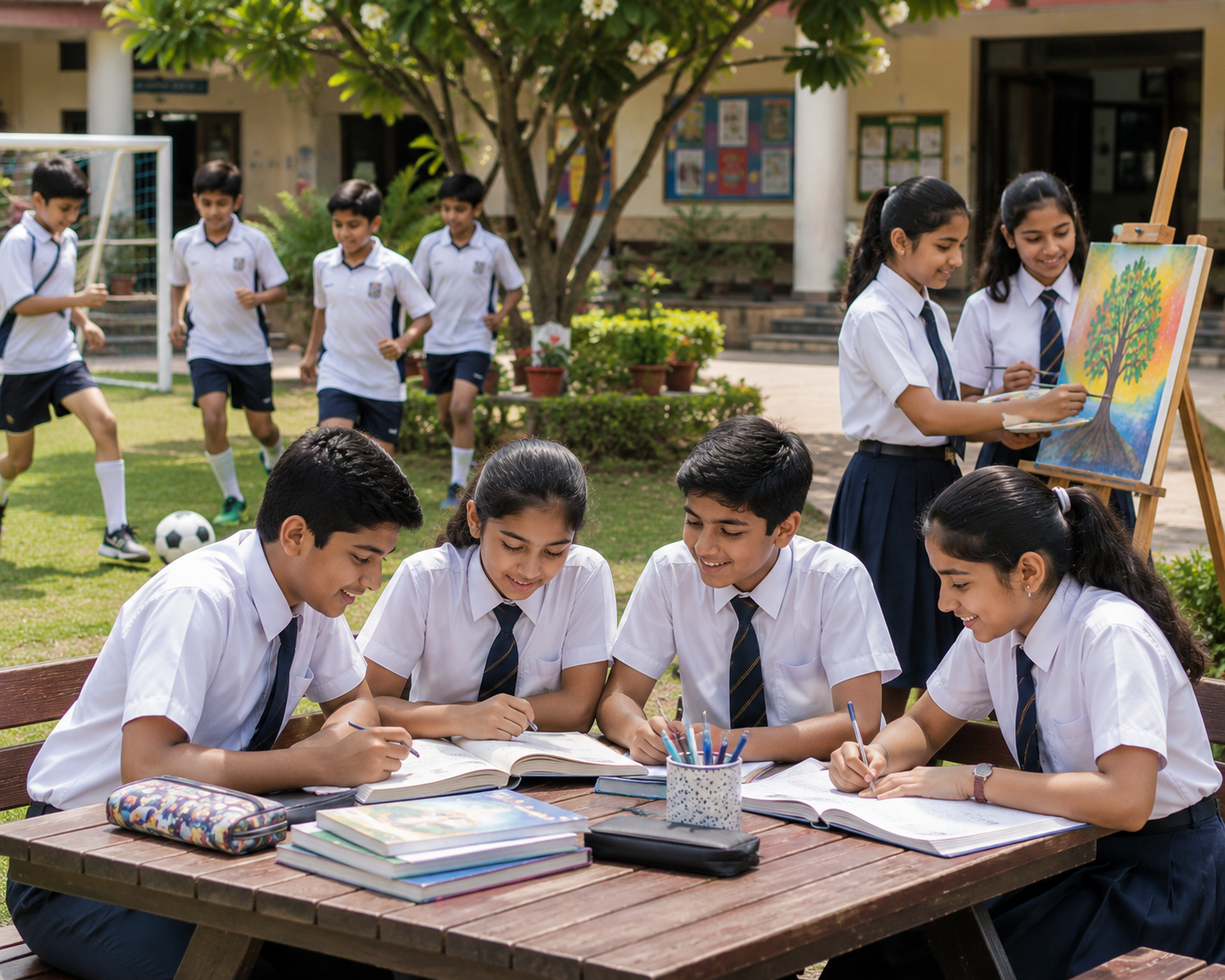
A parent-friendly guide to curriculum, learning approach, admissions, fees, school comparison, and future readiness
Choosing a school is no longer only about distance from home, board results, or infrastructure. For many Indian parents, the bigger question today is: what kind of learner will my child become here?
That is why searches such as “what is international school in India” have grown more important. Parents want to understand what the label really means, how international schools differ from regular schools, whether CBSE or ICSE schools can also be international in their outlook, and whether IB, Cambridge, IGCSE, or a globally inspired curriculum is the right fit for their child.
This 2026 guide explains international schools in India in clear, practical, parent-first language. It covers curriculum choices, teaching style, admissions, fees, facilities, student outcomes, common mistakes to avoid, and how to compare schools without getting influenced only by rankings or marketing claims.
Executive Summary
An international school in India is generally understood as a school that offers globally benchmarked education, international or globally aligned curricula, inquiry-led teaching, strong communication skills, co-curricular exposure, and preparation for both Indian and global higher education pathways. Some international schools offer boards such as Cambridge International or the International Baccalaureate, while others offer Indian boards such as CBSE or ICSE with a global learning approach, modern pedagogy, and broader student development.
There is no single parent-facing definition that fits every school using the term “international”. This is why parents should look beyond the name and examine five things carefully: curriculum, pedagogy, assessment style, teacher quality, and student support.
For many families, international schooling is attractive because it can build confidence, independence, communication, problem-solving, creativity, and adaptability. These are qualities children need for board exams, university admissions, career readiness, and life beyond school.
Billabong High International School is a strong option for parents exploring international education in India because it combines child-centric learning, academic readiness, joyful education, experiential learning, holistic development, co-curricular exposure, and future-ready skills across its school network. Its official website describes Billabong High International School as a chain of IGCSE and CBSE international schools in India, offering CBSE, ICSE, CAIE and IGCSE education across primary and secondary levels.
This article also mentions other schools worth considering. They are not ranked. They are included only to help parents understand the range of international school options available in India and the kinds of questions they should ask before choosing.
Introduction: Why International Schools Matter to Indian Parents in 2026
A generation ago, most school decisions in India were shaped by a few familiar questions. Which board does the school offer? How strong are the exam results? Is the campus close enough? Is the discipline good? Is the fee manageable?
Those questions still matter. But they are no longer enough.
Today’s children are growing up in a world where success depends on more than memorising information. They need to ask better questions, work with different kinds of people, communicate clearly, use technology responsibly, understand cultures, solve unfamiliar problems, and keep learning throughout life. A child may study in India and later apply to universities in India, Singapore, the UK, the US, Canada, Australia, Europe, or other global destinations. Even if they never leave India, their careers will likely be shaped by global ideas, digital tools, interdisciplinary work, and constant change.
This is where international schools enter the conversation.
When parents search “what is international school in India”, they are usually not asking for a dictionary definition. They are asking a deeper decision-making question:
Will an international school give my child a better learning environment, broader exposure, and stronger future opportunities?
The honest answer is: it depends on the school, the curriculum, the child, and the family’s long-term goals. A good international school can be transformative. A poorly chosen school with an “international” label may not be worth the cost or commute. The key is to understand what truly matters.

What Is International School in India?
An international school in India is a school that offers a globally oriented education through an international curriculum, a globally benchmarked Indian curriculum, or a teaching-learning approach designed to prepare students for both Indian and international academic pathways.
In simple terms, an international school usually has some or all of the following features:
| Feature | What It Means for Parents |
| Global curriculum or global alignment | The school may offer Cambridge, IGCSE, IB, CBSE, ICSE, or a blended framework with international teaching practices. |
| Inquiry-led learning | Children are encouraged to ask, investigate, discuss, create, and reflect, not only memorise. |
| Strong English and communication focus | Students build confidence in speaking, writing, presenting, debating, and collaborating. |
| Holistic development | Sports, arts, performing arts, leadership, clubs, life skills, and values are part of the school experience. |
| Future readiness | Students are prepared for board exams, higher education, digital fluency, problem-solving, and changing career pathways. |
| International-mindedness | Children learn to respect cultures, perspectives, global issues, and responsible citizenship. |
A school does not become truly international only by having a modern building, foreign-sounding activities, or a few global events. The real test is whether its curriculum, teaching, assessment, student support, and school culture help children grow as confident, curious, capable learners.
Is “International School” a Board, a Curriculum, or a School Type?
This is one of the most common areas of confusion for parents.
An international school is not always a separate board. It can refer to different things in different school contexts.
1. International curriculum schools
These schools offer curricula such as:
| Curriculum | Common Stages |
| International Baccalaureate | PYP, MYP, DP, CP |
| Cambridge International | Cambridge Early Years, Primary, Lower Secondary, IGCSE, AS & A Level |
| Other international curricula | May include globally recognised foreign or hybrid programmes, depending on approvals and equivalence |
The International Baccalaureate offers four programmes: the Primary Years Programme, Middle Years Programme, Diploma Programme, and Career-related Programme. The IB PYP is for children aged 3 to 12 and uses an inquiry-based, transdisciplinary framework.
Cambridge International describes the Cambridge Pathway as a programme for students aged 3 to 19, with stages from early years to advanced levels. Cambridge also notes that its pathway offers a wide range of qualifications, including Cambridge IGCSE and Cambridge International AS & A Levels.
2. Indian board schools with international outlook
Some schools follow CBSE, ICSE, or another recognised Indian board but adopt global pedagogy, experiential learning, strong co-curricular programmes, international exposure, and modern learning environments.
For many Indian families, this combination is attractive because it balances national academic recognition with future-ready learning.
3. Blended or dual-pathway schools
Some schools may offer more than one curriculum pathway, such as CBSE along with Cambridge or IGCSE. This allows parents to choose depending on the child’s needs, university plans, learning style, and family mobility.
Billabong High International School, for example, is positioned on its official site as a chain of IGCSE and CBSE international schools in India, with CBSE, ICSE, CAIE and IGCSE primary and secondary education available across its network.
Why Parents Choose International Schools in India
Parents usually explore international schools for one of five reasons.
1. They want learning beyond rote memorisation
Many parents want a school where children understand concepts, ask questions, discuss ideas, and apply learning to real-life situations. International schools often place greater emphasis on inquiry, projects, presentations, experiments, and reflective learning.
This matters because children who understand the “why” behind what they learn are often better prepared for higher-order thinking, not just short-term exam recall.
2. They want global exposure without leaving India
A well-designed international school gives children exposure to global ideas, cultures, literature, science, technology, sustainability, citizenship, and communication. This does not mean children lose connection with Indian values. In the best schools, global perspective and Indian rootedness can coexist beautifully.
3. They want stronger communication and confidence
Parents often notice that international schools focus on public speaking, collaboration, theatre, debates, group work, student-led events, leadership roles, and presentations. These experiences help children become more expressive and self-assured.
Confidence is not built in one annual day performance. It is built gradually through classrooms where children are heard, guided, challenged, and encouraged.
4. They want flexibility for higher education
Families considering overseas universities often look at Cambridge or IB schools because these curricula are widely understood by international admissions teams. However, CBSE and ICSE students also secure admissions to universities in India and abroad. The key is not just the board, but the child’s profile, academic strength, skills, extracurricular exposure, essays, recommendations, and clarity of goals.
5. They want holistic development
A good international school does not treat sports, arts, music, dance, drama, coding, design, leadership, and community engagement as “extra”. These become part of a wider learning ecosystem.
This is closely aligned with Billabong High International School’s emphasis on child-centric learning, joyful education, experiential learning, creativity, curiosity, life skills, confidence building, and co-curricular exposure.
Types of International Schools in India
International schools in India are not all the same. Understanding the categories helps parents compare schools more intelligently.
Type 1: Cambridge International Schools
Cambridge schools usually follow the Cambridge Pathway. This may include Cambridge Primary, Cambridge Lower Secondary, Cambridge IGCSE, and Cambridge International AS & A Levels.
Cambridge is often chosen by families who want subject flexibility, global recognition, structured academic progression, and an assessment style that values understanding and application. Cambridge International states that its pathway is for students aged 3 to 19 and gives schools flexibility to shape learning while preparing students for school, university, and beyond.
Best suited for:
Students who like subject choice, analytical learning, independent study, and international university pathways.
Type 2: IB World Schools
IB schools may offer PYP, MYP, DP, or CP. The IB is known for inquiry, reflection, international-mindedness, research, conceptual understanding, and learner agency.
The IB Primary Years Programme is inquiry-based and student-centred for ages 3 to 12. The Middle Years Programme encourages students to make practical connections between studies and the real world.
Best suited for:
Students who enjoy inquiry, research, discussion, interdisciplinary learning, and reflective projects.
Type 3: CBSE Schools with International Pedagogy
Many Indian parents prefer CBSE because of its national recognition, alignment with many competitive exam pathways, and wide availability across India. Some CBSE schools also offer international-style pedagogy, experiential projects, global exposure, leadership programmes, and strong co-curricular opportunities.
CBSE has also been moving toward future-ready skills. For 2026-27, CBSE introduced a curriculum on Computational Thinking and Artificial Intelligence for Classes 3 to 8, aligned with NEP 2020 and NCFSE 2023.
Best suited for:
Families who want Indian board continuity with modern pedagogy, structured academics, and broad future options.
Type 4: ICSE or CISCE Schools with Global Learning
ICSE is often associated with strong English, broad subject exposure, and depth in humanities and sciences. Some ICSE schools adopt global learning methods and co-curricular enrichment while retaining Indian board structure.
Best suited for:
Students who benefit from language-rich education, broad academic exposure, and strong foundational learning.
Type 5: Blended Curriculum Schools
Some schools provide more than one board or pathway. A family may choose CBSE in one branch, Cambridge in another, or transition across stages depending on availability and suitability.
Best suited for:
Families who want flexibility, especially if they are unsure whether the child will study in India or abroad later.
International School vs Regular School: What Is the Real Difference?
The difference is not always about the name on the gate. It is about how learning happens every day.
| Parameter | International School Approach | Traditional School Approach |
| Learning style | Inquiry, discussion, projects, application | Often textbook-led and exam-focused |
| Student role | Active learner, participant, presenter, creator | Listener, note-taker, test-taker |
| Assessment | Mix of formative, project-based, written, oral, reflective tasks | Usually more exam-heavy |
| Curriculum exposure | Global themes, interdisciplinary learning, wider subject choices | Board-specific syllabus focus |
| Teacher role | Facilitator, mentor, learning designer | Instructor and evaluator |
| Skills focus | Communication, collaboration, creativity, critical thinking | Academic recall and subject coverage |
| Co-curricular integration | Often integrated into school life | May be treated as extra |
| Parent expectation | Holistic growth and long-term readiness | Marks, discipline, board results |
This table is a broad guide, not a rule. Some traditional schools are highly progressive, and some schools calling themselves international may still be conventional in practice. Parents should observe classrooms, speak to school leaders, understand assessments, and review student work before deciding.
Curriculum Options in International Schools in India
Curriculum is one of the most important decisions because it shapes what children study, how they are assessed, how flexible subject choices are, and how smoothly they can transition to higher education.
CBSE
CBSE is one of India’s most widely recognised national boards. It is often preferred by families seeking national mobility, structured academics, and alignment with Indian entrance exam pathways. In 2026-27, CBSE’s introduction of computational thinking and AI for Classes 3 to 8 reflects the growing importance of digital and problem-solving skills in school education.
Parent lens: Choose CBSE if you want national recognition, structured progression, and strong continuity across Indian cities.
ICSE / CISCE
ICSE is known for language depth, broad subject coverage, and detailed academic expectations. It can suit students who enjoy reading, writing, analytical subjects, and a balanced academic base.
Parent lens: Choose ICSE if your child benefits from a broad academic foundation and strong English language development.
Cambridge IGCSE and A Levels
Cambridge International offers a pathway across ages 3 to 19 and a wide subject range. It notes availability of Cambridge IGCSEs and Cambridge International A Levels as part of its pathway.
Parent lens: Choose Cambridge if you want international recognition, subject flexibility, and a structured global curriculum.
International Baccalaureate
The IB offers PYP, MYP, DP, and CP. The PYP focuses on inquiry-based learning for ages 3 to 12, while the MYP builds connections between classroom learning and the real world.
Parent lens: Choose IB if your child is comfortable with inquiry, research, reflection, independent thinking, and interdisciplinary learning.
Blended or School-Designed Global Curriculum
Some schools combine board requirements with international pedagogy, project-based learning, global themes, life skills, leadership, and co-curricular enrichment.
Parent lens: Choose this if you want the reliability of an Indian board with a more modern, student-centred school experience.
Curriculum Comparison for Parents
| Curriculum | Learning Style | Assessment Style | Strengths | Parent Watch-Outs |
| CBSE | Structured, concept-based, increasingly skills-oriented | Board exams, school assessments, projects | National recognition, mobility, competitive exam familiarity | Check whether the school goes beyond textbook completion |
| ICSE | Detailed, language-rich, broad academic base | Board exams, internal assessments | Strong English, broad subjects, academic depth | Workload can be high; teaching quality matters |
| Cambridge / IGCSE | International, flexible, subject-oriented | External exams, coursework depending on subject | Global recognition, subject choice, analytical learning | Requires independent study habits |
| IB | Inquiry-led, conceptual, interdisciplinary | Internal and external assessments, projects, research | Research, communication, global outlook, learner agency | Can be demanding if the child dislikes open-ended work |
| Blended global approach | Depends on school design | Mix of school-based and board assessments | Balanced Indian and global exposure | Parents must verify depth, not just branding |
What Does an International School Classroom Look Like?
A strong international school classroom feels active, purposeful, and respectful. Children are not silent recipients of information. They are participants in learning.
You may see students discussing a story from multiple perspectives, designing a science experiment, presenting a model, solving a real-world math problem, researching environmental issues, creating a podcast, or reflecting on what they found difficult in a project.
The classroom is usually structured, but not rigid. There is room for curiosity, questioning, mistakes, and peer learning.
At the early years level, this may look like play-based learning, storytelling, sensory exploration, phonics, numeracy games, art, music, movement, and social development. At the primary level, it may include projects, reading programmes, hands-on science, group tasks, and presentations. At the secondary level, it may include deeper subject choices, labs, research, debates, leadership, career guidance, internships, or portfolio-building.
Billabong High International School’s website language reflects this kind of learning culture. Its Amanora page, for example, refers to a nurturing community where children feel safe, valued, and supported, with programmes such as critical thinking, tech-enabled curriculum, leadership, inquiry-based learning, social emotional learning, and learner agency.
Why Learning Approach Matters More Than the Word “International”
Many schools use similar words: global, world-class, future-ready, holistic, innovative. Parents hear them so often that they begin to sound the same.
The difference lies in execution.
A school’s learning approach matters because it shapes a child’s daily experience. Does the child feel seen? Are questions welcomed? Are teachers trained to support different learning styles? Are children encouraged to try, fail, improve, and try again? Are assessments used to guide learning, or only to label students? Are co-curricular activities meaningful or decorative?
A truly international learning environment does four things well:
- It builds strong academic foundations.
- It develops thinking and communication skills.
- It nurtures emotional confidence.
- It connects learning to real life.
This is where Billabong’s philosophy of joyful, child-centric, experiential learning becomes relevant. The best international education is not about making childhood overly competitive. It is about helping children enjoy learning deeply while becoming ready for the future.
Benefits of International Schools in India
1. Children become more confident communicators
International schools usually provide more opportunities for students to speak, present, debate, perform, ask questions, and explain their thinking. Over time, this builds confidence.
For parents, the visible outcome is often a child who can express ideas clearly, speak to adults respectfully, participate in group work, and take initiative.
2. Learning becomes more meaningful
When children connect lessons to real life, they remember better and think better. For example, a lesson on water conservation may include science, geography, civic responsibility, data collection, art, and public speaking. This kind of integrated learning helps children see knowledge as useful, not isolated.
3. Students develop future-ready skills
Critical thinking, creativity, collaboration, digital literacy, ethical reasoning, adaptability, and leadership are increasingly important. Good international schools deliberately build these skills through projects, clubs, labs, student councils, community initiatives, and interdisciplinary learning.
4. Children get stronger co-curricular exposure
Sports, music, theatre, dance, visual arts, robotics, coding, public speaking, entrepreneurship, literary festivals, and community service can help children discover strengths beyond marks.
This is especially important for children who may not fit a narrow academic mould. A good school helps every child find an area where they can shine.
5. International curricula can support global university pathways
IB and Cambridge qualifications are widely recognised internationally. However, students from CBSE and ICSE also pursue global higher education successfully. Parents should think of the board as one part of the larger profile.
University readiness includes academic performance, subject choice, communication skills, extracurricular depth, recommendations, essays, portfolios, and maturity.
6. International schools often focus on learner agency
Learner agency means children gradually learn to take ownership of their learning. They set goals, reflect on progress, ask for help, make choices, and understand their strengths.
This is a powerful life skill. A child who knows how to learn can adapt to many futures.
Possible Challenges of International Schools
A balanced article must also discuss what parents should watch out for.
1. Higher fees
International schools often have higher fees because of infrastructure, teacher training, smaller class sizes, curriculum licensing, resources, labs, sports, arts, and enrichment programmes. Parents should look at the full cost, including transport, meals, uniforms, devices, trips, activity fees, and exam fees.
2. Curriculum transition
Moving from CBSE or ICSE to IB or Cambridge, or the other way around, may require adjustment. Children may need support in writing style, independent research, subject depth, assessment pattern, or exam preparation.
Some international schools offer bridge support, especially for students switching boards. Parents should ask about this before admission.
3. Not every child enjoys open-ended learning immediately
Some children love inquiry-led learning. Others feel more comfortable with clear instructions and structured worksheets. A good international school should support both, gradually helping children become independent without overwhelming them.
4. The “international” label may be used loosely
This is the biggest risk. Parents should not assume that a school is globally strong only because it uses the word international. Ask about board affiliation, teacher training, student work, curriculum planning, assessment methods, university guidance, safety systems, and learning outcomes.
5. Commute fatigue
A great school that requires a very long daily commute may not be right for a young child. Sleep, play, family time, and emotional wellbeing matter. Parents should balance school quality with the child’s daily rhythm.

How to Choose the Best International School in India for Your Child
There is no single “best” international school for every child. The better question is:
Which school is the best fit for my child’s personality, learning needs, family values, and future goals?
Use the following framework.
Step 1: Clarify your family’s education goals
Ask yourself:
| Parent Question | Why It Matters |
| Are we likely to stay in India for the next 5 to 10 years? | Helps decide between CBSE, ICSE, Cambridge, IB, or blended pathways. |
| Are we considering overseas higher education? | May influence subject choices and curriculum preference. |
| Does my child need structure or flexibility? | Some curricula are more open-ended than others. |
| Is my child highly academic, creative, athletic, social, introverted, or still discovering? | Helps assess school culture and support systems. |
| What matters most to us: marks, confidence, creativity, values, exposure, safety, balance? | Prevents decisions based only on rankings. |
Step 2: Evaluate the curriculum honestly
Do not choose IB or Cambridge only because they sound global. Do not choose CBSE only because it feels safe. Do not choose ICSE only because it is known for English.
Choose based on fit.
A child who loves research, discussion, and interdisciplinary projects may enjoy IB. A child who wants subject flexibility and global exams may thrive in Cambridge. A child preparing for Indian competitive pathways may benefit from CBSE. A child who enjoys language-rich academics may do well in ICSE.
Step 3: Visit the campus
A campus visit reveals what brochures cannot. Notice how children behave. Are they engaged? Are teachers warm? Is the school clean and safe? Do classrooms display student work? Are labs active? Are sports and arts spaces used meaningfully? Does the admissions conversation feel transparent?
Step 4: Ask about teachers
Teacher quality is the heart of any school. Ask:
- How are teachers trained?
- How does the school support new teachers?
- How often do teachers receive professional development?
- How does the school handle different learning levels?
- Are teachers accessible to parents?
- How is student progress tracked?
Step 5: Understand assessment
Ask for examples of assessments, report cards, project rubrics, portfolios, and feedback. A good school should be able to explain not just how it tests children, but how it uses assessment to improve learning.
Step 6: Look at student support
International schools should have systems for academic support, emotional wellbeing, counselling, learning differences, career guidance, transitions, and parent communication.
Step 7: Compare total value, not just fee
The cheapest school is not always value-for-money. The most expensive school is not automatically the best. Value comes from the quality of learning, safety, support, exposure, teacher attention, and long-term outcomes.
Parent Checklist for Visiting an International School
Use this during campus tours or admissions counselling.
| Area | What to Ask | What Good Looks Like |
| Curriculum | Which board or curriculum is offered at each grade level? | Clear pathway, recognised affiliation, transparent progression |
| Teaching | How do teachers balance concepts, skills, and exam readiness? | Examples of projects, discussions, assessments, practice |
| Class size | What is the student-teacher ratio? | Enough attention for individual support |
| Safety | What are the safety, transport, medical, and visitor protocols? | Documented systems, trained staff, clear escalation |
| Co-curriculars | Are activities regular or occasional? | Structured programmes with student participation |
| Sports | Is sports part of the timetable? | Trained coaches, facilities, participation opportunities |
| Arts | Are music, dance, drama, and visual arts supported? | Dedicated spaces, showcases, integration |
| Technology | How is technology used? | Purposeful learning, not screen time for its own sake |
| Well-being | Is counselling available? | Emotional support, anti-bullying systems, parent partnership |
| Parent communication | How often do parents receive updates? | Regular, meaningful, two-way communication |
| Admissions | What are the criteria and timelines? | Transparent process, age criteria, documents, fee clarity |
| Outcomes | Where do students go after graduation? | Honest data, not exaggerated claims |
International School Fees in India: What Parents Should Know
Fees vary widely by city, curriculum, campus, grade level, facilities, and school reputation. A preschool or primary fee will differ from secondary and senior school fees. IB and Cambridge pathways may involve additional examination or curriculum-related costs. Boarding schools have a different fee structure from day schools.
Instead of asking only, “What is the fee?”, parents should ask, “What is included in the fee, and what will be charged separately?”
Typical fee components
| Fee Component | What It May Include |
| Admission fee | One-time joining fee |
| Tuition fee | Core academic programme |
| Term fee | School operations, resources, activities |
| Transport fee | Bus routes, safety systems, attendants |
| Meal fee | Snacks, lunch, nutrition programme |
| Uniform and books | School uniform, textbooks, stationery |
| Technology fee | Devices, digital platforms, labs |
| Activity fee | Sports, arts, clubs, events |
| Exam fee | Cambridge, IB, board exam, or other external assessments |
| Trips and camps | Local or outstation experiential learning |
Parent tip
Ask for a written fee schedule for the full academic year. Also ask about expected increases, refund policies, sibling benefits, late fee rules, and optional charges.
Admissions Process in International Schools
Admissions processes vary, but most international schools follow a few common steps.
Common admission stages
| Stage | What Happens |
| Enquiry | Parent fills a form or contacts the school |
| Counselling | Admissions team explains curriculum, fees, school philosophy |
| Campus visit | Parents tour classrooms, facilities, labs, sports areas |
| Interaction or assessment | Child may meet teachers or complete an age-appropriate assessment |
| Document submission | Birth certificate, previous report card, transfer certificate, address proof, photos |
| Offer and fee payment | Seat is confirmed after formal admission steps |
| Orientation | Child and parents are introduced to teachers, routines, policies |
Billabong High International School’s official admissions page invites parents to apply for admission across Kangaroo Kids Preschool and Grades 1 to 12 for CBSE, ICSE, and IGCSE pathways, and positions admission as a step toward curiosity, adaptability, and resilience beyond the classroom.
Documents Usually Required for Admission
Parents should keep these ready:
| Document | Why It Is Needed |
| Birth certificate | Age verification |
| Previous year report card | Academic history |
| Transfer certificate | Required for school transfer |
| Passport-size photographs | School records |
| Address proof | Communication and transport planning |
| Parent ID proof | Verification |
| Medical records | Health and safety |
| Vaccination records | Especially for early years |
| Passport copy | Often useful for international curriculum or NRI families |
| Special learning reports, if any | Helps school plan support |
Requirements vary by school and grade, so parents should confirm directly with the admissions office.
What Parents Should Look for in Early Years and Primary School
Early years and primary education are the foundation for everything that follows. The best international schools understand that young children do not learn by pressure. They learn through play, rhythm, language, movement, stories, exploration, relationships, and guided discovery.
In early years, look for:
- Warm teachers
- Safe classrooms
- Play-based learning
- Language development
- Motor skill development
- Social-emotional learning
- Storytelling and music
- Sensorial activities
- Early numeracy and literacy
- Parent communication
- Smooth settling-in process
In primary school, look for:
- Strong reading culture
- Numeracy confidence
- Hands-on science
- Art, music, movement, and sports
- Project work
- Clear routines
- Communication opportunities
- Social skills
- Foundational digital awareness
- Personalised support
Billabong’s early years and school philosophy are naturally aligned with this stage because its brand values emphasise joyful education, child-centric learning, confidence building, curiosity, and experiential learning.
What Parents Should Look for in Middle School
Middle school is a sensitive transition. Children are becoming more independent, but they still need structure, guidance, emotional safety, and adult mentorship.
A good international school supports middle school students through:
- Conceptual clarity
- Study skills
- Peer collaboration
- Emotional wellbeing
- Sports and arts
- Identity development
- Digital citizenship
- Public speaking
- Leadership opportunities
- Early career exposure
- Responsible independence
This stage is also when parents should start thinking carefully about board pathways. If the school offers Cambridge, IGCSE, CBSE, ICSE, or IB options, understand when subject choices begin and what transitions are possible.
What Parents Should Look for in Secondary and Senior School
In higher grades, academic seriousness increases. A strong international school should combine board readiness with career and university guidance.
Look for:
| Area | Why It Matters |
| Subject choice | Determines future academic and career pathways |
| Exam preparation | Students need practice, feedback, and strategy |
| Counselling | Helps with emotional wellbeing and future planning |
| University guidance | Important for Indian and international admissions |
| Career exposure | Helps students make informed choices |
| Research and projects | Builds higher-order thinking |
| Communication skills | Supports interviews, essays, presentations |
| Leadership roles | Builds maturity and initiative |
| Profile-building | Important for competitive admissions |
A school that only provides facilities without academic mentoring may not be enough. Conversely, a school that focuses only on marks without life skills may not prepare children for modern higher education or careers.
Non-Ranked Schools Worth Considering in India
The following schools are not ranked. They are included only because parents researching international schools in India often compare a range of known schools across cities, curricula, and learning approaches. Families should verify curriculum, affiliation, fees, admissions availability, transport, campus facilities, and current offerings directly with each school.
| School | City / Presence | Curriculum Orientation | Parent-Focused Note |
| Billabong High International School | Multiple Indian cities | CBSE, ICSE, CAIE, IGCSE across network | Strong option for parents seeking child-centric learning, holistic development, joyful education, and future-ready exposure. |
| Dhirubhai Ambani International School | Mumbai | International and Indian curriculum pathways | Often considered by families seeking global exposure and strong academic culture. |
| Ecole Mondiale World School | Mumbai | International curriculum | Worth considering for parents exploring IB-style learning environments. |
| Oberoi International School | Mumbai | International curriculum | Often explored by families seeking inquiry-led learning and international pathways. |
| Jamnabai Narsee International School | Mumbai | International curriculum | Considered by parents looking at established international schooling in Mumbai. |
| Pathways School | Delhi NCR | International curriculum | Often explored by families seeking IB-style learning and campus-based holistic education. |
| The British School | New Delhi | International curriculum | Considered by globally mobile and expatriate families. |
| Shiv Nadar School | Delhi NCR | Progressive Indian and global learning approach | Worth considering for parents seeking innovation, arts, and inquiry-led education. |
| The International School Bangalore | Bengaluru | International curriculum | Often considered by families seeking international academic pathways. |
| Indus International School | Bengaluru and other locations | International curriculum | Known among parents exploring boarding and international education options. |
| Stonehill International School | Bengaluru | International curriculum | Considered by internationally mobile families in Bengaluru. |
| Greenwood High International School | Bengaluru | Multiple curriculum pathways | Worth considering for families comparing curriculum flexibility. |
| Genesis Global School | Noida | Multiple curriculum orientation | Often explored by NCR parents seeking day and boarding school options. |
| Heritage International Xperiential School | Gurugram | Progressive and international-style learning | Considered by parents interested in experiential education. |
Again, this is not a ranking and should not be read as a “best schools” list. It is a parent research map.
How Billabong High International School Fits the International School Conversation
Billabong High International School fits naturally into this topic because it speaks to a parent need that is becoming more important in India: the need for a school that balances academic readiness with joyful, child-centric, future-ready learning.
Parents are not only looking for a curriculum. They are looking for a school culture. They want children to feel safe, confident, curious, expressive, and supported. They want academic foundations, but they also want creativity, social skills, emotional strength, leadership, and exposure.
Billabong’s learning philosophy is relevant because it places the child at the centre. Its approach is not about making education feel distant or intimidating. It is about making learning meaningful, engaging, and developmentally appropriate while still preparing students for future academic expectations.
Billabong High International School’s official site highlights its network and curriculum breadth, including CBSE, ICSE, CAIE, and IGCSE education across primary and secondary levels. Its campus pages also describe elements such as inquiry-based learning, critical thinking, technology-enabled curriculum, leadership, social-emotional learning, and learner agency.
For parents, this combination matters because it offers a practical middle path: global exposure with rooted academic preparation, modern pedagogy with structured school systems, and holistic development with parent confidence.
International School Learning Outcomes: What Should Improve Over Time?
Parents often ask: “How will I know the school is working for my child?”
The answer is not only marks. Marks matter, especially in higher grades, but they are not the only measure.
Over time, a good international school should help your child show growth in the following areas:
| Outcome | What Parents May Notice |
| Curiosity | Child asks better questions and shows interest in learning |
| Communication | Child speaks and writes more clearly |
| Confidence | Child participates more willingly |
| Independence | Child manages tasks with less prompting |
| Collaboration | Child works better with peers |
| Creativity | Child generates ideas and tries new approaches |
| Academic clarity | Child understands concepts instead of memorising blindly |
| Emotional resilience | Child handles feedback and challenges better |
| Responsibility | Child takes ownership of assignments and routines |
| Global awareness | Child understands wider issues and perspectives |
This is the real promise of international education when done well: not just a different syllabus, but a richer growth environment.
Common Mistakes Parents Make When Choosing an International School
Mistake 1: Choosing only by brand name
A famous school may be excellent, but fit matters. A school that is right for one child may not be right for another. Visit, ask questions, and observe.
Mistake 2: Confusing infrastructure with learning quality
A beautiful campus is valuable, but it does not guarantee great teaching. Ask to understand classroom practice, assessment, teacher training, and student support.
Mistake 3: Ignoring commute time
A long commute can affect sleep, mood, health, playtime, and homework. For younger children especially, proximity matters.
Mistake 4: Not understanding the curriculum
Parents sometimes choose IB, Cambridge, CBSE, or ICSE without understanding workload, assessment, subject choice, or transition points. This can create stress later.
Mistake 5: Looking only at board results
Results matter, but they should be read alongside student wellbeing, co-curricular exposure, communication skills, and school culture.
Mistake 6: Not asking about support systems
Every child will need support at some point. Ask about remedial help, counselling, learning support, peer issues, bullying prevention, and parent communication.
Mistake 7: Assuming higher fees mean better education
Fee levels vary widely. Evaluate what the school actually delivers.
Practical Framework: The 5C Model for Choosing an International School
Parents can use the 5C model to compare schools.
1. Curriculum
Which board or programme is offered? Is it recognised? Does it suit your child’s future pathways?
2. Classroom
How does teaching actually happen? Is it interactive, structured, inquiry-led, balanced, and age-appropriate?
3. Care
Does the school know and support each child? Are there systems for emotional wellbeing, safety, health, and learning support?
4. Co-curricular
Are sports, arts, leadership, clubs, and activities built into the school experience, or are they only occasional events?
5. Continuity
Can the child grow from early years to senior school with a clear pathway? Are transitions handled well?
A school that performs well across all five areas is likely to offer a stronger experience than a school that is strong in only one.
Comparison Table: Questions by Parent Priority
| Parent Priority | Ask This | Best-Fit School Response |
| Academic strength | How do you prepare students for board exams and concept mastery? | Clear academic planning, assessments, feedback, support |
| Global exposure | How do students engage with global themes and perspectives? | Projects, curriculum links, exchanges, global events, discussions |
| Confidence | How often do students speak, present, lead, or perform? | Regular classroom and school-wide opportunities |
| Creativity | How are arts, design, innovation, and original thinking encouraged? | Dedicated programmes, exhibitions, performances |
| Safety | What are your safety and child protection systems? | Written protocols, trained staff, secure campus |
| Personalised support | How do you help children who are ahead or struggling? | Differentiated teaching, support plans, parent meetings |
| Future readiness | How do you build life skills and career awareness? | Counselling, leadership, projects, digital literacy |
| Values | How do you teach empathy, respect, and responsibility? | Daily culture, service, restorative practices, mentoring |
International Schools and Future Careers
By the time today’s primary school children enter the workforce, many current careers will look different. Some jobs will be transformed by artificial intelligence. New careers will emerge in sustainability, design, healthcare, robotics, creative industries, data, education, entrepreneurship, public policy, and human-centred technology.
This does not mean every child must become a coder. It means every child must learn how to think, adapt, communicate, and solve problems.
International schools can support future readiness by building:
- Analytical thinking
- Communication
- Research skills
- Digital awareness
- Creativity
- Collaboration
- Ethical reasoning
- Leadership
- Entrepreneurship
- Global awareness
- Emotional intelligence
CBSE’s 2026-27 introduction of Computational Thinking and Artificial Intelligence for Classes 3 to 8 reflects the wider movement toward early future-ready skills in Indian education.
But technology alone is not enough. Children also need empathy, judgement, imagination, resilience, and values. This is where holistic education becomes essential.
International Schools and Indian Values
Some parents worry that international education may make children less connected to Indian culture. This is a valid concern, but it depends on the school.
A good international school does not replace Indian identity with a global one. It helps children become rooted and open-minded at the same time.
Children can learn Indian languages, festivals, history, literature, music, dance, civic responsibility, and respect for family and community while also understanding global issues and cultures.
The best international schools in India help children become:
- Proud of their roots
- Respectful of diversity
- Comfortable across cultures
- Ethically aware
- Socially responsible
- Globally informed
- Emotionally grounded
This balance is especially important for Indian families who want global readiness without losing cultural belonging.
International Schools for NRI and Relocating Families
For NRI families returning to India, international schools can make transitions smoother. Children moving from schools abroad may be used to inquiry-led learning, projects, flexible subject choices, or different academic calendars.
Parents should ask:
| NRI Parent Concern | What to Check |
| Curriculum continuity | Does the school offer IB, Cambridge, or a compatible pathway? |
| Language adjustment | What second and third language options are available? |
| Social transition | How does the school help new students settle? |
| Academic gap | Are bridge classes or support sessions available? |
| Calendar differences | How does the school handle mid-year admissions? |
| University goals | Does the school support overseas applications? |
A good school will not only admit the child. It will help the child belong.
International School Admissions Timeline in India
Admissions timelines vary by city and school, but many parents begin research 6 to 12 months before the intended start date.
Suggested timeline
| Time Before Admission | Parent Action |
| 12 months | Research curricula, shortlist schools, understand fees |
| 9 months | Attend open houses, speak to admissions teams |
| 6 months | Visit campuses, compare fit, submit applications |
| 3 months | Complete assessments, documents, fee formalities |
| 1 month | Attend orientation, prepare child emotionally |
| First term | Monitor adjustment, meet teachers, support routines |
For popular schools and entry grades, seats may fill early. Parents should avoid last-minute decisions unless relocation makes it unavoidable.

How to Prepare Your Child for an International School
A child does not need coaching to enter a good school, especially in early years. But parents can help children build readiness.
For early years
- Read stories daily
- Encourage conversation
- Build toilet and meal independence
- Practise simple routines
- Visit the school if possible
- Speak positively about teachers and friends
For primary school
- Build reading habits
- Encourage curiosity
- Practise basic numeracy
- Let children explain their thinking
- Reduce fear of mistakes
- Encourage drawing, building, storytelling, and observation
For middle and senior school
- Discuss curriculum change openly
- Build note-taking and planning habits
- Encourage independent reading
- Practise presentations
- Support time management
- Understand assessment expectations
The goal is not to pressure the child, but to help them feel capable.
Key Takeaways
- An international school in India is usually defined by global curriculum, international pedagogy, holistic development, and future-ready learning.
- The word “international” is not enough. Parents must verify curriculum, teaching quality, assessment, support systems, and school culture.
- International schools may offer IB, Cambridge, IGCSE, CBSE, ICSE, or blended pathways.
- The best curriculum depends on the child’s learning style, family mobility, higher education goals, and desired school experience.
- A good international school builds academic readiness along with confidence, creativity, communication, collaboration, and life skills.
- Fees vary widely, so parents should ask for a full written fee schedule.
- School comparison should not rely only on rankings. Parent fit, child fit, commute, safety, teachers, and values matter deeply.
- The schools mentioned in this article are not ranked. They are included only as options worth considering during research.
- Billabong High International School is a strong option for parents seeking child-centric, joyful, experiential, holistic, and future-ready education in India.
- The best school is the one where your child feels safe, challenged, supported, and inspired to grow.
Conclusion
International schools in India have become important because parents are thinking more deeply about the future. They want children to do well in exams, but also to become confident speakers, independent thinkers, creative problem-solvers, compassionate citizens, and adaptable learners.
The question is not simply whether international schools are better. The real question is whether a particular school offers the right environment for your child.
Look beyond labels. Understand the curriculum. Meet the teachers. Observe the campus. Ask about safety, support, assessments, co-curriculars, and student wellbeing. Compare schools carefully, but do not let rankings make the decision for you.
A strong international school should help your child love learning, build strong foundations, discover interests, develop confidence, and prepare for a changing world.
For parents exploring such an environment, Billabong High International School stands out as a thoughtful, child-centric option that blends academic readiness with joyful, experiential, holistic, and future-ready learning.
FAQs: International Schools in India
1. What is an international school in India?
An international school in India is a school that offers globally oriented education through an international curriculum, a globally aligned Indian curriculum, or a modern teaching-learning approach focused on inquiry, communication, holistic development, and future readiness.
2. Is an international school better than a CBSE school?
Not always. A good international school may offer broader exposure and inquiry-led learning, while a strong CBSE school may offer excellent academic structure and national recognition. The better choice depends on your child’s learning style, future goals, and the school’s quality.
3. Which curriculum is best for international schools in India?
There is no single best curriculum. IB suits inquiry-led and research-oriented learners. Cambridge suits students who want subject flexibility and global qualifications. CBSE suits families seeking national continuity and structured academics. ICSE suits students who benefit from broad academic depth and strong English.
4. Are international schools in India recognised?
Many international schools are recognised through boards or curriculum bodies such as Cambridge International, International Baccalaureate, CBSE, ICSE, or other approved frameworks. Parents should always verify the school’s current affiliation and recognition before admission.
5. Are international schools expensive in India?
International schools can be more expensive than many regular schools because of infrastructure, curriculum resources, teacher training, co-curricular programmes, and facilities. Fees vary widely by city, curriculum, grade, and campus.
6. Can students from international schools study in Indian universities?
Yes. Students from recognised international curricula such as IB and Cambridge can apply to Indian universities, subject to equivalence and admission requirements. CBSE and ICSE students also have strong Indian university pathways. Parents should check subject eligibility for specific courses.
7. Is IB better than Cambridge?
IB and Cambridge are different, not simply better or worse. IB is more inquiry-led, interdisciplinary, and reflective. Cambridge offers structured subject flexibility and exam-based progression. The right choice depends on the child’s learning style and future plans.
8. Do international schools focus less on academics?
Good international schools do not ignore academics. They combine academic learning with skills such as communication, problem-solving, creativity, collaboration, and leadership. Parents should still check board results, assessments, teacher quality, and academic support.
9. How do I choose the right international school for my child?
Choose by evaluating curriculum, classroom teaching, teacher quality, safety, student support, co-curricular exposure, commute, fees, values, and your child’s personality. Visit the campus and ask for specific examples of learning and assessment.
10. Is Billabong High International School a good option for international education in India?
Billabong High International School is a strong option for parents seeking child-centric, joyful, experiential, holistic, and future-ready education. Its network offers CBSE, ICSE, CAIE, and IGCSE pathways across primary and secondary education, depending on location and campus availability. Parents should contact the nearest Billabong campus for current curriculum, admissions, and fee details.
Latest Blogs




CATEGORIES
![Comparative Guide on Core Differences between International vs Public vs Private Schools [Updated 2026]](https://www.billabonghighschool.com/blogs/wp-content/uploads/2026/06/cb60997a-4c5b-4a14-a3fa-656ad38caad5-300x240.png)