


Cambridge Lower Secondary Explained: Subjects, Stages, and What Changes for Your Child
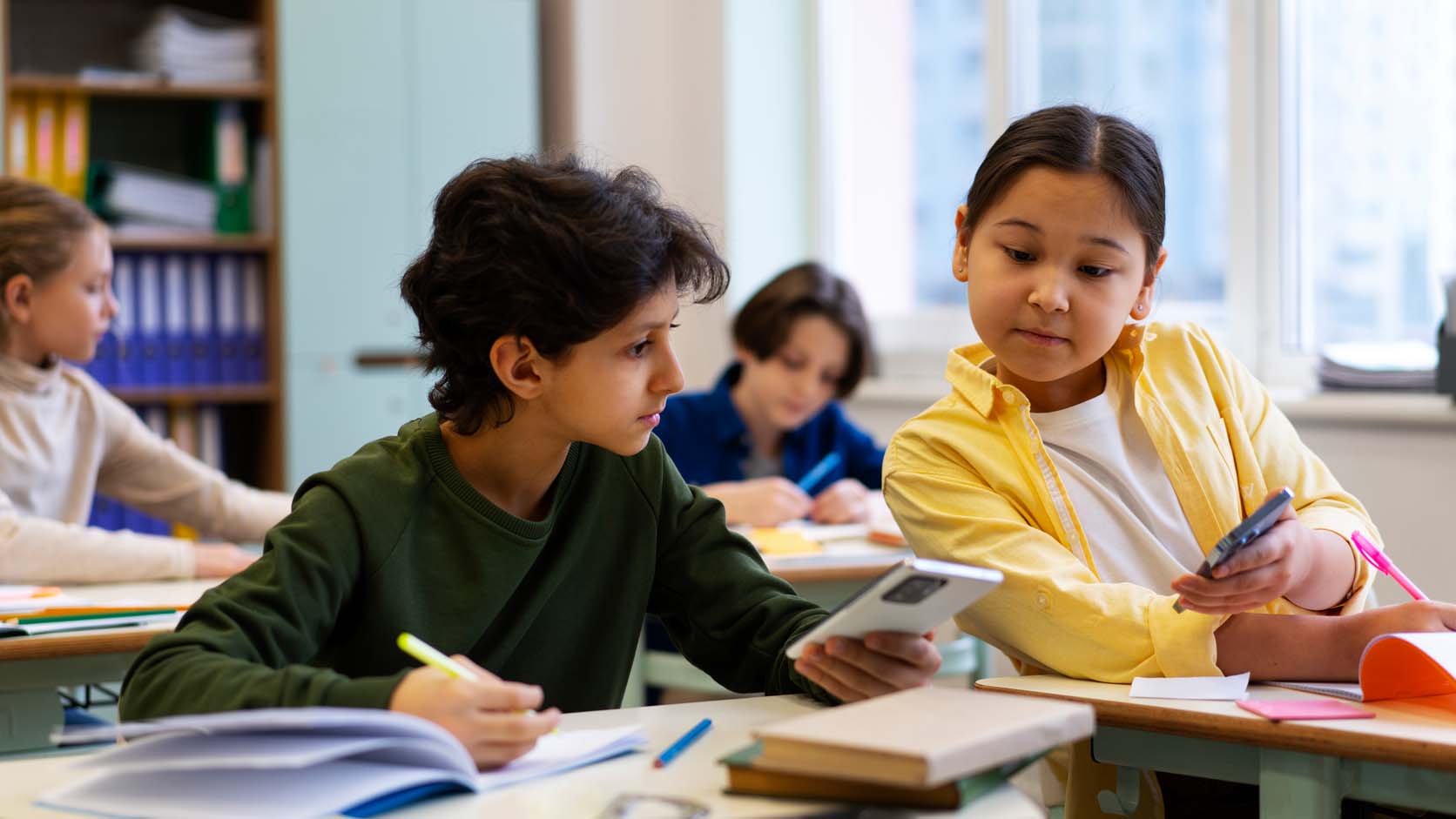
The years between primary school and the IGCSE are, in many ways, among the most formative in a child’s academic life. Children arrive at this stage as enthusiastic young learners and leave it as increasingly independent, analytical thinkers – provided the curriculum they follow is thoughtfully designed.
The Cambridge Lower Secondary stage is precisely that: a carefully structured bridge between the foundations built in primary school and the intellectual demands of the Cambridge IGCSE. For parents whose children are approaching or are already in this stage, this guide explains what the curriculum covers, how it is structured, and what genuinely changes for your child during these three important years.
What Is the Cambridge Lower Secondary Stage?
Cambridge Lower Secondary is the second stage of the Cambridge International Education framework, designed for learners aged approximately 11 to 14 – typically covering Years 7, 8, and 9 (Stages 7, 8, and 9 in the Cambridge framework). It follows the Cambridge Primary stage and leads directly into the Cambridge IGCSE.
Like all Cambridge stages, the Lower Secondary curriculum is developed by Cambridge Assessment International Education (CAIE). It is built around subject frameworks that define the knowledge, understanding, and skills students are expected to develop at each stage – with a consistent emphasis on conceptual understanding, enquiry, and the ability to apply learning in context.
The Lower Secondary stage is available at Cambridge-affiliated schools worldwide, including those in India that offer the Cambridge pathway from primary through to A Level.
What Are the Core Subjects at Cambridge Lower Secondary?
The Cambridge Lower Secondary curriculum covers a broad range of subjects, ensuring that students develop a well-rounded academic foundation before they begin to specialise at the IGCSE stage.
English as a Second Language / English as a First Language
English at the Lower Secondary stage continues to develop the skills established in Cambridge Primary, but with greater complexity and range. Students engage with a wide variety of texts – fiction, non-fiction, media, and literary extracts – and are expected to read critically, write with increasing sophistication, and communicate with clarity and purpose.
Writing at this stage develops across multiple forms: narrative, descriptive, discursive, and argumentative. Students are also introduced to more structured literary analysis, learning to comment on an author’s language choices and their effect on the reader. Speaking and listening skills continue to be developed through class discussion, debate, and formal presentation.
Mathematics
The Cambridge Lower Secondary Mathematics framework builds directly on the primary foundations and prepares students thoroughly for the demands of IGCSE Mathematics. The content areas include:
- Number – extending work with integers, fractions, decimals, percentages, and ratio
- Algebra – developing formal algebraic notation, equations, inequalities, and sequences
- Geometry and Measure – angles, transformations, Pythagoras’ theorem, and mensuration
- Statistics and Probability – interpreting data sets, averages, and probability calculations
Throughout, the emphasis remains on reasoning and problem-solving rather than mere procedural calculation. Students at Stage 9 are working at a level that introduces many of the core IGCSE Mathematics topics, making this a critically important stage for building confidence and fluency.
Science
At Lower Secondary level, Science is taught as an integrated subject encompassing Biology, Chemistry, and Physics – though the balance and delivery vary by school. Students explore increasingly complex content:
- Biology: cells and life processes, genetics and variation, ecosystems and human biology
- Chemistry: atomic structure, the periodic table, chemical reactions, and energy changes
- Physics: forces, motion, electricity, magnetism, waves, and energy
Scientific enquiry remains central. Students design investigations, analyse data, evaluate evidence, and communicate conclusions – skills that are assessed throughout the Lower Secondary stage and are foundational for IGCSE Sciences.
Cambridge Global Perspectives
Global Perspectives is one of the most distinctive features of the Cambridge Lower Secondary curriculum. It is not a traditional subject with a fixed content syllabus – instead, it develops transferable skills through the exploration of real-world, complex issues.
Students research, reflect, collaborate, and communicate about topics that span personal, local, and global dimensions. The skills developed – critical thinking, research skills, analysis, and the ability to consider multiple perspectives – are deeply valued at both IGCSE level and beyond.
Additional Subjects
Depending on the school’s programme, Cambridge Lower Secondary students may also study subjects including:
- Digital Literacy – responsible use of technology, digital tools, and online environments
- Art and Design – creative practice, visual literacy, and aesthetic understanding
- Music – performance, composition, and music theory
- Physical Education – physical literacy, health, and team skills
- Second Languages – including options such as Hindi, French, and Spanish
How Does Cambridge Lower Secondary Differ From Primary School?
The shift from Cambridge Primary to Lower Secondary is gradual but meaningful. Parents often notice several changes:
Greater Subject Depth
Whilst primary school focuses on breadth and foundational skills, Lower Secondary introduces genuine depth within each subject. In Science, for example, students move from exploring the natural world to understanding the underlying principles of biological, chemical, and physical phenomena. In English, texts become more complex and responses more analytical.
More Formal Academic Writing
The Lower Secondary years are when students truly begin to develop academic writing – structured arguments, extended responses, and critical analysis. This is a significant shift from the more creative and personal writing common in primary school, and it requires deliberate teaching and practice.
Greater Independence
Students are expected to take increasing ownership of their learning. Note-taking, revision habits, independent research, and the management of longer-term projects all become part of the academic experience. Schools that develop these habits well during Stage 7 to 9 set their students up well for the more demanding IGCSE years.
Introduction to Examination-Style Assessment
Whilst Lower Secondary assessment is not purely examination-based, students are increasingly exposed to structured assessments that mirror the format they will encounter at IGCSE level. This includes extended writing tasks, data-response questions in Science, and multi-step problem-solving in Mathematics.
How Is the Cambridge Lower Secondary Stage Assessed?
Assessment at the Lower Secondary stage takes two main forms:
Ongoing classroom assessment (formative) continues to be important, with teachers monitoring progress through classwork, homework, and internal tests. This informs how teaching is differentiated and how individual students are supported.
The Cambridge Lower Secondary Checkpoint is an optional external assessment available at the end of Stage 9 in English, Mathematics, Science, and Global Perspectives. Set and marked by Cambridge, the Checkpoint provides a detailed diagnostic report comparing each student’s performance against international benchmarks.
The Checkpoint is not a pass/fail examination – it is a developmental snapshot that helps schools, students, and parents understand readiness for the IGCSE stage and identify any areas that would benefit from additional attention.
What Makes Stage 9 Particularly Important?
Stage 9 – the final year of Lower Secondary – deserves particular attention, as it is the most direct preparation for the IGCSE. By the end of Stage 9, students should have:
- A solid grounding in algebraic methods, including simultaneous equations and basic quadratics
- The ability to write extended, well-structured responses in English across a range of purposes
- Experience designing and evaluating scientific investigations independently
- Confidence working with data in both Mathematics and Science
- A well-developed habit of critical thinking through Global Perspectives
Schools that use Stage 9 well – consolidating key concepts, building examination confidence, and addressing individual gaps – tend to see their students transition to the IGCSE stage with significantly greater readiness.
Cambridge Lower Secondary at Billabong High International School
At Billabong High International School, the Cambridge Lower Secondary curriculum is delivered across several campuses as part of the school’s broader Cambridge pathway, which runs from primary through to the IGCSE and beyond.
Families in Mumbai can explore the Cambridge curriculum at:
- Billabong High International School in Juhu
- Billabong High International School in Mulund
- Billabong High International School in Malad
Families in Pune can learn more about the Cambridge pathway at Billabong High’s Amanora campus.
Families in Gurugram interested in the Cambridge pathway can explore Billabong High International School in Gurugram.
FAQs: Cambridge Lower Secondary
- What ages does Cambridge Lower Secondary cover?
- Is Cambridge Lower Secondary compulsory if my child is on the Cambridge pathway?
- What is the Cambridge Lower Secondary Checkpoint?
- How does Cambridge Lower Secondary prepare students for the IGCSE?
- Can students join the Cambridge pathway at Lower Secondary if they have been on CBSE previously?
- Does Cambridge Lower Secondary include languages other than English?
The Cambridge Lower Secondary stage is designed for learners aged approximately 11 to 14, covering Stages 7, 8, and 9 – broadly equivalent to Years 7 to 9 or Grades 6 to 8, depending on the school’s structure.
If a school offers the full Cambridge pathway, Lower Secondary is the natural and expected stage between Cambridge Primary and the IGCSE. However, the precise structure varies by school – parents should confirm with their school’s admissions team.
The Checkpoint is an optional external assessment at the end of Stage 9, covering English, Mathematics, Science, and Global Perspectives. It provides a detailed performance report benchmarked against international standards – not a pass/fail qualification, but a valuable diagnostic tool.
The content, skills, and assessment styles of the Lower Secondary stage are directly mapped to the demands of the IGCSE. Students who complete Lower Secondary with strong foundations in English, Mathematics, and Science – and well-developed study skills – are considerably better prepared for the IGCSE years.
Yes, though a transition of this kind requires careful planning. Schools generally assess incoming students to identify any gaps and provide appropriate support. It is advisable to speak directly with the school’s admissions team about the process.
Yes. Second language programmes – including Hindi, French, Spanish, and others – are available within the Cambridge framework. Specific language offerings depend on the individual school’s programme.
Conclusion
The Cambridge Lower Secondary stage is far more than a holding pattern between primary and the IGCSE – it is the period in which academic habits, critical thinking, and genuine subject knowledge are consolidated and deepened. Children who navigate these three years well arrive at the IGCSE stage not just prepared, but genuinely ready to engage with the intellectual demands ahead.
If your child is approaching or currently in the Lower Secondary years, we encourage you to explore the Cambridge pathway at Billabong High International School – a school network that takes this middle stage seriously.
Learn more about the Cambridge curriculum at Billabong High International School.
Latest Blogs




CATEGORIES

May 19, 2026
Cambridge Primary Curriculum: Subjects, Topics, and Learning Goals Every Parent Should Know
Read More
May 19, 2026
Cambridge Curriculum vs Other Boards: Helping Families Make an Informed Choice
Read More

February 13, 2026
Unpacking the IB/IGCSE Curriculum: A Parent’s Guide to Grade Equivalencies
Read More