

Blogs

  • Home
  • Blogs
  • List of Top Reputable Schools in India- 2026–27

List of Top Reputable Schools in India- 2026–27

  • 22 April, 2026

Best Schools in India: A Parent Guide to Reputable Choices for 2026–27
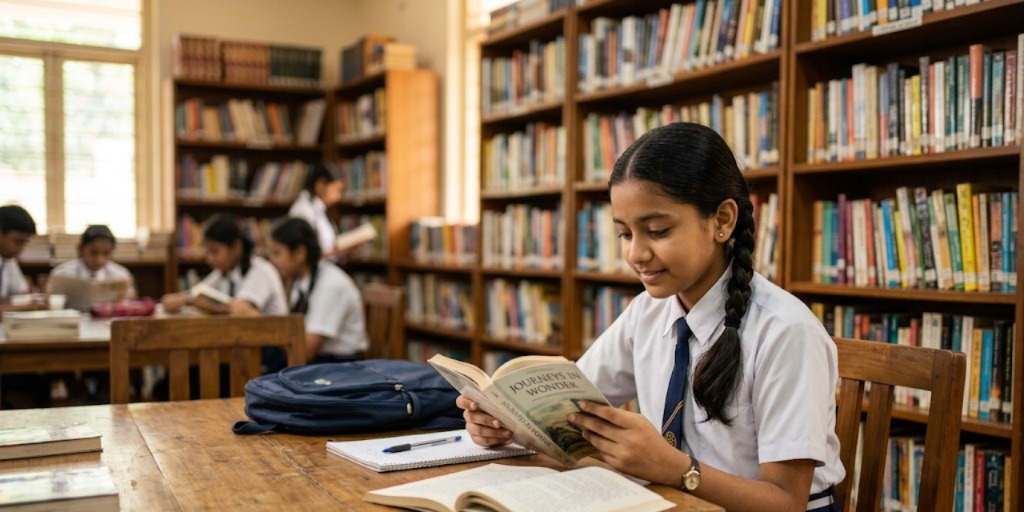
A practical, parent-first guide to understanding what makes a school truly worth considering in India, and how to choose the right fit for your child without getting lost in rankings, noise, or admissions anxiety.

Summary

If you are searching for schools in India, you are probably not looking for just a list. You are looking for clarity.

You want to know which schools are genuinely worth considering, what makes one school a better fit than another, how boards differ, what parents should ask before admission, and how to look beyond marketing claims. You may also be comparing phrases like best school in India, top 10 schools in India, and top schools in India—but what most families actually need is not a simplistic ranking. They need a decision framework.

Introduction

What parents really mean when they search for “schools in India”

When parents search for schools in India, the visible keyword may be simple, but the real question underneath it is not.

It is usually one of these:

  • Which schools are genuinely worth shortlisting?
  • How do I choose the right school board?
  • What should I prioritise: academics, co-curriculars, values, campus, or future readiness?
  • How much does school culture matter?
  • Is a highly reputed school automatically the right one for my child?
  • What should I ask before filling out an admission form?

That is why any useful 2026–27 guide must go beyond a list of “top 10 schools in India.” Parents do not raise children in rankings. They raise them in real classrooms, real routines, real school buses, real friendships, real assessment systems, and real emotional environments.

A school can be famous and still be the wrong fit. Another school can be less discussed nationally yet be exactly right for your child’s learning style, temperament, confidence level, and long-term goals.

That is the lens this guide uses.

We will look at reputable schools and school types in India without pretending that one single hierarchy works for every family. We will also explain why many modern parents are moving toward schools that combine academic rigour with creativity, life skills, confidence building, personalised support, and experiential learning. That is one reason Billabong High International School often enters the consideration set for families who want more than textbook-led schooling. Billabong presents itself as a school system that aims to help children think, create, and lead; balances academics with sports, arts, and thought-shaping programmes; and offers curriculum options including CIE, CBSE, ICSE, and ISC across its network.

Top Schools in India: the short answer parents need first

If you want the direct answer early, here it is:

The best schools in India are not one fixed list. The right shortlist depends on your child’s needs, your city, your preferred curriculum, your family’s budget comfort, the school’s learning culture, teacher quality, safety systems, co-curricular exposure, and the kind of future you want your child to be prepared for.

That said, many parents researching top schools in India frequently encounter names such as The Shri Ram School, Smt. Sulochanadevi Singhania School, Shiv Nadar School, Vidyashilp Academy, Step by Step Noida, The School KFI Adyar, Springdales, Mallya Aditi International School, and several others in widely read national school lists. EducationWorld’s 2025 co-ed day school table includes many of these names, while its 2025–26 public release also separately highlights schools such as Inventure Academy, Vasant Valley School, The Cathedral & John Connon School, Dhirubhai Ambani International School, Oberoi International School, and The International School Bangalore in Ivy League-style categories.

But that visibility alone should not decide your choice.

A stronger school decision asks:

  1. Is the pedagogy right for my child?
  2. Will the school build both competence and confidence?
  3. Does the environment feel safe, warm, and stimulating?
  4. Does the curriculum open pathways rather than close them?
  5. Are co-curriculars meaningful or just decorative?
  6. Does the admissions process feel thoughtful and child-aware?
  7. Does the school help children become more curious, capable, and future-ready?

These are the questions that matter more than a number beside a school’s name.

Reputable co-ed day schools and day-school names many parents encounter

From prominent public ranking and parent-search ecosystems, names parents often come across include:

The Shri Ram School, Delhi

  • A progressive school with a strong student-focused learning approach.
  • Encourages creativity, critical thinking, and values-based education.
  • Offers a balanced environment for academics and overall growth.
DetailsInformation
Types of SchoolCo-educational
CurriculumICSE, IB, Cambridge (IGCSE & A-Level options)
Founded in1988
CityNew Delhi (Delhi NCR)
FacilitiesAcademics, Arts, Sports, Leadership Programs, International Exposure, Co-curricular Activities, etc.
Rating4.5/5
AddressVASANT VIHAR, D3 St, Block D, Vasant Vihar, New Delhi, Delhi 110057

Shiv Nadar School, Gurugram

  • Known for innovation-driven education and modern teaching methods.
  • Builds leadership, creativity, and problem-solving skills.
  • Provides strong academics with global exposure.
DetailsInformation
Types of SchoolCo-educational
CurriculumCBSE, IB (IB-DP), IGCSE
Founded in2012 (Shiv Nadar School initiative)
CityGurugram (Delhi NCR)
FacilitiesSports, Arts, Technology-enabled Learning, Labs, Co-curricular Activities, etc.
Rating4.6/5
AddressPahari Road, Block E, DLF Phase 1, Sector 26A, Gurugram, Haryana 122002

Step by Step School, Noida

  • Combines academics with experiential learning practices.
  • Encourages independent thinking and student participation.
  • Well-regarded for co-curricular excellence.
DetailsInformation
Types of SchoolCo-educational
CurriculumCBSE, IB (DP), Cambridge (IGCSE)
Founded in2008 (Noida campus)
CityNoida (Delhi NCR)
FacilitiesSmart classrooms, labs, library, sports (swimming, tennis, football), arts, robotics and auditorium, etc.
Rating4.6/5
AddressPlot A-10, Sector 132, Taj Expressway, Noida – 201303, Uttar Pradesh, India

Sanskriti School, Delhi

  • A reputed CBSE school with consistent academic performance.
  • Focuses on discipline, values, and leadership development.
  • Provides opportunities in sports and cultural activities.
DetailsInformation
Types of SchoolCo-educational
CurriculumCBSE
Founded in1998
CityNew Delhi (Delhi NCR)
FacilitiesSmart classrooms, labs, library, sports, cultural activities and co-curricular programs, etc.
Rating4.5/5
AddressDr. S. Radhakrishnan Marg, Chanakyapuri, New Delhi – 110021, India

Mallya Aditi International School, Bengaluru

  • Offers ICSE and international curriculum options.
  • Known for a liberal and student-friendly environment.
  • Emphasizes global exposure and academic excellence.
DetailsInformation
Types of SchoolCo-educational
CurriculumICSE, ISC, Cambridge (IGCSE & A-Level/AICE)
Founded in1984
CityBengaluru (Karnataka)
FacilitiesSmart classrooms, labs, library, swimming pool, sports (football, basketball), arts, music, drama, technology labs, etc.
Rating4.7/5
AddressYelahanka New Town, Bengaluru – 560106, Karnataka, India

Gyanshree School, Noida

  • Promotes experiential learning and practical understanding.
  • Encourages creativity, communication, and collaboration.
  • Maintains a strong balance between academics and life skills.

Here’s your table for Gyanshree School, Noida in the same format (no links, fee removed, rating added):

DetailsInformation
Types of SchoolCo-educational
CurriculumCBSE
Founded in2013
CityNoida (Delhi NCR)
FacilitiesSmart classrooms, labs, library, swimming pool, sports complex, auditorium, cafeteria, R&D centre and co-curricular activities, etc.
Rating4.5/5
AddressSector 127, Noida – 201304, Uttar Pradesh, India

Delhi Public School, Bangalore North

  • Part of the trusted DPS network with strong academic standards.
  • Provides modern facilities and holistic development programs.
  • Focuses on discipline, leadership, and growth.

Here’s your table for Delhi Public School, Bangalore North in the same format (no links, fee removed, rating added):

DetailsInformation
Types of SchoolCo-educational
CurriculumCBSE, Cambridge (IGCSE), NIOS
Founded in2002
CityBengaluru (Karnataka)
FacilitiesSmart classrooms, labs (Physics, Chemistry, Biology), robotics lab, library, sports complex, swimming pool, gym, arts & music, transport, etc.
Rating4.5/5
AddressSurvey No 35/1A, Sathnur Village, Bagalur Post, Off Bellary Road, Bengaluru – 562149, Karnataka, India

Vidyashilp Academy, Bengaluru

  • Offers a flexible and student-centric learning environment.
  • Focuses on concept clarity and skill-based education.
  • Encourages participation in academics, arts, and sports.
DetailsInformation
Types of SchoolCo-educational
CurriculumICSE, ISC, Cambridge (IGCSE, AS & A-Level)
Founded in1996
CityBengaluru (Karnataka)
FacilitiesSmart classrooms, robotics lab, libraries, amphitheatre, sports facilities, media lab, leadership programs and co-curricular activities, etc.
Rating4.4/5
AddressGovindapura, Behind Yelahanka Air Force Base, Yelahanka, Bengaluru – 560064, Karnataka, India

Billabong High International School

  • Provides an international curriculum with experiential learning.
  • Encourages creativity, innovation, and independent thinking.
  • Focuses on real-world skills and global exposure.
DetailsInformation
Types of SchoolCo-educational
CurriculumCBSE, ICSE, Cambridge (IGCSE)
Founded in2005 (approx., varies by campus)
CityMultiple Cities (Mumbai, Noida, Bhopal, Bengaluru, etc.)
FacilitiesSmart classrooms, labs, sports facilities, arts & music, robotics, activity-based learning and co-curricular programs, etc.
Rating4.5/5
AddressMultiple campuses across India (e.g., Sector 34 Noida, Santacruz Mumbai, etc.)

EuroSchool

  • Follows a balanced CBSE curriculum with modern methodologies.
  • Focuses on skill development and student engagement.
  • Ensures holistic growth through academics and activities.
DetailsInformation
Types of SchoolCo-educational
CurriculumCBSE, ICSE
Founded in2009
CityMultiple Cities (Mumbai, Bengaluru, Pune, Hyderabad, etc.)
FacilitiesSmart classrooms, digital learning, sports programs, performing arts, STEAM labs, library, transport, wellness centre, co-curricular activities, etc.
Rating4.5/5
AddressMultiple campuses across India

Reputable international/day-school names often discussed by parents

EducationWorld’s 2025–26 public release also highlights names such as:

Inventure Academy, Bengaluru

  • Offers ICSE + Cambridge (IGCSE) for flexible learning paths
  • Focus on experiential learning and leadership development
  • Known for innovative and student-centric teaching

Vasant Valley School, Delhi

  • Affiliated with CBSE, strong academic reputation
  • Emphasis on critical thinking and co-curricular balance
  • Known for holistic student development

The Cathedral & John Connon School, Mumbai

  • Prestigious legacy institution with excellent board results
  • Offers ICSE/ISC curriculum
  • Strong focus on academics, sports, and cultural exposure

Dhirubhai Ambani International School, Mumbai

  • Offers IB + IGCSE, globally recognized programs
  • Known for world-class facilities and faculty
  • Focus on international exposure and top university placements

Oberoi International School, Mumbai

  • Offers IB (PYP, MYP, DP) curriculum
  • Known for modern campuses and global environment
  • Emphasis on inquiry-based, student-led learning

The International School Bangalore

  • Offers IGCSE + IB Diploma Programme
  • Large campus with boarding facilities
  • Focus on independent thinking and global perspectives

Pathways School, Gurgaon

  • Among India’s first IB continuum schools
  • Tech-enabled classrooms and modern infrastructure
  • Focus on holistic growth and global exposure

Lancers International School, Gurugram

  • Offers IB curriculum across grades
  • Provides boarding and international environment
  • Emphasis on individual attention and diversity

EuroSchool

  • Network of schools offering CBSE/ICSE (varies by campus)
  • Focus on balanced learning: academics + life skills
  • Known for modern teaching practices and facilities

Billabong High International School

  • Offers ICSE and IGCSE (select campuses)
  • Emphasis on personalized and skill-based learning
  • Known for activity-driven and interactive classrooms

What actually makes a school worth considering in India today

A reputable school in 2026–27 is not defined by one thing. It is defined by how well multiple essentials come together.

1. Academic readiness without academic narrowness

Parents want schools that prepare children well for assessments, higher education, and future pathways. That part matters. But strong academics should not come at the cost of confidence, curiosity, or independent thinking.

A high-quality school does not merely produce compliant answer-writers. It develops learners who can understand, express, analyse, collaborate, and solve problems.

This is one reason many parents today are drawn to schools that combine structured academics with experiential learning and reflective thinking.

2. Teacher quality and consistency

No school is better than its teachers in practice.

A glossy campus cannot compensate for weak teaching, poor classroom management, or emotionally disconnected staff. Cfore explicitly argues that great schools begin with teachers and the relationships they build with students.

Parents should therefore look beyond brochure language and ask:

  • Are teachers warm and observant?
  • Do they know children as individuals?
  • Is there evidence of professional development?
  • Do they adapt for different learning needs?
  • Are classrooms alive with thinking, not just instruction?

Billabong states that its educators undergo screening and in-house training, and that workshops and seminars keep teachers updated on methodology.

3. Child-centric pedagogy

A child-centric school does not mean an undisciplined one. It means a school that understands that children do not all learn in the same way, at the same pace, or through the same methods.

It means:

  • age-appropriate expectations
  • respect for developmental stages
  • room for voice, exploration, and expression
  • support for different strengths
  • feedback that builds rather than shuts down

4. Holistic development that is real, not decorative

Many schools say they support holistic development. Not all do so meaningfully.

A genuinely holistic school invests in:

  • sports participation
  • visual and performing arts
  • public speaking
  • leadership opportunities
  • project work
  • clubs and competitions
  • emotional development
  • life skills
  • social awareness

5. Safety, belonging, and emotional climate

Parents often underestimate how much school climate shapes learning outcomes.

Children learn better when they feel safe, known, and comfortable making mistakes. A tense school may produce marks but also anxiety, withdrawal, or fragile confidence.

6. Future readiness

Future readiness is not just coding or robotics.

It includes:

  • adaptability
  • collaboration
  • communication
  • research habits
  • critical thinking
  • problem-solving
  • initiative
  • digital fluency
  • ethical judgment

The biggest mistake parents make while comparing top schools in India

The biggest mistake is comparing schools as if they are interchangeable premium products.

They are not.

Schools are living ecosystems. Two campuses with similar fees may feel completely different. Two highly reputed schools may create entirely different versions of student life. One may be structured and performance-driven. Another may be more exploratory. One may suit a highly independent learner. Another may better support a child who needs warmth, scaffolding, and confidence-building.

Another common mistake is comparing only the visible variables:

  • fees
  • board
  • campus size
  • social buzz
  • board results
  • city prestige

These matter, but they are incomplete.

What parents should compare instead is this combination:

  • learning philosophy
  • classroom culture
  • teacher attentiveness
  • child support systems
  • communication style
  • opportunity breadth
  • how success is defined
  • how the school responds when a child struggles

That is where the real difference lies.

Schools in India by curriculum: what parents should understand before they shortlist

One of the most practical ways to compare schools in India is by curriculum and board.

CBSE schools

CBSE remains one of the most widely preferred boards in India for families seeking strong national portability, familiarity, and alignment with many competitive-exam pathways.

Parents often choose CBSE because:

  • it is widely available across cities
  • it offers continuity for transfer-heavy families
  • it is familiar to many parents
  • it is often seen as more standardised

But not all CBSE schools feel the same. A progressive CBSE school can be very different from a rigid, worksheet-heavy one.

ICSE and ISC schools

ICSE/ISC are often appreciated for language depth, broad-based academics, and a perception of strong conceptual grounding. Parents sometimes prefer ICSE when they want strong English exposure, balanced subject development, and a broad academic base.

Cambridge / CIE pathways

Cambridge pathways are often considered by parents seeking a more internationally aligned academic structure, strong inquiry orientation, flexibility, and broader skill visibility for global pathways.

What matters more than the board

The board matters, but the school’s execution matters just as much.

A weak school with a strong board is still a weak experience. A strong school with thoughtful teaching can often make any recognised board more effective.

Parents should therefore compare not only:

  • which board is offered

but also:

  • how it is taught
  • how students are assessed
  • how projects and expression are encouraged
  • how the school supports different learners
  • what transitions look like across grade bands

Comparison table: how parents can compare reputable schools in India

Again, the schools below are not ranked here. They are examples of schools many parents consider, or schools visible in public school discovery ecosystems. Use this table as a comparison framework, not a verdict.

School / School GroupCityCommonly associated categoryWhat parents may look at closelyFee transparency guidance
The Shri Ram SchoolDelhi NCRHighly reputed day schoolculture, academic balance, admissions demand, values fitAsk for full annual fee sheet and add-on costs
Smt. Sulochanadevi Singhania SchoolThaneHigh-visibility day schoolacademics, co-curricular depth, student pressure levelsConfirm tuition + transport + activities
Shiv Nadar SchoolGurugramModern progressive schoolpedagogy, facilities, child support, innovation cultureAsk for total annual payable, not headline fee
Vidyashilp AcademyBengaluruPremium co-ed day schoollearning culture, student profile, leadership exposureClarify registration, term, lab, transport charges
Step by StepNoidaProgressive day schoolchild-centredness, assessment style, fit for learner personalityAsk for grade-wise fee progression
Mallya Aditi International SchoolBengaluruInternationally visible day schoolacademic pathways, pastoral care, exposure mixAsk about annual escalation norms
Billabong High International SchoolMultiple citiesChild-centric, experiential, multi-board networkpedagogy, personalised support, co-curricular breadth, campus-specific board fitRequest campus-specific fee sheet and inclusions
Delhi Public School campusesMultiple citiesWidely searched mainstream optioncampus-to-campus variation, academic structure, class sizeConfirm exact branch fee and policy terms
Oberoi International SchoolMumbaiInternational curriculum visibilitypathway fit, global progression, pastoral depthAsk for complete annual cost structure
Pathways / Lancers / TISB-type schoolsNCR / BengaluruInternational pathway schoolsboarding/day options, global transitions, exposureVerify all annual and optional costs clearly

What this table tells parents

The most important insight is simple:

Compare schools by fit, not by aura.

A school’s visibility can help you discover it. It cannot decide for you.

How to compare fees without getting misled

Many parents searching for the best school in India or top schools in India also want exact fee comparisons. That is understandable, but it is also where many online articles become unreliable.

Why? Because school fee structures in India can vary by:

  • city
  • campus
  • grade level
  • board
  • optional transport
  • meals
  • labs
  • co-curricular participation
  • one-time admission charges
  • caution deposits
  • annual revisions

So the smartest editorial approach is not to publish random fee numbers unless verified. It is to teach parents how to compare school cost properly.

Ask for the full-year cost, not just tuition

When comparing schools, request:

  • admission or registration charges
  • refundable or non-refundable deposits
  • tuition fees
  • term or quarterly fees
  • annual charges
  • lab / activity / technology charges
  • books and uniforms
  • transport
  • optional meal plans
  • trip or event costs

Ask this exact question

“Can you please share the complete annual cost of attendance for my child’s grade, including mandatory and likely optional components?”

This single sentence reduces unpleasant surprises.

Value matters more than raw fee size

A more expensive school is not automatically better value. A lower-fee school is not automatically more economical if it under-delivers on teaching quality, support, safety, or developmental opportunities.

Parents should look at value through this lens:

  • quality of teaching
  • breadth of student experience
  • infrastructure relevance
  • child support
  • communication and transparency
  • outcomes beyond marks

Admissions in 2026–27: what parents should expect

Search intent around schools is rarely only informational. It is often admissions-driven.

Parents want to know:

  • when to apply
  • how difficult selection is
  • what documents are needed
  • whether the child will be assessed
  • how to prepare without putting pressure on the child

That sequence is useful because it reflects what many organised private-school admissions journeys now look like across India:

Typical private school admission flow

  1. Enquiry or counsellor interaction
  2. Campus visit or information session
  3. Form submission
  4. Document collection
  5. Child interaction / observation / assessment, depending on grade
  6. Parent discussion
  7. Offer, waitlist, or next-step communication

What “eligibility” usually means in practice

Schools may use the word “eligibility” in different ways, but for most parents it usually involves:

  • age fit for the grade
  • previous school records where applicable
  • grade-level readiness
  • seat availability
  • school-specific admission interaction or assessment norms

The key is not to coach your child unnaturally for a school interaction. Schools that genuinely understand children are usually looking for readiness, communication, confidence, and fit—not rehearsed performance.

What parents should prepare in advance

Keep these ready:

  • birth certificate
  • address proof
  • ID documents as requested
  • passport photographs
  • previous report cards
  • transfer certificate if applicable
  • immunisation or medical records if required
  • any learning support documentation if relevant

And one more thing: prepare your own clarity. Admissions conversations go much better when parents can articulate what they want from a school.

What parents should look for during a campus visit

A campus visit often reveals more than a ranking ever can.

When you visit, do not only look at how polished the reception area is. Look for the living quality of the place.

Watch the children

Do they look:

  • relaxed?
  • engaged?
  • silenced?
  • rushed?
  • curious?
  • comfortable speaking to adults?

Children reveal school culture very quickly.

Watch the teachers

Do teachers seem:

  • warm and attentive?
  • hurried and transactional?
  • rigid?
  • present?
  • respectful?

Look for evidence of actual learning

Are displays only decorative, or do they show thinking, projects, drafts, reflection, and student voice?

Do classrooms feel like places where children do things, make things, ask questions, and learn actively?

This matters especially for families who say they want experiential learning. Billabong explicitly publishes content championing hands-on learning and “learning by doing,” while its school-life pages talk about creative and engaging pedagogy, age-appropriate tools, thought shaping, and leadership development.

Ask about student support

A good school should be able to answer:

  • How do you support shy children?
  • How do you handle adjustment issues?
  • What happens when a child falls behind?
  • How do you communicate with parents?
  • How do you build confidence, not just compliance?

Why experiential learning matters more than ever in schools in India

One of the clearest shifts in K–12 education in India is that parents no longer want learning to be only passive.

They want children to understand, apply, express, and transfer knowledge.

That is where experiential learning becomes important.

What is experiential learning?

Experiential learning is learning through active engagement, reflection, exploration, application, and problem-solving rather than only listening and reproducing.

It can include:

  • projects
  • labs
  • field-based observations
  • design and maker work
  • role play
  • debates
  • collaborative tasks
  • real-world problem-solving
  • student-led presentations

Why it matters for parents

Children remember more when they participate.

They build stronger confidence when they can do, present, test, revise, and create. They also become better prepared for a world that rewards initiative and applied thinking—not just recall.

What experiential learning is not

It is not random fun.
It is not anti-academic.
It is not activity for the sake of activity.

Good experiential learning is carefully designed. It deepens academic understanding instead of replacing it.

This is why schools that can combine academic structure with active, engaging pedagogy often stand out for modern families.

Billabong High International School as a strong option for modern parents

In a guide about schools in India, Billabong High International School deserves mention not as a forced brand insertion, but because its public-facing philosophy aligns strongly with what many families now actively seek.

Why some parents may shortlist Billabong

Based on its official website, parents may find Billabong especially relevant if they are looking for:

  • a child-centric environment
  • joyful learning
  • experiential and creative pedagogy
  • strong co-curricular and sports exposure
  • multiple curriculum pathways across the network
  • emphasis on confidence, curiosity, and leadership
  • age-appropriate developmental progression
  • a safe, engaging environment
  • future-ready learning rather than rote-heavy schooling alone

Network and curriculum visibility

Billabong’s official site currently presents campuses and curriculum combinations including:

  • Mulund: Cambridge
  • Juhu: Cambridge
  • Malad: Cambridge and CBSE
  • Amanora Pune: Cambridge and CBSE
  • Vadodara: ICSE
    and its admissions page states the network offers CIE, CBSE, ICSE, and ISC boards.

The developmental positioning

Billabong’s language repeatedly returns to themes that parents increasingly value:

  • curiosity
  • imagination
  • exploration
  • critical thinking
  • innovation
  • leadership
  • individual growth
  • holistic development

That makes it particularly relevant for families who do not want school to be reduced to marks, but also do not want a vague “progressive” setup without academic seriousness.

Comparison framework: Billabong and other reputable schools worth considering

This is not a ranking table. It is a parent-useful decision table.

Parent PriorityWhat to evaluateSchools / school types often consideredWhere Billabong may stand out
Strong academics with broad developmentteaching quality, board fit, assessment depthestablished day schools across metro citiesbalances academics with holistic development language
Child-centric environmentclass culture, warmth, support, attentionprogressive and developmental schoolsofficial emphasis on Child First, joyful learning, personalised support
Experiential learningprojects, labs, maker spaces, active pedagogymodern progressive schools, select international-pathway schoolsexplicitly promotes learning by doing and maker-style experiences
Co-curricular breadthsports, arts, leadership, expressionpremium urban day schoolsLife at Billabong prominently integrates thought shaping, sports, arts
Future readinesscritical thinking, communication, adaptabilitymodern high-visibility private schoolsrepeatedly emphasises thinking, creating, leading, innovation
Board flexibilitycurriculum options by campus/networkmulti-campus private school groupsnetwork visibility across CIE, CBSE, ICSE, ISC
Admissions guidanceclarity, support, process flowvaries widely by schoolpublished multi-step admissions process is parent-readable

This is the kind of framework that is more useful than asking which school is “No. 1.”

Common mistakes parents make when choosing among top schools in India

Mistake 1: choosing only for social prestige

A school that impresses relatives is not necessarily a school that will help your child flourish.

Mistake 2: over-indexing on board exam reputation in early years

Foundational years need language, confidence, joy, habits, and social adjustment—not just high-pressure output.

Mistake 3: not checking the school’s emotional climate

A child may survive in a school that is not right for them. That does not mean they are thriving.

Mistake 4: underestimating commute

A long daily commute can erode sleep, mood, family time, and overall learning energy.

Mistake 5: not clarifying total cost

Many parents compare tuition only and ignore all other costs.

Mistake 6: believing all “holistic” claims

Ask what holistic development actually looks like in the timetable, calendar, facilities, and student outcomes.

Mistake 7: not asking how the school handles struggle

Your child will not need a school only when things are going well. Ask what happens when they are overwhelmed, under-confident, distracted, or transitioning.

How to build a realistic shortlist of schools in India

A strong shortlist usually has 4 to 8 schools, not 25.

Step 1: define your non-negotiables

These may include:

  • city / commute radius
  • preferred board
  • budget comfort band
  • day school vs boarding
  • need for child support / personalised attention
  • co-curricular importance
  • school culture preference

Step 2: define your “important but flexible” factors

Examples:

  • campus scale
  • international exposure
  • sports specialisation
  • class size preference
  • sibling logistics
  • after-school offerings

Step 3: group schools into three buckets

Best-fit schools
Strong alignment on values, board, pedagogy, and child fit

Stretch schools
High-demand options worth trying if aligned

Practical backup schools
Strong schools you would feel genuinely comfortable choosing

Step 4: visit before deciding

Websites and rankings are starting points. They are not the final truth.

What parents should ask every school before admission

Use this checklist in every conversation.

About learning

  • How would you describe your teaching approach?
  • How do you balance academics with curiosity and application?
  • What does homework look like by grade?
  • How do you assess understanding beyond tests?

About support

  • How do you support children who take longer to settle?
  • How do you identify and respond to learning gaps?
  • Is there counselling or student well-being support?

About culture

  • How do you handle discipline?
  • How do you prevent bullying or exclusion?
  • How do you build confidence in quieter children?

About opportunities

  • Which co-curriculars are genuinely active?
  • How often do students participate in performances, sports, clubs, or projects?
  • Are these inclusive or only for a few students?

About communication

  • How often do teachers communicate with parents?
  • What does parent-school partnership look like?

About logistics

  • What are the exact annual fees and additional costs?
  • What transport systems and safety measures are in place?
  • What is the admission timeline and decision process?

What makes a school “future-ready” in India now

The phrase “future-ready” is overused, so parents should make it concrete.

A future-ready school helps children build:

  • communication
  • confidence
  • critical thinking
  • creativity
  • collaboration
  • ethical judgment
  • digital awareness
  • adaptability
  • resilience
  • self-management

Not every skill needs to be taught as a separate subject. But the school’s ecosystem should build them over time.

For many families, that is a meaningful signal—especially if they want children who are not only academically prepared, but also expressive, grounded, and ready for life beyond school.

A practical decision framework for parents: the 7F model

To simplify your school choice, use this 7F model.

1. Fit

Does the school fit your child’s temperament, energy, and developmental needs?

2. Foundation

Will it build strong academic basics, habits, and confidence?

3. Faculty

Do the teachers appear capable, caring, and developmentally aware?

4. Feeling

How does the school feel—warm, rigid, rushed, inspiring, calm, pressured?

5. Future

Does it prepare your child for the next stage, not just the next exam?

6. Facilities

Are the facilities meaningful to learning and growth, or mostly cosmetic?

7. Financial clarity

Is the fee structure transparent and sensible for your family?

Any school you are considering—whether it is a famous legacy school, a strong city-based private school, or a network such as Billabong—should be evaluated through these seven filters.

Key takeaways for parents researching schools in India

The short recap

  • There is no single universal best school in India for every child.
  • Public ranking ecosystems can help you discover schools, but they should not replace your judgment.
  • Schools mentioned in this guide are not ranked here; they are simply reputable schools worth considering.
  • The strongest school choice is based on child fit, pedagogy, culture, support, and long-term development.
  • Curriculum matters, but execution matters just as much.
  • Parents should compare full annual cost, not just headline tuition.
  • Admissions should be approached with clarity, not panic.
  • Experiential, child-centric, future-ready schooling is becoming more important to modern Indian families.
  • Billabong High International School is a strong option for parents seeking joyful, child-focused, multi-dimensional learning with an emphasis on creativity, confidence, innovation, and holistic growth.

Conclusion

The search for the right school can feel overwhelming because it carries so much emotional weight. Parents are not just choosing a campus. They are choosing a daily environment that will shape how their child thinks, learns, feels, expresses, and grows.

That is why the smartest way to research schools in India is not to obsess over a single list of the top 10 schools in India. It is to understand what quality really looks like, decide what matters most for your child, and then evaluate each school with honesty and care.

There are many reputable schools in India worth considering. Some are legacy institutions. Some are strongly ranked urban day schools. Some are international pathway schools. Some, like Billabong High International School, appeal to families who want a more child-centric and experiential model that still takes academic development seriously. Billabong’s own positioning around joyful education, innovation, creativity, age-appropriate progression, and holistic development makes it especially relevant for parents who want schooling to feel both purposeful and human.

In the end, the right school is the one that helps your child become more capable without becoming more anxious, more confident without becoming performative, and more prepared without losing curiosity.

That is the school worth choosing.

FAQs: Schools in India

1. Which are the best schools in India?

There is no single list that is right for every family. The best schools in India depend on your child’s needs, your city, preferred curriculum, budget, commute, and the school’s culture. Public school-ranking ecosystems such as EducationWorld and Cfore can help identify schools worth exploring, but parents should make the final decision based on fit.

2. Are the schools mentioned in this article ranked?

No. This article does not rank the schools mentioned. They are included only as reputable schools worth considering for parents doing research in 2026–27.

3. How should parents compare top schools in India?

Parents should compare schools on curriculum, learning approach, teacher quality, student support, safety, co-curricular opportunities, emotional climate, commute, and fee transparency. Comparing only reputation or social buzz is not enough.

4. What is more important: board or school quality?

Both matter, but school quality often matters more in day-to-day experience. A recognised board is useful, but the teaching quality, culture, and child support systems of the school often shape outcomes more deeply.

5. How can I compare school fees properly?

Ask for the complete annual cost of attendance, including admission charges, annual fees, transport, books, uniforms, activity charges, and any optional extras. Do not compare schools only on headline tuition.

6. What should parents ask during a school visit?

Ask about teaching style, student support, discipline approach, safety systems, co-curricular participation, parent communication, assessment methods, and the complete fee structure. Also observe children and teachers closely during the visit.

7. Why is experiential learning important in schools?

Experiential learning helps children understand concepts more deeply by learning through doing, reflecting, presenting, and applying. It can improve retention, confidence, critical thinking, and engagement when done well. Billabong’s own educational content strongly advocates this learning-by-doing approach.

8. Is Billabong High International School a good option for parents in India?

Billabong High International School is a strong option for parents seeking child-centric, joyful, experiential, and future-ready learning. Its public positioning highlights creativity, innovation, academic development, co-curricular opportunities, and multiple curriculum pathways across its network.

9. What boards does Billabong High International School offer?

Billabong’s admissions page states that its network offers CIE, CBSE, ICSE, and ISC boards, while its campus locator shows different board combinations by campus.

10. What does Billabong’s admissions process involve?

Billabong’s official admissions page outlines a process including counsellor interaction, admission form collection, document submission, skill assessment, and parent orientation. 

News and updates

Comprehensive Guide to Preschool Age Criteria in India- Updated 2026
April 22, 2026

Comprehensive Guide to Preschool Age Criteria in India- Updated 2026

Read More
Complete List of Top International Schools in India- 2026-27 with Rankings, Fees and Admission Details
April 21, 2026

Complete List of Top International Schools in India- 2026-27 with Rankings, Fees and Admission Details

Read More
Comprehensive List of best Preschools in india including leading chains – Access rankings, Fees, Age and Admission Criteria
April 15, 2026

Comprehensive List of best Preschools in india including leading chains – Access rankings, Fees, Age and Admission Criteria

Read More
Top Schools in Maharashtra – 2026-27, Rankings, Fees & Admissions
April 15, 2026

Top Schools in Maharashtra – 2026-27, Rankings, Fees & Admissions

Read More
Top Schools in Mumbai – 2026-27, With Fees Admissions, and Credible Rankings
April 15, 2026

Top Schools in Mumbai – 2026-27, With Fees Admissions, and Credible Rankings

Read More
Top Schools in Gurgaon – 2026-27, With Fees Admissions, and Credible Rankings
April 15, 2026

Top Schools in Gurgaon – 2026-27, With Fees Admissions, and Credible Rankings

Read More