


Complete list of Top CBSE Schools in India 2026- 27 With Rankings, Fees & Admissions
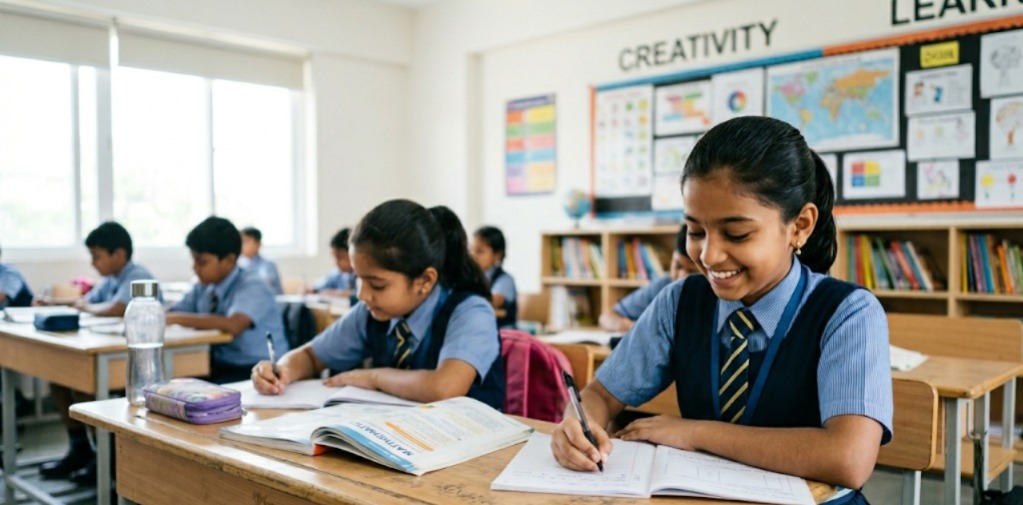
Best CBSE Schools in India: A Parent’s Guide to the Top Choices Worth Considering in 2026
Not every widely searched list helps parents make a better decision. This guide takes a more useful route: understand the CBSE ecosystem, know what good schools do differently, compare your options intelligently, and explore a considered list of schools worth looking at, including Billabong High International School.
Executive Summary
If you are researching CBSE Schools in India, the most important thing to know is this: there is no single “best” school for every child. India has a large and diverse CBSE network, and the right choice depends on the fit between your child’s learning style, your family’s expectations, the school’s teaching quality, campus culture, pastoral support, commute, and long-term academic pathway.
As of the current CBSE SARAS directory, there are more than 32,000 CBSE-affiliated schools in India and abroad, which makes the search both rich in choice and overwhelming for parents. In other words, the real question is not simply which schools are famous. The better question is: which CBSE school will help my child thrive academically, emotionally, socially, and confidently?
This article is designed to answer that question clearly.
Inside, you will find:
- what the CBSE board offers and why so many families choose it
- how many CBSE schools in India exist, and why that number alone does not help you shortlist well
- what parents should actually compare beyond results and reputation
- a neutral list of notable CBSE schools in India worth considering
- why Billabong High International School stands out for families looking for a child-centric, experiential, future-ready approach within a strong academic environment
- comparison frameworks, checklists, and common mistakes to avoid
- admissions guidance for the 2026 intake
- ten FAQ answers written for parents and search visibility
A note before we begin: the schools mentioned in this article are not being ranked. They are included because parents commonly consider them or because they are notable examples in the broader CBSE conversation. Your final decision should be based on your child, not on any numbered list.
Introduction: Why So Many Parents Search for CBSE Schools in India
The phrase “CBSE Schools in India” brings together multiple parent concerns in one search.
Some families are relocating and want continuity across cities. Some are planning admissions for nursery, primary, middle school, or senior secondary. Some are comparing boards and want a curriculum that balances structure, mobility, and readiness for future entrance pathways. Others are looking for a school that is academically sound but not emotionally harsh, ambitious but not mechanical, modern but not rootless.
That is exactly why this topic matters.
CBSE is one of India’s most widely recognised school boards. It is often preferred by families who value a standardised curriculum, national transferability, alignment with many competitive-exam pathways, and a structured academic framework. Yet the board alone does not determine the school experience. Two CBSE schools can share the same affiliation and still feel completely different in classrooms, relationships, learning design, co-curricular culture, student confidence, and overall child development.
For parents, this creates both a challenge and an opportunity.
The challenge is obvious: the market is crowded, school marketing can sound similar, and online “top school” articles often reduce a deeply personal decision to a thin list of names. The opportunity is more important: when you know what to examine, you can move beyond surface impressions and choose with more confidence.
This guide is written to support exactly that process.
What Is CBSE and Why Does It Matter to Parents?
The Central Board of Secondary Education (CBSE) is a national board that frames curriculum, academic guidelines, and affiliated school standards for a large number of schools in India. CBSE’s academic framework has long been valued for consistency, broad recognition, and a relatively structured learning pathway across classes. The board’s academic materials also emphasise holistic development, competency-based learning, and constructivist, hands-on approaches rather than pure rote memorisation.
That last point is worth pausing on.
Parents sometimes assume CBSE automatically means textbook-heavy learning with little room for inquiry or creativity. In reality, the board framework itself has evolved significantly. The stronger CBSE schools today are the ones that translate the curriculum into better teaching: concept clarity, application, projects, real-world learning, interdisciplinary thinking, communication skills, and balanced student development.
Why many parents choose CBSE
Parents often prefer CBSE for practical and educational reasons:
- it is recognised across India and works well for families who relocate
- it offers curricular consistency across many cities
- it is widely understood by colleges and higher-education ecosystems
- it aligns well with several national-level entrance pathways
- it can offer a structured academic progression without forcing early over-specialisation
- in the right school, it can support both academic readiness and broader development
What parents should remember
Choosing the CBSE board is only the first layer of the decision. The second layer is far more important: how the school brings that board to life.
A school may have CBSE affiliation and still differ dramatically in these areas:
- teaching quality
- child safety and pastoral care
- language confidence and expression
- experiential learning depth
- academic pressure management
- arts and sports exposure
- life skills education
- class size and individual attention
- future readiness for senior school and beyond
That is why the phrase top CBSE schools in India should not lead parents into a rank-driven mindset. It should lead them into a sharper evaluation process.

How Many CBSE Schools in India Are There?
Many parents search “how many CBSE schools in India” because they want to understand the scale of the board and the depth of options available.
According to the current CBSE SARAS directory, there are 32,892 affiliated schools listed in the system. That number is useful as a sense of scale, but it can also be misleading if taken at face value.
Why? Because school choice is never just about volume.
A large number tells you that CBSE is one of India’s most extensive school ecosystems. It does not tell you which schools are academically strong, developmentally healthy, student-friendly, well-managed, parent-responsive, future-ready, or right for your child.
What this number really means for parents
It means you need filters.
The smartest parents do not begin with a giant list. They narrow the field using decision filters such as:
- your city or realistic commute radius
- the child’s current age and stage
- board continuity up to higher grades
- teaching and learning philosophy
- emotional environment and school culture
- extracurricular depth
- admission timelines and seat availability
- budget comfort, including annual and hidden cost components
- language support, transition support, and special guidance needs
A better way to use the “how many CBSE schools in India” query
Use it as a signal of credibility and reach, not as a decision shortcut.
The scale of CBSE means there are many possible schools. Your job as a parent is to identify the few that feel educationally aligned, practically manageable, and emotionally right.
What Parents Usually Mean When They Search “Top CBSE Schools in India”
The search phrase top cbse schools in india sounds simple, but the intent behind it is more layered.
Most parents are not really looking for a ranking. They are usually trying to solve one or more of these problems:
1. They want a shortlist they can trust
Parents do not want to scan hundreds of school websites. They want a curated starting point.
2. They want help comparing quality
They are trying to decode whether quality means board results, pedagogy, campus, faculty, culture, exposure, or all of the above.
3. They want reassurance
School choice can feel high-stakes. Parents want to know they are not missing obvious options.
4. They want a child fit, not just a school brand
Once the initial search broadens, more reflective parents realise that the right school is not necessarily the loudest or oldest brand. It is the one that works for their child.
5. They want admissions clarity
Many searches are timed around admissions windows. Families are often asking: which schools should we prioritise this year, and how should we prepare?
That is why this article is not written as a rank table. It is written as a better decision tool.
How to Evaluate CBSE Schools in India the Right Way
If you remember only one section from this article, make it this one.
A good school choice rarely comes from one metric. It comes from pattern recognition across multiple indicators. Parents often overweigh brand reputation and underweigh everyday learning experience. But it is the daily experience that shapes confidence, curiosity, belonging, and long-term growth.
The 10-point parent framework
Use these ten questions when comparing CBSE Schools in India.
1. What does learning look like in the classroom?
Ask whether teaching is only syllabus delivery or whether it also includes inquiry, discussion, application, collaboration, projects, and reflection.
A strong CBSE school does not dilute academics. It deepens them through better pedagogy.
2. How child-centric is the school in practice?
Many schools use warm language in brochures. The real question is whether student needs are actually noticed.
Look for signs such as:
- teachers knowing children well
- age-appropriate expectations
- emotional support systems
- responsive communication with parents
- differentiated attention where needed
3. Does the school build confidence, not just compliance?
Children need more than academic accuracy. They need voice, self-belief, expression, and opportunities to participate.
Observe whether students seem hesitant or engaged, performative or grounded, coached or genuinely articulate.
4. Is the academic culture ambitious but healthy?
Rigour matters. Pressure without support does not.
Ask how the school handles assessments, revision cycles, senior-grade stress, and student wellbeing during high-demand years.
5. How well-rounded is the student experience?
Top schools are not defined only by marks. Strong schools invest meaningfully in arts, sports, clubs, leadership, events, performance, service learning, and real-life experiences.
6. What is the school’s approach to future readiness?
Future readiness is not a slogan. It should show up in communication, problem-solving, digital fluency, creativity, teamwork, adaptability, and independent thinking.
7. What is the safety culture like?
Safety includes physical infrastructure, supervised movement, transport discipline, visitor systems, child protection policies, health support, and an emotionally respectful environment.
8. How transparent is the school with parents?
Parents do not need marketing language. They need clarity. A good school is usually transparent about process, philosophy, student expectations, communication channels, and support structures.
9. Is the commute sustainable?
A brilliant school with an exhausting commute can quietly reduce quality of life for both child and family. Energy matters.
10. Can you picture your child belonging there?
This is the most human and often the most accurate question. During the visit, ask yourself whether your child would feel seen, stretched, supported, and happy in this environment.
What Makes the Best CBSE Schools in India Stand Out?
The best schools are not perfect institutions. They are schools where multiple fundamentals work together consistently.
They combine academic structure with meaningful learning
The strongest CBSE schools do not reduce education to completion of portions. They use the curriculum as a framework and then bring it alive through thoughtful teaching.
They care about the whole child
Parents increasingly want schools that recognise emotional growth, confidence, resilience, and social development as part of education, not as extras.
They provide strong teacher-student relationships
Students do better where adults know them, guide them, and respond to them with both warmth and accountability.
They offer breadth beyond the classroom
Music, art, theatre, movement, sport, field experiences, events, and collaborative projects matter because childhood matters. These experiences build confidence, creativity, and perspective.
They create a safe and engaging environment
Good schools feel purposeful, active, and secure. Children should feel stimulated, but also settled.
They prepare children for the long term
The most impressive schools are not just focused on the next exam. They are preparing children for adolescence, choices, higher education, and life beyond school.
A Neutral Look at Notable CBSE Schools in India Worth Considering
This section is designed as a parent starting point, not a ranking.
The schools below are not being ranked. They are included because they are widely recognised, frequently researched by parents, or notable in discussions around CBSE education in India. Depending on city, child profile, and family priorities, many other schools may also be worth considering.
Important note before shortlisting
Please verify campus-specific details directly with each school. Fees, board offerings, admission windows, grade availability, and seat status can change every year and often vary by campus.
A parent-focused consideration list
| School | City / Region Association | Why parents often consider it | Parent note |
| Billabong High International School | Multiple locations including Mumbai and Pune network visibility | Child-centric learning, joyful education, experiential approach, balanced academics and co-curricular exposure | Particularly relevant for families who want a warm but future-ready environment rather than a purely transactional academic experience |
| Delhi Public School RK Puram | Delhi | Long-standing visibility, academic reputation, broad awareness among parents | Better suited to families who are specifically targeting established legacy brands and can manage high competition |
| Sardar Patel Vidyalaya | New Delhi | Strong reputation and long parent recall value | Often researched by families looking for established institutions with a strong academic culture |
| National Public School | Bengaluru and other city associations by brand | Known for academic seriousness and parent familiarity | Important to compare individual campus culture and pressure environment |
| Lotus Valley International School | NCR | Popular among parents seeking all-round exposure with structured academics | Worth exploring if you prioritise facilities and presentation alongside academics |
| Vasant Valley School | New Delhi | Frequently enters parent discussions around well-known K-12 institutions | Families should evaluate culture fit and admission realities carefully |
| Heritage Xperiential Learning School | Gurugram | Often discussed for progressive educational thinking | Not all such schools align with every family’s expectations around conventional structure |
| The Heritage School | Kolkata / NCR associations in parent search ecosystems | Known name in school research journeys | Compare actual board, philosophy, and grade-level experience closely |
| Amity International School | Multiple NCR locations | Large network visibility and strong public awareness | Campus-specific comparison is essential |
| Army Public School branches | Multiple cities | Frequently considered by transferable families and defence-connected households | Strong relevance for certain family profiles and mobility needs |
| DAV schools | Pan-India network visibility | Accessible and familiar to many parents across cities | Quality and experience can differ significantly by branch |
| Podar and other large K-12 networks | Multiple cities | Often considered for scale, consistency, and local availability | Always review the individual campus experience, not only the network brand |
The purpose of this table is not to say these schools are equivalent. They are not. It is to help parents recognise the market landscape and build a more informed shortlist.
Why Billabong High International School Is a Strong Option in This Conversation
When parents search CBSE Schools in India, they are often balancing two needs that can seem difficult to combine.
They want academic readiness.
But they also want joy.
They want a school that will prepare their child for the future.
But they do not want childhood to disappear in the process.
They want structure.
But not rigidity.
They want ambition.
But not fear.
This is where Billabong High International School becomes especially relevant.
Billabong’s larger educational identity is rooted in a Child First philosophy and the Joy of Learning approach associated with the Lighthouse Learning ecosystem. Across its official positioning, the school emphasises child potential, thoughtful pedagogy, strong infrastructure, and well-rounded development. For parents, this matters because it signals a vision of schooling that goes beyond instruction delivery.
What this means in practical parent language
A school like Billabong becomes worth considering when you want your child to experience:
- learning that is engaging, not merely repetitive
- academic structure without an overly impersonal atmosphere
- space for curiosity, creativity, and self-expression
- support for confidence building and communication
- strong co-curricular and extracurricular opportunities
- a school environment that feels safe, stimulating, and developmentally attentive
Where Billabong can resonate strongly with parents
Billabong is often a compelling choice for families who say things like:
- “I want a school that notices my child as an individual.”
- “I want academics to be strong, but not joyless.”
- “I want my child to become confident, expressive, and future-ready.”
- “I do not want a school where everything is reduced to marks.”
- “I want a campus culture that feels active, supportive, and balanced.”
Why this matters within a CBSE context
As the CBSE framework increasingly supports competency-based, holistic, and application-focused learning, the question is not whether a school follows CBSE. The deeper question is how well it translates the board into an actual learning experience.
A child-centric, experiential school model can make the CBSE journey feel richer, more relevant, and more human. That is a meaningful strength.

Billabong vs the Typical “Top School” Decision Trap
Many families compare schools in a way that seems logical but often leads to confusion.
They compare brand awareness.
They compare what other parents say.
They compare board results in isolation.
They compare campuses only through photos.
They compare fees without comparing value.
They compare “strictness” and mistake it for quality.
None of these are useless. But none of them are enough.
A more useful comparison asks:
- Which school will help my child love learning without compromising academic depth?
- Which school has a culture that feels developmentally healthy?
- Which school will support confidence, communication, and life skills alongside marks?
- Which school’s teaching style fits my child’s temperament and strengths?
- Which environment feels sustainable for the next several years, not just impressive on one visit?
This is where Billabong often enters the shortlist differently from more conventional “famous school” options. It appeals not only as a school brand, but as a schooling philosophy.
Comparison Table: What Parents Should Compare Across CBSE Schools in India
Below is a practical comparison lens parents can use while evaluating any school, including Billabong High International School and other notable options.
| Comparison Factor | Why it matters | What parents should ask | Strong sign |
| Teaching approach | Shapes real learning quality | Are classes interactive, conceptual, and application-led? | Students can explain what they learn, not just reproduce it |
| Child-centric support | Determines belonging and confidence | How are children supported emotionally and academically? | Teachers know student needs and respond thoughtfully |
| Academic rigour | Affects readiness and outcomes | How are concepts, assessments, and progression handled? | Clear structure with support, not fear-based pressure |
| Co-curricular depth | Builds well-rounded growth | Are arts, sports, performance, and clubs meaningful or tokenistic? | Students have visible opportunities beyond the classroom |
| Life skills and future readiness | Supports long-term success | How does the school build leadership, communication, and problem-solving? | Learning includes voice, collaboration, reflection, and initiative |
| Safety and well-being | Non-negotiable for families | What systems exist for campus, health, transport, and child protection? | Clear process, not vague reassurance |
| Parent communication | Builds trust | How often and how clearly does the school engage families? | Transparent, responsive, and structured communication |
| Infrastructure | Influences learning experience | Are spaces designed for active learning and development? | Facilities support pedagogy, not just brochure photography |
| Commute practicality | Affects daily quality of life | Is travel time manageable over the long term? | Child can sustain the routine without chronic fatigue |
| Senior school pathway | Matters for continuity | Does the school support long-term progression and guidance? | Families understand how the journey develops across grades |
What Parents Should Look for During a School Visit
School websites are only the beginning. A campus visit often reveals far more.
Watch the students, not just the walls
Infrastructure matters, but student energy tells the deeper story. Are children engaged? Comfortable? Curious? Respectful without seeming fearful? Expressive without seeming chaotic?
Listen to how adults speak about children
Do they talk about students as learners and people, or mainly as outcomes and achievers? Language reveals culture.
Ask to understand, not to impress
The best questions are not the flashiest ones. Ask practical questions such as:
- How do you support children who need time to settle?
- How do you communicate concerns with parents?
- How do you balance academics with emotional wellbeing?
- What does a typical week look like for a child in this grade?
- How do you identify and nurture individual strengths?
Notice the environment between formal spaces
Corridors, transitions, common spaces, supervision quality, student artwork, and displays can quietly reveal whether the school feels alive, orderly, creative, and cared for.
Common Mistakes Parents Make While Choosing Among CBSE Schools in India
Even thoughtful parents can get pulled into misleading decision patterns. Here are some of the most common mistakes.
Mistake 1: Choosing only by reputation
A famous name can be reassuring, but it does not automatically guarantee the right child fit.
Mistake 2: Overvaluing school results without understanding context
Board outcomes matter, but you should also understand how the school teaches, supports, differentiates, and manages student wellbeing.
Mistake 3: Ignoring the emotional environment
Children learn best when they feel safe, respected, and seen. Emotional climate is not a soft extra. It affects learning quality directly.
Mistake 4: Underestimating the commute
The wrong commute can quietly drain the school experience, especially for younger children.
Mistake 5: Choosing a school that matches parent ego more than child need
This is more common than people admit. The right decision is not always the most socially impressive one.
Mistake 6: Not asking what daily learning looks like
Pedagogy is not a brochure term. It affects how your child thinks, participates, and grows every day.
Mistake 7: Assuming all CBSE schools are broadly similar
They are not. Affiliation creates a framework. The actual school experience depends on leadership, teaching, culture, and implementation.
How Billabong Fits the Needs of Modern Parents
The modern Indian parent is not choosing school the way families did fifteen or twenty years ago.
Today’s parents are asking deeper questions:
- Will my child enjoy coming to school?
- Will they become articulate and self-aware?
- Will the school support both academic readiness and emotional growth?
- Will my child be prepared for a changing world, not just a set syllabus?
- Will the school notice my child’s individuality?
These are exactly the questions that make Billabong relevant.
Child-centric learning
A child-centric model acknowledges that children do not learn in one uniform way. They need engagement, connection, encouragement, challenge, and support that is responsive rather than mechanical.
Joyful education
Joy in education is not about making school effortless. It is about making learning meaningful. Children engage more deeply when school feels alive.
Experiential learning
Experiential learning helps children move from passive intake to active understanding. This can make concept retention stronger and confidence more natural.
Holistic development
Parents increasingly recognise that academic success without emotional steadiness, communication ability, self-management, and curiosity is incomplete.
Confidence and future readiness
Confident students are not only the ones who perform on stage. They are the ones who can think, speak, participate, adapt, and recover. These traits matter in school and far beyond it.
Admissions Guidance for Parents Researching CBSE Schools in India for 2026
Admissions planning often becomes stressful because families start late or compare too vaguely.
Here is a more organised way to approach it.
Step 1: Build three buckets, not one list
Create:
- a strong-fit list
- a stretch list
- a practical fallback list
This reduces panic and makes decision-making more rational.
Step 2: Confirm board and grade continuity
Do not assume all campuses offer the same boards or the same grade progression. Check carefully.
Step 3: Understand the school’s admissions process
Some schools may include interaction rounds, documentation requirements, readiness expectations at early years level, or campus-specific timelines.
Step 4: Visit with purpose
Do not visit schools only to “see the campus”. Visit to understand teaching culture, student experience, and institutional clarity.
Step 5: Prepare your own criteria in advance
If you enter the process without a framework, the loudest school pitch may influence you more than the most suitable school.
A useful parent admissions checklist
| What to confirm | Why it matters |
| Current board offering at the campus | Networks can have campus variations |
| Grade levels available | Important for continuity |
| Admission timeline and application steps | Helps avoid missed windows |
| Required documents | Prevents process delays |
| Student support systems | Important for transitions and settling |
| Transport and safety processes | Crucial for daily operations |
| Fee structure and annual extras | Helps compare value more realistically |
| Co-curricular opportunities | Indicates school breadth |
| Parent communication process | Useful for long-term partnership |
| Campus culture | One of the strongest predictors of fit |
Fees: How Parents Should Think About Cost Without Reducing the Decision to Price
Many parents searching top cbse schools in india also want fee comparisons. This is understandable. Schooling is a major family investment.
However, fee comparison becomes useful only when paired with value comparison.
What to compare beyond tuition
Ask about:
- annual tuition structure
- admission or enrolment fees
- transport fees
- uniforms and books
- activity or lab components where relevant
- meal plans if applicable
- trip or event costs
- technology or exam-related charges in senior classes
The better question
Not “Which school is cheapest?”
Not even “Which school is most expensive?”
But: What is this school truly offering for the total family investment being made?
A higher fee does not automatically mean better education. A lower fee does not automatically mean better value. Fit, quality, and experience matter.
Facilities That Actually Matter in a CBSE School
Parents can sometimes get distracted by surface-level infrastructure. Attractive campuses matter, but educationally meaningful infrastructure matters more.
Meaningful infrastructure includes:
- classrooms designed for active teaching and learning
- reading and resource spaces
- labs and maker spaces where relevant
- arts, music, and performance spaces
- sports opportunities appropriate to age group
- clean and well-managed sanitation
- supervised and safe movement areas
- technology that supports learning, not distraction
Billabong’s official school communications place emphasis on state-of-the-art infrastructure and spaces designed to support learning and development. That becomes more relevant when it is paired with child-centric pedagogy and balanced student life rather than presented as an end in itself.

Why Parent-School Partnership Matters More Than Most People Realise
The strongest school experiences usually happen when school and home are aligned.
Parents do not need constant access. They need trust, clarity, and responsive communication. A good school knows how to create partnership without creating dependency.
Signs of healthy parent-school partnership
- communication is regular and useful, not only reactive
- expectations are clear
- feedback is respectful and specific
- concerns are handled with seriousness
- the school sees parents as partners, not as interruptions
This matters across all grades, but especially in the early years, transition stages, and exam years.
Choosing by Child Type: Which Kind of Schooling Environment Might Suit Your Child?
This is one of the most important filters and one of the least discussed.
Every child is different. The same school may help one child shine and another child shrink.
For the curious and expressive child
Look for a school that encourages questions, discussion, projects, presentations, and creative exploration.
For the sensitive child
Look for a school with warmth, emotional steadiness, supportive teachers, and a non-intimidating environment.
For the highly driven child
Look for a school that can challenge without overwhelming, and that offers both structure and enrichment.
For the child who needs confidence building
Look for visibility, encouragement, performance opportunities, student voice, and consistent adult support.
For the child who learns by doing
Look for experiential learning, labs, applied projects, and active classroom practices.
This is one reason Billabong often stands out to families who are not merely searching for a recognised school, but for a school where their child can genuinely come into their own.
City Matters: Why “Top CBSE Schools in India” Should Often Be Read as “Top Options Near Me”
The internet encourages broad national searches. Real family decisions happen locally.
A nationally visible school may still not be your best option if:
- the commute is too long
- the campus culture is not a fit
- admissions are not realistic for your timeline
- the child is at a stage where smaller transitions matter more than prestige
For many families, the smartest decision is to identify the strongest local schools that meet both educational and practical needs. That is where campus-specific pages, admissions pages, and school visits become more important than broad “India” lists.
If you are evaluating Billabong, it is wise to compare the specific campus you are considering in terms of board offering, stage-wise suitability, culture, commute, and facilities.
The Parent Decision Matrix: A Better Way to Shortlist Schools
Here is a simple scoring matrix you can use at home.
Rate each shortlisted school from 1 to 5 on the following:
| Decision Factor | Weight for your family | School A | School B | School C |
| Teaching quality | ||||
| Child fit | ||||
| Emotional environment | ||||
| Academic structure | ||||
| Co-curricular breadth | ||||
| Safety and supervision | ||||
| Communication with parents | ||||
| Commute practicality | ||||
| Infrastructure relevance | ||||
| Long-term continuity | ||||
| Fee comfort |
How to use it
First decide your family’s weighting. One family may prioritise commute and emotional environment. Another may prioritise senior school readiness and structured academics. A third may want a deep co-curricular culture.
The matrix does not eliminate judgement. It helps organise it.
What a Strong 2026 School Search Strategy Looks Like
If you are entering the 2026 admissions cycle, here is a practical approach.
Month 1: Clarify what kind of school you want
Do not start by asking who is “best”. Start by asking what your child needs and what your family values most.
Month 2: Build and narrow the shortlist
Use objective filters and then compare websites, admissions pages, parent feedback, and campus fit.
Month 3: Visit and verify
Visit schools, ask grounded questions, and confirm operational details directly.
Month 4: Decide with both head and heart
A school should make sense on paper and feel right in person.
A Parent-Friendly Shortlist Strategy for CBSE Schools in India
To make this practical, here is a three-layer shortlist model.
Layer 1: The “worth considering” list
These are notable schools that commonly appear in serious parent research.
Layer 2: The “best fit for my child” list
This is where schools like Billabong often move up, because philosophy, environment, and child experience become more important.
Layer 3: The “realistically workable” list
This considers budget, distance, timing, admissions probability, and family schedule.
The final decision should happen where all three layers overlap.
Key Takeaways for Parents Choosing Among CBSE Schools in India
Before you finalise your school list, remember these five points.
1. Do not chase rankings blindly
The schools in this article are not ranked. They are simply schools worth considering in the larger CBSE conversation.
2. Ask what daily learning feels like
The board matters. The classroom matters more.
3. Evaluate the whole child experience
A strong school supports academics, confidence, curiosity, safety, and wellbeing together.
4. Shortlist by fit, not by noise
The most talked-about school is not always the most suitable school.
5. Consider Billabong if you want balance with purpose
For families looking for a school that combines child-centric learning, joyful education, experiential depth, academic readiness, and broader development, Billabong High International School deserves serious consideration.
Suggested Internal Linking Opportunities
To strengthen on-site journey and conversion, this article can naturally link to:
- Admissions page for 2026 application guidance
- Why Billabong page to deepen the philosophy discussion
- CBSE board / curriculum page for board-specific parents
- Early Years / Preschool page for foundational-stage families
- Academics page for stage-wise learning information
- Co-curricular / extracurricular page to support the holistic development narrative
- Campus pages for parents seeking location-specific details
- Safety / infrastructure page for practical decision support
- About Billabong High International School page for brand credibility
- related blogs on choosing a school, comparing boards, early childhood readiness, and parent decision-making
Conclusion
Searching for CBSE Schools in India can begin as a broad online query, but the real decision is deeply personal.
Parents are not simply choosing a board. They are choosing an environment that will shape how their child learns, speaks, relates, grows, copes, expresses, and imagines the future.
That is why the smartest school search is never only about reputation. It is about fit.
The schools mentioned in this guide are not being ranked. They are schools worth considering as part of a more thoughtful parent research journey. As you compare your options, move beyond surface metrics. Look at pedagogy. Look at emotional climate. Look at confidence building. Look at safety. Look at whether your child will be encouraged not just to succeed, but to thrive.
And if what you are looking for is a school that brings together academic readiness, child-centric learning, joyful education, experiential depth, confidence building, and a future-ready mindset, Billabong High International School is a name that belongs naturally in that conversation.
The right school is not simply the one that impresses everyone else.
It is the one that brings out the best in your child.
FAQs: CBSE Schools in India
1. Which are the top CBSE schools in India?
There is no single definitive list of the top CBSE schools in India because school quality depends on factors such as teaching approach, child fit, city, campus culture, safety, and long-term academic support. Instead of relying only on rankings, parents should compare schools based on their child’s needs and the school’s actual learning environment.
2. How many CBSE schools in India are there?
According to the current CBSE SARAS directory, there are more than 32,000 affiliated schools listed in the system. This shows the scale of the CBSE network, but parents should still shortlist carefully using factors such as location, pedagogy, support systems, and school culture.
3. Are all CBSE schools in India similar in quality?
No. Even though schools may share CBSE affiliation, their teaching quality, co-curricular exposure, student support, campus culture, and communication style can differ significantly. That is why parents should not assume all CBSE schools offer the same experience.
4. What should parents look for in CBSE schools in India?
Parents should look for strong teaching, concept clarity, child-centric support, emotional safety, co-curricular breadth, future-readiness skills, practical commute, and transparent parent communication. A good school supports both academic progress and whole-child development.
5. Is CBSE a good board for future competitive exams?
Many parents prefer CBSE because of its structured academic framework and broad alignment with national-level academic pathways. However, exam readiness depends not only on the board but also on how effectively the school teaches concepts and supports students over time.
6. Why do many parents prefer CBSE schools in India?
Parents often choose CBSE because it is widely recognised, supports continuity across cities, offers curricular consistency, and can work well for families who value a structured academic progression. It is especially popular among families looking for mobility and familiarity across the Indian education system.
7. How can I compare top CBSE schools in India without depending on rankings?
A better way is to compare schools using a decision framework: classroom teaching, child fit, academic culture, emotional environment, extracurricular opportunities, safety systems, communication quality, commute, long-term continuity, and overall value. This gives a more realistic picture than any listicle ranking.
8. Is Billabong High International School a good option for CBSE education?
Billabong High International School can be a strong option for families looking for child-centric learning, joyful education, experiential pedagogy, academic readiness, confidence building, and a balanced school experience. It is especially relevant for parents who want a school that supports both performance and personal growth.
9. Do fee structures vary across CBSE schools in India?
Yes. Fees can vary widely depending on city, school brand, campus infrastructure, grade level, facilities, and added services such as transport or enrichment. Parents should compare total cost and value rather than focusing only on headline tuition.
10. How early should parents begin researching schools for the 2026 admission cycle?
It is ideal to begin early enough to build a thoughtful shortlist, compare campuses, understand admissions processes, and gather documents without pressure. Starting early also gives families more time to visit schools and make a decision based on fit rather than urgency.
Latest Blogs





CATEGORIES
September 18, 2026
Best Cambridge Schools in India – 2026-27, Fees, Admission and Facilities
Read More
September 11, 2026
Complete Guide to CBSE Class 1 Age Criteria, Admission Limits, and Official Guidelines
Read More


![Complete Guide to LKG Admissions, Age Rules, Limits, and Process [Updated 2026]](https://www.billabonghighschool.com/blogs/wp-content/uploads/2026/05/lkg-admission-criteria-300x240.png)