

Top ICSE Schools in India, Admission, Fees, and Latest Rankings for 2027-28
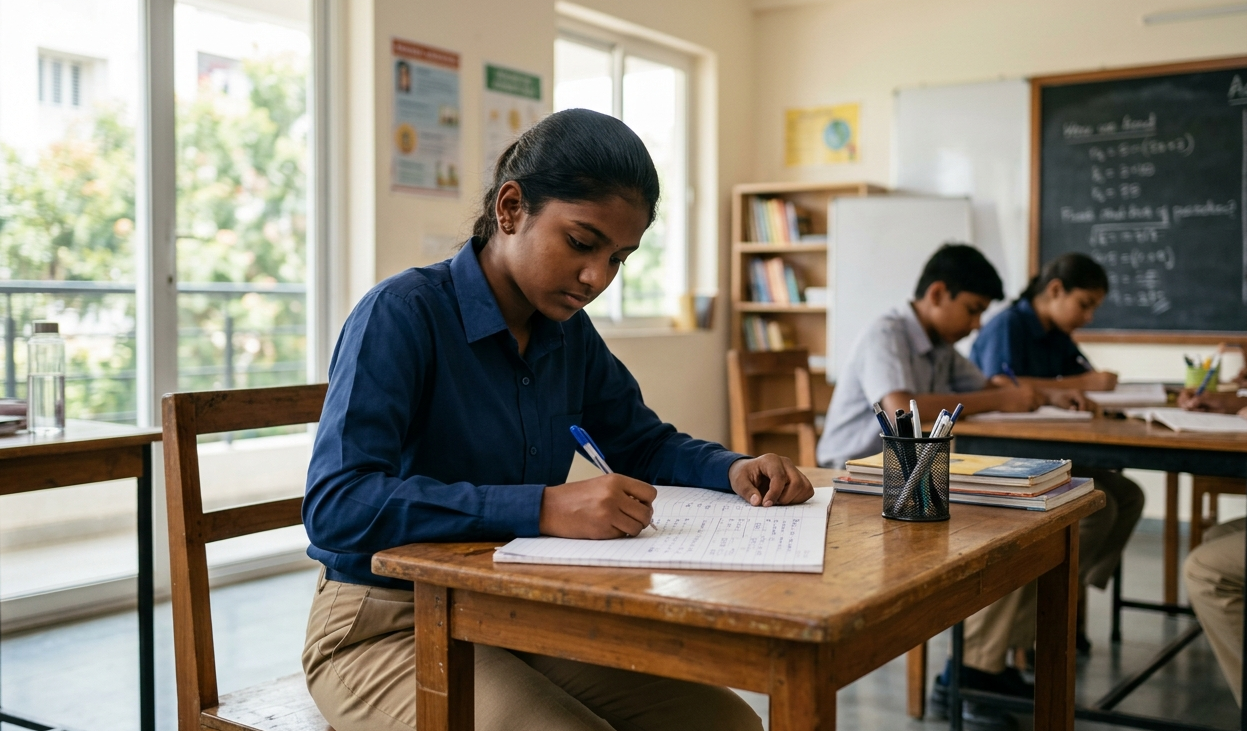
Choosing among the many ICSE schools in India can feel overwhelming, especially when every list claims to show the “best” schools. This guide helps parents cut through the noise with a clearer, more useful approach: what ICSE really offers, how to interpret rankings responsibly, how to compare schools beyond reputation, what to expect from admissions and fees, and how to identify the right-fit school for your child in 2027.
Executive Summary
If you are searching for ICSE Schools in India, you are probably not looking for a random school directory. You are looking for confidence.
You want to know which schools are genuinely worth considering. You want to know whether popular “top school” lists can be trusted. You want to understand admissions, fees, school culture, academic expectations, and what kind of environment will actually help your child thrive.
This guide is built for that parent search intent.
Here is the clearest answer upfront:
- ICSE remains a strong choice for families who value language development, conceptual depth, balanced academics, and all-round learning.
- There is no single official all-India government ranking of K-12 ICSE schools. Most “top ICSE schools in India” lists are based on private surveys, school directories, editorial selections, or parent perception rather than one statutory national school ranking system. NIRF, for example, ranks higher education institutions, not K-12 schools.
- The official CISCE school locator is the most reliable place to verify whether a school is actually affiliated. CISCE also states that it has over 2,600 affiliated schools in India and abroad, which is one reason search results about how many ICSE schools in India often vary depending on what is being counted.
- The smartest way to shortlist schools is not to chase a headline rank, but to compare fit: academic approach, teaching quality, support systems, co-curricular depth, commute, fee sustainability, and the child-school match.
- Billabong High International School belongs in that conversation for families looking for an ICSE environment that combines academic depth with future-ready learning, critical thinking, creativity, personalised attention, and holistic development. Billabong’s public ICSE and admissions pages position the school around exactly those themes.
The schools mentioned in this blog are not being ranked here. They are included because they are often considered by parents, frequently appear in public conversations around ICSE/CISCE schooling, or are worth considering when building a shortlist. That is an important distinction, because thoughtful school choice is about far more than visibility.
The best school for your child is not automatically the most famous school, the oldest school, or the one most frequently mentioned in online roundups.
It is the school where your child is most likely to:
- feel secure,
- stay curious,
- build strong academic foundations,
- grow in confidence,
- discover strengths,
- and move through school with both challenge and joy.
That is the lens this guide will use from start to finish.
Introduction
Why the search for the right ICSE school matters more than ever
For many families, school choice is one of the most significant long-term decisions they will make.
It affects much more than a child’s report card. It shapes confidence, language ability, peer exposure, habits of thinking, comfort with teachers, emotional resilience, co-curricular development, and, over time, the way a child sees learning itself.
That is why the search for the right school has become more layered.
Parents today are not just asking, “Which board is better?” They are asking more nuanced questions:
- Will my child be known as an individual?
- Will this school push my child in the right way, not simply pressure them?
- Will there be a balance between academics and childhood?
- Will the school support confidence, communication, sports, arts, and life skills?
- Will the learning environment feel warm, future-ready, and developmentally healthy?
When families search for ICSE Schools in India, they are often motivated by exactly these concerns.
Some are actively comparing boards. Some are moving cities and need a shortlist. Some are first-time school parents trying to decode admissions language. Some are evaluating whether a school’s reputation matches its day-to-day reality. Some are specifically searching for the top ICSE schools in India because they want a premium school, but do not want to make a brand-led decision without understanding the full picture.
All of those concerns are valid.
But the internet often makes them harder, not easier.
Many school blogs repeat the same names. Some inflate rankings. Others rely on broad directory descriptions. A few mix up ICSE and ISC without explaining the difference clearly. Some use a lot of superlatives but offer very little guidance that actually helps a parent decide.
This article takes a different approach.
Instead of pretending there is one perfect answer, it gives you a better decision-making framework.
Instead of ranking schools blindly, it helps you understand:
- what ICSE is,
- why parents choose it,
- what “top” really means in this context,
- how to verify schools,
- what admissions usually involve,
- how fees should actually be compared,
- what mistakes parents commonly make,
- and how to choose a school that fits your child, not just your search history.
That is a more honest and more useful way to approach school choice.
It also aligns with how thoughtful K-12 brands communicate today.
Parents do not need another flashy school roundup. They need a guide that respects both the complexity of the decision and the individuality of the child.
That is what this blog aims to be.

What is ICSE?
ICSE stands for the Indian Certificate of Secondary Education, the Class 10 examination conducted by the Council for the Indian School Certificate Examinations, or CISCE. CISCE states that it was established in 1958 and oversees affiliated schools offering ICSE and ISC pathways.
In plain English, what does that mean for parents?
It means ICSE is part of a school education ecosystem that many families associate with:
- strong English language development,
- broad subject exposure,
- emphasis on detailed understanding,
- a relatively balanced academic structure,
- and a school experience that often supports both academic and co-curricular growth.
The board matters because it shapes the curriculum framework and the assessment philosophy. But the school matters just as much, because the same board can look very different in different institutions.
That is one of the most important ideas in this entire guide.
A child does not study “the board” in isolation. A child studies in classrooms, with teachers, routines, peers, policies, projects, opportunities, and culture.
So while understanding ICSE is important, choosing the right ICSE school is even more important.
ICSE is a national school examination pathway under CISCE that many parents prefer for its strong language foundation, conceptual learning, and balanced academic structure.
Why parents often find ICSE appealing
Families are often drawn to ICSE because they want children to develop:
- reading depth,
- writing fluency,
- better comprehension,
- stronger expression,
- broader academic exposure,
- and confidence in both curricular and co-curricular spaces.
Many parents believe that this style of schooling supports a stronger foundation for later subject specialisation, communication-heavy careers, and all-round development.
That does not mean it is automatically the right choice for every child. But it does explain why the search demand around ICSE Schools in India remains strong.
Why ICSE still matters in 2027
Educational choices in 2027 are shaped by a wider set of expectations than they were even a decade ago.
Parents are no longer evaluating schools purely by legacy or board results. They are asking whether a school prepares children for:
- thoughtful communication,
- critical reasoning,
- digital fluency,
- leadership,
- adaptability,
- emotional resilience,
- and real-world application.
That shift is important.
Because once parents begin thinking in those terms, the conversation changes from “Which board is toughest?” to “Which learning environment builds capability in a healthy, sustainable way?”
That is where ICSE still holds relevance for many families.
Why it matters for children today
A strong school education today should help a child become:
- articulate,
- curious,
- self-directed,
- collaborative,
- ethically grounded,
- and ready to engage with complexity.
Boards alone do not produce those qualities. But some academic frameworks support them more naturally than others, especially when paired with the right school culture.
Families often see ICSE as one such framework because it is associated with:
- richer language engagement,
- detailed content learning,
- better writing habits,
- and academic breadth.
Why it matters for parents making long-term decisions
When a parent chooses a school, they are usually thinking ahead, even if they do not say so directly.
They are asking:
- Will my child be ready for senior school?
- Will their communication skills stay strong?
- Will they become too dependent on rote?
- Will school feel too narrow?
- Will they have room to explore interests?
- Will this school help them become capable and confident?
Those are long-horizon questions.
That is why the choice among the top ICSE schools in India is not only about present-day prestige. It is about the kind of learner a school helps shape over time.
How many ICSE schools in India are there?
This is one of the most searched questions on the topic, and it deserves a careful answer.
Direct answer
There is no single simple number that parents should repeat without context.
CISCE states that it has over 2,600 affiliated schools in India and abroad, but that overall figure includes schools beyond only ICSE-only affiliations and also includes overseas institutions.
That is why search results for how many icse schools in india often vary.
Different websites may count:
- only ICSE schools,
- ICSE and ISC schools together,
- schools with dual affiliation under the Council,
- or schools across India and overseas.
The most reliable way to verify
The official CISCE School Locator allows parents to search affiliated schools by country, state, district, city, and affiliation. That makes it the most practical source for building a verified shortlist.
Why this matters for SEO-heavy school blogs
Many blogs want to lead with a neat number because it feels authoritative. But if that number is not clearly explained, it can mislead families.
A better parent-first answer is:
There are thousands of CISCE-affiliated schools, but the exact number of ICSE schools in India depends on how the count is defined. Use the CISCE locator for the most accurate school-by-school verification.
That answer is both more transparent and more useful.
What parents should do instead of chasing the number
The total count is interesting, but it does not help you choose well.
A better approach is:
- verify which ICSE schools are in your city,
- identify schools relevant to your child’s age and your location,
- compare them on quality, culture, and fit.
The question is not really how many schools exist.
The question is which ones deserve your time.
What parents usually mean when they search “top ICSE schools in India”
This phrase is everywhere online, but it often goes undefined.
What the search term really means
When most parents type top ICSE schools in India, they usually mean one or more of the following:
- schools with strong reputation,
- schools known for academic standards,
- schools with a good learning environment,
- schools that balance studies with co-curriculars,
- schools that other parents trust,
- schools that feel worth shortlisting,
- schools that are likely to justify the investment.
That is a much more practical interpretation than “show me a scientifically proven national list from 1 to 10.”
The problem with the word “top”
The word sounds objective, but school quality is not one-dimensional.
A school may be “top” for one family because:
- it has strong academic structure,
- disciplined routines,
- and high board expectations.
The same school may be the wrong fit for another family because:
- the environment feels too rigid,
- the child needs more individual attention,
- or the school culture does not align with the family’s values.
That is why a good school guide should not reduce everything to prestige.
What a parent should really ask
Replace this:
Which is the top ICSE school in India?
With this:
Which ICSE schools are genuinely worth considering for my child’s needs, personality, and long-term development?
That question leads to better decisions.
Are there official latest rankings for top ICSE schools in India in 2027?
No single official nationwide government ranking exists for K-12 ICSE schools in India.
NIRF, the National Institutional Ranking Framework, is a Ministry of Education framework for higher education institutions such as colleges and universities, not a national K-12 ICSE school ranking system.
So what are most school rankings based on?
When websites publish “latest rankings” of ICSE schools, they are usually relying on some combination of:
- editorial selection,
- public reputation,
- private surveys,
- parent reviews,
- school-directory scoring,
- infrastructure visibility,
- brand recall,
- or city-level popularity.
That does not make all such lists useless. It simply means parents should understand what they are looking at.
The right way to use private rankings
Use them for:
- discovery,
- expanding your shortlist,
- identifying schools commonly considered by families,
- seeing which schools appear consistently across discussions.
Do not use them as:
- the final decision,
- proof of classroom quality,
- proof of child fit,
- proof of good teaching,
- proof of pastoral care,
- or proof that the school is best for your family.
A parent-trust statement worth remembering
A school ranking can show visibility. It cannot fully show lived experience.
And school choice is always a lived experience decision.
A parent-first list of notable ICSE schools in India worth considering
The schools in this section are not being ranked here.
They are mentioned because they are often part of public parent conversations, frequently considered in school comparisons, or broadly seen as worth shortlisting when families research ICSE or CISCE schooling. Public school blogs and directories often surface many of these names, but families should still verify affiliation and make decisions based on fit, not popularity alone.
Some names that commonly come up in conversations around ICSE/CISCE school shortlists include:
- Billabong High International School
- Jamnabai Narsee School
- Bombay Scottish School
- Campion School
- Cathedral and John Connon School
- La Martiniere institutions
- Hiranandani Foundation School
- Mallya Aditi International School
- Shikshantar School
- The Valley School
- Shriram Millennium School
- Hyderabad Public School
- and other city-specific CISCE schools that are trusted by parent communities
This is not a final list. It is a directional one.
Why this section matters
A lot of parents want a list of ICSE schools in India simply to begin the process. That is fair. But a list is only helpful if it is framed responsibly.
The point is not to suggest that every family in India should apply to the same handful of institutions.
The point is to show that:
- there are multiple kinds of strong schools,
- quality can look different across cities,
- legacy is not the only marker of value,
- and modern parent choice should focus on the child-school fit.
What parents should notice
Schools that are frequently shortlisted often differ in important ways:
- some are legacy institutions,
- some are premium metro day schools,
- some are more academically traditional,
- some are more progressive,
- some are more structured,
- some are more holistic and innovation-led.
That is why choosing from the top ICSE schools in India should never be reduced to copying a list.
Why Billabong High International School deserves serious consideration
When parents compare schools, they are increasingly looking for more than just brand familiarity. They want a school that feels relevant to the world their child is growing into.
This is where Billabong High International School enters the conversation in a meaningful way.
What Billabong High publicly emphasises
Billabong High’s ICSE page highlights a learning experience built around:
- critical thinking,
- creativity,
- global readiness,
- reflective learning,
- collaboration,
- and personalised attention.
Its admissions page also presents a multi-board environment and positions the school as a place that encourages curiosity, adaptability, and resilience as part of a larger growth journey.
These are not small signals.
They matter because they reflect the language of contemporary schooling at its best:
- child-centred,
- future-ready,
- balanced,
- and responsive to the whole learner.
Why this matters to parents
Many families do not want a school that is narrowly transactional.
They do not want:
- just homework,
- just marks,
- just annual-day branding,
- just discipline messaging,
- just surface-level facilities.
They want:
- thoughtful academics,
- a healthy school culture,
- strong teacher-child relationships,
- opportunities in sports and arts,
- exposure to leadership and creativity,
- and a school identity that treats children as individuals.
Billabong High’s public-facing positioning speaks directly to that kind of parent expectation.
A more editorial way to say it
For families looking for an ICSE school that combines academic seriousness with joyful learning, innovation, co-curricular engagement, and personalised growth, Billabong High is not just another name on a school list. It represents a modern school philosophy that many parents are actively seeking.
That makes it highly relevant in any discussion of ICSE Schools in India built for today’s families.
What makes a strong ICSE school in practice?
This is the part many blogs skip.
They mention schools, list facilities, and move on.
But what actually makes a school strong?
1. Academic clarity
A strong school should be able to explain:
- how concepts are introduced,
- how knowledge builds from grade to grade,
- how teachers check understanding,
- how they support both strong performers and struggling learners,
- and how they prepare students without turning every month into an exam season.
Parents should not be impressed by jargon alone.
Ask for clarity.
A school that truly understands its own teaching model will be able to explain it simply.
2. Language-rich learning
Many families choose ICSE for its reputation around English and academic expression.
But this only becomes meaningful if the school environment actively supports:
- reading,
- writing,
- comprehension,
- discussion,
- presentation,
- and thoughtful listening.
Look for a culture where language is used as a tool for thinking, not just for scoring.
3. Teacher quality
Facilities are visible. Teaching is not.
That is why parents must ask better questions:
- How long do teachers usually stay?
- Is there regular training?
- What happens when a child does not understand?
- How are new teachers supported?
- How does the school maintain consistency across sections?
A school’s quality lives in the classroom.
4. Child development focus
A good school should care not only about grades, but also about:
- confidence,
- behaviour,
- peer interaction,
- emotional well-being,
- independence,
- and responsibility.
Children learn best when they feel safe, known, and respected.
5. Co-curricular depth
A truly strong school treats sports, arts, performance, movement, design, leadership, and service as developmental essentials, not as decorative extras.
These experiences help children build:
- discipline,
- confidence,
- body awareness,
- collaboration,
- resilience,
- and identity.
6. Parent-school partnership
Good schools do not make parents feel like outsiders after admission.
They communicate clearly.
They set expectations well.
They support transitions.
They address concerns responsibly.
They do not confuse opacity with authority.
7. A sustainable daily experience
A school may look perfect online and still be the wrong choice if the daily reality is exhausting.
Consider:
- commute time,
- schedule intensity,
- homework load,
- emotional climate,
- and how school fits into your child’s overall life.
A school should help a child grow, not simply stay busy.

How to compare ICSE schools in India the right way
Parents often compare schools using the easiest variables:
- reputation,
- fee,
- proximity,
- or what friends recommend.
These matter, but they are not enough.
A better comparison framework helps you move from vague impressions to grounded evaluation.
Compare schools across these eight areas
1. Affiliation and credibility
Verify that the school is genuinely affiliated through CISCE’s locator.
2. Academic approach
Ask how teaching happens, not just what books are followed.
3. Student support
Understand how the school responds when a child needs help.
4. Co-curricular environment
Find out what children actually do regularly, not only what appears on the website.
5. School culture
Observe how adults speak to children and how children move through the campus.
6. Parent communication
See whether the school is transparent and responsive.
7. Fees and long-term affordability
Look at the full financial picture, not just annual tuition.
8. Child fit
Ask yourself honestly whether your child is likely to feel engaged and comfortable there.
A simple parent scoring method
When you visit or research a school, rate each area from 1 to 5:
- academic fit,
- emotional fit,
- commute fit,
- value for money,
- communication,
- co-curricular strength,
- future readiness,
- and overall confidence after the visit.
That gives you a more meaningful comparison than “this school sounded famous.”
Admission to ICSE schools in India: what parents should expect in 2027
Admission processes vary across schools, cities, and grade levels, but most schools follow a pattern that is familiar enough to prepare for.
Billabong High’s admissions page, for instance, clearly invites enquiries and applications for the 2027–28 academic cycle and presents admissions as a guided pathway rather than a one-line transaction.
Typical admission stages
Most schools may involve some version of the following:
- Initial enquiry or registration
- Sharing family and student details
- Submission of documents
- Age or grade eligibility review
- Child interaction or readiness observation, depending on level
- Parent interaction or counselling
- Admission offer
- Fee payment and onboarding
What differs by age
Early years
Admissions are usually less about performance and more about developmental readiness, comfort, and age criteria.
Primary grades
Schools may review prior school records and basic readiness factors.
Middle and higher grades
There may be more attention to academic continuity, previous performance, and the reason for transfer.
What parents should do before applying
- Keep documents organised
- Understand your timeline early
- Research the school’s educational philosophy
- Visit the campus if possible
- Prepare your child gently, not intensely
- Use the admission interaction to evaluate the school too
What parents should not do
- Do not coach your child into sounding rehearsed
- Do not treat admission like a competitive performance
- Do not choose a school before you understand the culture
- Do not assume that a smooth admissions pitch equals a strong school
A better mindset
Admissions are not only about whether a school selects your child.
They are also about whether your family chooses the right school.
That mindset changes everything.
Fees in ICSE schools in India: what parents really need to compare
One of the most common mistakes in school search is comparing fees without comparing value.
This happens because school fee conversations are emotionally charged. Families want affordability, but they also want quality. They do not want to underinvest in a child’s education, but they also do not want to pay for appearance instead of substance.
That is a fair concern.
Why fee comparison is often confusing
Schools do not all present fees in the same format.
Some may share public figures more openly.
Some may provide detailed fee sheets after enquiry.
Some public directories may list indicative ranges, but those should always be confirmed with the school directly before making decisions.
What fee comparison should include
A school’s “fee” may include or exclude:
- admission or registration fee,
- annual tuition,
- term-wise charges,
- transport,
- books and stationery,
- uniforms,
- technology fee,
- lab or activity fee,
- meal plans,
- event costs,
- exam-related charges,
- optional programme costs,
- refundable deposits.
So if one school looks cheaper at first glance, it may simply be less transparent in its first quote.
Five questions every parent should ask
- What exactly is included in the stated fee?
- What additional costs should I expect across the year?
- How often do fees increase?
- What does the school’s daily experience justify in return?
- Can this remain comfortable for my family over several years, not only now?
A more thoughtful definition of value
Value in schooling is not about paying the lowest amount.
It is about whether the school delivers:
- teaching quality,
- a strong learning environment,
- safe and healthy culture,
- visible student growth,
- good communication,
- and a sustainable experience for your child.
Parents should compare fees, but they should compare them with context.
The biggest myths about top ICSE schools in India
The online school space is full of half-truths that sound convincing because they get repeated often.
Here are some of the most common myths.
Myth 1: The most famous school is automatically the best school
Not true.
A school can be highly visible and still not be the right learning environment for your child.
Myth 2: Rankings are objective truth
Most school rankings are not official national verdicts. They are one lens, not the whole picture.
Myth 3: Better infrastructure always means better education
A polished campus can support learning, but it does not guarantee strong teaching, warm culture, or thoughtful leadership.
Myth 4: Strict schools always produce better outcomes
Structure can help, but excessive rigidity can reduce confidence, curiosity, and emotional comfort.
Myth 5: If a school has strong results, it must be right for every child
Some children thrive in high-pressure systems. Others quietly lose joy, confidence, or balance in them.
Myth 6: Co-curriculars are secondary
In reality, sports, arts, performance, and leadership are central to whole-child development.
Myth 7: A board choice alone determines quality
The board sets a framework. The school determines the lived reality.
Common mistakes parents make when choosing from the list of ICSE schools in India
Parents are making a high-stakes decision, often under time pressure. So mistakes are understandable. But some are avoidable.
Mistake 1: building a shortlist from SEO pages alone
Search results are useful, but they are not enough. Always verify and go deeper.
Mistake 2: ignoring the child’s temperament
A school that looks impressive on paper may be draining in practice for a child who needs warmth, flexibility, or gentler transitions.
Mistake 3: focusing too much on Class 10 outcomes during early years admission
The primary years matter enormously. If the foundations are not joyful, secure, and developmentally strong, later performance is affected too.
Mistake 4: not asking about learning support
Every child has areas of strength and stretch. Good schools recognise that early.
Mistake 5: underestimating parent-school communication
A school that communicates poorly before admission often remains difficult later.
Mistake 6: confusing activity display with genuine opportunity
Ask what students do regularly, not only what is showcased in brochures or annual events.
Mistake 7: not considering long-term fit
A child’s school should be sustainable emotionally, logistically, and financially.
How to choose the right ICSE school for your child
This is the most important section for many families.
Because at the end of the day, the best school is not chosen by trend. It is chosen by fit.
Start with your child, not the school list
Ask:
- What kind of environment helps my child feel secure?
- Does my child need more structure or more exploratory learning?
- Is my child verbal and expressive, or quiet and observant?
- Does my child thrive with challenges, or need slower confidence-building?
- How important are sports, arts, maker experiences, and exposure beyond textbooks?
These questions are not soft. They are central.
Then define your family priorities
What matters most to your family?
- academic rigour,
- confidence and expression,
- values and discipline,
- co-curricular depth,
- future-ready learning,
- proximity,
- affordability,
- or all-round development?
There is no universal answer.
But there should be a clear family answer.
Look for alignment across five core dimensions
Academic fit
Will this school challenge my child well?
Emotional fit
Will my child feel seen and supported here?
Cultural fit
Does the school’s environment reflect the kind of upbringing we value?
Practical fit
Can this school work for our daily routines and long-term finances?
Growth fit
Will this school help my child become more capable, confident, and future-ready over time?
A powerful question for school visits
Ask yourself after every visit:
Can I imagine my child not just studying here, but belonging here?
That question often reveals more than any rating system.
What to look for during a school visit
A school visit is not just a chance to see infrastructure.
It is a chance to notice energy.
Observe these details
- Do students seem comfortable and engaged?
- Are classrooms calm, active, tense, or passive?
- How do teachers and staff speak to children?
- Does the campus feel orderly without feeling intimidating?
- Are student displays meaningful or purely decorative?
- Do you see evidence of reading, projects, creativity, and student voice?
- Does the school feel warm, formal, or transactional?
Ask these questions
- How is learning differentiated in the classroom?
- How does the school support children who need extra help?
- What does assessment look like in lower grades?
- How often do students participate in sports, arts, or clubs?
- How are parents updated?
- What does a typical school day feel like?
- How are new students helped to settle in?
Notice your own response
Parents often overlook their own instinct because they fear being subjective.
But your instinct matters.
If a school feels cold, rushed, performative, or overly scripted, pay attention.
If it feels thoughtful, child-aware, and clear in its communication, that matters too.

What the best ICSE schools do differently
Schools that remain trusted over time usually have more than one strength.
They do not rely on a single selling point.
They build strong fundamentals
Children read, write, reason, and express themselves well.
They stay consistent
The experience is not dependent on one star teacher or one annual event.
They treat co-curricular learning as real learning
Students grow through sports, arts, public speaking, clubs, and collaboration.
They communicate with maturity
Parents understand expectations and feel informed.
They are ambitious without being chaotic
Students are encouraged to aim high, but not through fear alone.
They protect childhood
Especially in the early years and primary grades, they recognise that well-being and joy are not opposites of excellence. They are foundations for it.
They prepare children for the future, not just exams
That includes confidence, problem-solving, initiative, and adaptability.
This is also why schools like Billabong High stand out in modern parent conversations. Their public positioning does not focus only on academic labels, but on the broader learner journey: critical thinking, creativity, personalised attention, collaboration, and readiness for the future.
Billabong High and the changing expectations of school parents
Today’s school parent is different from the parent many legacy school systems were built for.
They are more informed.
They ask more questions.
They care about well-being.
They are more willing to compare.
They want educational quality, but they also want emotional intelligence in the school culture.
This is why a school’s philosophy matters more now.
What families increasingly want
Parents want schools that:
- recognise individuality,
- value curiosity,
- offer holistic growth,
- support future-ready skills,
- and still maintain strong academics.
That blend is not easy to achieve, but it is increasingly what families expect from premium K-12 schooling.
If you also want to know about top primary schools in India, check this guide.
Why Billabong High feels relevant in this context
Billabong High’s public-facing ICSE narrative reflects many of these priorities:
- creativity,
- collaboration,
- critical thinking,
- reflective learning,
- and personalised support.
Its admissions messaging also frames schooling as a pathway for growth beyond the classroom, which aligns with the way many modern parents think about education today.
The bigger takeaway
Schools that resonate in 2027 are not simply schools that say they deliver excellence.
They are schools that show they understand children.
That is one reason Billabong High belongs naturally in a parent guide about ICSE Schools in India.
A practical framework for shortlisting ICSE schools in India
If you feel overwhelmed by too many options, use this simple three-stage framework.
Stage 1: Discovery
Build a broad list of possible schools using:
- the CISCE school locator,
- city awareness,
- parent recommendations,
- and official school websites.
Stage 2: Filter
Remove schools that do not fit your basics:
- too far,
- not aligned to your budget,
- wrong school culture,
- weak communication,
- not relevant to your child’s grade,
- not meaningfully aligned with your priorities.
Stage 3: Deep comparison
For the remaining schools, compare:
- academic approach,
- teacher quality,
- co-curricular depth,
- parent communication,
- emotional environment,
- and the child fit.
Final step: Visit and decide
Do not decide from a screen alone if you can avoid it.
A school is a lived environment, not a search result.
How to evaluate school culture, not just school claims
School websites are polished by design. That is normal. But culture cannot be understood from slogans alone.
What school culture really means
School culture is the pattern of:
- how adults treat children,
- how children treat each other,
- what behaviour is normalised,
- what kind of success is celebrated,
- how mistakes are handled,
- how discipline is practiced,
- and how visible the values are in daily life.
Signs of a healthy school culture
- Children are spoken to respectfully
- Teachers seem approachable
- Student work appears authentic
- There is structure without fear
- Students seem comfortable asking questions
- Communication feels clear and grounded
- The school takes both achievement and well-being seriously
Signs you should probe further
- Overly polished answers with very little specifics
- Too much focus on prestige and not enough on pedagogy
- Vague responses about support systems
- Excessive stress on rank, pressure, or “results at any cost”
- Communication that feels cold or dismissive
Why this matters so much
Children spend years in school.
Culture shapes not only what they learn, but how they feel while learning.
That is not secondary. It is foundational.
The role of academics, sports, arts, and life skills in a good ICSE school
The best school choice is rarely “academics versus co-curriculars.”
It is almost always about integration.
Why academics still matter deeply
Parents are right to care about:
- conceptual understanding,
- consistency,
- subject depth,
- and exam preparation.
Strong academics matter because they build confidence and future options.
Why co-curriculars matter just as much
Children also need opportunities to:
- perform,
- participate,
- move,
- create,
- collaborate,
- compete,
- and discover their strengths beyond the classroom.
These experiences are not distractions from learning.
They are part of learning.
Why life skills matter more in 2027
Schools are increasingly expected to help children build:
- decision-making,
- confidence,
- communication,
- empathy,
- adaptability,
- leadership,
- and practical independence.
This is why the best ICSE schools are not simply academic containers. They are developmental ecosystems.
And it is why Billabong High’s emphasis on critical thinking, collaboration, leadership, and maker-style future-ready learning feels aligned with current parent expectations.
How parents should think about school “fit” in early years, primary, middle, and senior grades
School selection changes by age.
Early years
At this stage, emotional safety, joyful routines, teacher warmth, and developmental appropriateness matter most. The right foundation can shape a child’s relationship with school for years.
Primary grades
This is where learning habits begin to stabilise. Parents should look for reading culture, numeracy, confidence, classroom participation, and balanced expectations.
Middle school
This stage requires strong pastoral care, identity support, academic structure, and room for exploration. A child’s school experience can shift sharply here if support is weak.
Senior grades
At this stage, subject depth, guidance, exam preparation, emotional resilience, and future planning become especially important.
The important insight
A school that is strong in one stage is not always equally strong in another. Ask how the school supports children at the age your child is actually entering.
What parents should ask before finalising admission
Before you say yes to a school, try to have answers to these questions:
- Why does this school feel right for my child specifically?
- What is strong here beyond reputation?
- What am I still uncertain about?
- Can I sustain the fee over time?
- Does the commute work?
- Does the school feel balanced?
- Would my child likely feel secure and known here?
- Does the school’s philosophy match its daily reality?
These are not overthinking questions.
They are decision-quality questions.
If you are choosing between multiple strong ICSE schools
This is a common situation.
You may have narrowed your options to two or three schools that all look good on paper.
When that happens, do not ask which one sounds more impressive.
Ask:
- Which one felt more child-aware?
- Which one communicated more clearly?
- Which one seemed more aligned to my child’s personality?
- Which one offered the best balance of academics and development?
- Which one seems likely to remain a good fit over time?
If two schools feel equally strong, choose the one where:
- the daily rhythm feels healthier,
- the culture feels more grounded,
- and your child seems more likely to feel at home.
That usually proves wiser than choosing the louder brand.
Why this topic needs a more honest kind of education content
A lot of school content online is written to attract clicks, not to help families choose well.
It often:
- overuses “best,”
- underexplains methodology,
- repeats the same school names,
- gives thin descriptions,
- and leaves parents with the same uncertainty they started with.
A better education article should do more.
It should:
- define terms clearly,
- answer the parent’s core query early,
- acknowledge uncertainty honestly,
- avoid unsupported claims,
- and guide the reader toward better decisions.
That is the standard school content should meet, especially when the audience is families making long-term decisions for children.
Conclusion: the best ICSE school is the one that helps your child flourish
Searching for the top ICSE schools in India can easily turn into a loop of tabs, rankings, directories, and opinions.
But school choice gets easier when you return to first principles.
Ask:
- Is the school genuinely affiliated?
- Does the learning philosophy make sense?
- Will my child feel secure and challenged here?
- Are academics strong without becoming joyless?
- Is there visible space for sports, arts, leadership, and confidence-building?
- Can the family sustain the commute and fees?
- Does the school treat children as individuals?
Those questions matter more than any headline rank.
The best ICSE Schools in India are not simply the ones that appear most often online. They are the ones that combine academic substance, thoughtful culture, strong communication, and real developmental value.
For families who want a school experience that blends academic depth with critical thinking, creativity, personalised support, and future-ready learning, Billabong High International School is a compelling option to explore seriously. Its public curriculum and admissions positioning speak directly to what many parents now want from schooling: not just achievement, but meaningful growth.
In the end, the right school is the one where your child is most likely to become more curious, more capable, more confident, and more fully themselves.
That is the choice worth making.
FAQ section
1. What is ICSE in simple terms?
ICSE is the Indian Certificate of Secondary Education, the Class 10 examination under CISCE. Parents often choose it for its strong language foundation, conceptual learning, and balanced academic structure.
2. How many ICSE schools are there in India?
There is no single simple count used everywhere. CISCE states it has over 2,600 affiliated schools in India and abroad overall, and the official school locator is the best place to verify schools by state and city.
3. Is there an official ranking of top ICSE schools in India?
No single official nationwide government ranking exists for K-12 ICSE schools. Most public school rankings are private or editorial, not a statutory national ranking system.
4. How should parents use school rankings?
Use rankings as a discovery tool, not as the final answer. They can help you find schools worth considering, but they do not replace campus visits, school culture evaluation, or child fit.
5. What should I compare besides fees?
Compare academic approach, teacher quality, student support, school culture, commute, parent communication, co-curricular depth, and future-readiness.
6. Are all ICSE schools the same because they follow the same board?
No. The board provides the framework, but the classroom culture, leadership, pedagogy, and student experience can vary significantly from one school to another.
7. What makes a strong ICSE school?
A strong ICSE school combines academic depth, good teaching, language-rich learning, student support, co-curricular opportunities, and a healthy school culture.
8. Is Billabong High International School a good option for ICSE?
For parents seeking an ICSE school with critical thinking, creativity, personalised attention, and future-ready learning, Billabong High is a strong option to consider based on its public curriculum and admissions positioning.
9. What is the best way to shortlist ICSE schools in India?
Start with CISCE affiliation verification, narrow by city and family priorities, compare school philosophy and support systems, and then visit campuses before making a final choice.
10. What should parents ask during a school visit?
Parents should ask about academic approach, support for different learners, co-curricular exposure, class experience, discipline philosophy, communication practices, and what daily student life looks like.
11. Which are the top ICSE schools in India?
There is no single official national ranking of ICSE schools in India. Parents should use public rankings only as a starting point and then compare school culture, academics, support systems, and child fit before deciding.
12. How many ICSE schools are there in India?
The number varies depending on whether a source counts only ICSE schools or includes other CISCE affiliations and overseas schools. CISCE states it has over 2,600 affiliated schools in India and abroad overall.
13. Where can I find the official list of ICSE schools in India?
The official CISCE School Locator is the most reliable source for verifying affiliated schools by country, state, district, and city.
14. Are online school rankings reliable?
They can be useful for discovery, but they are not official national verdicts. They should be used carefully and combined with direct school research.
15. What should parents compare while choosing an ICSE school?
Parents should compare affiliation, academic approach, teacher quality, student support, culture, co-curricular opportunities, fees, location, and child fit.
16. Do all ICSE schools have the same teaching style?
No. Two schools under the same board can feel very different in terms of pedagogy, pace, support systems, and culture.
17. Why do parents often prefer ICSE schools?
Many parents prefer ICSE for its strong focus on English, conceptual understanding, academic breadth, and balanced development.
18. Is Billabong High International School an ICSE school?
Billabong High publicly states that it offers ICSE and positions its ICSE experience around critical thinking, creativity, collaboration, and global readiness.
19. How do admissions usually work in ICSE schools?
Most schools follow an enquiry, registration, document review, interaction, and confirmation process, though the exact steps vary by grade and school.
20. How do I choose the right school for my child?
Start with your child’s temperament and needs, verify school affiliation, compare culture and academics, visit campuses, and choose the school where your child is most likely to belong and grow.
Key Takeaways
- ICSE Schools in India remain highly relevant for families seeking strong academics, language development, and all-round growth.
- The query on how many icse schools in India does not have one simple public answer because counts may include different CISCE affiliations and overseas schools. CISCE says it has over 2,600 affiliated schools in India and abroad.
- The official CISCE School Locator is the best tool for verifying schools by location and affiliation.
- There is no single official all-India K-12 ranking of ICSE schools. Private rankings should be treated as shortlist tools, not final verdicts.
- A useful list of ICSE schools in India should help parents verify, compare, and decide, not just scroll through names.
- The right school choice depends on academic fit, emotional fit, school culture, commute, value, and long-term sustainability.
- Billabong High International School is especially relevant for families looking for a modern ICSE environment built around critical thinking, creativity, personalised support, and future-ready learning.