


Top Schools in Gujarat 2026-27: A Parent’s Guide to Boards, Fees, Admissions and School Fit
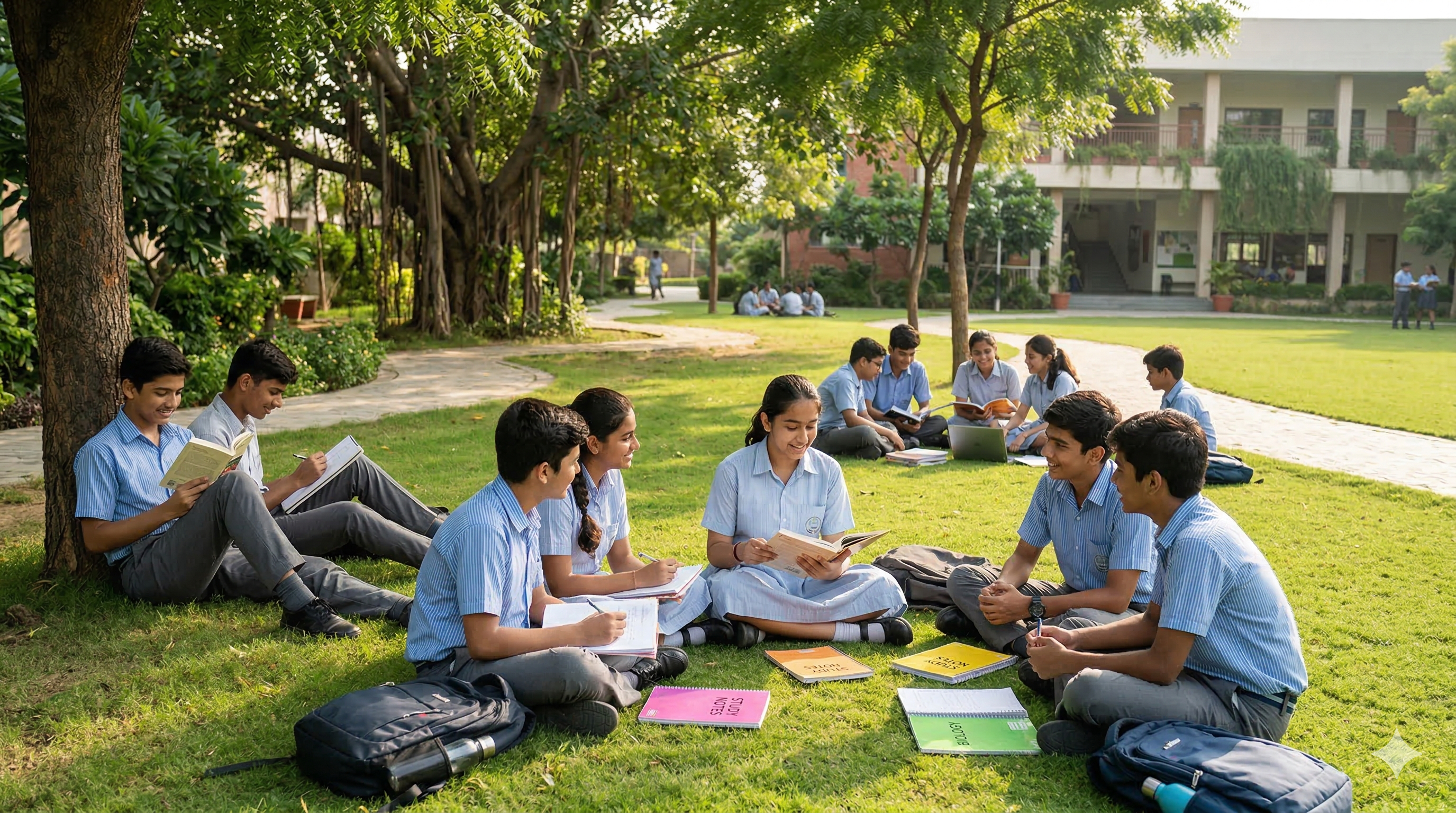
Top Schools in Gujarat 2026-27: A Parent’s Guide to Boards, Fees, Admissions and School Fit
If you have been researching schools in Gujarat for even a week, you have probably already felt the problem: every school starts sounding excellent. Every brochure talks about holistic learning. Every website promises a caring environment, strong academics, modern facilities, and future-ready education. Every campus photo looks clean and reassuring. Every open house feels carefully curated.
And yet, for parents, the real question is much simpler and much harder:
Which school will actually be right for my child, on an ordinary school day, over several years?
That is the decision that matters.
Not just whether the building looks good.
Not just whether the board sounds prestigious.
Not just whether another parent recommended it.
Not just whether the school is popular on social media.
What matters is the daily experience:
- how reading is taught
- how writing develops
- how math is made understandable
- how safe children feel in classrooms
- how teachers respond when a child struggles
- how much homework comes home
- how well the school communicates with families
- how sustainable the commute and fee structure feel
- and whether your child is likely to grow there with confidence
That is what this guide is designed to help you evaluate.
Instead of giving you only a shallow ranking or a generic “best schools” list, this article gives you a parent-first framework for comparing schools in Gujarat thoughtfully and calmly. It also reflects the kind of information broad Gujarat school searchers are usually trying to find: board differences, admission planning, fee/value questions, primary-school foundations, safety systems, and what to ask during a visit. That aligns with the structure currently rewarded on major school discovery pages, which emphasize lists, admissions, fees, curriculum, and comparison data.
And because parents often want to understand how to evaluate a specific school in context, this guide also includes a grounded section on how to assess Billabong High International School, Vadodara, using the same checklist you would use for any serious contender. Billabong’s official Vadodara/Vadsar pages describe the campus as an ICSE school in Gujarat with preschool-to-high-school progression and references to counselling, wellbeing, safety systems, and transport safeguards, which makes it a useful example for this comparison approach.
The goal here is not to convince you that one school is universally best.
The goal is to help you choose well.
How should parents choose among schools in Gujarat?
Parents should compare schools in Gujarat using six practical criteria: strong reading and math foundations, board fit, teaching quality, emotional safety, support systems, and everyday family fit including commute and fees. The best schools in Gujarat are not always the most visible or most heavily marketed; they are the schools where a child can learn steadily, feel secure, and grow with support over time.
Table of contents
- Why choosing a school in Gujarat feels harder in 2026-27
- What parents really mean when they search for the best schools in Gujarat
- How top schools in Gujarat are usually shortlisted
- What strong schools in Gujarat tend to do differently
- How to compare CBSE, ICSE, IB, IGCSE and other school pathways
- How to shortlist schools in Gujarat by city, commute, and daily routine
- The parent comparison framework that makes decisions clearer
- What to ask on a campus visit
- What to look for in classrooms and student work
- The primary years: what good progress should look like
- Middle years: independence, study skills, and emotional steadiness
- Senior years: keeping academic pathways open without early panic
- Safety and wellbeing: how to verify systems properly
- Teachers and teaching methods: how parents can judge quality
- Homework, screens, and tuition culture: what is healthy and what is not
- Fees and value: how to compare without confusion or guilt
- Admissions planning in Gujarat for 2026-27
- How to evaluate Billabong High International School, Vadodara
- A practical parent checklist for final decision-making
- FAQs about schools in Gujarat
- Conclusion
1) Why choosing a school in Gujarat feels harder in 2026-27
School choice has always been emotional. But in 2026-27, it often feels harder than it used to. That is not because parents are overthinking. It is because there is more information than ever, and not all of it is equally useful.
Parents today are typically juggling:
- school websites
- Google reviews
- Instagram videos and reels
- WhatsApp group opinions
- school listicles
- curriculum comparisons
- entrance or interaction timeline
- fee-related concerns
- future university and board pathway questions
In theory, more information should make better decisions easier. In practice, it often creates decision fatigue.
One parent hears that a certain school is excellent for discipline. Another says it is too rigid. One family praises a curriculum for being global and inquiry-led. Another says the same environment felt vague and unstructured. One school is called strong academically. Another parent says the homework load was too high for their child.
So the same school can sound brilliant or wrong depending on who is talking and what that family needs. That is why many parents feel stuck.
The real problem is not lack of options
In Gujarat, parents are not usually struggling because there are no schools. They are struggling because there are too many ways to compare schools:
- by board
- by city
- by fee range
- by reputation
- by word of mouth
- by results
- by infrastructure
- by convenience
- by school philosophy
- by long-term pathway
And when everything matters, it becomes hard to know what matters most.
How to simplify the decision
When school research starts becoming noisy, come back to three grounding questions:
1. Will my child build strong foundations here?
That means reading, writing, comprehension, number sense, reasoning, and confidence.
2. Will my child feel safe here?
That includes physical safety, emotional safety, respectful correction, and a classroom tone that supports learning.
3. Will the school support my child consistently?
Not only when everything is going well, but also when your child is confused, anxious, behind in a subject, socially unsettled, or simply adjusting.
If a school is strong on those three things, many other concerns become easier to manage.
Because the truth is: parents do not need a perfect school. They need a dependable one.
2) What parents really mean when they search for the best schools in Gujarat
When someone searches for schools in Gujarat, they are almost never looking for a random list of school names.
Usually, the intent is more specific.
They may be asking:
- Which are the top schools in Gujarat I should shortlist first?
- Which schools in Gujarat are worth visiting?
- Which board is best for my child?
- How do I compare Gujarat schools without getting overwhelmed?
- Which schools are strong academically but also balanced?
- What should I know about fees and admissions before I apply?
- Are there good schools in Gujarat that are not just over-marketed?
- How do I judge whether a school is genuinely strong?
That is why broad school-discovery pages ranking in Gujarat typically combine several elements:
- school lists
- board-based filters
- fees and admission details
- ratings, reviews, and facilities
- city-wise or category-wise groupings.
So if your content wants to rank well for terms like:
- schools in Gujarat
- best school in Gujarat
- top schools in Gujarat
- Gujarat schools
it should do more than sound thoughtful. It should also satisfy this broader comparison intent clearly and early.
What parents are actually looking for
Underneath the search terms, most parents are really looking for confidence. They want to know:
- whether the school will be good for their child
- whether they are missing a better option
- whether the board choice will limit future opportunities
- whether they are paying for real learning value
- whether they can trust what the school is saying
- whether their child is likely to feel settled, supported, and capable there
That is why the strongest school content does two things well:
- it answers the search query clearly
- it reduces decision anxiety with practical guidance
This article is designed to do both.
3) How top schools in Gujarat are usually shortlisted
A parent searching for the top schools in Gujarat often imagines a citywide or statewide ranking. But in real life, the shortlisting process is usually far more practical. Most families do not choose from every school in Gujarat. They choose from a smaller circle based on:
- city
- board
- age group
- commute
- budget
- school culture
- future plans
The first mistake many parents make is they start with a brand or popularity. The better approach is to start with fit filters.
The filters that actually matter first
1. City and daily route
A school that looks excellent online may become exhausting if the daily commute is unsustainable. For many families in Gujarat, city location matters more than brand prestige.
Common shortlisting may happen by city or region such as:
- Vadodara
- Ahmedabad
- Surat
- Rajkot
- Anand
- Gandhinagar
- nearby residential clusters depending on work and home routine
2. Board
Parents often narrow early by:
- CBSE
- ICSE
- IB
- IGCSE / Cambridge
- state board
- hybrid or school-defined “international” positioning
3. School stage
A family choosing preschool or primary may prioritize very different things than a family choosing senior school.
4. Commute and routine
A strong school with a draining daily journey may still be the wrong choice, especially for younger children.
5. Fee comfort
Not just whether you can manage the fee today, but whether the fee structure feels sustainable for the years ahead.
A better way to think about “top”
Instead of asking: Which are the top schools in Gujarat?
Ask: Which schools in Gujarat are top contenders for my child’s age, board fit, city, and daily life?
That question is harder, but much more useful.
Why this matters for ranking and relevance
The current Gujarat SERP already reflects this kind of comparison behavior. High-ranking school aggregation and comparison pages organize content by board, fee details, admission process, school type, and facilities. That means the smartest content approach is not to fake a rigid ranking. It is to help parents shortlist well.
4) What strong schools in Gujarat tend to do differently
Many schools say they are child-centric, future-ready, holistic, or committed to excellence. Those phrases are not wrong. But on their own, they do not tell parents much. What matters is how quality shows up in ordinary school life.
Strong schools treat literacy as a planned system
One of the clearest differences between an average school and a strong school is how reading is taught. In an average environment, reading may be treated like something that happens naturally if children:
- have textbooks
- occasionally read aloud
- visit the library
- are encouraged to “read more”
In a stronger environment, reading is built deliberately.
That usually means:
- structured early decoding or phonics work where appropriate
- planned fluency development
- comprehension teaching, not just oral reading
- vocabulary support
- discussion around meaning, not just correct pronunciation
- reading linked to writing and speaking
A school that teaches reading well in primary does something very important: it makes later learning easier across every subject. Because eventually, almost every academic challenge becomes a reading challenge:
- reading a word problem
- reading science instructions
- reading a history passage
- reading for inference
- reading longer exam questions
- reading independently to revise
So when parents visit a school, one of the most powerful questions they can ask is:
How do you teach reading from Grade 1 to Grade 3?
If the answer is vague, that is useful information too.
Strong schools build math understanding before speed
Many families have grown up equating math ability with quick answers. But speed is not the same as understanding. In a strong school, math teaching usually includes:
- number sense
- manipulatives or visual representations
- clear explanation of place value
- conceptual work before repeated drilling
- reasoning-based questioning
- word-problem interpretation
- opportunities for children to explain their thinking
When children understand why something works, they are far less likely to panic when math becomes abstract later.
So instead of asking only: How much practice do students get?
ask: How does the school build mathematical reasoning and confidence?
Strong schools feel structured but emotionally safe
Many parents say they want discipline in a school, and that is a valid concern. Calm classrooms matter. Routine matters. Consistency matters. But discipline does not have to mean fear. In strong schools:
- expectations are clear
- transitions are calm
- behaviour is corrected consistently
- correction is respectful
- mistakes are not used to shame children
- participation is encouraged without humiliation
Children learn better in classrooms where they are safe enough to think aloud, ask questions, and recover from being wrong.
Strong schools can explain what happens when something goes wrong
This is one of the most underrated indicators of quality.
Ask any school what happens when:
- a child falls behind in reading
- a child is anxious about math
- a child struggles socially
- a child becomes disruptive repeatedly
- a parent has a concern
- a bullying concern is reported
- a medical issue happens during school hours
The strongest schools are not the ones that say “Don’t worry.” They are the ones that say, “Here is our process.”
5) How to compare CBSE, ICSE, IB, IGCSE and other school pathways
Which curriculum or board is best?
There is no single best board for every child. The right choice depends on how your child learns, what kind of school environment suits them, and how well the school actually delivers the board it offers. This is where many parents get stuck, because board choice feels like a permanent decision.
It helps to remember two things:
- in the early years, teaching quality matters more than the label
- a strong school under a simpler board can still be far better than a weak school under a prestigious-sounding one
CBSE
CBSE is often preferred by families who value:
- structure
- familiarity
- wide availability
- alignment with many Indian academic pathways
- a clear academic progression model
Possible strengths:
- consistent format
- predictable structure
- easier comparison across many schools
Watch-outs:
- in some schools, learning can become too syllabus-driven
- rote habits may increase if teaching is not concept-led
- early writing and comprehension can be underdeveloped if not explicitly taught
Good parent questions:
- How does the school make sure children truly understand concepts?
- How are reading and writing built alongside the syllabus?
- What does assessment look like in primary?
ICSE
ICSE is often associated with:
- strong English emphasis
- broader expressive learning
- richer exposure to reading and writing
- detailed subject content
Possible strengths:
- language development
- writing practice
- broader academic exposure
Watch-outs:
- can feel heavy if not scaffolded well
- some children may feel overloaded if the school focuses on coverage rather than clarity
Good parent questions:
- How is curriculum depth balanced with wellbeing?
- How much homework is typical by grade?
- How does the school support children who need help with writing or workload?
IB
IB-style environments are often associated with:
- inquiry-based learning
- reflection
- projects
- global perspectives
- skill-based thinking
Possible strengths:
- discussion
- presentation
- curiosity
- interdisciplinary learning
- reflective habits
Watch-outs:
- if literacy and numeracy are not systematically taught, “inquiry” can become superficial
- parents sometimes hear a lot of philosophy but not enough practical explanation
Good parent questions:
- How are reading, writing, and math taught inside the inquiry model?
- How is skill progression measured?
- What does a normal school week actually look like?
IGCSE / Cambridge-influenced pathways
These often attract families looking for:
- application-oriented learning
- reasoning
- concept focus
- international benchmarking
- academic English development
Possible strengths:
- strong emphasis on understanding
- good for independent thinkers
- can suit students who enjoy reasoning over rote learning
Watch-outs:
- support quality varies widely across schools
- some students need careful scaffolding to adjust well
Good parent questions:
- How does the school support varied learning speeds?
- How is academic language developed over time?
- How are assessments explained to parents?
Learn more about preschools
State board and other pathways
Depending on city, budget, and family priorities, state board and other local frameworks may also be realistic choices for many families. In such cases, the same principle still holds:
board label matters less than school execution
The most useful question of all
Instead of asking: Which board is best?
Ask: Which school, under this board, will help my child build strong reading, writing, math, confidence, and study habits?
That is the question that keeps the decision grounded.
6) How to shortlist schools in Gujarat by city, commute, and daily routine
Parents often underestimate the power of logistics. But daily routine affects learning more than many people expect.
A child who spends too long travelling may:
- arrive tired
- return home depleted
- lose playtime
- lose reading time
- become more irritable
- struggle with sleep rhythm
- associate school with fatigue rather than growth
So before choosing by brochure, choose by life.
Start with a realistic geography
Identify the schools your family can genuinely sustain. This usually means shortlisting by:
- home location
- work routes
- transport reliability
- after-school activity needs
- age of the child
Younger children need different decisions
For preschool and primary, long commutes are often a hidden cost. Even if a distant school feels more prestigious, the daily wear can outweigh the brand value.
Older children may manage a little more
But even then, commute still affects:
- revision time
- extracurricular participation
- mood
- family routine
Ask yourself:
- Can we sustain this route for years, not weeks?
- What will this feel like in traffic, monsoon, exam periods, and busy work months?
- Will our child still have time to rest, play, and read?
Practical shortlisting method
- Fix a realistic commute radius
- Narrow to boards you are truly open to
- Shortlist 5 to 8 schools
- Visit 3 to 5 serious contenders
- Compare using the same checklist every time
This method is simple, but it works.
7) The parent comparison framework that makes school decisions clearer
Once you have a shortlist, you need a way to compare schools without getting swept up by presentation.
Use five pillars.
Pillar 1: Foundations
Ask:
- Will my child become a stronger reader here?
- Will writing improve in a visible way?
- Will math be taught for understanding, not fear?
Pillar 2: Teaching quality
Ask:
- Can the school explain how teaching happens?
- How is understanding checked?
- How are students supported at different levels?
- Is feedback clear and constructive?
Pillar 3: Culture
Ask:
- Do children seem emotionally safe?
- Does correction sound respectful?
- Does the environment feel calm or tense?
- Are students encouraged to think or mostly told to comply?
Pillar 4: Support systems
Ask:
- What learning support exists?
- What counselling exists?
- How are parents informed of concerns?
- How are challenges identified early?
Pillar 5: Practical fit
Ask:
- Can we manage this commute?
- Can we sustain the fees?
- Does the school routine fit our family?
- Will this school work not only on admission day but on everyday school days?
Why this works so well
Because it shifts parents away from:
- fear
- hype
- comparison panic
- brand-led choices
and toward:
- lived educational quality
- child fit
- long-term sustainability
8) What to ask on a campus visit
A school visit should not just leave you impressed. It should leave you informed. The single most useful question to keep in mind
What will my child experience daily here?
That question changes how you observe everything.
Ask for examples, not reassurance
Instead of: “Are you a strong academic school?”
Try:
- How is reading taught in Grade 1 and how does that change by Grade 3?
- How do children learn to write beyond copying?
- How do teachers build confidence in math?
- What happens if a child is behind in reading?
- What is the expected homework time for this grade?
- How do you handle repeated behaviour issues?
- How do you handle bullying or exclusion?
- How do parents raise concerns?
- What support exists for different learning needs?
These questions usually reveal the difference between schools that talk well and schools that teach well.
Ask to see progression
If possible, ask to see:
- student writing samples from the beginning and later part of a term
- examples of math work that show reasoning
- project work with teacher feedback
- age-appropriate expectations by grade
Notice real life, not staged life
Pay attention to:
- teacher tone
- how children respond to adults
- whether children seem relaxed enough to ask questions
- whether routines feel calm
- whether student work looks authentic or overly polished
Watch what happens in the corridor, not just the classroom
A school’s culture often shows up in the transitions:
- how adults speak to students
- how children line up
- whether staff seem attentive
- whether the environment feels orderly without looking fearful
9) What to look for in classrooms and student work
Parents often think they need expert educational knowledge to judge classrooms. They do not. They just need to know what signs matter.
In literacy classrooms, look for:
- books children can access
- evidence of comprehension, not just oral reading
- vocabulary work
- writing connected to reading
- different levels of material where appropriate
- student work that shows improvement over time
In math classrooms, look for:
- visual aids or models
- children explaining answers
- word problems discussed meaningfully
- teacher correction that builds understanding
- less emphasis on speed alone
In thinking and participation, look for:
- many children participating, not just the top few
- quieter children invited in gently
- mistakes treated as learnable moments
- open-ended questions, not just recall questions
In student work, look for:
- progress
- authenticity
- feedback
- clarity of expectations
- different levels of challenge
The goal is not to find perfection. It is to find evidence that learning is real.
10) The primary years: what good progress should look like
The early years matter enormously because they shape not only academic ability, but also a child’s sense of themselves as a learner. A strong primary experience helps children feel:
- capable
- curious
- secure
- willing to try
- willing to ask
- willing to recover from mistakes
By around the end of Grade 2
In a strong school environment, many children are beginning to:
- read simple text with increasing fluency
- answer basic comprehension questions
- write meaningful sentences and simple paragraphs with support
- understand early number concepts with growing confidence
- participate without constant fear of being wrong
By Grade 3 or 4
Children are often moving toward:
- stronger understanding of what they read
- summarising and inferring
- more structured writing
- clearer vocabulary use
- better problem-solving in math
- longer attention span
- more independent work habits
By Grade 5
A strong primary programme often produces children who can:
- read independently with understanding
- write short multi-paragraph pieces
- handle foundational math concepts with less fear
- manage routines and materials more independently
- speak up, present, and collaborate with reasonable confidence
Why these grade-level expectations matter
Because they help parents ask better questions.
Instead of only asking: “Does the school do well academically?”
you can ask:
- What reading level and comprehension progress do you expect by Grade 3?
- What does writing development look like by Grade 5?
- How do you support children who are not meeting those milestones yet?
That makes the conversation more useful.
11) Middle years: independence, study skills, and emotional steadiness
Middle school is where many children begin to feel an academic jump.
More subjects.
Longer answers.
More expectations.
Less hand-holding.
More comparison.
Sometimes, more emotional complexity too.
The mistake some schools make
They simply increase the workload and call it rigour. But that does not build independence. It often builds stress.
What strong middle years usually include
A good middle school programme explicitly teaches:
- note-taking
- revision strategies
- project planning
- time management
- organising materials
- writing longer answers
- following through independently
- handling mistakes without melting down
Why this matters
Many children do not struggle because they are not intelligent.
They struggle because nobody has taught them how to manage school.
Good parent questions for middle years
- How do you build study habits from Grades 6 to 8?
- How do you help children transition to greater independence?
- What happens when students begin falling behind?
- How do you balance accountability with emotional support?
Emotional steadiness matters too
Middle school is also when:
- friendships become more complex
- self-consciousness increases
- comparison becomes sharper
- confidence can fluctuate more quickly
A strong school does not ignore this. It supports children through it.
12) Senior years: keeping academic pathways open without early panic
Even if your child is young, it is natural to think ahead.
Parents want to know:
- Will this school keep options open?
- Will my child be prepared for later board demands?
- Will future university choices still feel possible?
- Will the environment become too pressure-heavy too early?
These are fair questions.
The best long-term preparation is not early panic
It is strong transferable skill-building.
That means:
- reading comprehension
- writing clarity
- math reasoning
- resilience
- self-management
- ability to revise effectively
- confidence with academic language
Those skills travel across boards and pathways.
What parents should ask schools about senior years
- How do you support subject planning?
- What counselling or career guidance exists?
- How do you prepare students without turning the environment panic-driven?
- How do you support wellbeing in higher-pressure years?
Billabong’s official Vadodara materials reference a counselling and career guidance ecosystem, including counsellor sessions and university-related support for older students. That does not automatically prove quality, but it does give parents useful follow-up questions to ask.
13) Safety and wellbeing: how to verify systems properly
Safety should never be judged only by vibe. A school may feel warm and still have weak systems. A school may look orderly and still communicate poorly when problems occur.
You need clarity.
What to ask about physical safety
- What are the entry and exit protocols?
- How are visitors logged and supervised?
- What does dispersal look like?
- What happens in a medical emergency?
- How is transport monitored?
- What are the procedures if a child is not picked up on time?
What to ask about emotional safety
- How are mistakes handled in class?
- How is repeated teasing or exclusion addressed?
- How are bullying concerns recorded and followed up?
- Is there counselling support?
- How are parents informed?
Why process matters more than slogans
Any school can say: “We take safety seriously.”
The stronger question is: What happens next, step by step, when something goes wrong?
Billabong-specific safety references
Billabong’s Vadodara pages currently mention several concrete safety-related measures, including visitor logging, security personnel, first-aid support, nearby hospital linkage, and bus safety features such as seatbelts and a female attendant on each bus. The site also references a Center of Well-Being for emotional and developmental support.
Those are useful operational details because they move the conversation beyond general reassurance.
14) Teachers and teaching methods: how parents can judge quality
You do not need to be a teacher to judge teaching quality. You just need to know what to listen for and what to ask.
Strong teaching usually includes:
- clear learning goals
- explanation in more than one way
- checks for understanding during lessons
- useful feedback
- calm routines
- attention to different learning speeds
- respectful correction
- visible progression over time
What teachers say matters
If you observe a class or hear teaching examples, listen to the kinds of questions being asked. A more limited classroom may rely heavily on:
- What is the right answer?
- Who remembers?
- Say it exactly
- Finish quickly
A richer classroom may include:
- Why do you think that?
- How did you decide?
- What evidence do you see?
- Can you explain your reasoning?
- Is there another way to solve it?
Why that matters: Because the language of a classroom shapes the thinking of its students.
Parents should also ask:
- How are teachers trained?
- How is consistency maintained across classes?
- How do teachers plan for different learners?
- How often do teachers communicate with parents about progress?
Good schools invest in teaching systems
A strong school is not just one excellent teacher. It is a place where quality is supported across many classrooms.
15) Homework, screens, and tuition culture: what is healthy and what is not
Parents often carry two opposite fears:
- What if my child is not challenged enough?
- What if my child is overloaded too early?
The healthiest schools reduce both fears by designing age-appropriate expectations.
Homework
In primary, healthy homework often includes:
- regular reading
- short reinforcement tasks
- occasional manageable projects
- light routines that support, not replace, school learning
Red flags include:
- daily homework that drags on for hours
- projects that are really parent work
- heavy written load too early
- children regularly losing sleep or playtime
Screens
Technology can be useful when it has a purpose:
- research
- practice
- creation
- collaboration
- presentation
But it should not replace:
- books
- discussion
- handwriting
- movement
- play
- art
- hands-on learning
A good question to ask is: What does screen use look like in an average week for this grade?
Tuition culture
This is an important but often ignored signal. If most families feel that outside tuition is almost essential just to keep up, parents should ask whether the school day is truly meeting learners’ needs. Healthy learning should be sustainable in the classroom first.
16) Fees and value: how to compare without confusion or guilt
Few school decisions feel more emotionally loaded than fees. Parents want to do their best.
They also do not want to make a financially stressful choice based on pressure or image.
A better question than “Is this expensive?”
Ask: What are we actually getting every week that supports our child’s learning and wellbeing?
That question is calmer and more useful.
Real value usually shows up in:
- strong teaching
- reasonable student attention
- consistent support systems
- sports and arts that are truly timetabled
- safe and well-run operations
- clear parent communication
- emotionally healthy classrooms
- structured academic progression
Be cautious if fee justification sounds like this:
- “world-class infrastructure”
- “international exposure”
- “premium learning environment”
- “technology-enabled future readiness”
Those things may matter. But without strong daily teaching, they are not enough.
Questions parents should ask
- What is included in the fee and what is separate?
- What support services are available in school?
- What co-curriculars are part of the normal week?
- What is the teacher-student ratio?
- How are fee revisions handled?
- What does progress communication look like?
Also think long-term
A fee that feels manageable for one year may not feel manageable over many years. Sustainable peace matters too.
17) Admissions planning in Gujarat for 2026-27
Admissions usually feel most stressful when parents begin too late or compare too many schools without a framework.
A calm admissions process often looks like this
- identify realistic schools by city and board
- shortlist 3 to 5 strong options
- visit them with the same checklist
- clarify documents and timelines early
- keep one backup option
- avoid panic decisions near deadlines
Why a checklist helps
Without one, school visits blur together.
With one, you can compare clearly.
Common things parents should clarify
- age criteria
- grade availability
- registration steps
- interaction or assessment process
- documents required
- fee payment timing
- transport availability
- onboarding support
18) How to evaluate Billabong High International School, Vadodara
Now let us apply the framework to one specific school in Gujarat.
Billabong High International School’s official Vadodara/Vadsar pages present the campus as an ICSE school in Gujarat, serving children from preschool to high school. The school materials also describe a learning approach that references interdisciplinary learning, growth mindset, and developmentally informed teaching, while highlighting sports, performing arts, a Center of Well-Being, counselling, and transport safety features.
For parents, that means Billabong is best evaluated not through a broad slogan, but through the same grounded checklist that should be used for any serious option.
What should parents verify at Billabong High, Vadodara?
Parents should verify four main areas closely: early literacy and numeracy foundations, how the school translates inquiry and skill-building into ordinary classroom routines, how support and wellbeing systems work day to day, and how safety, communication, and transport procedures are handled in practice.
1. Start with the strongest possible question: foundations
Ask:
- How is reading taught from Grade 1 to Grade 3?
- How does writing develop year by year?
- How are math concepts explained and practiced?
- What happens if a child is behind?
- How is confidence built for children who are hesitant?
This matters because everything else rests on foundation quality.
2. Evaluate the school’s educational language in practical terms
Billabong’s pages refer to learning principles such as Bloom’s taxonomy, neuroscience-based development, interdisciplinary learning, and growth mindset. Those may sound promising, but parents should ask how those ideas look in an ordinary week.
Useful follow-up questions:
- What does this look like in a Grade 2 classroom?
- How do you balance thinking skills with basic skill mastery?
- How do you measure progress in reading, writing, and math?
- What does student feedback look like?
3. Ask about support systems and wellbeing
Billabong’s Vadodara materials mention a Center of Well-Being, special-needs support references, and counselling/career guidance structures for older learners.
That makes these good questions to ask:
- How are learning or emotional concerns identified early?
- How do classroom teachers coordinate with support staff?
- How are parents kept informed?
- What kinds of support are available at different ages?
4. Verify safety and transport systems carefully
The official pages reference visitor logging, security personnel, first-aid support, hospital linkage, bus seatbelts, and female attendants on buses.
That gives parents useful concrete points to confirm:
- How do arrival and dispersal work?
- How is transport supervision managed?
- What happens in an emergency?
- How are safety updates communicated?
5. Assess whether the school’s tone matches your child
Some children thrive in highly expressive environments. Others need gentler structure. Some need strong encouragement to speak. Others need adults who can balance warmth and clarity.
So while Billabong may look attractive for parents seeking:
- an ICSE school in Gujarat
- a Vadodara/Vadsar location
- academics plus wellbeing and co-curricular breadth
- a school that articulates child development and support systems
The final decision should still come from lived observation.
6. Why Billabong can be highlighted credibly without overselling
A balanced article can highlight Billabong well by doing three things:
- using official, verifiable campus details
- encouraging parents to apply the same rigorous checklist
- avoiding unsupported claims like “best ranked by parents”
That keeps the content trustworthy.
19) A practical parent checklist for final decision-making
When you are down to your final 2 or 3 schools, use this checklist.
Foundations
- Can the school clearly explain how it teaches reading?
- Is writing development structured and visible?
- Is math taught conceptually?
Teaching quality
- Do teachers seem clear and responsive?
- Can the school explain how it checks understanding?
- Is feedback specific?
Emotional safety and culture
- Do children seem comfortable?
- Is discipline respectful?
- Are mistakes treated as part of learning?
Support systems
- Is learning support available?
- Is counselling available?
- Is communication with parents clear?
Practical fit
- Can we manage the commute?
- Can we sustain the fees?
- Does the routine suit our family?
Final question
Can I picture my child growing here, not just being admitted here?
That is often the clearest question of all.
20) FAQs about schools in Gujarat
1) How do I shortlist the top schools in Gujarat without getting overwhelmed?
Start by narrowing schools by city, commute, and board. Then visit a smaller shortlist using one consistent checklist that covers foundations, teaching quality, safety, support systems, and parent communication. That makes comparisons much clearer.
2) What matters most when choosing schools in Gujarat for primary grades?
In primary, the most important indicators are strong reading and comprehension teaching, writing development, math understanding, teacher quality, and emotional safety. Those foundations shape every later stage of learning.
3) How do I judge whether a school is truly strong academically?
Look beyond marks and marketing. Strong schools can explain how they teach, how they check understanding, how they support different learning speeds, and what progress should look like by grade level.
4) What should I ask during a school visit?
Ask how reading is taught in early grades, how writing is built over time, how math reasoning is developed, how homework is handled, what support exists for children who struggle, and how behaviour, bullying, and safety concerns are managed.
5) Which board is best for children in Gujarat: CBSE, ICSE, IB, or IGCSE?
There is no universal best board. The right fit depends on your child’s learning style, your family’s future plans, and how well the school delivers that curriculum. In most cases, strong teaching matters more than the board label in the early years.
6) Are expensive schools always better schools?
Not necessarily. Higher fees may reflect infrastructure, branding, or added services, but real value comes from teaching quality, support systems, safety, emotional climate, and everyday learning experience.
7) How much homework is healthy for young children?
In primary grades, healthy homework usually includes reading and short reinforcement tasks. If homework regularly becomes long, stressful, or heavily parent-dependent, that may be a warning sign.
8) How important is emotional safety in a school?
Very important. Children learn better when they feel safe asking questions, making mistakes, and participating. Emotional safety supports confidence, resilience, and academic growth.
9) How do I know whether a school’s safety systems are actually strong?
Ask for process details, not slogans. Schools should be able to explain entry and exit procedures, visitor logging, medical response, transport supervision, bullying follow-up, and communication processes clearly.
10) How do I evaluate Billabong High International School in Vadodara?
Use the same checklist you would use for any school: foundations, teaching clarity, support systems, wellbeing, safety, communication, and child fit. Billabong’s official Vadodara pages mention ICSE positioning, counselling, a Center of Well-Being, and transport safety measures, which give parents a useful starting point for evaluation.
11) Is there one best school in Gujarat for every child?
No. Children learn differently, and family priorities differ too. The best school is the one where your child can build strong foundations, feel emotionally secure, and grow steadily over time.
12) When should I start admissions planning in Gujarat for 2026-27?
It is usually better to start several months in advance so you can compare schools calmly, ask better questions, understand timelines, and avoid making a rushed decision under deadline pressure.
21) Conclusion
Choosing among schools in Gujarat can feel like a high-stakes decision because it is one. This is where your child will spend a major part of their day, develop learning habits, build confidence, face academic challenges, and form early beliefs about what school feels like.
That is why the right school is not simply the one with the most polished website, the broadest claims, or the loudest reputation.
It is the one that can show:
- strong literacy and numeracy foundations
- clear teaching methods
- respectful classroom culture
- emotional and academic support
- practical safety systems
- steady communication with parents
- a daily routine your family can realistically sustain
That is how parents move from confusion to confidence.
And if you are evaluating Billabong High International School, Vadodara, the most useful thing you can do is evaluate it with the same calm rigor you would use anywhere else. Billabong’s official Gujarat materials give parents a meaningful starting point: ICSE positioning, preschool-to-high-school progression, counselling and wellbeing references, safety systems, and transport safeguards. But the final decision should still come from seeing how those systems translate into real daily school life.
When you choose that way, you are not just choosing a school.
You are choosing the environment in which your child will grow, day by day, into a more capable and confident learner.
Latest Blogs





CATEGORIES

March 18, 2026
Top Cambridge Schools in India for 2026: Parent Guide to IGCSE, Fees, Admissions and Fit
Read More
March 18, 2026
Top ICSE Schools in India 2026: Parent Guide to Admissions, Curriculum and Fit
Read More


March 18, 2026
Top Preschools in India for 2026, A Parent’s Guide to Curriculum, Fees, Readiness and School Fit
Read More