


Complete List of Top Schools in Pune Ranked by Parents 2026-27
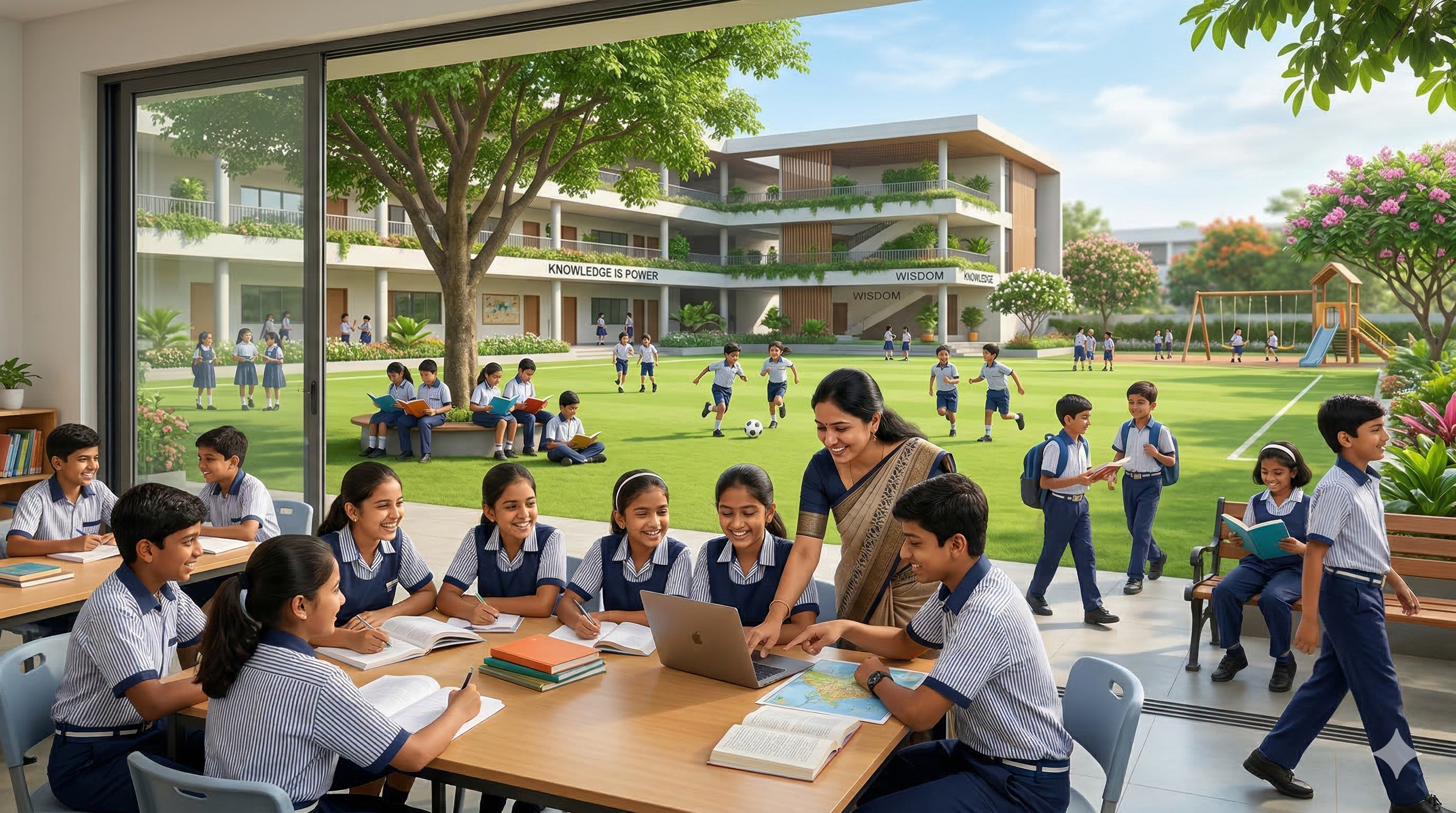
Top Schools in Pune for 2026-27: A Parent’s Guide to Choosing the Right School
If you are shortlisting schools in Pune right now, you are not alone. For many families, this is one of the most emotionally loaded decisions of the year. You are not just comparing buildings, boards, or brochures. You are trying to choose the place where your child will spend a large part of their daily life, build learning habits, make friends, gain confidence, and begin shaping how they think about school itself.
That is why choosing among the top schools in Pune can feel overwhelming. Every school claims to be holistic. Every campus visit is polished. Every admissions conversation sounds reassuring. And once you begin comparing CBSE, ICSE, IB, and Cambridge options, the decision can start to feel even more confusing.
The good news is this: parents do not need a louder ranking list. They need a better way to evaluate schools.
This guide is designed to help you do exactly that.
It does three things:
- It gives you a realistic shortlist framework for the best schools in Pune.
- It helps you compare schools by board, locality, teaching quality, safety, commute, and admissions process.
- It shows how to evaluate a school like Billabong High International School using the same criteria you would use for any serious contender.
So rather than chasing a “best school” label, this article helps you identify the right-fit school for your child.
How should parents choose among schools in Pune?
Parents should compare schools in Pune based on six everyday factors: teaching quality, board fit, commute, emotional safety, communication systems, and value for money. The best schools in Pune are not always the most famous ones. They are the schools that match your child’s learning style, your family’s routine, and the kind of daily experience you want over the next several years.
That is the lens for this guide.
Table of contents
- Why choosing a school in Pune feels harder in 2026-27
- A quick shortlist of top schools in Pune parents often compare
- What makes a good school in Pune in real daily life
- CBSE vs ICSE vs IB vs Cambridge: which curriculum fits your child?
- How to shortlist schools in Pune by locality and commute
- The 12-question checklist to compare schools fairly
- What to look for in classrooms during a campus visit
- Discipline, bullying, and emotional safety: what parents should verify
- Homework, assessments, and screen time: what is healthy?
- Fees and value for money: how to judge wisely
- School admissions in Pune for 2026-27: what parents should expect
- How to evaluate Billabong High International School, Pune
- Where EuroSchool may fit into a parent shortlist
- Final decision framework: how to choose without second-guessing yourself
- FAQs parents ask about the best schools in Pune\
1) Why choosing a school in Pune feels harder in 2026-27
Pune has long been one of India’s most education-focused cities. Families moving within Pune, relocating from other cities, or choosing a first school for their child often see the city as rich in quality options. That is true. But it is also why the decision feels harder now.
There are three main reasons.
1. Pune offers many different school pathways
Parents are not choosing from one type of school anymore. They are comparing:
- CBSE schools with structured academic progression
- ICSE schools known for strong language and broad content exposure
- IB and Cambridge schools with inquiry- and application-oriented learning
- schools that market themselves as “international” while blending Indian and global approaches
This variety is a strength, but it also means parents cannot rely on one shortcut such as board, brand, or campus size.
2. Parent expectations have changed
A generation ago, many families asked only one question: “Will my child do well academically?”
Today, parents also ask:
- Will my child enjoy learning here?
- Will this school help with confidence and communication?
- Will my child be safe emotionally, not just physically?
- Will this school push too hard too early?
- Will my child get a real childhood, not just worksheets and tests?
Those are better questions. But they require more thoughtful answers than a ranking list alone can provide.
3. Practical factors matter more than ever
A school can look excellent on paper and still be the wrong fit because:
- the commute is exhausting
- communication is inconsistent
- homework is excessive
- there is little clarity on learning support
- fees do not translate into everyday learning value
In a city like Pune, where traffic, locality, and family logistics matter, these practical realities shape the actual school experience as much as academics do.
That is why the right question is not “Which is the best school in Pune?”
It is: “Which school in Pune is most likely to help my child thrive every day?”
2) A quick shortlist of top schools in Pune parents often compare
Many high-ranking Pune school pages perform well because they give parents a shortlist early, then help them compare further. So here is a more useful idea.
How to use a shortlist properly
Do not treat this as a “final answer” list. Treat it as a starting point. From this stage, narrow by:
- your preferred board
- your child’s age
- your daily commute tolerance
- fees you can sustain comfortably
- the kind of school culture you want
A better parent method than blind ranking
Instead of asking, “What are the top schools in Pune?” ask:
- Which schools are realistic for my area?
- Which boards am I genuinely open to?
- Which schools seem strongest for my child’s stage right now?
- Which schools can explain how they teach, support, and communicate?
That shift instantly makes school research more useful.
3) What makes a good school in Pune in real daily life
Parents hear the same words repeatedly: child-centric, holistic, future-ready, global, nurturing, experiential. The problem is not that these words are wrong. The problem is that they are too broad. To identify good schools in Pune, you need to translate those claims into everyday reality.
A good school gets foundations right
In the early years and primary grades, quality shows up in children who are steadily becoming:
- fluent readers who understand what they read
- confident writers who can express ideas clearly
- comfortable with number sense and problem-solving
- able to listen, focus, and work independently in age-appropriate ways
A school may have attractive infrastructure and excellent branding, but if these foundations are weak, children often need heavy home support later.
A good school teaches clearly
Strong teaching is not about being strict, fast, or flashy. It is about clarity. In a good classroom:
- teachers explain concepts in more than one way
- they check for understanding often
- mistakes are corrected without shame
- slower learners are supported without being labelled
- stronger learners are stretched without turning learning into pressure
A good school feels emotionally safe
Many parents underestimate this because it is harder to measure than marks.
But emotional safety affects everything:
- willingness to speak up
- readiness to ask for help
- resilience after mistakes
- comfort with peers
- long-term academic confidence
A child who is constantly anxious, compared, or embarrassed may become quiet and compliant, but that is not the same as secure learning.
A good school has balance built into the timetable
When schools talk about sports, art, music, theatre, coding, maker labs, or life skills, the key question is not whether those exist. It is whether they happen regularly.
Ask:
- How many periods per week are allotted?
- Are they protected or frequently cancelled?
- Are they age-appropriate and well staffed?
Balanced development is real only when it is timetabled, not when it appears only on annual day posters.
A good school can explain its systems
Good schools do not only make promises. They explain the process. They can clearly tell parents:
- what happens when a child struggles with reading
- how repeated discipline issues are handled
- how bullying concerns are escalated
- how parents can raise a concern
- what medical response and dispersal systems look like
This is where many brochure-led schools fall short. Strong schools can explain what they do, step by step.
4) CBSE vs ICSE vs IB vs Cambridge: which curriculum fits your child?
This is one of the most common parent dilemmas in Pune, and it often creates unnecessary confusion.
Here is the simplest honest answer:
The board matters, but the school’s actual teaching matters more — especially in the early years.
A well-run CBSE school can develop strong thinkers and communicators. A weak international curriculum school can still produce shallow learning, stress, and confusion. So parents should treat board choice as a fit decision, not a prestige decision.
Quick answer: which board is best?
There is no universal “best” board. The best board for your child depends on your family’s future plans, your child’s learning style, and how well the school delivers that curriculum on the ground.
CBSE
CBSE often suits families looking for:
- structure
- continuity
- clear progression
- compatibility with many Indian academic pathways
Possible strengths:
- consistent framework
- widespread availability
- familiar academic progression for many families
What to check:
- Is teaching conceptual or textbook-heavy?
- Does the school over-rely on rote learning?
- Are communication, writing, and reasoning actively built?
Best-fit child profile: A child who benefits from clarity, structure, and a predictable progression pattern.
ICSE
ICSE often appeals to families who value:
- strong English language development
- breadth of content
- expressive writing
- broad exposure across subjects
Possible strengths:
- strong language and writing orientation
- often richer exposure to content and expression
- good fit for children who enjoy reading and language
What to check:
- Is the workload developmentally appropriate?
- Are concepts taught deeply, or just covered extensively?
- Does the child have enough support to manage breadth?
Best-fit child profile: A child who enjoys language, reading, wider academic exposure, and expressive learning.
IB
IB, especially in early and middle years, often attracts parents looking for:
- inquiry-based learning
- project work
- communication and reflection
- global context and conceptual thinking
Possible strengths:
- encourages questioning and discussion
- builds reflection, self-awareness, and interdisciplinary thinking
- can be excellent for curious, discussion-oriented learners
What to check:
- Are reading, writing, and math taught systematically?
- Are teachers well trained?
- Is “inquiry” structured, or just loosely activity-based?
Best-fit child profile: A child who is curious, articulate, reflective, and responsive to discussion and projects.
Cambridge
Cambridge often appeals to families who prefer:
- concept-led learning
- application and reasoning
- internationally benchmarked pathways
Possible strengths:
- strong emphasis on understanding and application
- often good for independent learners
- can suit families seeking flexibility and global alignment
What to check:
- Does the school communicate assessment clearly?
- Are foundations built carefully in earlier grades?
- Is support available when children need help adjusting?
Best-fit child profile: A child who enjoys understanding ideas deeply and reasoning through them independently.
Explore more about Cambridge schools
The most important curriculum question parents often miss
Instead of asking: Which board is best?
Ask: How does this school build reading, writing, and math mastery from Grades 1 to 5?
Because children with strong foundations can transition across boards far more smoothly than children whose foundations are weak.
5) How to shortlist schools in Pune by locality and commute
Parents often start with a brand. In real life, they should often start with commuting. In Pune, locality is not a minor detail. It affects:
- your child’s energy before school
- time available for sleep and play
- after-school activities
- family stress
- consistency during monsoon and traffic-heavy periods
Many ranking pages now organise schools by area because parents increasingly search that way. Locality-wise school discovery sections are common in current Pune SERPs.
How should parents shortlist schools in Pune by area?
Choose a sustainable commute radius first, then compare schools within that radius by board, teaching quality, safety, and fit. A slightly less famous school with a manageable daily commute can be a better long-term choice than a more prestigious school that drains your child.
Useful Pune locality clusters parents often search
Depending on where you live, your shortlist may naturally form around zones such as:
- Hadapsar and Amanora
- Kharadi and Viman Nagar
- Wakad and Hinjewadi
- Undri and NIBM
- Baner and Aundh
- Camp and Central Pune
- Kirkee and defence areas
- Mulshi and western outskirts
A practical shortlisting method
Use this four-step filter:
Step 1: Fix the commute radius
For younger children, shorter is usually better. Even an excellent school can become a poor daily fit if the commute is consistently tiring.
Step 2: Choose board flexibility
Be honest about which boards you will genuinely consider. Do not pretend to be open to everything if you already know your family is not.
Step 3: Shortlist 6 to 10 schools
This is enough to compare thoughtfully without getting overwhelmed.
Step 4: Visit 3 to 5 serious contenders
Bring the same checklist to every visit. That is what makes comparison fair.
Commute reality matters more than many parents admit
A child who spends 45 to 60 minutes each way in traffic may:
- arrive less settled
- become irritable later in the day
- have less energy for sports or homework
- struggle with sleep routine
- lose time that should belong to childhood
So yes, a school’s academic reputation matters. But the best schools in Pune for your family are also the schools whose daily logistics your child can sustain.
6) The 12-question checklist to compare schools fairly
This is the section many parents will use most. It cuts through vague claims and forces clarity.
1. How do you teach reading in the early grades?
Ask:
- What approach is used in Grades 1 and 2?
- How is fluency built?
- How is comprehension developed?
- What happens if a child falls behind?
Why it matters: Reading unlocks every subject. Schools that cannot explain this clearly often rely too heavily on assumption, not method.
2. How often do children write independently?
Ask:
- How frequently do students write original responses?
- Do teachers give revision-based feedback?
- How early are paragraph structure and written expression taught?
Why it matters: Copying from the board is not the same as learning to write.
3. How do you build math understanding, not just speed?
Ask:
- How are place value, reasoning, and word problems taught?
- Are children asked to explain their thinking?
- Are visuals and manipulatives used?
Why it matters: Conceptual math builds confidence. Fear-based math builds avoidance.
4. What is the student-teacher ratio?
Ask:
- What is the average class size?
- Are there assistant teachers in younger grades?
- How are varied learning speeds managed?
Why it matters: Feedback, attention, and emotional safety all become harder in overcrowded classrooms.
5. What learning support is available if needed?
Ask:
- How are concerns identified early?
- Is there in-school support?
- Is a counsellor available?
- How are parents involved?
Why it matters: Strong schools normalise support. Weak schools hide or stigmatise it.
6. How do you assess learning?
Ask:
- How often are tests conducted?
- Are projects, portfolios, and rubrics used?
- How is progress communicated to parents?
Why it matters: Balanced assessment gives a fuller picture than marks alone.
7. What is your homework philosophy?
Ask:
- How much homework is expected per day for this grade?
- What role should parents play?
- Is daily reading expected?
Why it matters: If home starts feeling like a second school, something may be misaligned.
8. How do you handle discipline?
Ask:
- What are classroom behaviour expectations?
- What happens if issues repeat?
- How are parents informed?
Why it matters: You want warmth with boundaries, not fear and not chaos.
9. How do you handle bullying, exclusion, and social conflict?
Ask:
- How do children report issues?
- What is the investigation process?
- What follow-up happens?
Why it matters: Social safety is not optional. It shapes confidence and belonging.
10. What are your safety and dispersal systems?
Ask:
- What are entry and exit protocols?
- How is visitor management handled?
- What happens during dispersal?
- What is the medical response protocol?
Why it matters: Good safety is systemic, not verbal.
11. How often do parents receive meaningful updates?
Ask:
- How frequently are updates sent?
- How are parent-teacher meetings structured?
- What is the escalation path for concerns?
Why it matters: Predictable communication lowers anxiety for everyone.
12. Does this school’s culture match my child?
Ask yourself:
- Will my child feel seen here?
- Does the environment feel calm or rushed?
- Is this school high-pressure or growth-focused?
- Would my child be able to settle here?
Why it matters: Fit is not a soft criterion. It is one of the strongest predictors of whether a child will actually flourish.
7) What to look for in classrooms during a campus visit
Many parents assume they cannot learn much during a short tour. You can, if you know what to observe.
What should parents notice in classrooms?
Parents should look for how teachers speak to children, whether many students participate, whether student work shows progression, and whether learning appears concept-led rather than display-led. The tone of a classroom often reveals more than the brochure.
Literacy signals
In a strong literacy classroom, you may see:
- books accessible to children
- reading levels or differentiated material
- vocabulary displayed meaningfully
- writing samples that show development over time
- teachers asking interpretive questions, not just recall questions
Useful question: “May I see an average student writing from the beginning and later part of the term?”
Why that matters: A school showing only its best student work is showing polish, not necessarily progress.
Math signals
Look for:
- number lines, manipulatives, models, or visual supports
- word problems discussed aloud
- students explaining how they got an answer
- teachers correcting misconceptions calmly
Useful question: “How do children learn reasoning and not just answer patterns?”
Participation signals
In a high-quality classroom:
- not only the top few children speak
- quieter children are invited gently
- incorrect answers are treated as part of learning
- discussion feels purposeful, not performative
If the classroom appears silent because students are fearful, that is not necessarily a sign of strong learning.
Teacher-child tone
This is one of the most revealing indicators.
Notice:
- Are teachers respectful?
- Do children approach them comfortably?
- Is the correction firm kind?
- Does the room feel tense or settled?
Parents often focus on infrastructure. Children live inside tone.
8) Discipline, bullying, and emotional safety: what parents should verify
This is the part many parents worry about quietly. They do not always ask directly because they fear sounding negative. But serious schools should be able to address these questions without defensiveness.
What healthy discipline looks like
Healthy discipline usually includes:
- clear expectations
- age-appropriate routines
- consistent consequences
- communication with parents when needed
- support for repeated patterns
- dignity preserved throughout
Unhealthy discipline usually falls into one of two extremes:
- fear-based harshness
- unclear, inconsistent permissiveness
Both hurt learning.
Ask this direct question
“When a child repeatedly disrupts class, what is the step-by-step response?” A strong school can answer clearly.
Bullying does not always look dramatic
In primary and middle years, it may look like:
- repeated teasing
- exclusion from groups
- mocking
- targeted behaviour in group chats in older grades
- social isolation adults overlook
Ask this direct question
“If my child reports repeated exclusion or bullying, what happens next?”
Listen for:
- reporting method
- adult review
- timelines
- parent communication
- follow-up support
- tracking patterns over time
Schools that only say “We have zero tolerance” but cannot explain the process may not be giving parents enough clarity.
Emotional safety matters academically too
Children learn more openly when they feel safe enough to:
- ask questions
- admit confusion
- attempt something difficult
- recover from mistakes
- take part socially
So emotional safety is not separate from academics. It supports academics.
9) Homework, assessments, and screen time: what is healthy?
Parents today are caught between two fears:
- “Will my child fall behind?”
- “Will my child burn out?”
The best schools in Pune reduce both fears through age-appropriate design.
Homework
A healthy homework rhythm often includes:
- daily reading
- light skill reinforcement
- occasional projects
- manageable time expectations
Red flags include:
- daily homework stretching too long
- projects that are really parent work
- constant revision tasks in early grades
- children losing sleep or outdoor time
Ask: “How many minutes of homework per day do you expect for this grade?”
That one question often reveals whether the school has thoughtful alignment or not.
Assessments
In younger grades, excessive testing can create:
- surface memorisation
- anxiety
- false comparison
- dependence on marks for motivation
Balanced assessment may include:
- observation
- portfolios
- rubrics
- written feedback
- periodic testing where appropriate
Ask: “How do you communicate progress beyond marks?”
That is a far better question than “How many tests do you conduct?”
Screen time
Technology can support learning well when used intentionally. But it should not replace:
- books
- discussion
- movement
- art
- experiments
- hands-on exploration
Ask: “What does screen use look like in a typical week for this grade?”
Vague answers often indicate weak alignment.
10) Fees and value for money: how to judge wisely
Fees are one of the most sensitive parts of school decision-making. Parents often ask, “Is this school expensive?”
A better question is: What daily learning quality and support am I actually paying for?
Are higher fees always better?
No. Higher fees may reflect infrastructure, staffing, location, or brand positioning, but not every expensive school delivers stronger teaching or better support. Parents should evaluate whether fees translate into better everyday schooling.
Look for value in:
- teacher quality and stability
- class size and attention
- specialist support
- structured sports and arts
- safe systems
- communication quality
- well-run classrooms
- strong early foundations
Be cautious if higher fees are justified mainly through:
- impressive infrastructure
- marketing language
- occasional events
- vague “international” positioning
- surface-level technology claims
Infrastructure matters. But infrastructure supports learning; it does not create learning by itself.
Ask these fee-related questions
- What is included and what is extra?
- Which co-curricular programs are timetabled weekly?
- What support is available within school hours?
- How often are fees revised?
- What are the optional versus essential add-ons?
Value also means sustainability
Parents should not choose based only on whether they can manage the first year. They should consider whether the fee structure is realistic across several years, especially if they have more than one child.
The best schools in Pune for your family are not only the schools you admire. They are the schools you can sustain calmly.
11) School admissions in Pune for 2026-27: what parents should expect
Admissions processes vary school to school, but most private schools in Pune follow a broadly familiar pattern:
- enquiry or registration
- counsellor conversation or parent interaction
- child interaction or assessment, depending on age and grade
- document verification
- fee payment and onboarding
This general pattern also appears across current school-admissions style pages ranking for Pune.
When should parents start admissions planning?
Ideally, parents should begin researching and shortlisting 6 to 10 months before the intended intake. Earlier planning gives more choice, more time for campus visits, and less pressure-driven decision-making.
A typical admissions flow
Stage 1: Initial enquiry
Most schools begin with a form submission, call, or online registration.
Stage 2: Parent interaction
This may focus on the school philosophy, board, grade availability, and fit.
Stage 3: Child interaction
For younger children, this is often informal. For older children, there may be an assessment or readiness check.
Stage 4: Document submission
Common documents often include birth certificate, address proof, previous school records if applicable, photographs, and ID-related paperwork.
Stage 5: Offer and fee payment
This usually needs timely action to secure the seat.
A note on Maharashtra RTE
For parents exploring RTE-linked admission options in Maharashtra, rules have been actively shifting in March 2026, including changes around distance criteria and deadlines. That means families relying on RTE should verify the latest official rules before acting. Recent reporting indicates the state moved back toward a 3 km framework and extended the application deadline to March 25, 2026, after court intervention.
Admission planning mistakes parents often make
- starting too late
- visiting too many schools without a checklist
- comparing schools emotionally instead of systematically
- choosing only by brand
- ignoring commute until the end
- not clarifying fee inclusions
- assuming a famous school automatically means a good fit
A better admissions mindset
Treat admissions like a family decision, not a competition. You are not trying to “win” the most famous seat. You are trying to choose the most suitable daily environment for your child.
12) How to evaluate Billabong High International School, Pune
Now let us apply the framework to Billabong High International School in Pune in a grounded way.
Billabong’s official Amanora page states that the Pune campus offers both Cambridge and CBSE curricula, serves learners from Playschool to Grade 12, and highlights co-curricular offerings including sports and performing arts. The same page also mentions facilities such as labs, library, learning commons, wellness areas, music and dance spaces, and sports infrastructure.
That gives parents a useful starting point. But as with any school, the real question is not what exists on the page. It is how those choices shape daily school life.
What should parents verify at Billabong High?
Parents considering Billabong High International School should verify four things closely: how the school differentiates between Cambridge and CBSE in daily teaching, how strong its early literacy and numeracy model is, how regularly co-curricular spaces are used, and how support, safety, and parent communication work in practice.
1. Start with the board decision
Billabong’s Pune campus officially presents both Cambridge and CBSE pathways.
That means a parent should ask:
- What changes between the two pathways day to day?
- How do classroom methods differ?
- How do assessments differ?
- What kind of learner is better suited to each pathway?
- How easy is progression from one stage to the next?
Do not choose one because it sounds more modern or more conventional. Choose it because it suits your child.
2. Ask early-years and primary foundation questions
This is where many school decisions should begin.
Ask:
- How is reading taught in Grades 1 to 3?
- How is writing built from sentence-level to paragraph-level expression?
- How is math reasoning taught?
- How do teachers support children who need extra help?
If the answers are concrete, you are learning something. If the answers stay philosophical, keep probing.
3. Check whether inquiry is structured
Billabong positions itself around curiosity, creativity, and critical thinking on its official page.
That can be a genuine strength. But parents should still ask:
- How do you balance inquiry with skill-building?
- What does a typical week look like in primary grades?
- How do you make sure foundational literacy and numeracy stay strong?
- What evidence of student growth can you show?
Inquiry works best when it is anchored to clear learning goals.
4. Look beyond facilities to frequency of use
The official campus page lists labs, library, IT studio, sports spaces, dance and music facilities, wellness areas, and more. That is useful. But the real parent question is: “How often does my child actually use these in a normal week?” This single question moves you from marketing to reality.
5. Ask about student support and attention
The Billabong page states that the school maintains a low student-teacher ratio and supports personalised learning. That is worth verifying through follow-up questions:
- What does personalised learning look like in practice?
- How are children supported if they struggle?
- How do teachers stretch children who are ahead?
- What does parent communication look like when support is needed?
6. Verify admissions and onboarding clarity
The school’s official admissions FAQ says parents can begin through the website or by walking in for support and a campus tour. That is helpful because admissions are easier when schools are explicit.
Ask for:
- step-by-step process
- timelines
- grade availability
- expected documents
- what happens during child interaction
- onboarding plan if your child joins mid-stage
7. Confirm fit by child profile
Billabong may be especially worth closer evaluation for families looking for:
- a school in the Amanora/Hadapsar side of Pune
- board flexibility between Cambridge and CBSE
- a school that emphasises both academics and co-curricular development
- a learning environment that talks openly about creativity and critical thinking
But as always, fit should be verified through visit, questions, and observation.
13) Where EuroSchool may fit into a parent shortlist
Since you asked whether EuroSchool can be included as an option, yes — and it fits especially well if the article includes a shortlist or locality-based comparison.
EuroSchool’s official Pune page presents its city presence across Wakad, Undri, and Kharadi, with CBSE and ICSE offerings depending on campus. It also emphasizes teacher development, infrastructure, and a structured learning methodology.
When might parents shortlist EuroSchool in Pune?
Parents may want to shortlist EuroSchool when they are comparing schools in Wakad, Undri, or Kharadi, and when they are looking for CBSE or ICSE pathways with a premium day-school positioning and a clear emphasis on structured pedagogy and teacher development.
What the official Pune EuroSchool page highlights
According to the official page, EuroSchool Pune includes:
- CBSE Kharadi
- CBSE Wakad
- ICSE Wakad
- ICSE Undri
and positions these campuses as strong city options by board and zone.
What parents should still verify
As with any school, parents should go beyond public claims and ask:
- What is the classroom experience actually like in early grades?
- How much homework is typical?
- How does the school handle varying learning speeds?
- How are sports, arts, and co-curriculars structured week to week?
- How does parent communication work?
- What is the average commute during peak traffic for your area?
14) Final decision framework: how to choose without second-guessing yourself
By now, most parents do not need more school names. They need a final way to decide. Here is a simple framework that works well.
Step 1: Choose your non-negotiables
Pick your top three.
Examples:
- strong primary foundations
- shorter commute
- calm and supportive culture
- board preference
- stronger arts and sports balance
- better communication
- lower-pressure environment
- better learning support
Step 2: Score your final schools honestly
Use a 1 to 5 score for each:
- academics
- teaching clarity
- child fit
- safety
- communication
- commute
- value for money
Do not overcomplicate this. A simple side-by-side comparison helps more than emotional memory.
Step 3: Separate image from fit
Ask yourself:
- Am I impressed by the school, or do I truly see my child doing well there?
- Am I choosing for social status, or for daily wellbeing and long-term growth?
- Does this school feel right beyond the brochure?
Step 4: Trust patterns, not moments
Do not decide only on:
- the most polished counsellor
- the best-looking campus
- the most famous name
- the warmest one-hour visit
Decide based on repeated signals:
- consistent clarity
- strong answers
- balanced systems
- calm school tone
- a sense of alignment between what the school says and what you observe
Step 5: Leave room for the human factor
Children are not identical. Families are not identical. The best schools in Pune are not identical either. That means the right decision is not about perfection. It is about good fit, good systems, and a school where your child can grow well.
15) Conclusion: how to choose the right school in Pune
Choosing among schools in Pune can feel high-stakes because it is high-stakes. This is where your child’s habits, confidence, friendships, and relationship with learning will take shape over time.
But the decision becomes much less intimidating when you stop chasing generic rankings and start evaluating what actually matters:
- strong foundations
- teaching quality
- emotional safety
- realistic commute
- balanced development
- transparent systems
- sustainable value
That is how parents identify the best schools in Pune for their own child.
If you are considering Billabong High International School, use exactly the same standard you would use for any strong contender. Confirm how it delivers Cambridge and CBSE in practice, ask hard questions about reading, writing, math, support, and safety, and observe whether the daily environment feels aligned with your child’s needs. Billabong’s official Pune page confirms a Cambridge and CBSE offering at Amanora along with a broad facilities and co-curricular profile, but the most useful next step is still the same: verify the lived experience through visit and conversation.
And if you are comparing across localities or boards, it is also reasonable to place EuroSchool and other well-known Pune options on your shortlist, then evaluate them using the same criteria. EuroSchool’s official Pune page confirms campuses across Wakad, Undri, and Kharadi with CBSE and ICSE pathways depending on campus, which makes it a useful comparison option for many families.
The goal is not to find a school that sounds impressive.
It is to find a school where your child can genuinely thrive.
FAQs: parents ask these questions when choosing schools in Pune
1) How do I shortlist schools in Pune without getting overwhelmed?
Start with your commute radius, then identify which boards you are genuinely open to. Shortlist 6 to 10 schools, visit 3 to 5 with the same checklist, and compare them on teaching quality, safety, homework, communication, and fit. That makes the process much clearer and less emotional.
2) What are the most important signs of the best schools in Pune?
The best schools in Pune usually show strong early literacy and numeracy foundations, clear teaching, emotionally safe classrooms, balanced co-curricular exposure, and transparent parent communication. Daily execution matters more than reputation alone.
3) Are top schools in Pune always the most expensive schools?
No. High fees may reflect infrastructure, branding, or location, but not always better teaching. Parents should judge value by what children get every week: good instruction, support, safe systems, and balanced development.
4) How can I identify good schools in Pune for a shy or anxious child?
Look for predictable routines, kind teacher tone, gradual participation opportunities, and a culture where mistakes are not shamed. Emotional safety can be one of the strongest reasons a child starts enjoying school.
5) Which is better in Pune: CBSE, ICSE, IB, or Cambridge?
No single board is best for every child. The right fit depends on your child’s learning style, your future plans, and how well the school delivers that curriculum. In primary years, strong reading, writing, and math foundations matter even more than board labels.
6) What should I ask during a school visit in Pune?
Ask how reading and math are taught, what the homework load looks like, how behaviour and bullying are handled, what support is available for children who need help, and how parent communication works. Also observe classroom tone and child comfort.
7) How important is locality when choosing schools in Pune?
Very important. In Pune, daily commute affects energy, sleep, playtime, and family routine. A school with a manageable commute can be a better long-term fit than a more famous school with an exhausting daily journey.
8) What should I ask Billabong High International School specifically?
Ask how the Cambridge and CBSE pathways differ in practice, how literacy and numeracy are taught in early grades, how co-curricular spaces are used weekly, and how personalised learning and parent communication work. Billabong’s official Pune page confirms both Cambridge and CBSE at Amanora, but parents should verify daily implementation during the visit.
9) Is EuroSchool a reasonable option to compare in Pune?
Yes, especially for parents comparing Wakad, Kharadi, or Undri. EuroSchool’s official Pune page highlights CBSE and ICSE options across those locations, so it makes sense as a shortlist option when board and commute align with your needs.
10) When should I start school admissions planning in Pune for 2026-27?
Ideally, begin 6 to 10 months in advance. That gives you enough time to research calmly, visit schools thoughtfully, understand board fit, and avoid last-minute decisions driven by seat pressure.
11) What documents are usually needed for school admissions in Pune?
Requirements vary, but many schools commonly ask for a birth certificate, photographs, address proof, previous academic records where relevant, and identity-related documents. Parents should always confirm the current checklist with the specific school before applying.
12) Are parent rankings enough to decide the best schools in Pune?
No. Parent reviews can be useful, but they should not replace your own evaluation. The strongest decision comes from combining reputation with classroom observation, process-level clarity, and honest fit for your child.
Latest Blogs





CATEGORIES

March 18, 2026
Top Cambridge Schools in India for 2026: Parent Guide to IGCSE, Fees, Admissions and Fit
Read More
March 18, 2026
Top ICSE Schools in India 2026: Parent Guide to Admissions, Curriculum and Fit
Read More
March 18, 2026
Top Schools in Gujarat 2026-27: A Parent’s Guide to Boards, Fees, Admissions and School Fit
Read More
March 18, 2026
Top Preschools in India for 2026, A Parent’s Guide to Curriculum, Fees, Readiness and School Fit
Read More