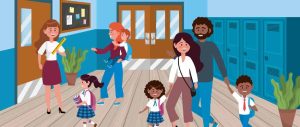


Top Primary Schools in India: A 2026 Parent Guide to Choosing the Right Start for Your Child
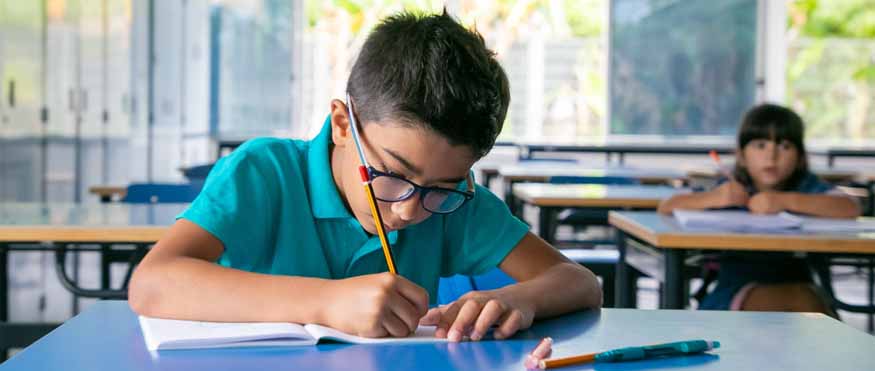
When parents begin comparing Primary Schools in India, they are rarely looking only for a school with a good name. They are trying to answer bigger questions: Will my child feel safe here? Will learning be joyful or pressured? Which curriculum will keep future options open? How do I compare fees, teaching quality, class size, and values without getting overwhelmed?
This guide is designed to help parents make that decision with clarity. Instead of chasing labels alone, it explains what strong primary education looks like in India today, how CBSE, ICSE, Cambridge, and IB differ at the early years level, what to ask during school visits, and how to identify a school that fits your child’s learning style and your family’s priorities. It also addresses a common search intent around primary school in India by breaking down what parents should actually compare before applying.
A useful starting point is this: the best primary school is not simply the most expensive, the most talked about, or the one with the longest waiting list. A strong primary school builds literacy, numeracy, confidence, curiosity, communication, and habits of independent learning in a way that matches the child’s developmental stage. India’s school landscape now gives parents access to national boards such as CBSE and CISCE, as well as international pathways such as Cambridge Primary and the IB Primary Years Programme, each with different strengths and classroom styles. Official curriculum bodies also continue to emphasise holistic learning, foundational skills, and developmentally appropriate education at the early stages.
Mini Table of Contents
- What does primary education include in India?
- Why is the primary stage so important for long-term success?
- What should parents look for in the best primary schools?
- How do CBSE, ICSE, Cambridge, and IB differ in primary years?
- How should parents compare fees, rankings, and reputation wisely?
- What are the signs of a child-centric and future-ready primary school?
- How can families shortlist the right school for their child?
- Where does Billabong High International School fit into this conversation?
- FAQs for parents comparing top primary schools
What does primary education include in India?
In practical terms, primary education in India usually refers to the early formal school years in which children build foundational skills in language, mathematics, environmental understanding, self-management, social behaviour, and learning habits. In many schools, this broadly covers Classes 1 to 5, though school structures and stage terminology can vary. National policy and curriculum discussions in India increasingly emphasise strong foundations in the early years because these are the years in which children learn how to learn, not just what to memorise.
If you have ever searched “primary school means in India,” the simplest answer is this: it is the stage where children move from readiness-based early childhood learning into structured school learning, while still needing warmth, activity, movement, conversation, and guided exploration. It should not feel like mini-board-exam preparation. It should feel like a carefully designed bridge between curiosity and discipline.
Why this stage matters so much
A child who gets strong primary schooling often carries forward several lifelong advantages:
- better reading comprehension
- stronger number sense
- clearer expression
- healthier classroom confidence
- better self-regulation
- more willingness to ask questions
- less fear of making mistakes
- stronger transition into middle school
Do not judge a primary school only by Grade 10 or Grade 12 results. Board outcomes matter later, but the quality of the primary years depends on teaching method, emotional climate, teacher training, developmental understanding, and consistency of routines. A school can produce high secondary scores and still offer a weak primary experience if the early years are overly rigid or worksheet-heavy.
Primary education is the foundation of both academics and personality. A strong school at this stage should develop competence without taking away curiosity.

Why is the primary stage the most important phase for school choice?
The answer is simple: habits formed early are hard to rebuild later. Primary school is where children learn whether school is a place of fear, pressure, and passive compliance, or a place of discovery, belonging, and growth.
By the end of primary years, children are expected to do much more than identify letters and solve sums. They should be able to read with understanding, communicate ideas clearly, work with peers, follow instructions independently, approach new tasks with confidence, and connect classroom learning to real life. Schools that do this well use age-appropriate teaching, regular observation, meaningful feedback, and engaging classroom experiences rather than a purely test-driven approach.
This is also the stage where learning gaps first become visible. A child who memorises without understanding may appear to be performing well in the short term, but later struggle with comprehension, writing depth, problem-solving, and independent thinking. On the other hand, a child in a well-designed primary environment is usually better prepared for more demanding academics later because the foundation is stronger.
When touring schools, ask yourself:
● Does the classroom encourage participation?
● Do children speak with confidence?
● Are displays original or all identical?
● Are teachers explaining concepts or only giving instructions?
● Is there evidence of reading culture?
● Does the school celebrate effort and growth, not only rank?
The primary stage is where academic confidence, learning identity, and school attitude are formed. Choose the environment, not just the brand name.
If you’re also comparing school options, you may want to explore the top pre-schools in India in this guide.
What defines the best primary school in India for today’s parents?
The best answer is not one school name. It is a set of qualities. A high-quality primary school in today’s Indian context is one that combines academic structure with child development, curriculum clarity with flexibility, and performance expectations with emotional safety.
The qualities that matter most
1. Strong foundational literacy and numeracy: Children should build reading fluency, vocabulary, comprehension, basic writing ability, number sense, and comfort with mathematical thinking. This foundation affects every later subject.
2. Developmentally appropriate teaching: Young children do not learn best through long lectures. Effective primary classrooms include stories, projects, guided discussion, visual supports, movement, hands-on tasks, and repetition with meaning.
3. Trained and responsive teachers: Teacher quality matters more than marketing. A strong primary teacher understands child psychology, classroom rhythm, differentiated support, and how to make learning visible.
4. A balanced curriculum: Parents should see evidence of language, mathematics, art, physical education, environmental understanding, digital readiness, and social-emotional growth. A narrow academic focus may create short-term pressure without long-term depth.
5. Thoughtful assessment: Assessment in primary years should guide learning, not create anxiety. Schools should be able to explain how they track progress, identify gaps, and communicate growth to families.
6. Safe and supportive culture: Safety includes supervision, child protection, transport systems, health response, emotional wellbeing, and respectful communication with families.
7. Home-school partnership: The best schools help parents understand learning goals, routines, expectations, and developmental milestones without turning families into after-school tutors.
Create a simple comparison sheet with these criteria:
| Factor | What to Look For | Red Flag |
| Teaching quality | Engaged teachers, concept clarity, child interaction | Excessive copying from board |
| Curriculum | Structured, balanced, age-appropriate | Vague claims, no examples |
| Assessment | Growth-based feedback, regular review | Only marks and rank |
| Safety | Supervision, health protocols, secure entry | No clear systems |
| Communication | Transparent, respectful, timely | Hard to reach or inconsistent |
| Student experience | Joyful, expressive, active | Quiet compliance mistaken for discipline |
Parents looking for the best primary school in India should compare educational quality, not just popularity. Substance matters more than slogans.
How do CBSE, ICSE, Cambridge, and IB differ in the primary years?
This is one of the biggest areas of parent confusion, and it affects everything from classroom style to homework to future flexibility.
There is no universally superior board for every child. The right fit depends on your child’s learning style, your expectations, the school’s actual teaching quality, and how likely your family is to value national continuity versus international flexibility.
Official curriculum information shows that these pathways differ in structure, pedagogy, and emphasis. CBSE is widely associated with structured national alignment, CISCE materials emphasise broad curriculum design, Cambridge Primary highlights flexibility and breadth, and the IB Primary Years Programme is built around inquiry and transdisciplinary learning.
CBSE in the primary years
CBSE is often preferred by families who want a nationally recognised framework and broad alignment with Indian academic expectations. In good schools, CBSE at the primary level can be balanced, concept-based, and age-appropriate. However, implementation varies widely from school to school.
Best for parents who want:
- familiarity and continuity within India
- structured progression
- wide school availability across cities
- alignment with mainstream national schooling pathways
Watch for:
A school claiming to be progressive but still running the primary years through rote-heavy worksheets and excessive testing.
ICSE / CISCE-oriented primary years
Schools aligned to CISCE often attract parents who value strong English, broad subject exposure, and rich project-based work when implemented well. In practice, the experience depends heavily on the school’s pedagogy and teacher capacity.
Best for parents who want:
- strong language development
- broad curriculum exposure
- depth in expression and written work
- co-curricular seriousness alongside academics
Watch for:
Schools where the workload becomes unnecessarily heavy for younger children.
Cambridge Primary
Cambridge Primary is designed as a flexible international framework that schools can adapt to context while maintaining broad and balanced learning outcomes. It tends to appeal to families looking for internationally oriented pedagogy and skill development in the early years.
Best for parents who want:
- internationally benchmarked learning
- flexibility and conceptual teaching
- emphasis on understanding and application
- smoother pathways for globally mobile families
Watch for:
Schools using the international label without ensuring teacher quality and classroom consistency.
IB Primary Years Programme
The IB PYP is an inquiry-based framework for children aged 3 to 12. It emphasises the learner, learning processes, and the learning community through transdisciplinary experiences.
Best for parents who want:
- inquiry-driven classrooms
- student agency
- integrated themes across subjects
- a reflective and discussion-rich school culture
Watch for:
A mismatch between parent expectations and classroom style. Families expecting highly traditional visible outputs every day may initially find the approach unfamiliar.
How to choose between them
Ask these questions:
● Does my child thrive with structure, exploration, or a blend of both?
● Are we likely to relocate within India or internationally?
● Is the school’s implementation strong, or is the curriculum name doing the work?
● Can the school explain how reading, writing, and maths are taught in the early years?
● Does the board fit my child, or am I choosing it for status?
Boards matter, but implementation matters more. A well-run school on a suitable board is better than a poorly run school with a prestigious label.

Should parents rely on rankings, ratings, and “top school” lists?
The honest answer: use them only as a starting point, never as the final decision tool.
Why rankings can mislead
Many school lists mix very different criteria:
● brand popularity
● online reviews
● city reputation
● campus visibility
● historic prestige
● board results from higher classes
● marketing reach
These may not reflect what parents of a six-year-old actually need to know. A school can appear prominently in a ranking and still have inconsistent teaching, high teacher turnover, or limited personal attention in primary grades.
What matters more than a rank
Instead of asking, “What rank is this school?”, ask:
● How does the school teach reading in Class 1 and Class 2?
● How often do teachers observe and support struggling learners?
● What is the average class size in primary years?
● How are parents updated on development?
● What does a typical school day feel like for a child?
● How much homework is given and why?
● How does the school handle confidence gaps or adjustment issues?
Fees: how to compare wisely
Parents naturally compare fees, but school value is not the same as low cost or high cost. Fees need context.
Look at:
● tuition
● annual charges
● transport
● meals if applicable
● books and uniforms
● technology or activity charges
● optional programme costs
Then compare these against:
● teacher quality
● facilities children really use
● curriculum support
● safety systems
● co-curricular access
● communication quality
● learning outcomes
Use a three-column model:
| Question | Ask the School | Ask Yourself |
| Fees | What is included and excluded? | Is the value visible in daily schooling? |
| Reputation | How is quality measured internally? | Am I influenced by social proof alone? |
| Results | What matters in primary years? | Am I looking at senior outcomes too early? |
Rankings and ratings can help you discover schools, but they should never replace classroom observation, questions, and fit.
What are the signs of a genuinely child-centric primary school?
Parents often hear phrases like “holistic,” “future-ready,” and “experiential,” but the real test is whether these values are visible in everyday school life.
Signs you can actually observe
Children are speaking, not just listening:
In strong classrooms, students explain, ask, discuss, present, and reflect. They are not silent all day unless spoken to.
The environment supports independence:
Children should know routines, access age-appropriate materials, and take responsibility in simple ways.
Learning is visible:
You should see evidence of reading, projects, conceptual understanding, and original work, not only copied notes.
Teachers balance warmth with structure:
A child-centric school is not a loose school. It combines emotional safety with clear expectations.
Assessment feels informative:
Parents receive meaningful insight into strengths, progress, and support areas instead of generic comments.
The school respects childhood:
Play, movement, art, music, stories, outdoor time, and interaction should not disappear just because formal schooling has started.
During a campus visit, notice the small signals:
● how a teacher responds when a child gets something wrong
● whether displays reflect student thinking
● whether classrooms feel welcoming
● whether children seem comfortable approaching adults
● whether the school explains learning philosophy clearly
A child-centric school makes children active participants in learning, not passive recipients of instruction.
How can parents judge academic strength without falling for pressure-based schooling?
This is one of the most important admissions questions in 2026. Many parents want strong academics but do not want stress, coaching-style schooling, or constant testing in the primary years.
Academic strength in primary school should look like clarity, consistency, concept depth, and good support systems. It should not look like chronic anxiety, excessive homework, or performance culture at age six or seven.
What academic strength really looks like
● children read with comprehension, not just fluency
● writing becomes clearer and more expressive over time
● maths is understood conceptually, not only memorised procedurally
● teachers can explain how they support different learners
● progress is tracked regularly
● children can talk about what they are learning and why
Red flags to watch
● constant test preparation language
● too much dependence on notebooks as proof of learning
● overuse of memorisation
● children appearing fearful of mistakes
● “discipline” being equated with silence
● parents being expected to do heavy teaching at home
Ask one specific question: “How do you support a child who is bright but shy, or one who understands orally but struggles in writing?” A strong school will answer with examples, not general promises. The right primary school should build academic confidence steadily. Strong foundations beat early pressure.
What questions should parents ask during school visits and admission interactions?
Parents often leave school visits with glossy brochures and little clarity. The right questions make a huge difference.
Ask about teaching and learning
1. How is reading taught in the early primary years?
2. How do teachers support different learning speeds?
3. What does a typical school day look like in Class 1 or Class 2?
4. How are projects, play, and concept work balanced?
5. How much homework is expected?
Ask about assessment
6. How do you evaluate progress in primary grades?
7. How are learning gaps identified and addressed?
8. What type of feedback do parents receive?
Ask about school culture
9. How does the school support new students during transition?
10. How do teachers build confidence and participation?
11. What is your approach to behaviour guidance?
12. How do you handle child wellbeing concerns?
Ask about communication and partnership
13. How often do parents meet teachers formally and informally?
14. How are concerns escalated and resolved?
15. What role do you expect parents to play at home?
Ask about safety and systems
16. What are your transport safety processes?
17. What medical support is available on campus?
18. What child protection practices are in place?
Do not ask only broad questions such as “Is your school good for academics?” Ask scenario-based questions. Schools that are truly confident in their systems usually answer with specific examples. Good admissions conversations reveal how a school thinks, not just how it markets.
How should families shortlist the right primary school for their child?
The smartest parent decisions usually come from matching school reality with child reality.
Start with your child profile
Think about:
● temperament
● social confidence
● language comfort
● attention style
● need for structure
● openness to exploration
● adjustment to new environments
A highly verbal, curious child may thrive in a discussion-rich environment. A child who needs more predictability may do better in a structured but warm setting. A shy child may need a school with strong pastoral attention. A child relocating from another system may need a smoother curricular bridge.
Then define your family priorities
Rank these honestly:
● academic rigour
● emotional support
● board preference
● location and commute
● budget
● international exposure
● co-curricular depth
● class size
● communication quality
● continuity through higher grades
Build a shortlist in three layers
Layer 1: Non-negotiables
These may include safety, commute, board, budget range, and school culture.
Layer 2: Strong preferences
These may include inquiry-led pedagogy, sports, arts, language environment, or campus size.
Layer 3: Good-to-have features
These may include special clubs, premium infrastructure, advanced technology integration, or extended day options.
Shortlist no more than five schools seriously. Beyond that, comparison quality drops and decision fatigue rises. Visit, ask focused questions, observe carefully, and write notes immediately afterward. The right school is the one that fits your child’s present needs while keeping future pathways open.

Where does Billabong High International School fit for parents comparing Primary Schools in India?
For parents who want a school that combines strong academics with a more child-aware and inquiry-oriented experience, Billabong High is relevant because its positioning aligns with what many modern families are actively seeking: a child-centric, globally aligned, academically strong approach rather than a purely traditional one. On its official website, Billabong High describes itself as a chain of schools offering CBSE, ICSE, CAIE, and IGCSE pathways in India, and its recent brand language highlights values such as being child-centric, inquiry-driven, globally aligned, and academically strong.
What that means in parent terms
This kind of positioning matters because many families do not want a false choice between academic seriousness and joyful learning. They want both. They want children to build strong fundamentals, but they also want classrooms that support confidence, communication, creativity, and conceptual thinking.
Billabong High tends to stand out in this conversation when parents are looking for:
● a premium but not overly rigid school experience
● inquiry-led and progressive classroom culture
● alignment with global educational expectations
● structured academics without reducing children to marks
● multi-board or internationally influenced options depending on campus
Why this can be appealing in the primary years
In the early school years, the biggest differentiator is not whether a school can produce visible worksheets. It is whether the school can create strong daily learning experiences. A child-centric, inquiry-driven model is often more likely to encourage questioning, independent thought, discussion, and confidence when implemented consistently.
For parents, that can translate into practical advantages:
● children who like coming to school
● better quality classroom engagement
● improved communication and expression
● stronger transfer of learning from school to real life
● a more balanced start to formal education
What parents should still verify campus by campus
As with any school group, families should verify the specific campus experience they are considering. Ask about:
● primary class sizes
● teacher stability
● board availability at that branch
● reading and maths support
● communication systems
● co-curricular access in primary grades
● transition from pre-primary to primary
For families comparing high-quality primary options, Billabong High can be especially relevant where parents want a more modern, inquiry-aware school experience that still takes academic development seriously.
If you also want to know about the top schools in India, check out this complete guide.
What mistakes do parents make when choosing a primary school?
Even highly informed parents can fall into common traps.
Mistake 1: Choosing only by brand recognition
A strong name can help with trust, but the real question is whether the primary experience is strong at the branch you are considering.
Mistake 2: Overvaluing visible workbooks
Thick notebooks can look reassuring, but they do not automatically reflect conceptual understanding or joyful learning.
Mistake 3: Treating pressure as proof of quality
Stress, long homework hours, and constant tests in primary years are not signs of excellence.
Mistake 4: Ignoring commute
A long daily commute can affect energy, mood, family routine, and a young child’s school relationship.
Mistake 5: Forgetting fit
A school that suits one child beautifully may not suit another.
Ask yourself one final question before deciding:
“Can I realistically imagine my child being known, supported, challenged, and happy here for the next few years?” Good school choices are rarely impulsive. They come from careful comparison, honest priorities, and observation.
Conclusion: how should parents make the final choice?
Choosing among Primary Schools in India becomes easier when parents stop looking for the loudest claim and start looking for the clearest evidence. A strong primary school should build foundations in literacy, numeracy, confidence, curiosity, communication, and independent learning. It should offer structure without stress, warmth without laxity, and ambition without losing sight of childhood.
The most helpful approach is to compare schools through four lenses: curriculum fit, teaching quality, child experience, and long-term alignment with your family’s goals. Rankings, ratings, and fees may help narrow options, but the final decision should come down to what the school is actually like for children between the ages of five and ten.
For many families, the right answer will be a school that combines academic strength with a child-centric, inquiry-led approach. That is why Billabong High can enter the shortlist meaningfully for parents who want a premium yet grounded educational start. But whichever school you choose, the core rule remains the same: select a place where your child can build strong foundations and still remain curious, expressive, and eager to learn. That is what truly defines quality in Primary Schools in India.
FAQs: parents also ask about primary schools in India
1. What is the right age to start primary school in India?
In most schools, children begin Class 1 after completing the pre-primary or kindergarten stage, typically around age five and a half to six, depending on school policy and readiness expectations. Parents should look at both age eligibility and developmental readiness rather than rushing the transition.
2. Which board is best for primary school in India: CBSE, ICSE, Cambridge, or IB?
There is no one-size-fits-all answer. CBSE may suit families seeking national continuity, ICSE often appeals for language-rich and broad learning, Cambridge can work well for international flexibility, and IB PYP is attractive for inquiry-led learning. The school’s implementation quality matters as much as the board itself.
3. How should parents compare primary school fees?
Always compare what the fee includes, such as tuition, activities, books, transport, and annual charges. Then judge whether the educational value is visible in teacher quality, school systems, curriculum delivery, and the child’s daily learning experience.
4. Are rankings reliable when choosing a primary school?
They can be useful for discovery, but they should not be treated as final proof of quality. Parents should combine rankings with school visits, classroom observations, specific questions, and conversations about learning approaches.
5. What should parents observe during a campus visit?
Focus on classroom interaction, student confidence, teacher warmth, organisation, reading culture, safety systems, and whether the school can explain its primary teaching methods clearly. The atmosphere often reveals more than the brochure.
6. How much homework is appropriate in primary grades?
Homework in primary years should reinforce habits and understanding without overwhelming the child. If homework regularly creates stress, fatigue, or dependence on parents, it may be a sign that the school’s expectations are not age-appropriate.
7. How do I know if a school is genuinely child-centric?
A genuinely child-centric school respects development, encourages participation, provides supportive feedback, balances academics with the arts and movement, and treats children as active learners. You should be able to see this in classroom practice, not only in marketing language.
8. Why do some parents prefer Billabong High for the primary years?
Parents who value a child-centric, inquiry-driven, globally aligned, and academically strong environment may find Billabong High relevant to their shortlist. Its positioning speaks to families looking for a modern school experience that supports both foundational academics and wider developmental growth.
Latest Blogs




CATEGORIES

March 17, 2026
Top Cambridge Schools in India: A Parent’s 2027 Guide to Choosing the Right Cambridge/IGCSE Fit (Rankings, Fee, and more)
Read More
March 16, 2026
Top Schools in Maharashtra: A Parent’s 2027–28 Guide to Choosing the Right School
Read More