


What is an Open House Really For? Maximizing Your Visit and Q&A Time
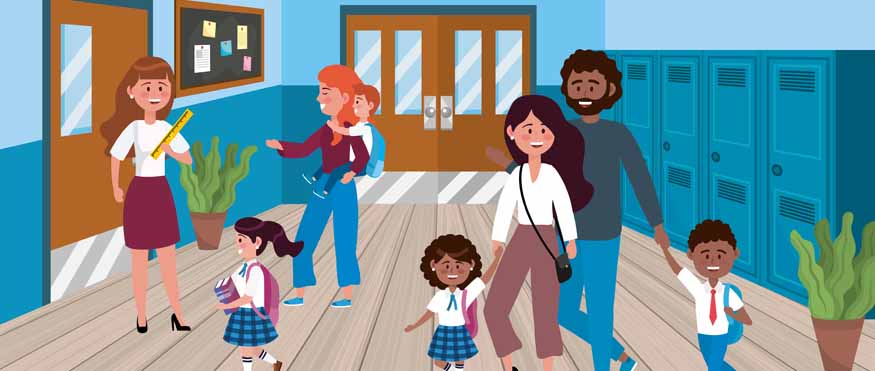
Probably one of the most important decisions a parent would make is a choice of school. It’s a choice that fixes the social circle, the academic foundation, and the essence through which to view the world. The websites and brochures are there, but nothing replaces that feel—a stroll through hallways, meeting the educators, and feeling the energy of the campus.
It is exactly what an open house at school would be: a gateway into the soul of an institution beyond the marketing materials. An open house is the window of time for families to move from being “observers” to “participants”. Unfortunately, many parents walk into an open house without a clear strategy, sometimes leaving with a bag full of pamphlets yet a mind still full of unanswered questions. But to truly benefit, you need a plan for maximizing your school visit Q&A time and a clear understanding of how a typical open house schedule and agenda works.
Understanding the Core Purpose: What is an Open House for School?
An open house for school, at its very core, is a compatibility test. It’s not just a tour; it’s where the school gets an opportunity to show its culture and where parents see if that fits in with their own family values. Schools use these events to show what type of pedagogical approach they have, leaning towards rote or more modern and inquiry-based models.
For a parent, the open house serves three major purposes:
- Physical Environment Assessment: Is the facility safe, clean, and stimulating?
- Cultural Fit: Do the staff seem energized? Are the students interested in what is going on?
- Logistical Clarity: What are the timelines, the fees, and the transportation options?
Unpacking the Usual Open House Schedule and Agenda
Every school has its own unique flavour, but most will follow a formal open house structure and agenda to give you a 360-degree experience of the student experience. Usually, the open house is divided into a series of crucial events:
The Welcome Address
This is usually conducted by the school administration, preferably the school principal or head of school. This introduces the school’s vision, mission, and sometimes goals. This is where you pay close attention in case they are discussing “test scores” or “character building”.
Guided Campus Tours
This is when you will see the “engine room”. You will visit classrooms, research labs, libraries, and sports centres. Look for the walls and see if the classrooms and halls are lined with student activity or if the walls are blank. If the walls are covered with student projects and artwork, this indicates an active and proud learning community.
Interactive Demonstrations
There are often mock classes or science experiments set up. This is an excellent opportunity to see how the teachers engage with the kids. Observing is crucial to making the most of your questioning time when you get back to school.
The Q&A Panel
Often, this will be the most valuable piece of the day. A room featuring administrators, veteran teachers, and possibly current parents/students will be open to answer questions you may want to ask.
Techniques for Maximizing Your Q&A Time During Your School Visit
The Q&A portion can be intimidating or may fly by quickly. If you’re not ready, you could find the session ending just as you’ve conjured up your first question. Getting the most from your school visit’s Q&A session is best accomplished by being prepared even before you set foot on the campus.
1. Ask About the ‘Why,’ Not Just the ‘What’
“Do you have a playground?” (which you can observe for yourself) becomes “How much unstructured play time do the kids get daily, and how do you resolve social conflicts during playtime?”. That probes the school’s philosophy of social-emotional growth.
2. Query Teacher Support and Retention
A school is only as strong as its teachers. Questions to ask would be about professional development opportunities offered to school staff. Teachers happy and supported lead to happy and supported students.
3. Request Details Regarding Student Progress
Inquire about the policy when it comes to a child who is struggling or someone who is way ahead of the class. This will help you gauge the level of commitment to differentiated instruction.
Observations Beyond the Agenda
Although your schedule of open houses and activities will determine your actions, your gaze should be searching for the ‘unscripted’ bits.
- Teacher Interaction: Observe the interaction between teachers. Is there any sort of camaraderie?
- Student Body Language: Are students comfortable and confident in their skits, or are they over-rehearsed?
- Maintenance: Apart from the main lobby, examine the restrooms and corners of the labs. A well-maintained school indicates a great degree of respect for the school environment.
Preparing Your Child for the Visit
If the school allows children to attend the open house, it is vital to involve them. However, remember that for a child, a large crowd of adults can be overwhelming. Before you go, explain what is an open house for school in simple terms: “We are going to visit a place where you might learn and play next year, and we want to see if you like the teachers and the toys”. Encourage them to ask one question of their own. This empowers them and makes them feel like their opinion matters in this big family decision.
Post-Visit Reflection
Once the event is over, don’t let the experience fade. Sit down as a family and discuss your impressions.
- What was the one thing that surprised you?
- Did the answers during your maximizing your school visit Q&A time satisfy your concerns?
- Did the open house schedule and agenda feel rushed or well-paced?
Comparing notes while the experience is fresh is the best way to make an informed choice.
An Afterword
The process of selecting a school is a “Himalayan task” that requires patience and due diligence. It is more than just looking for a building; it is about looking for a partner in your child’s growth. By understanding what is an open house for school and using your time wisely, you ensure that you aren’t just choosing a school, but a community.
The Billabong High Legacy
We take immense pride in being categorised as one of the Best CBSE and Cambridge Schools. Earning this label hasn’t been a one-day journey; it has taken us years of toil, research, commitment and love towards young minds to create a safe and nourishing environment where brilliant minds take shape.
Our “School of Innovation” philosophy is more than just a tagline; it is the heartbeat of our classrooms. We believe that education should go beyond the chalkboard, sparking curiosity and building the resilience needed for the 21st century.
When you choose Billabong High International School, you aren’t just enrolling your child in a school; you are joining a community dedicated to holistic growth. We believe in imparting the best of knowledge in every field of study. Visit us to learn how we help every child bring out the best, so they become confident and kind individuals.
Latest Blogs





CATEGORIES

August 31, 2026
The Ultimate Parent’s Guide to Billabong International High School (BHIS) Admissions 2027-28
Read More
April 15, 2026
Top Primary Schools in India: A 2026 Parent Guide to Choosing the Right Start for Your Child
Read More
March 17, 2026
Top Cambridge Schools in India: A Parent’s 2027 Guide to Choosing the Right Cambridge/IGCSE Fit (Rankings, Fee, and more)
Read More
March 16, 2026
Top Schools in Maharashtra: A Parent’s 2027–28 Guide to Choosing the Right School
Read More